
A customer service cover letter should make one thing clear: you can listen to a request, respond within your responsibility, and leave an accurate record of what happened. Instead of listing “communication,” “empathy,” and “problem-solving” as empty claims, choose a true example of a question, complaint, order issue, or follow-up. Explain your action and the actual outcome without inventing customer satisfaction scores.
The U.S. Bureau of Labor Statistics describes customer service representatives as staff who answer questions, process orders, handle complaints, record interactions, and refer complex issues when needed. Exact tools and authority vary by employer. UC Berkeley advises applicants to connect qualifications to the role rather than repeat a resume list.
Identify the Type of Customer Service in the Posting
A retail returns desk, remote contact center, utility support line, and business-to-business help team can all use the customer service title while requiring different processes. Read whether the vacancy emphasizes calls, written messages, order changes, account research, billing, or escalation. Select a story that resembles the actual responsibilities rather than a generic assertion that you enjoy helping people.
If a job involves regulated account information, do not assume you have the required authority or training. You can describe how you protect confidentiality within existing policy without claiming access you did not have. BLS notes that service roles vary substantially by industry, so one work story should not be presented as proof of every specialized skill.
Choose a True Service Situation You Can Explain
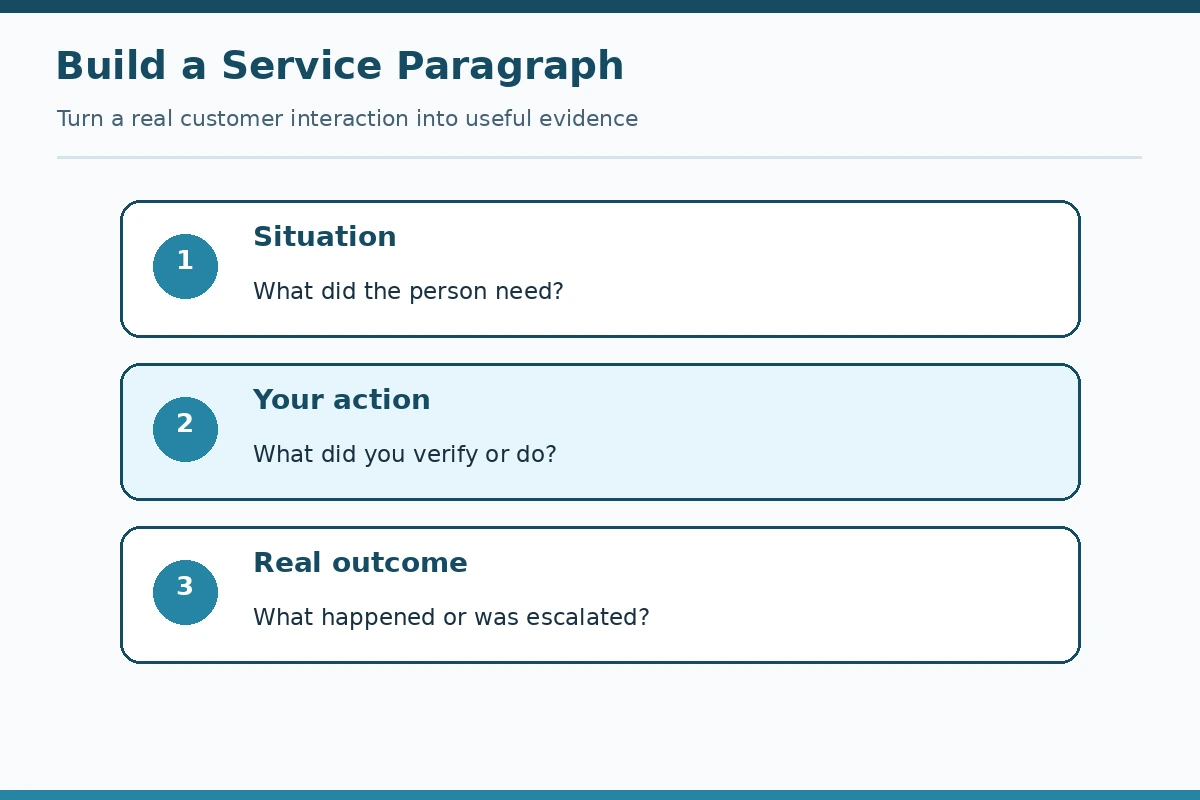
Write down an actual concern someone raised, the information you checked, what you personally did, and whether the issue was resolved or handed off. Choose a situation that shows listening and good judgment. If you only passed the question to an authorized colleague, state that accurately; responsible escalation can be as relevant as direct resolution.
A school event, volunteer help desk, or hospitality shift may supply useful evidence if it really happened. Avoid claiming you managed a call-center queue if you only responded to two questions at a student activity. Clear limits make the story more credible and help an interviewer ask productive follow-up questions.
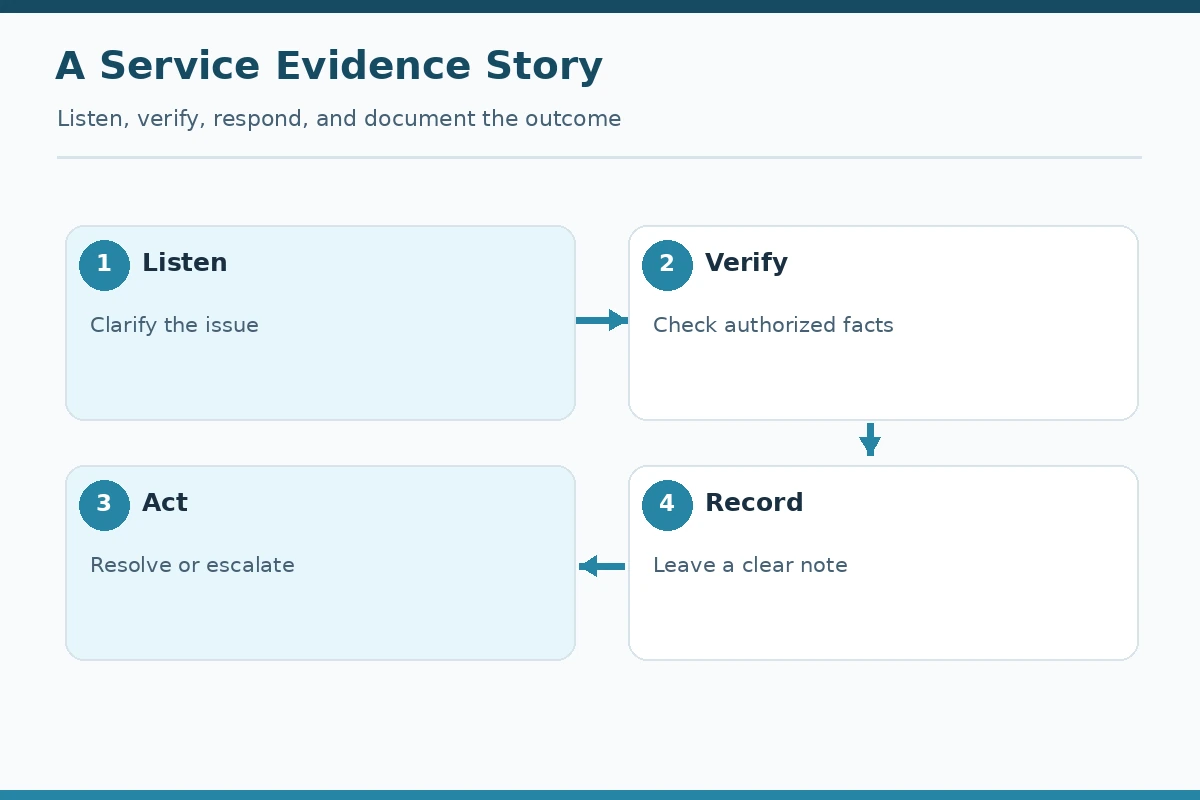
Make the Opening Specific to a Service Channel
Identify the employer and position, then note the task you can support. For a chat-based role you might emphasize written explanations; for a front-desk role, careful visitor communication; for an order team, accurate recording and follow-up. Do not describe the employer’s products or policies in a way that assumes facts you have not checked.
Hypothetical opening: “I’m applying for the Customer Support Associate position. In my volunteer registration role, I answered attendee questions, checked reservation details, and recorded issues for the event coordinator.” This is an illustrative example, not a claim of actual employment or customer-service performance by any real candidate.
Explain a Complaint Without Manufacturing a Happy Ending
A useful middle paragraph can follow listen, clarify, check, respond, and document. Give the context in one sentence, describe your actual decision, and state an outcome you know. Not every complaint is resolved during the first conversation. If a refund decision or account change required authorization, explain that you referred it to the correct person.
Hypothetical example: “When a visitor could not locate a booking record, I checked the approved attendance list, confirmed the identifying details I was authorized to review, and asked the coordinator to investigate the mismatch.” Do not turn that into “I solved every case” or attach invented percentages.
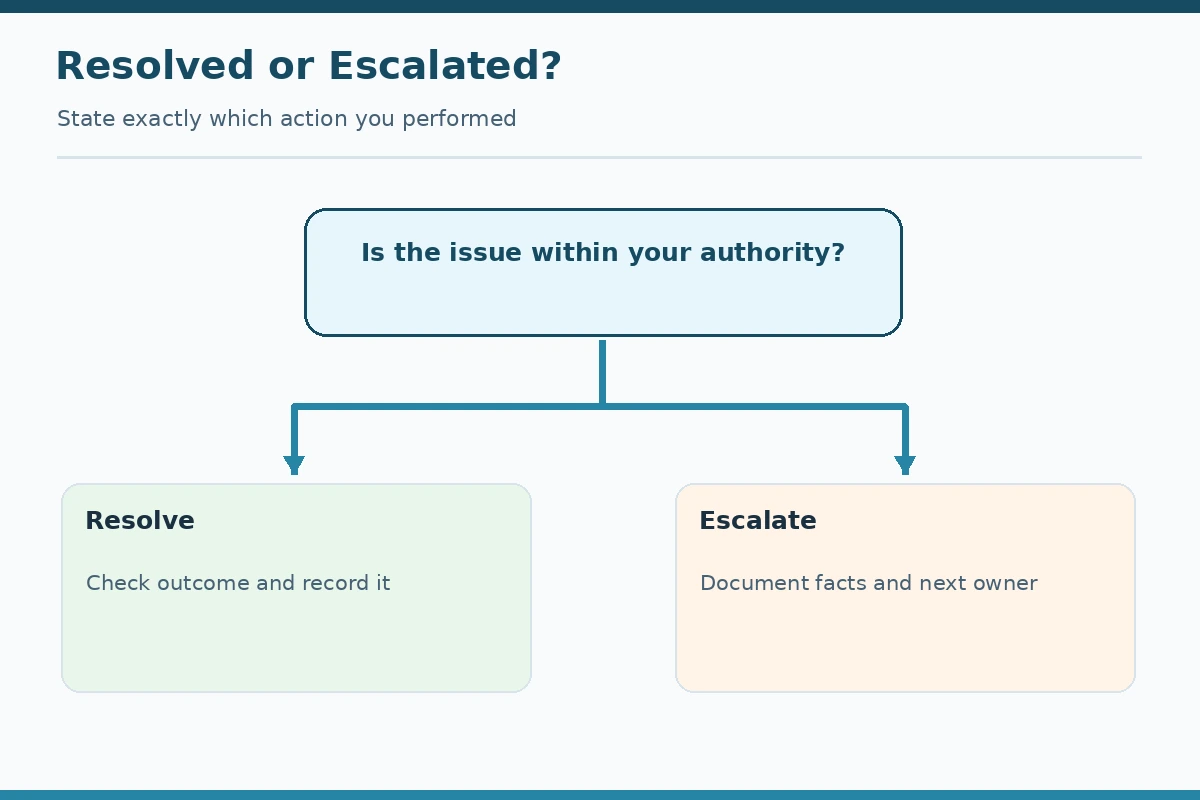
Show the Writing and Recordkeeping Behind Good Service
Customer contact may continue across shifts or channels. If you have recorded requests, written summaries, or communicated next steps, describe how you kept the information accurate and usable. A clear handoff is a valuable part of service work even when another team completes the action. Mention software only if you actually used it.
For example, you might have maintained a volunteer question log or sent a concise event update. Connect that behavior to the posting’s need for accurate customer notes. Do not pretend that general spreadsheet experience makes you an expert in a named ticketing or customer relationship management platform.
Tailor One Evidence Paragraph to the Employer
Pick two posted requirements and support at least one with a story. The second can be shown through an adjacent skill such as handling written communication or organizing information. If you have no direct customer-facing job, explain how a relevant activity developed the same behavior without changing its setting into paid work.
The goal is not a universal letter that works for every company. A role focused on returns may need examples of checking policy and explaining choices; an email queue may value precise writing and consistent follow-up. Keep your own words and remove buzzwords that could fit any job.
Finish With an Accurate Checklist and Next Step
Before sending, verify job title, employer spelling, contact information, and whether the vacancy asks for a cover letter. Check that all figures are real and that your example does not disclose customers’ names, private records, or company-only procedures. Remove any claim that you are certified or trained in a platform unless you can substantiate it.
Close with a brief statement about what you would contribute and a polite request to discuss the position. The letter is a writing sample, so correct spelling and readable paragraphs matter. Practice telling the same story aloud using true facts; a cover letter should not create achievements you cannot later explain. Our customer service representative cover letter guide goes into more detail.
How We Research These Cover Letter Examples
We checked UC Berkeley’s cover letter guidance on connecting experience and qualifications to a specific employer, and the University of Washington’s recommendations on using concise stories, concrete contribution, and accurate formatting. These sources support a writing approach, not a guarantee that any letter leads to an interview. The example wording in this article is explicitly hypothetical and must be replaced with the reader’s real experience.
We also reviewed additional guidance relevant to this scenario. The examples do not represent real applicants, employers, internal company policies, hiring outcomes, or verified referrals. No affiliate partnership is claimed here; see our affiliate disclosure for site-wide information.
Related Guides
- Customer Service Resume Summary: Prove Requests, Records, and Follow-Up
- IT Support Cover Letter: Demonstrate Troubleshooting and Clear Follow-Up
- Customer Service Self-Evaluation Examples: From Request to Follow-Up
- Customer Service Skills for a Resume: Show What Happened After the Request
- Customer Service Resume Summary: Show Channels, Cases, and Judgment
Use one genuine example of listening, action within your authority, clear communication, and an accurate outcome or handoff.
Yes. Explain the volunteer context honestly and connect the behavior to the advertised customer-service tasks.
No. Include metrics only when you genuinely know and can support them; otherwise describe observable actions and outcomes.
Describe the escalation accurately. Routing an issue responsibly is useful, but it is different from personally completing the resolution.
No. Mention tools you actually used and express willingness to learn the employer’s systems.