
A bookkeeper cover letter should make the reader confident that you can keep records orderly, check work, and flag unusual items responsibly. Software familiarity matters, but the clearest proof is a process you can explain: which information you received, what you matched, how you checked discrepancies, and to whom you reported them.
The Bureau of Labor Statistics describes bookkeeping work that includes recording transactions, using spreadsheets or software, checking postings, and reconciling differences. Choose the subset that matches the actual vacancy. You do not need to claim every accounting responsibility to write a strong letter.
Identify the Responsibilities Behind This Specific Posting
Read the job description for its focus. A small organization’s bookkeeper might maintain several accounts; a larger employer may ask for a clerk concentrating on receivables, invoices, or reconciliations. Do not use ‘full-cycle accounting’ unless your own experience supports that breadth. Determine whether the posting emphasizes bank reconciliations, payable processing, spreadsheets, internal approvals, or customer communications.
Choose a task you have genuinely completed. Your evidence could be checking invoices against purchase orders, matching daily receipts, organizing supporting documents, or reviewing records for missing codes. If you only completed a bookkeeping course, identify the ledger as a class exercise. A simulated dataset can prove learning, but it must not masquerade as a real employer’s books.
Choose Evidence That Matches the Actual Work
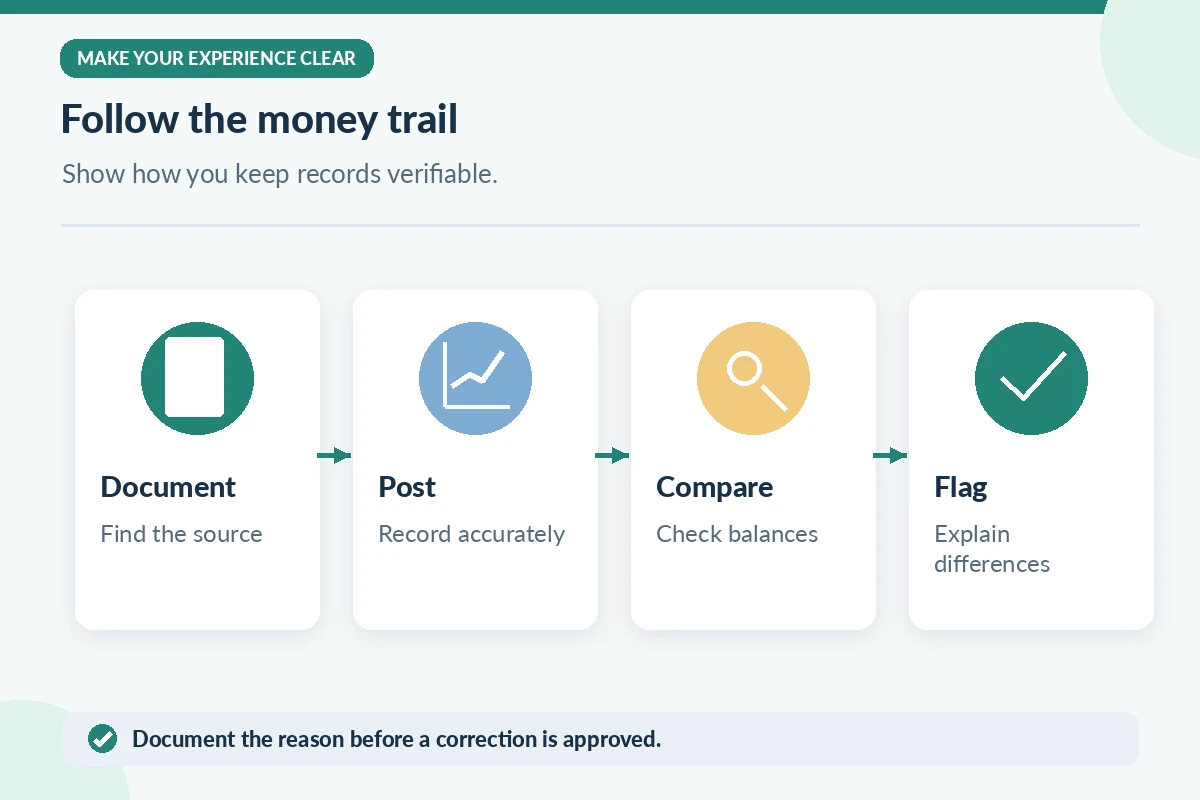
Use the sequence source document → ledger entry → verification → exception handling. Explain when you would stop and ask for approval instead of silently changing a number. Accuracy is not the same as never finding an error; it also means making discrepancies visible and keeping the record traceable.
Describe a software program only at the level you can demonstrate. ‘Entered and checked transactions in a spreadsheet’ is different from ‘managed payroll’ or ‘prepared audited financial statements.’ Financial records can be sensitive, so never send real account numbers, bank data, or employer invoices as writing samples without clear authorization.
Build Four Short Paragraphs Around Real Evidence
Keep the structure legible: identify the role and your reason for applying; explain one matching skill with context; give a second specific example or detail your transferable experience; then close with an invitation to discuss the work. Penn Career Services advises applicants to select a small number of relevant experiences rather than copy a resume into letter form. USC’s career center similarly recommends a concise, job-specific business-letter structure. You can adapt the voice to the employer without sacrificing clarity.
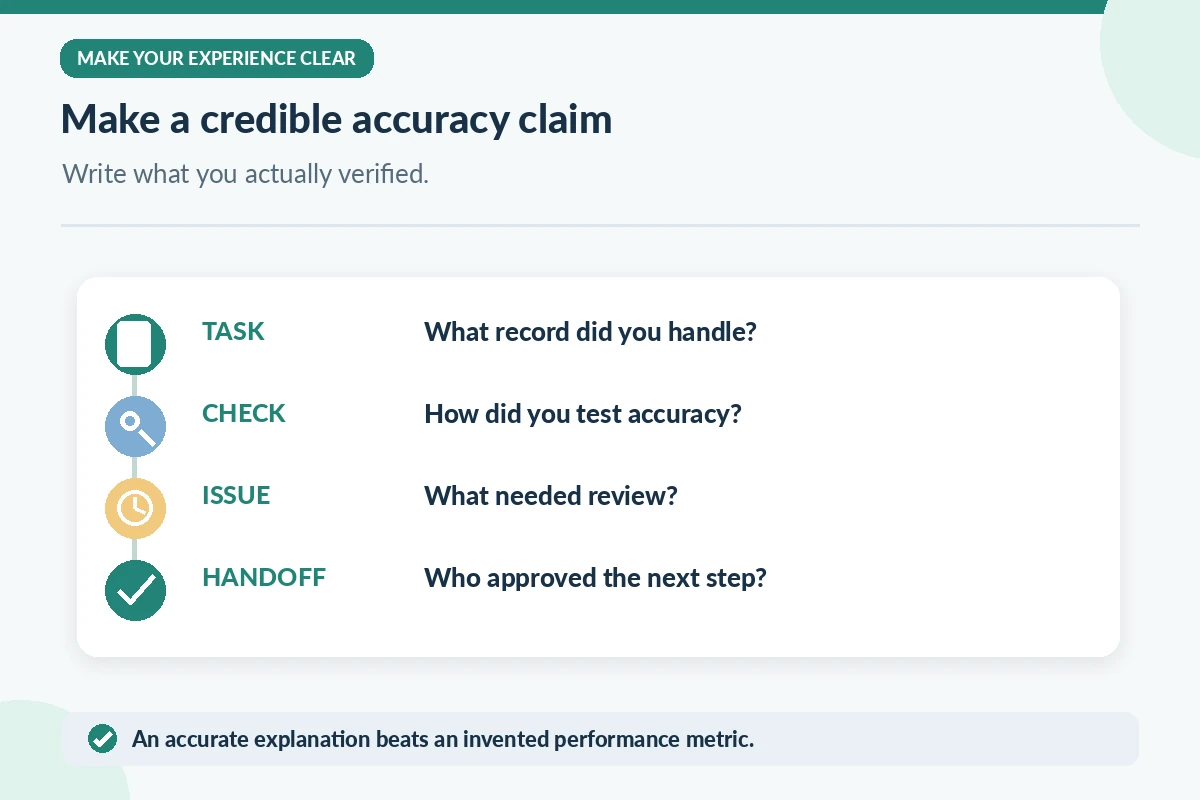
The first sentence needs the precise role name, not a generic ‘any opening’ pitch. In the center, replace labels such as ‘hard-working,’ ‘passionate,’ or ‘detail-oriented’ with what you did and how you checked it. Use a result only when it is genuinely known. In the closing, state interest and thank the reader without assuming an interview is guaranteed. A one-page letter is a useful default for most nonacademic roles unless the employer says otherwise.
Read This Hypothetical Cover Letter Example Carefully
Hypothetical sample for practice only: The following scenario is not a real applicant, real employer, or verified achievement.
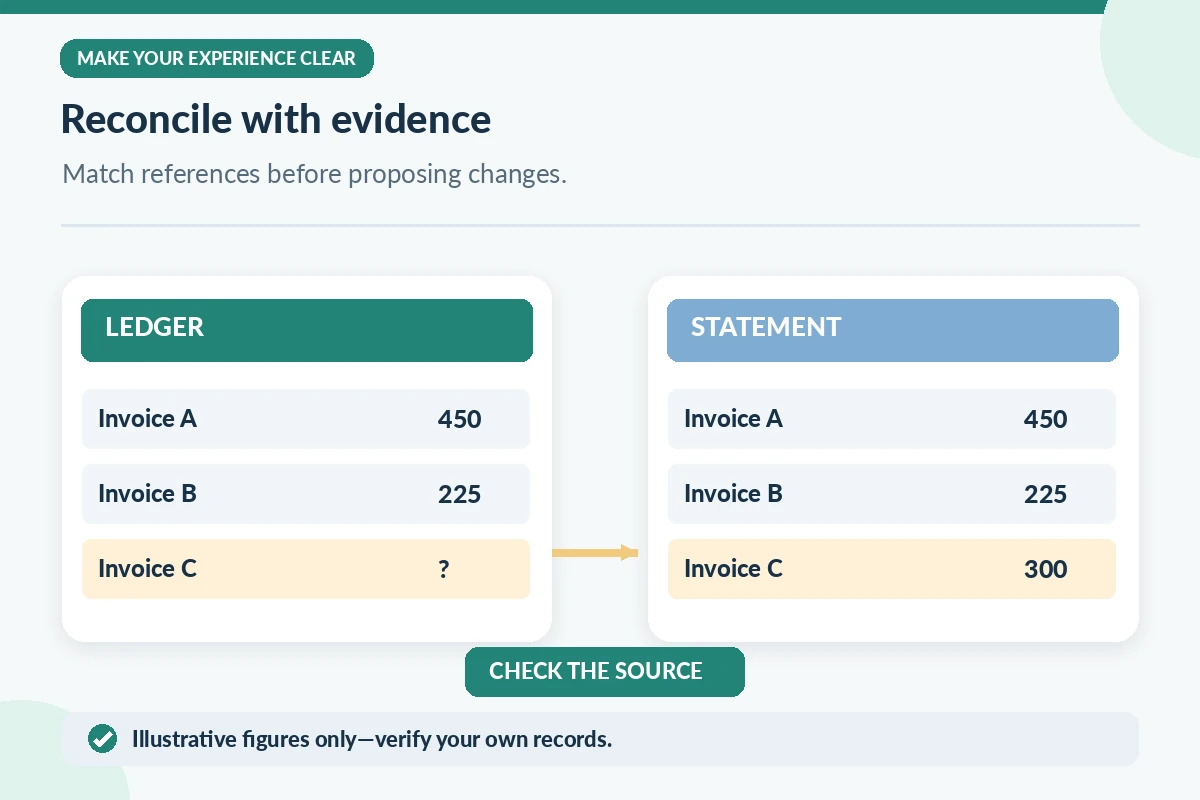
Dear Hiring Manager, I am applying for the bookkeeper position because your posting emphasizes careful records and timely reconciliation. In a hypothetical accounting-course exercise, I entered a series of source documents into a practice ledger and compared the totals with a provided bank statement. When two records did not match, I traced the reference numbers, documented the difference, and asked the instructor to review the proposed correction. I also used spreadsheet checks to find missing categories before preparing a summary. These were classroom tasks, not actual company accounts, but they helped me practice reliable recordkeeping and clear exception notes. I would welcome the opportunity to follow your organization’s procedures and learn its approved systems. Thank you for considering my application. Sincerely, [Your Name]
The transactions and classroom scenario in this sample are hypothetical. Replace them with your own verified training or workplace evidence. Never add an invented error-reduction rate or financial volume simply to make the example sound more impressive.
Adapt the Letter to Your Level of Experience
New bookkeeper: explain coursework, school business activities, or administrative data checking without inflating the scope. A course ledger is useful only when you say it is a learning exercise. List software proficiency at an accurate level and name what you actually did.
Experienced candidate: choose a real reconciliation or closing-cycle responsibility and explain how you verified supporting documents, communicated exceptions, and protected confidential information. Mention scale or accuracy improvements only if they are independently supportable and appropriate to disclose.
Review the Claims Before You Press Submit
Avoid phrases such as ‘perfect records’ or ‘zero errors’ without evidence. Do not blur bookkeeping with licensed professional accounting or auditing credentials. If the posting mentions tax preparation, payroll, or compliance, be precise about training and authorization rather than promising work outside your experience.
Before submission, check that dates, titles, and software names match your resume. Use the correct vacancy title and company, and avoid sharing screenshots with customer identities or financial details. A strong letter shows a repeatable checking habit, not access to someone else’s private ledger.
Use a final matching check: compare the employer’s wording with the experience you can substantiate, and remove borrowed phrases that would misrepresent your contribution. Make sure the cover letter complements—not contradicts—your resume, dates, portfolio, and application fields. A credible explanation of scope is stronger than an exaggerated achievement. Save the file in the format requested by the employer; do not presume that a specific file type or wording guarantees screening software will favor it.
How We Research This Cover Letter Advice
This guide compares U.S. Bureau of Labor Statistics occupation guide, Penn Career Services cover-letter guidance, USC Career Center letter-format advice. These references support general responsibilities and sound writing structure; they do not verify a particular employer’s hiring procedure, the success of any example, or an applicant’s real work history. We used invented examples clearly identified as hypothetical and avoided unverified salary, hiring, or selection claims. No affiliate relationship for the cited resources is confirmed; see our affiliate disclosure.
More Resume and Cover Letter Guides
- Paralegal Cover Letter: Show Research, Filing, and Careful Boundaries
- Flight Attendant Cover Letter: Put Safety and Passenger Care First
- Bookkeeper Resume Summary: Prove Reconciliation and Ledger Scope
- Accounting Clerk Cover Letter: Demonstrate Accuracy and Controls
- Graphic Designer Cover Letter: Connect Portfolio Work to the Role
Mention only the actual spreadsheet or bookkeeping tools you have used, and connect each to a task instead of listing names without evidence.
Yes. Explicitly label coursework or simulated ledger exercises; do not describe them as paid employment.
Yes, when you truly performed or practiced it and can explain how discrepancies were traced, reviewed, and resolved.
Only when the figure is documented, relevant, and safe to disclose. A sound process is preferable to a fabricated metric.
Be candid about the gap, show adjacent transferable skills, and explain readiness to learn under the employer’s procedures.