
A paralegal cover letter needs to show careful work, not courtroom drama. Focus on accurate records, usable research, controlled deadlines, and communication within the legal team’s procedures. Employers may work in litigation, corporate matters, real estate, or another specialty; their vacancy should determine which evidence appears first.
The BLS occupational guide includes gathering documents, conducting research, scheduling, and drafting support materials among typical duties. Legal work is sensitive, so never attach real client records as writing samples without explicit authorization, and never imply that support work amounted to independent legal advice.
Identify the Responsibilities Behind This Specific Posting
Scan the posting for the kinds of files and tasks you would handle. A litigation role may call for docket calendars and exhibits; a transaction-focused position may emphasize document checklists and organized correspondence. Translate the requirements into tasks you have actually performed. If the vacancy specifies a practice-management application you have not used, do not call yourself proficient just because you have used another program.
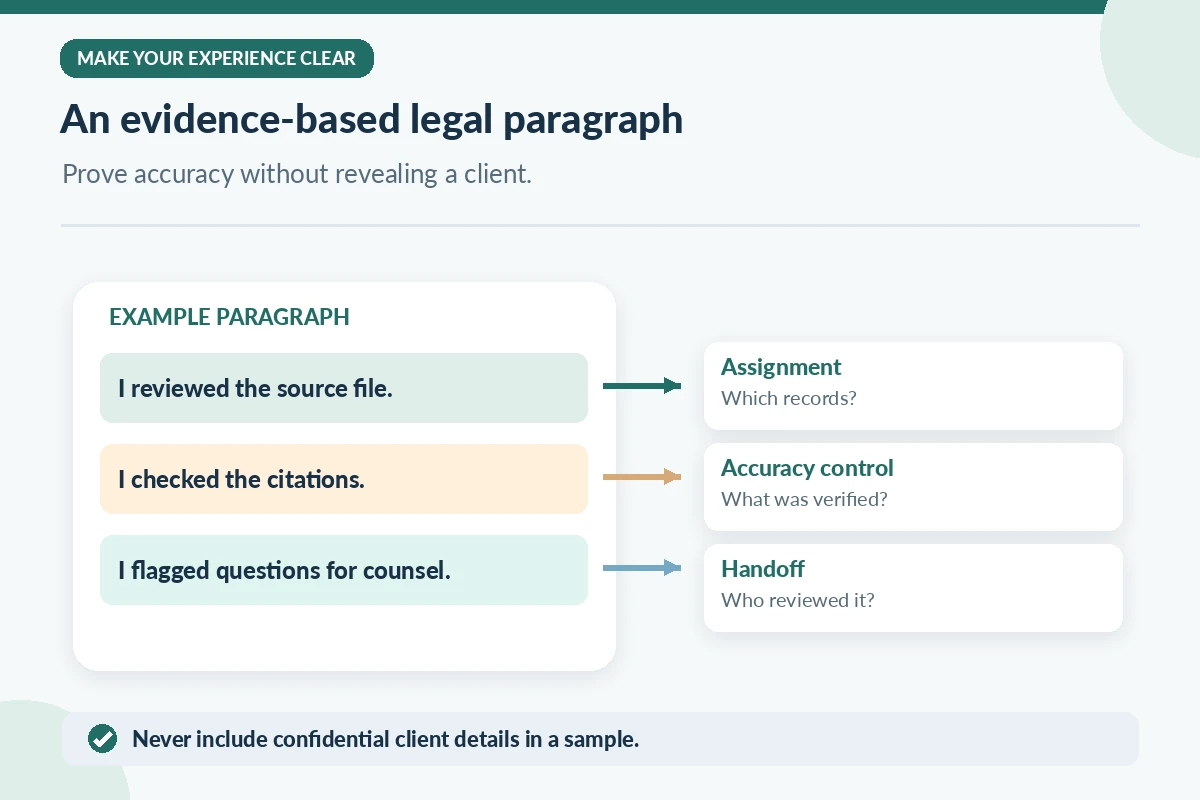
Map each important requirement to a work product you can describe without revealing confidential information. Examples include an index of records, a redacted research outline, a citation-checking process, or a calendar workflow under supervision. State who reviewed the finished work and what you checked before handing it off. These details make reliability concrete.
Choose Evidence That Matches the Actual Work
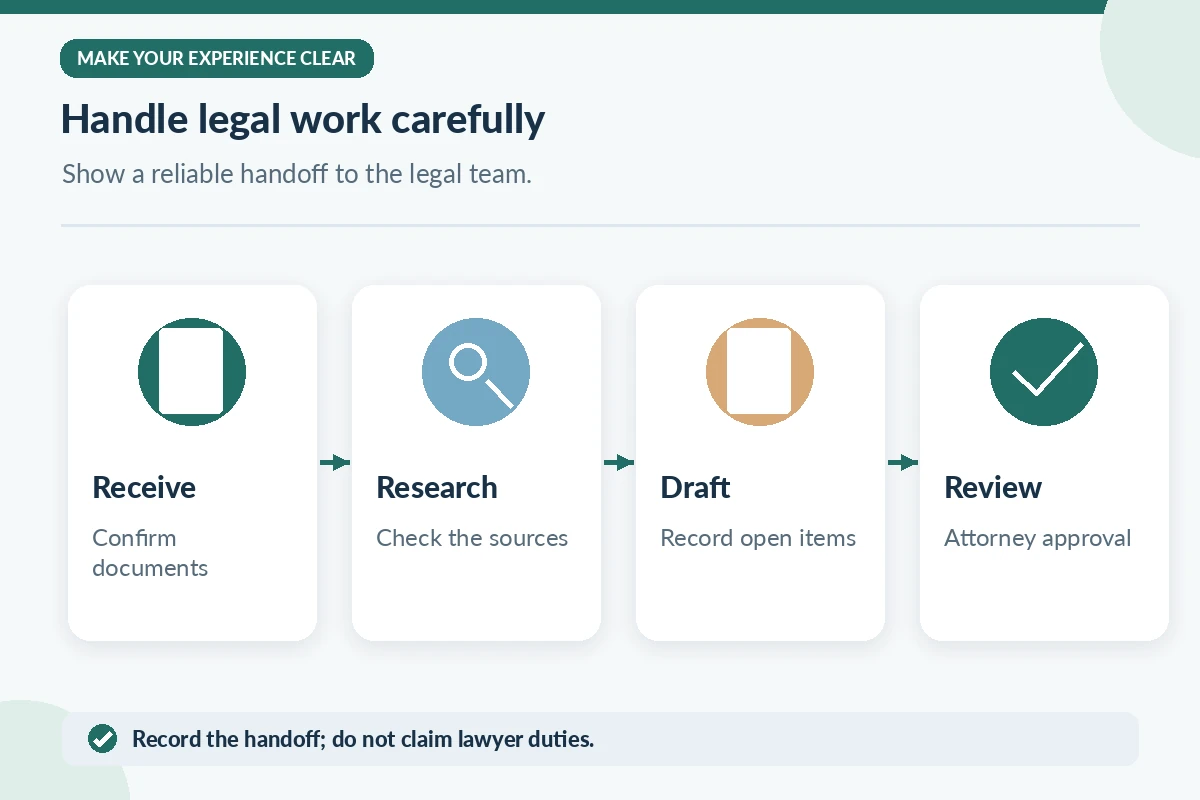
A good evidence statement has four parts: assignment, your action, the control that protected accuracy, and the handoff. For example, you might have reviewed a batch of public documents against a checklist and flagged missing dates to supervising staff. If that was classroom work, label it as a classroom exercise.
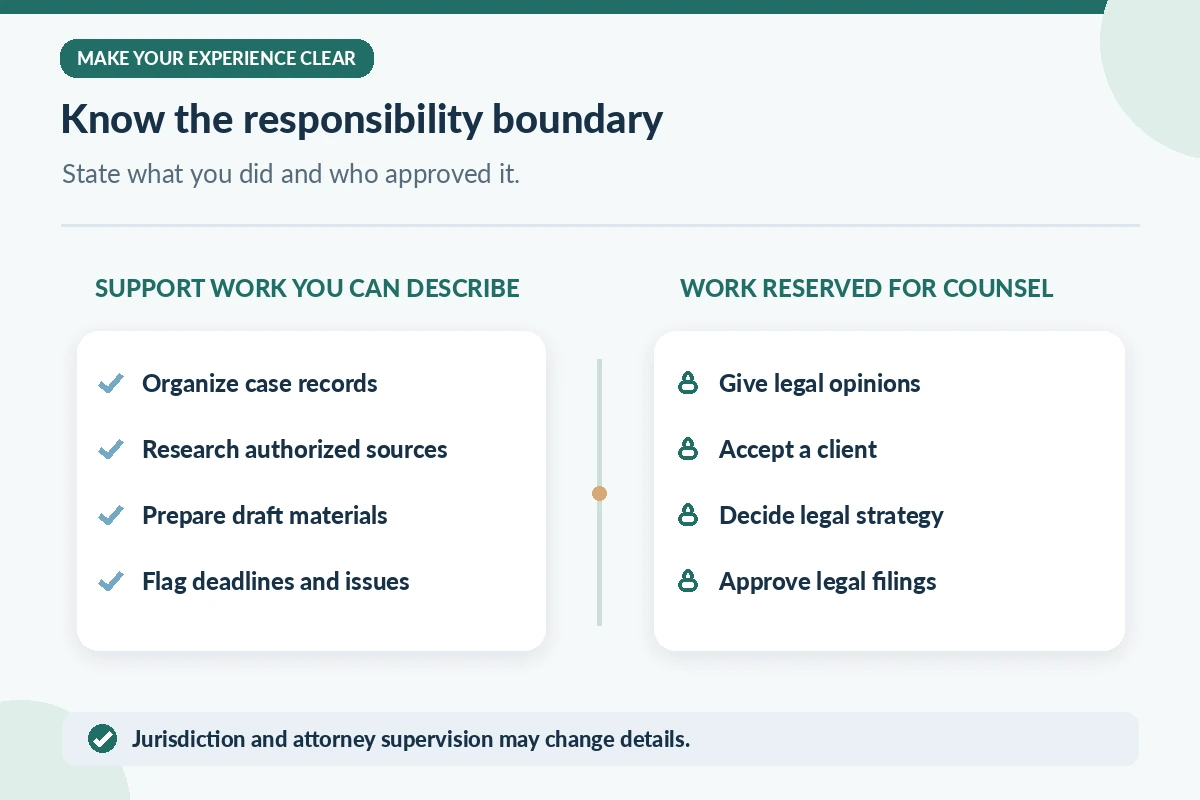
Keep the professional boundary visible. The American Bar Association explains that the provision of legal advice and other legal functions is regulated, and supervision matters. Rules vary by jurisdiction and role. A cover letter can discuss organizing case material or researching sources without claiming authority to decide a client’s legal position.
Build Four Short Paragraphs Around Real Evidence
Keep the structure legible: identify the role and your reason for applying; explain one matching skill with context; give a second specific example or detail your transferable experience; then close with an invitation to discuss the work. Penn Career Services advises applicants to select a small number of relevant experiences rather than copy a resume into letter form. USC’s career center similarly recommends a concise, job-specific business-letter structure. You can adapt the voice to the employer without sacrificing clarity.
The first sentence needs the precise role name, not a generic ‘any opening’ pitch. In the center, replace labels such as ‘hard-working,’ ‘passionate,’ or ‘detail-oriented’ with what you did and how you checked it. Use a result only when it is genuinely known. In the closing, state interest and thank the reader without assuming an interview is guaranteed. A one-page letter is a useful default for most nonacademic roles unless the employer says otherwise.
Read This Hypothetical Cover Letter Example Carefully
Hypothetical sample for practice only: The following scenario is not a real applicant, real employer, or verified achievement.
Dear Hiring Manager, I am interested in the paralegal position because your posting emphasizes organized records, research support, and careful communication. In a hypothetical paralegal certificate course exercise, I built a document index from provided training materials and checked citations in a draft research memo. I recorded open questions for instructor review rather than treating the exercise as client advice. In another hypothetical assignment, I used a calendar checklist to track staged deadlines and flagged missing documents before a simulated handoff. These exercises helped me practice accuracy and clear notes. I would be glad to apply those habits while following your firm’s procedures and attorney supervision. Thank you for your consideration. Sincerely, [Your Name]
The sample describes fictional course exercises, not actual casework. Applicants must replace the sample with their own school or workplace experience. If an interviewer asks for a writing sample, provide only public, anonymized, or specifically authorized material and comply with applicable confidentiality rules.
Adapt the Letter to Your Level of Experience
Entering the field: a real certificate course, legal clinic project, or records-based administrative job may supply relevant proof. Name the actual setting and limit your claim to tasks completed. General administrative accuracy can transfer to legal support, but it does not prove substantive law experience.
Experienced applicant: select an example from the employer’s practice area when possible. Describe how you maintained a docket, organized discovery, supported closings, or completed attorney-reviewed research, without disclosing client facts. Explain the workflow before quoting any performance figures.
Review the Claims Before You Press Submit
Do not write ‘I can practice law independently’ or imply that a paralegal signs or approves legal advice. The boundaries may differ under local law and regulated exceptions, so use the actual duties from the posting and your training. Also avoid invented litigation wins or assuming one software product is used by every firm.
Review names, dates, citations, and attachment permissions before sending. Make the subject and role title exact. If the job requests a writing sample, verify whether a public assignment or redacted document is accepted. Leave confidential case information out of both the letter and online portfolio.
Use a final matching check: compare the employer’s wording with the experience you can substantiate, and remove borrowed phrases that would misrepresent your contribution. Make sure the cover letter complements—not contradicts—your resume, dates, portfolio, and application fields. A credible explanation of scope is stronger than an exaggerated achievement. Save the file in the format requested by the employer; do not presume that a specific file type or wording guarantees screening software will favor it.
How We Research This Cover Letter Advice
This guide compares Penn Career Services cover-letter guidance, U.S. Bureau of Labor Statistics occupation guide, American Bar Association professional guidance. These references support general responsibilities and sound writing structure; they do not verify a particular employer’s hiring procedure, the success of any example, or an applicant’s real work history. We used invented examples clearly identified as hypothetical and avoided unverified salary, hiring, or selection claims. No affiliate relationship for the cited resources is confirmed; see our affiliate disclosure.
Related Guides
- Bookkeeper Cover Letter: Demonstrate Reconciliation and Record Accuracy
- Flight Attendant Cover Letter: Put Safety and Passenger Care First
- Data Scientist Cover Letter: Show Model Validation and Business Context
- Warehouse Cover Letter: Prove Accuracy and Dependability
- Entry-Level Legal Assistant Jobs: Files, Research, and Work Boundaries
Yes, when the posting names one. Connect it to verified training or experience without claiming expertise you do not have.
Yes. Label it as class, clinic, or hypothetical work and describe the actual source-checking steps.
Only if disclosure is authorized and any applicable court, client, employer, and confidentiality rules permit it.
No. Highlight those you have used and explain how you maintained accurate records. Learn the named tool if needed without claiming proficiency prematurely.
Do not imply authorization you lack. Describe your actual responsibilities and attorney review; jurisdictional rules and exceptions differ.