
Quick answer: A hospital job application should begin with the exact department and job title. A scheduling assistant, front-desk associate, patient transporter, and medical assistant may appear in the same careers portal but have different training, privacy, and credential requirements. Read the posting before answering any clinical-skill or certification question. Do not use experience with appointments or office records to claim medical authority you have not earned.
The sample responses below are hypothetical, not actual hiring outcomes. Exact fields, eligibility rules and processing steps depend on the employer and vacancy. Follow the real posting rather than treating these examples as a universal form.
Identify the Department and Role Boundaries
Healthcare employers may group administration, allied health, patient services, logistics, and clinical support under one careers menu. Choose the role from its actual responsibilities, not the hospital brand or the generic word “assistant.” The BLS medical assistant profile describes both administrative tasks, such as scheduling, and clinical tasks, such as vital-sign recording. Responsibilities vary by location, specialty, employer, and state law. A candidate applying for a scheduling role should not automatically list specimen collection or injections as skills. Confirm whether a patient-facing role requires a particular credential, supervised training, or prior practice.
Build a Credential Status Checklist
Write out your actual degree or certificate name, issuing organization, license status, expiration date, and any required current training before opening the portal. Read whether the hospital requires a credential at application, by hire date, or as a stated preference. Distinguish “in training,” “course completed,” “certification exam scheduled,” and “current certification.” Those are different claims. If the system allows only a current credential and you do not have one, use official support for clarification rather than entering an invented number. The posting and applicable state rules control eligibility; the application form cannot grant clinical authority.
Show Administrative Accuracy Without Patient Details
For registration or scheduling positions, highlight accurate data entry, appointment communication, forms, phone routing, queue management, and privacy-conscious record handling that you have actually performed. Do not include real patient names, case details, or screenshots from medical systems in a portfolio. If your background is in general office work, explain transferable practices such as verifying contact information and routing issues to the correct staff member. Avoid implying knowledge of a specific electronic health record platform if you have never used it. Your application should demonstrate care with information, not exposure of confidential examples.
Separate Clinical Assistance From Independent Decisions
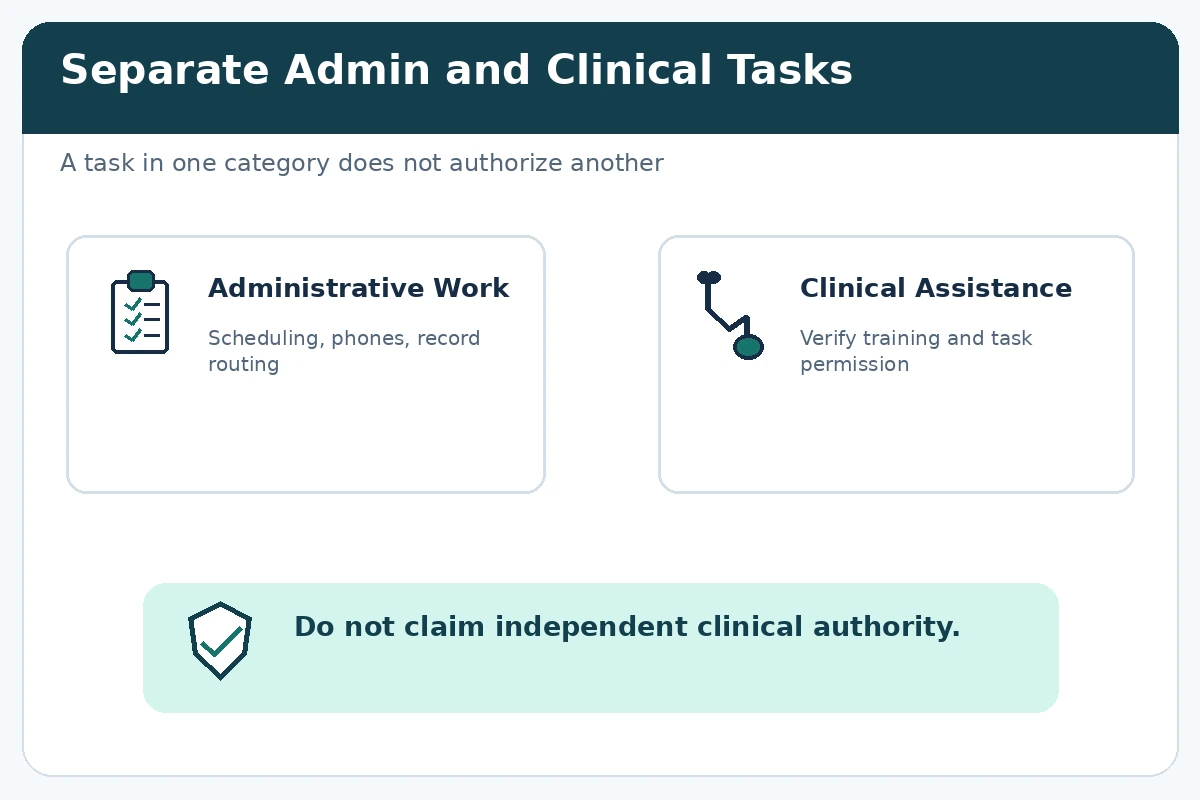
A medical assistant may help with certain clinical procedures within employer policy and applicable state rules; this does not make the applicant a physician, nurse, or other licensed clinician. The BLS notes that some tasks, including administering medications, are allowed only under relevant direction and law. When a job form asks about hands-on tasks, name only those you were trained and authorized to perform. For example, recording vital signs after supervised training is distinct from diagnosing a condition or deciding treatment. If you have only classroom practice, label it as simulation or supervised training, not independent patient care.
Prepare References and Work History Carefully
Hospital portals may ask for department, supervisor, shift, employment dates, certifications, and reason for leaving. Use actual dates and labels, including practicum or volunteer status where applicable. Ask references for permission, and prefer people who observed your accuracy and professional conduct. If you completed a placement, describe the supervising department and tasks without disclosing identifiable patients. Do not include screenshots of internal rosters or charts. Have a resume and accurate employment history on hand because an attachment may not populate every application field. A short, precise record is better than a vague claim to have “managed patient care.”
Use a Hypothetical Role-Match Statement
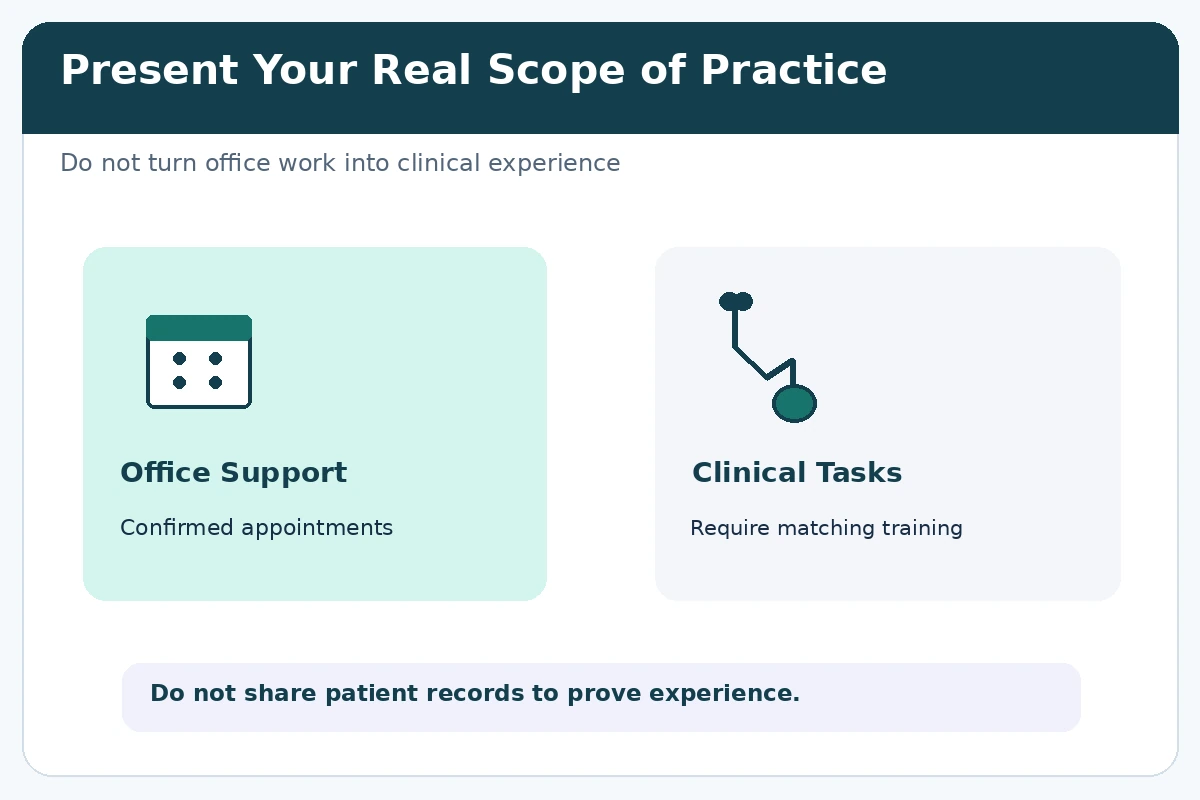
Hypothetical example: A candidate applying to a hospital scheduling desk has worked at a community reception counter. A truthful response is: “Confirmed visitor appointment times, updated a shared schedule according to instructions, and referred complex requests to designated staff.” It does not claim proficiency in hospital software or authority to make clinical decisions. If the candidate also completed a certified medical assistant program, that can be recorded under education and credential fields with its true status, but should not be used to claim work experience from a simulated class exercise.
Protect Personal Records During the Application
Start at the hospital’s official career pages and verify that any third-party recruiting system is linked from there. Do not transmit medical records, identification scans, or bank information to an unverified recruiter who contacts you unexpectedly. The FTC describes fake job offers that seek personal and financial details before normal hiring stages. Legitimate employers may conduct background checks or credential verification, but these should follow a documented process. If a form requests something unusual, stop and verify independently with human resources using a published number.
Check the Worksite, Shift and Scope Before Submitting
Confirm the actual hospital or clinic site, unit or department, weekend and night requirements, role title, and credential fields. Hospital systems can cover multiple facilities, and a vacancy’s location may not be the employer’s main address. Confirm realistic travel and shift availability before selecting a broad time range. Review attachment previews and check that your resume dates align with the online form. Save a candidate confirmation and the exact job number. A portal acknowledgment demonstrates receipt, not that credentialing, screening, or onboarding has been completed.

Prepare Focused Questions for Recruiting
If you are invited to discuss the position, ask what training the department provides, which system tasks are supervised, how privacy procedures are taught, and what credentials must be active before work begins. For clinical duties, request clarity on who delegates work and checks competency. For administrative jobs, ask about patient communication, record verification, and escalation procedures. Do not assume one hospital’s job description applies to another. If a listing is vague about clinical responsibility, it is reasonable to clarify before accepting work that could exceed your qualifications. The goal is a compatible role, not the maximum number of checked skills.
How We Research Online Application Guidance
This guide combines the checked primary and professional sources BLS Medical Assistant Tasks, CareerOneStop Application Tips, FTC Job Scam Guidance. Each source supports a defined issue, such as job duties, safe work, licensure, agency submission, or recruiting fraud; none verifies a particular open vacancy. The response examples are hypothetical and should be rewritten to match your actual experience. Our affiliate disclosure explains site relationships; no link here is presented as a confirmed affiliate referral.
Related Job Search Guides
- Civil Service Applications Online: Match Requirements and Documents
- Online Job Applications for Students: Match Class Hours and Relevant Evidence
- Hospital Jobs With No Experience: Separate Support Roles From Licensed Care
- Supporting Documents for Online Job Applications: What to Upload
- Online Job Application Assessments: Prepare Without Guessing
For suitable administrative postings, sometimes yes; check the actual job requirements and avoid claiming clinical skills you do not have.
No. Record completed training separately from the current status of any actual credential.
Not if they include private patient details or confidential employer records. Use sanitized, permitted examples instead.
Answer each item truthfully and seek official clarification when a field does not match the vacancy.
Some roles and employers have verification requirements; confirm the legitimate timing and method directly from the employer.