
Bank jobs with no experience may be accessible through teller or branch-support positions that train new hires, but a bank is not one uniform entry role. A teller may handle routine deposits and withdrawals under established controls; a lobby or service assistant may guide customers or handle nontransaction requests. Read the job duties, education requirements, and screening process before choosing where to apply.
The Bureau of Labor Statistics reports that tellers typically need a high school diploma or equivalent, may need to pass a background check, and receive training after hiring. That does not mean a beginner can independently approve unusual transactions, disclose account details, or bypass identity checks. The strongest first interview answer emphasizes accuracy, privacy, and asking the right person for authorization.
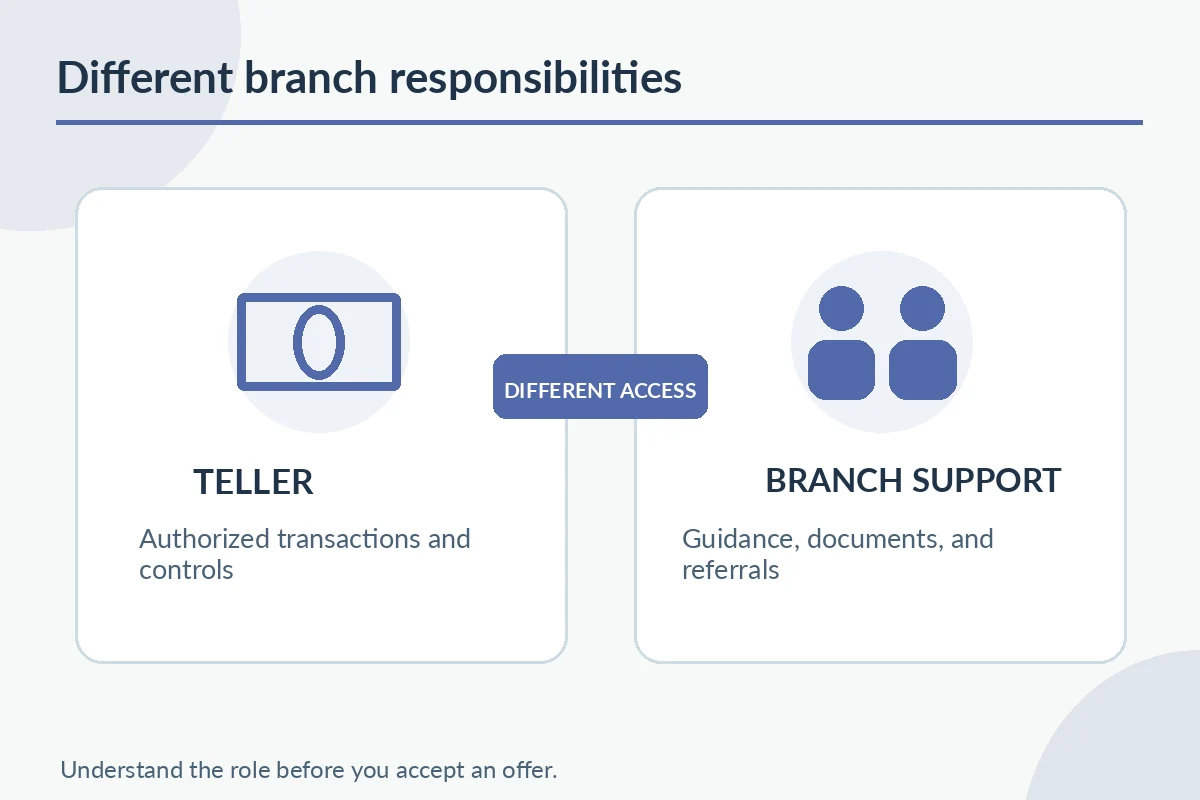
Separate tellers from other branch support positions
Teller roles generally focus on customer transactions such as deposits, withdrawals, and checks, as well as balancing work according to the bank’s procedures. Other branch roles may help visitors find the right desk, explain how to book an appointment, prepare permitted paperwork, or route questions to licensed or authorized staff. An advertisement for “universal banker” may combine a broader range of duties and should not be treated as identical to a basic teller opening.
Bank titles vary widely, so compare the actual required tasks, systems, and customer interactions. If the posting includes account opening, sales, loan discussions, or financial advice, ask what training, supervision, credentials, or registrations are required. Never claim you are permitted to recommend financial products just because you enjoy helping customers.
Learn about screening and on-the-job training
A bank may verify identity, employment history, education, references, or other information as part of its hiring process, depending on the role and applicable rules. BLS notes that some teller applicants may need a background check. Requirements are not identical across institutions. Ask the hiring team what the process involves and how they provide official instructions; avoid guessing about what information will be requested.
During onboarding, tellers learn institution-specific software, cash handling, customer verification, fraud awareness, and exception procedures. You can practice staying organized and checking basic calculations, but training controls are designed by the institution. Never imply that knowledge of a consumer banking app means you can safely operate a teller platform.
Treat identity verification and privacy as core duties
A customer may be friendly, impatient, or persuasive, but those qualities do not replace the bank’s identity and transaction requirements. A new worker should follow the institution’s approved steps and refer exceptions to authorized staff. If a caller asks for account details, do not improvise a response or share information through an unapproved channel. Access to data exists for work purposes only.
In a hypothetical interview scenario, you could answer: “I would follow the required verification process. If a customer could not meet it, I would explain the next approved step and contact the authorized employee rather than override it.” This answer illustrates how you would behave; it is not a claim that you have previously handled real banking transactions.

Find truthful evidence from other responsibilities
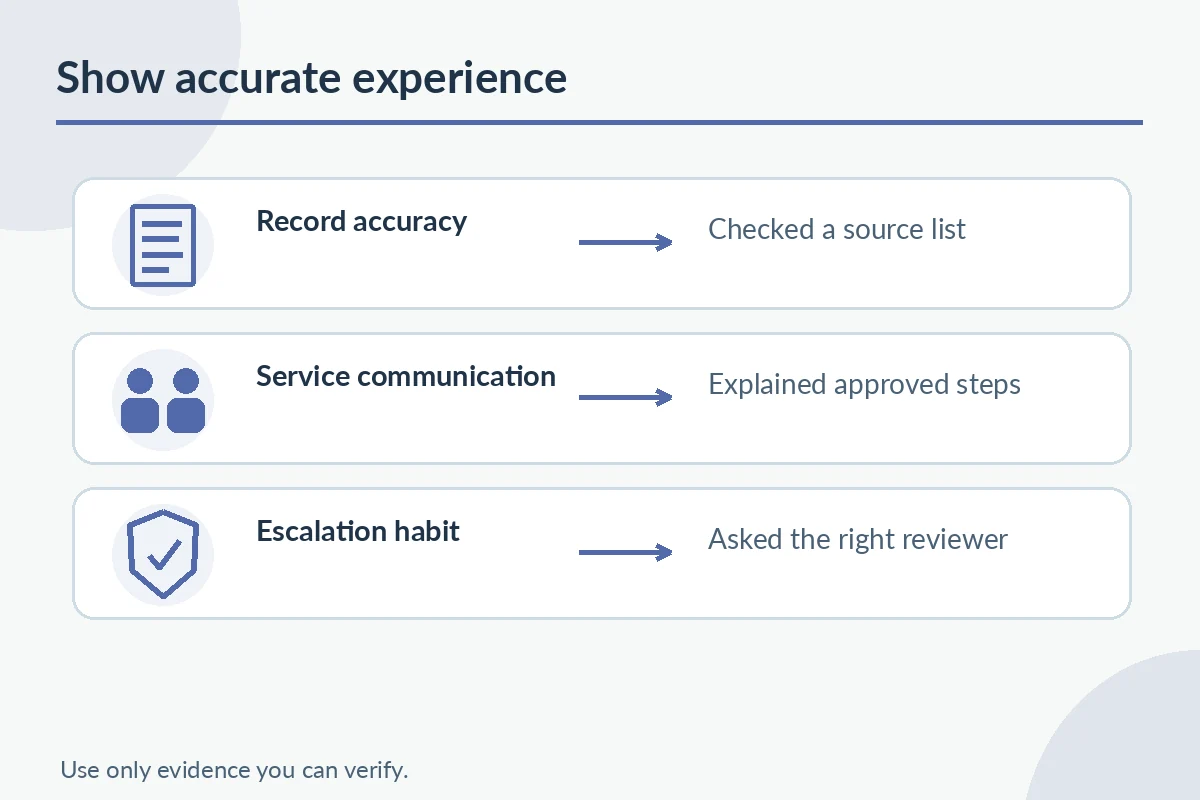
Service and accuracy examples can come from retail, school work, volunteering, appointment scheduling, or general office support. A candidate might have checked a supply log, explained a process to visitors, or maintained a confidential club list under instructions. Describe what you were responsible for and whether someone reviewed it. Avoid implying that handling cash at a fundraiser proves experience with regulated banking systems.
Illustrative resume example: “Managed an event sign-in table, checked attendance against a prepared list, and referred registration exceptions to the organizer.” Use it only if true. If you do not have a banking background, say so directly while emphasizing your ability to learn verified procedures. Your job history does not need fabricated cash totals or customer satisfaction percentages.
Ask about shifts, sales expectations, and decision rights
Different branches have different opening hours, staffing, and service models. Ask whether weekend coverage is required, how training shifts are scheduled, and whether the job includes cash drawer reconciliation. Some roles include sales or referral expectations; ask what is measured and which conversations employees are authorized to conduct. A title alone will not tell you what the day involves.
Clarify how exceptions reach a lead or manager and whether work is reviewed while you are learning. Find out which steps must be documented and what a new teller does when the system reports a mismatch. An employer should be able to explain its training approach without revealing private security procedures to an applicant.
Apply carefully and verify the hiring channel
Use an employer career page or a verified recruitment contact and record the job reference number. If an online messenger claims to offer a bank position immediately, independently verify that the person actually represents the institution. The FTC warns that scammers may misuse recognizable company names to request payments or sensitive details. Do not pay a recruiter to secure a branch job.
Prepare a short interview response built from three parts: a relevant real example, the accuracy habit it demonstrates, and the specific bank procedure you expect to learn. For instance, “I checked a shared inventory list at the end of each shift and flagged discrepancies. I would apply that same habit of checking and escalating while learning your teller controls.” This is credible without inventing teller experience.
How We Research First-Job Requirements
We reviewed BLS Tellers, BLS Customer Service Representatives, FTC Job Scam Guidance on October 29, 2026 to check occupation descriptions, entry training, and practical safety or hiring risks. These are U.S.-focused guides to role categories, not current vacancy advertisements; an individual employer may require additional qualifications or screenings. Illustrative scripts and résumé examples in this article must be replaced with your own true experience.
We do not treat advertised “no experience” as permission to bypass training, licenses, employer security, or privacy procedures. There is no confirmed paid placement, job referral, or affiliate arrangement in this article. For site-wide transparency, read the affiliate disclosure. Check a real listing and the appropriate official guidance before acting.
Related Guides
- Farm Jobs With No Experience: Compare Crop, Greenhouse, and Animal Tasks
- Railroad Jobs With No Experience: Compare Yard Roles and Safety Training
- Bank Teller Jobs With No Experience: Skills and Entry Requirements
- Cleaning Jobs With No Experience: Compare Sites, Shifts, and Safety
- Bank Teller Interview Questions About Accuracy and Customer Service
Some teller positions are entry level and provide on-the-job training, but education, screening and employer requirements must still be met.
No. Branch service, lobby support, customer assistance and teller transactions may have different responsibilities and access.
It may. The BLS notes checks can be part of teller hiring. Ask the employer for its role-specific requirements.
Yes, if it is real and described precisely. Do not equate a fundraiser cash box with bank transaction or security training.
Follow the bank’s official verification process and involve authorized staff rather than making an exception yourself.