
Call center experience should show what you did with a customer inquiry after you answered the call: listened, verified the permitted information, documented the issue, followed an approved process, and transferred unresolved matters to the right person. That chain can be more useful on a resume than an unsupported claim of ‘excellent customer service.’ List your actual job title and dates, then write bullets that reflect the channel, systems, and authority you had. The examples here are hypothetical and deliberately avoid real account details, invented satisfaction scores, and claims that every case was resolved.
Identify the support channel and actual work type
Start by distinguishing inbound service, outbound follow-up, appointment scheduling, order questions, and technical troubleshooting. These can occur in one contact center, but they do not imply the same training. O*NET describes customer service representatives as employees who answer questions, record contacts, and refer unresolved grievances. Its occupation description is a useful vocabulary check, not evidence that you personally handled every possible case. Describe the work queue or channel you supported without revealing restricted customers or internal call-routing rules.
A candidate who read shipping status and opened tickets should not claim they fixed computer systems. Someone who helped customers navigate a published policy should not say they changed that policy. If you used email and chat along with phone calls, mention each only when you have hands-on experience. Specific channels are helpful because employers may hire for messaging, voice, and back-office case processing separately.
Turn customer conversations into verifiable records
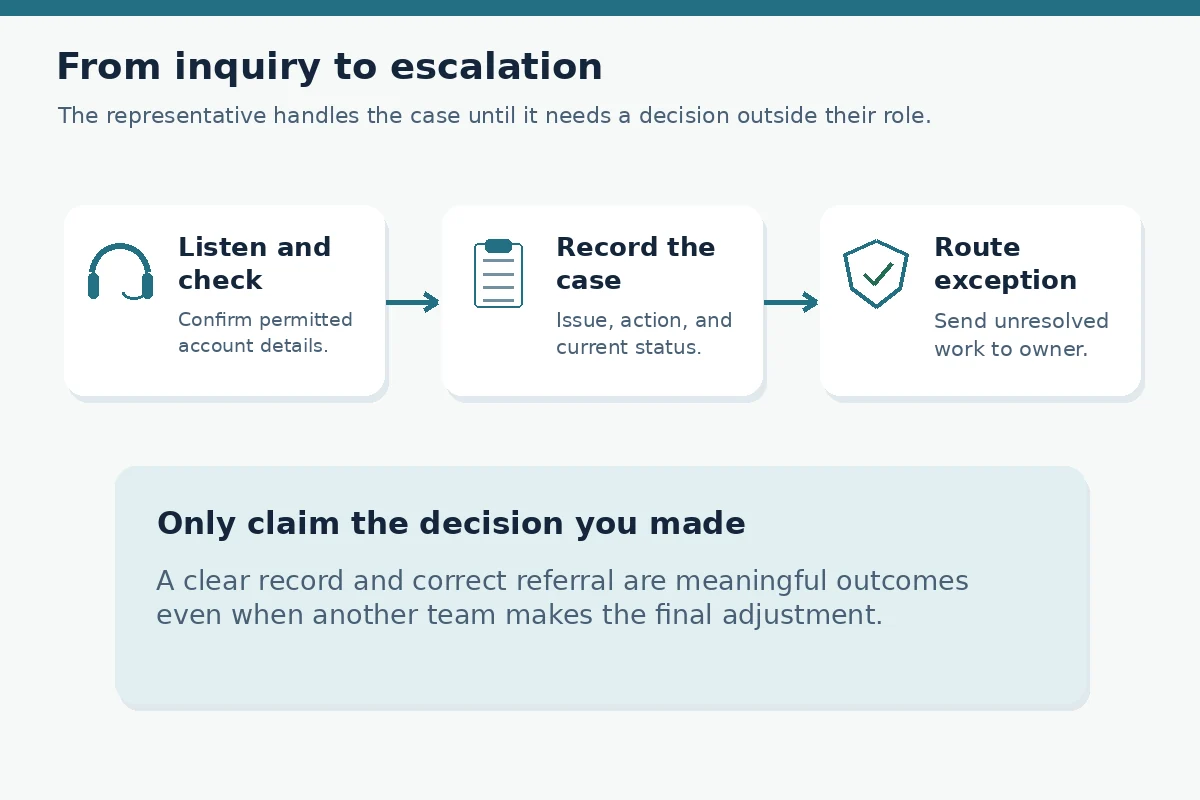
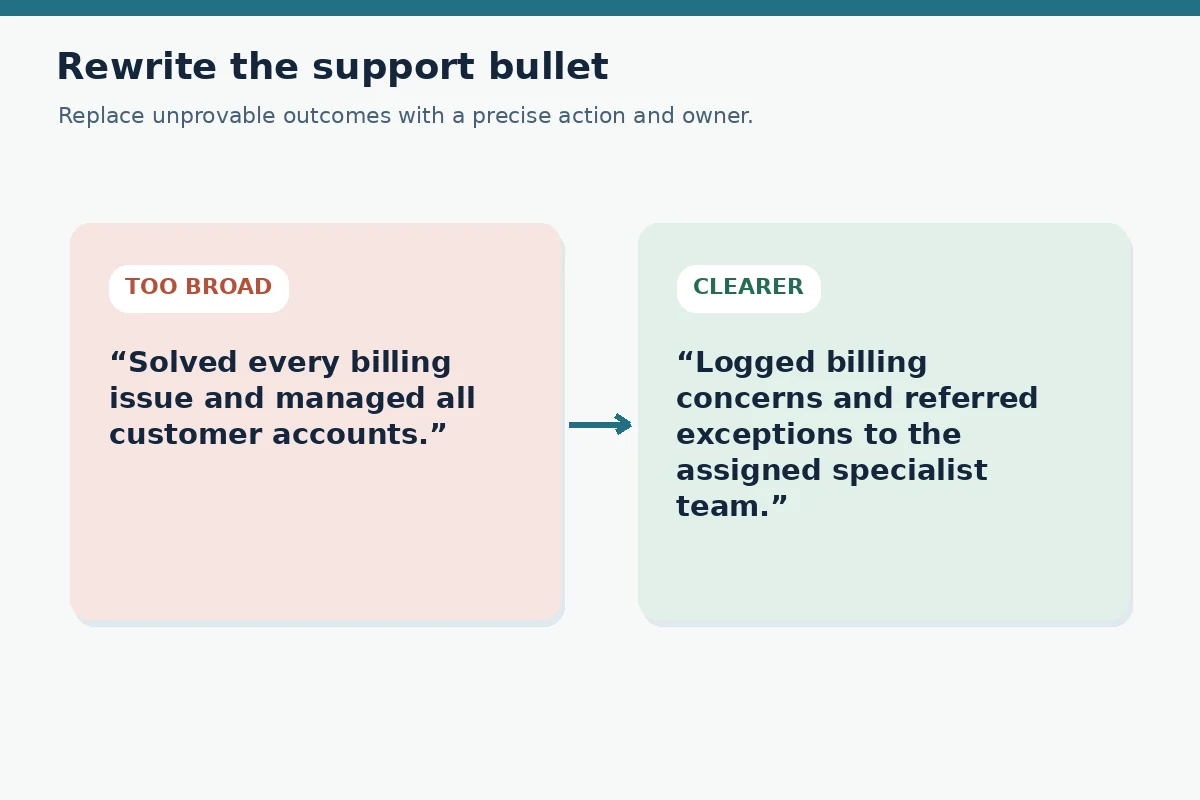
A strong call center bullet records the service cycle: identify the inquiry, ask permitted questions, check the relevant information, document the steps, and communicate the next action. You might write, ‘Recorded customer billing questions in the ticket system and routed unresolved disputes to the billing team.’ This communicates tool use and handoff discipline without implying a billing adjustment was made. If you completed follow-up after the transfer, say how you monitored the case within your assigned role.
Collect evidence privately from memory or personal notes that do not contain customer data. Useful specifics include whether you used a CRM or service queue, drafted case notes, reviewed knowledge-base instructions, or documented repeat contacts. Never paste caller names, account numbers, call recordings, health details, passwords, or protected transaction histories into a resume or portfolio. An employer can evaluate your communication and process skills through anonymized process descriptions.
Show when you solved and when you escalated
The phrase ‘resolved customer issues’ can be true for a routine address update but misleading for a payment dispute that required a supervisor. Describe the split. A representative may provide information and complete authorized changes; a specialized team may investigate complaints and approve exceptions. Good wording uses ‘answered,’ ‘verified,’ ‘documented,’ ‘coordinated,’ or ‘escalated’ for the appropriate step. If you stayed on a call while a lead took over, describe your support rather than claiming the final decision.
Read your old training documents only when you are legally permitted to retain and use them, and never quote confidential operating procedures. You can still tell an interview story at the level of task and outcome: a customer was confused about a published condition, you confirmed the account category, provided the approved explanation, and referred an exception. Your resume does not require the customer’s identity or a private transcript.
| Task to describe | Evidence to check | Boundary to respect |
|---|---|---|
| Answered a routine inquiry | Permitted knowledge-base guidance | Do not claim policy authority |
| Updated a customer record | Actual verification and approved change | Never expose personal data |
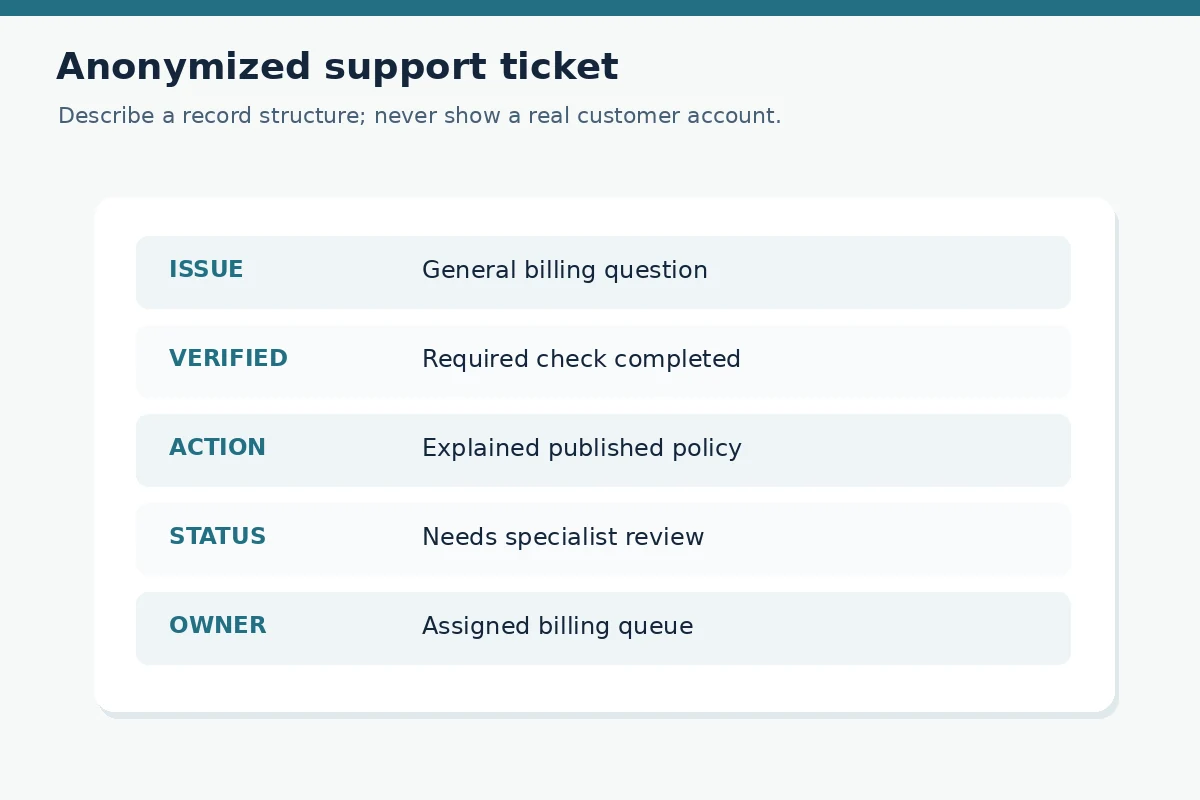
| Created a case note | Issue, action, status, next owner | No screenshots of real accounts |
| Escalated a dispute | Correct routing and handoff | Do not claim specialist approval |
Choose metrics you can defend
Call centers often measure handle time, quality reviews, first-contact resolution, queue volume, and customer feedback. These metrics have precise meanings that may depend on your employer’s rules. Do not write ‘95% resolution rate’ because it appears in an online template. If you know a documented score that you are allowed to disclose, define what it measures and the period. Otherwise, describe the work accurately, such as maintaining structured case notes during high-volume inbound shifts.
Numbers without a basis can create risk in interviews. ‘Managed 100 complex cases per hour’ or ‘perfect satisfaction’ invites scrutiny and may be unrealistic. A better candidate might cite experience with simultaneous chat conversations only if that was their actual workflow, or mention working across phone and email queues when assigned. Factual context is stronger than an invented KPI, particularly in roles involving financial or personal information.
Build a practical support entry
Hypothetical example — Customer Support Representative | Service Desk Co. (fictional) | Tulsa, OK | March 2023–July 2025. ‘Answered inbound product and account questions, checked approved reference materials, and explained next steps in plain language.’ ‘Logged inquiry details and actions in the assigned CRM queue so another agent could continue the case.’ ‘Escalated billing disputes and access concerns to designated specialists rather than making unapproved account changes.’ The fictional employer is used only to show format.
If the target role is office administration, lead with documentation and follow-up rather than call speed. If the target is customer support, lead with verified inquiry handling and calm explanations. If you transferred into a specialized queue, consider a separate dated title only if the assignment genuinely changed. Avoid claiming ‘manager’ or ‘team lead’ because you occasionally assisted a colleague; coaching and formal performance supervision are different activities.
Avoid common wording traps in contact-center resumes
‘Handled customer accounts’ is broad enough to suggest unauthorized access; clarify whether you viewed permitted details, updated information with verification, or simply recorded a request. ‘Solved technical incidents’ should be reserved for actual technical work with the required access. ‘Developed policy’ is inappropriate if you followed an existing script. ‘De-escalated difficult calls’ can describe tone and listening, but it should not imply you prevented a measurable loss unless that outcome is supported.
Customer confidentiality should appear as responsible behavior, not as a boast about private data. For instance, ‘Followed identity-verification steps before discussing account details’ is meaningful if true; ‘accessed confidential records to help customers faster’ may suggest poor controls. Rewrite any bullet that depends on naming a caller or showing a screenshot of an account. Keep the sentence easy for recruiters outside the industry to understand.
Audit the entry against a real vacancy
Review whether the job needs case documentation, multi-channel support, phone communication, or specific account changes. Order your bullets by the duties you can substantiate, not the most impressive-sounding keywords. Check your date range, full job title, employer name, and location or remote arrangement. Match the resume with the factual employment history you would enter on the application. If you worked through an agency, identify the employing relationship accurately.
Finally, test each bullet with a follow-up question: What did you verify? Where did the case go? What decision was yours? What remained with a lead? If you can answer without consulting private customer data or giving away internal procedures, the bullet is probably specific enough. Your experience should show reliable service work and sound escalation decisions rather than pretending you independently controlled the entire customer outcome.
How We Research This Resume Advice
We compared task descriptions for this occupational setting with the federal O*NET career database, then used CareerOneStop guidance for clear work-history entries. A typical occupational task is not proof of what any individual applicant did. Confirm your own duties, training, and employer-specific limits before adapting any example. Reference sources: O*NET. CareerOneStop. BLS or OSHA. These are informational sources, not endorsements or hiring promises. Read the site affiliate disclosure for relationship transparency.
More Resume and Cover Letter Guides
Yes. Accurate notes, communication, follow-up, and routing to the correct team can transfer to office support when genuinely performed.
Only when the figure is reliable, understood, and appropriate to disclose. Concrete tasks are sufficient without a KPI.
Yes, if you actually used it and can describe the functions you performed. Avoid confidential screens or customer records.
State what you documented and which designated team received the case. Distinguish your handoff from the specialist’s final decision.
Following authorized guidance, listening carefully, recording accurate information, and identifying exceptions are legitimate responsibilities.