
When choosing between two entry-level job postings, compare the daily work, mandatory qualifications, actual training arrangements and schedule before deciding where to apply. Do not rank the positions simply by title, a headline pay claim or the word “entry level.” One may offer supervised routine tasks while the other expects independent customer decisions, a specialized credential or shifts you cannot work.
This comparison is for the application stage, not for accepting a formal offer. You may know very little about benefits, advancement or manager support until you ask. Use a side-by-side worksheet to separate verified posting details from questions requiring employer confirmation. BLS descriptions are useful for understanding typical occupations, but individual vacancies and employers determine the real assignment.
Copy the Actual Tasks From Both Postings
Open the two employer descriptions and record only the work activities, not the persuasive adjectives. A hypothetical store role may emphasize shelf replenishment, item location and shift handoffs; an office assistant opening may emphasize appointment records, routine inquiries and document filing. Neither is automatically better. The question is which tasks you understand, are prepared to learn and can describe with a truthful example.
Keep a note of the work setting and who interacts with the role: customers, supervisors, equipment operators or internal teams. If a vacancy uses a broad label such as “associate,” the actual task list matters even more. Do not infer that a task is low-risk just because it looks simple on a website. Handling cash, medical data, dangerous equipment and restricted access can demand specific procedures or authorization.
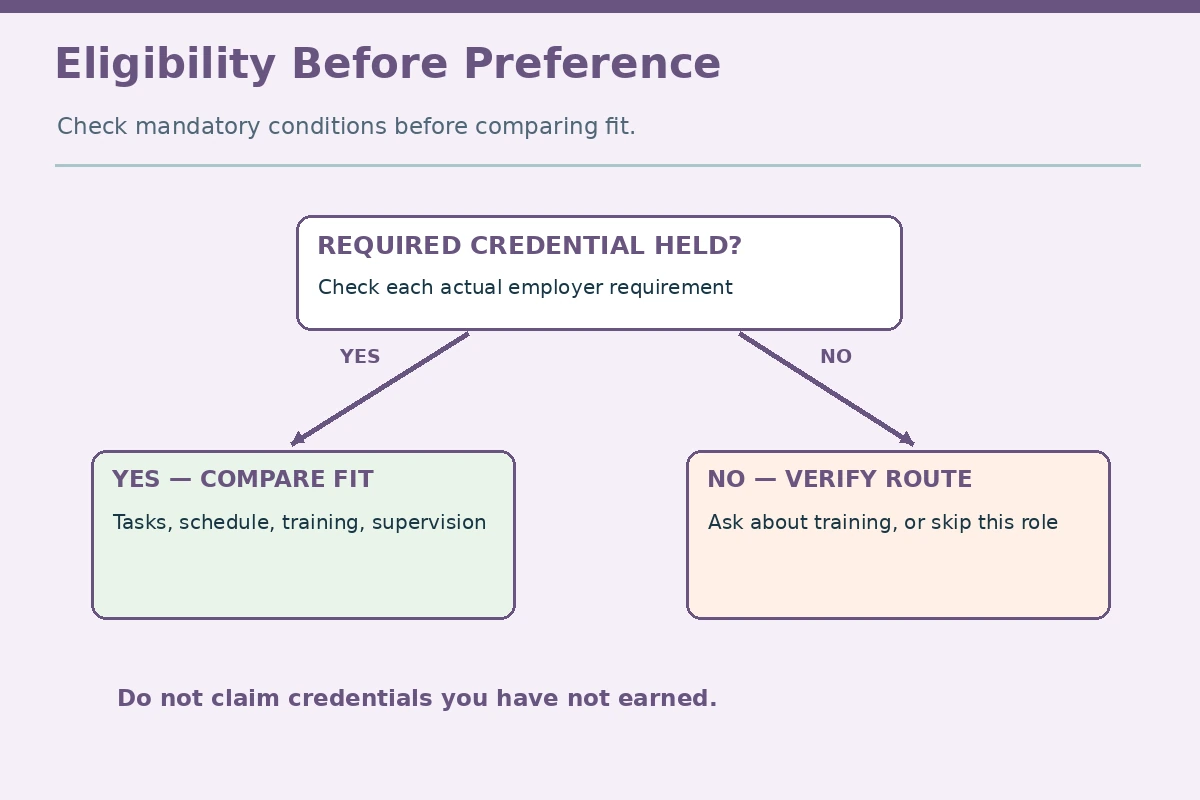
Separate Mandatory Qualifications From Preferences
Put each requirement into one of three groups: confirmed mandatory, listed as preferred, or unclear. A current professional license, specific work authorization or mandatory equipment qualification is not something to pretend you hold. A preferred tool may be trainable, but the employer decides. If a listing says “experience with spreadsheets,” note whether you used them for real work, a class or an exercise and how far that experience goes.
Compare a listing against your evidence rather than a generic score. You might meet the schedule and two core duties for a position but still be ineligible because of an explicit credential. That matters more than a high overall impression. If wording is ambiguous, save one targeted question for the official recruiter. Do not submit fictional certificates, change dates or label uncompleted training as earned.
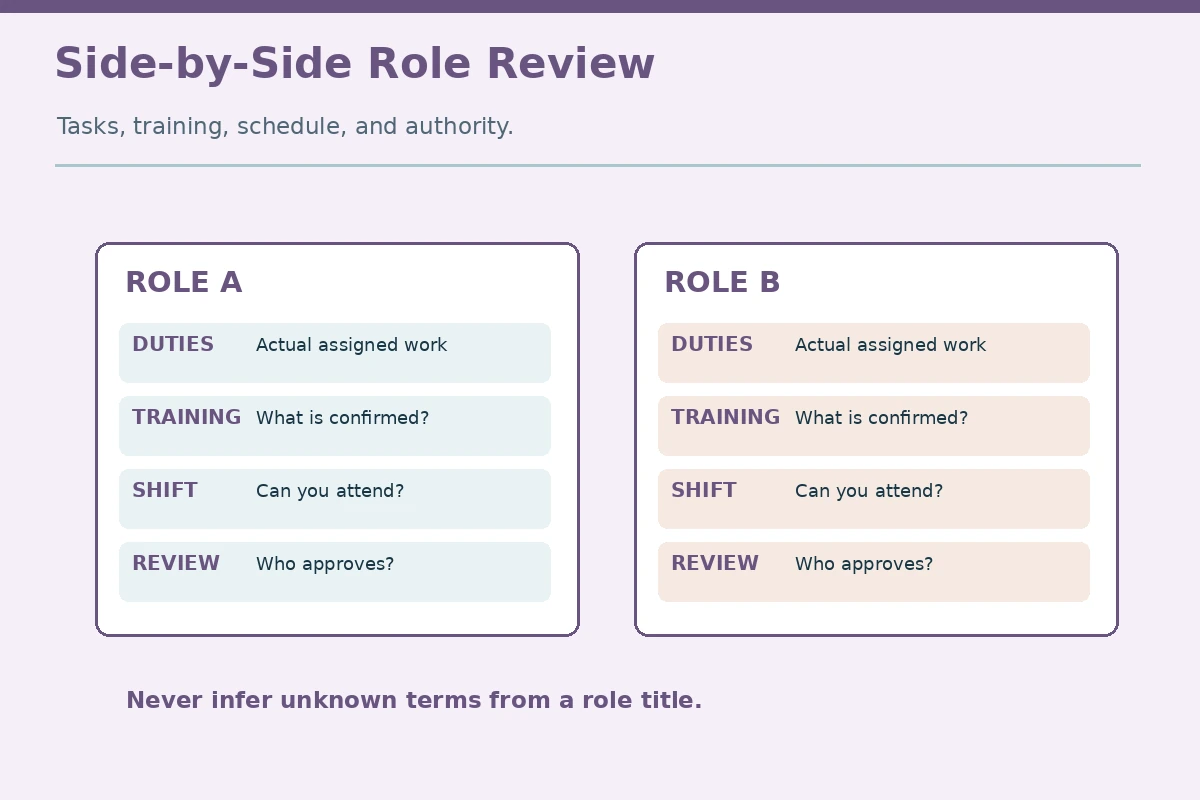
| Check | Role A | Role B |
|---|---|---|
| Core tasks | Actual routine actions | Actual routine actions |
| Training | Confirmed, unclear, or absent | Confirmed, unclear, or absent |
| Schedule | Shift and travel details | Shift and travel details |
| Authority | Supervisor approvals | Supervisor approvals |
Investigate What Training Actually Includes
Training can mean a formal paid orientation, brief shadowing, an online module or the expectation that you already know the job. The label “training provided” gives little detail by itself. Ask what is taught, who supervises tasks at the start, which systems are used and how readiness is assessed. Some openings may involve paid work while learning; others describe separate external qualifications that applicants must already possess.
Avoid paying for a private course merely because a listing contains a software name. First confirm whether the employer requires a recognized qualification and whether another route exists. The BLS Occupational Outlook Handbook distinguishes typical entry education and on-the-job training by occupation, but an employer’s specific training plan still needs confirmation. A realistic first-job choice should have a safe, authorized way to learn unfamiliar work.
Measure Schedule Fit With Real Constraints
A shift advertised as “flexible” may still require weekend, evening or holiday coverage. Record the actual location, commute feasibility, start window, travel demands and any rotating schedule requirements. A role you cannot reliably attend is not a useful application just because it sounds appealing. Do not assume remote or hybrid arrangements apply to every employee or every day unless the employer clearly states the conditions.
Use a weekly availability grid that includes class, caregiving and other fixed commitments, without exposing personal details in an application unnecessarily. Mark conflicts as must clarify rather than silently assuming accommodation. If the job mentions variable hours, ask whether there is a minimum expected availability or a typical notice period for schedule changes. These practical questions are especially valuable for a first job.
Check Responsibility and Supervisor Review
A beginner may be comfortable answering routine questions but not approving exceptions. Compare which tasks are performed under instruction and which require independent judgment. An ad that says “resolve all customer issues independently” may not fit the same level as one that says “route complex issues to a lead.” Those phrases need context, so ask about support rather than diagnosing the employer from one sentence.
Identify the owner of risky actions in either role. If a posting includes lifting equipment, regulated transactions, patient contact or access to protected records, verify who provides safety instruction, how authorization works and which tasks you would not do alone. A good role comparison does not reward the job that offers the most responsibility at any cost. It asks whether the training and authority match the responsibility.
Record What You Know and What You Need to Ask
Use one row each for daily duties, schedule, requirements, training, supervision, application channel and open questions. Add a source column: job posting, official employer page, recruiter clarification or not yet verified. This prevents a marketing statement from becoming a confirmed condition in your notes. Avoid inventing a rating or an expected response probability; there is no evidence that a particular worksheet score predicts an offer.
For example, “training discussed in recruiter email” is different from “official posting says paid training.” Note which one you have and whether the email address was independently verified. If there is no direct information about health benefits or advancement, leave the field unknown. A clear unknown is more helpful than a guess disguised as a conclusion, particularly before you have spoken with the employer.
Choose the Next Action, Not a Guaranteed Winner
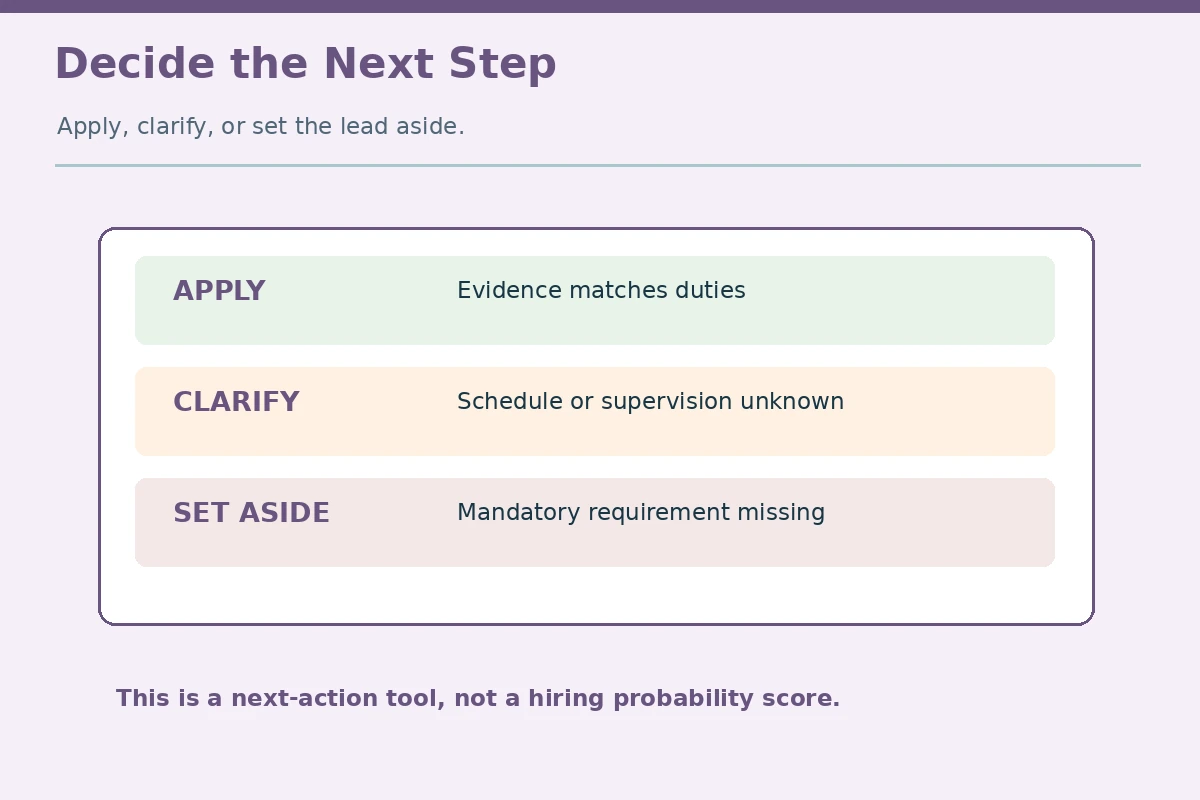
After checking the two roles, decide whether to apply, ask for clarification, or set aside each listing. It is reasonable to apply to both if you honestly meet their requirements and can handle the process, but tailor the evidence and avoid duplicate submissions. It is also reasonable to prefer the vacancy with a clearer training pathway even if its title sounds less senior. Record your rationale in ordinary words, not a made-up precision score.
If neither position fits, update your search criteria using the duties and schedule you learned about. Try a related title or a different employer rather than lowering necessary safety and credential standards. The comparison is successful when you can explain your next step: “I can perform these tasks, I must ask about this schedule, and I know which requirements I cannot claim to have met.” That is a better basis for a first application than optimism alone.
How We Research Beginner Job Search Advice
Checked on 2026-11-14: BLS: Occupational Profile Guide — BLS occupational profiles compare duties, entry-level qualifications, training and similar occupations.; CareerOneStop: Find Career Ideas — CareerOneStop offers interest, skill and work-value steps for narrowing suitable career directions.; Penn Career Services: Diversify Search — Penn Career Services recommends a mix of broad job boards, target employers and narrower channels.; FTC: Verify Job Leads — FTC warns job seekers to verify employers independently and never pay for a promised job.. We compared this topic with the supplied WordPress post-title exports and previous JobAsk draft subjects, and reviewed search results for the specific intent. Examples, job leads and worksheets in this article are hypothetical and not open vacancies, predicted interview outcomes or guarantees. The exact requirements, hiring channels and work arrangements must be verified with the real employer. JobAsk does not claim a paid employer or referral partnership. See our affiliate disclosure.
Related Job Search Guides
You may, if you meet each posting’s mandatory requirements and can describe a truthful fit. Track each application separately.
No. Ask what training exists, who supervises it and which qualifications are expected before the first shift.
Compare verified duties, schedule, training and requirements first; mark compensation unknown and clarify through official hiring channels.
Yes for relevant tasks you actually completed, clearly labeled as school, volunteer or personal work.
Contact the verified recruiter with a focused question rather than assuming that a mandatory condition can be waived.