
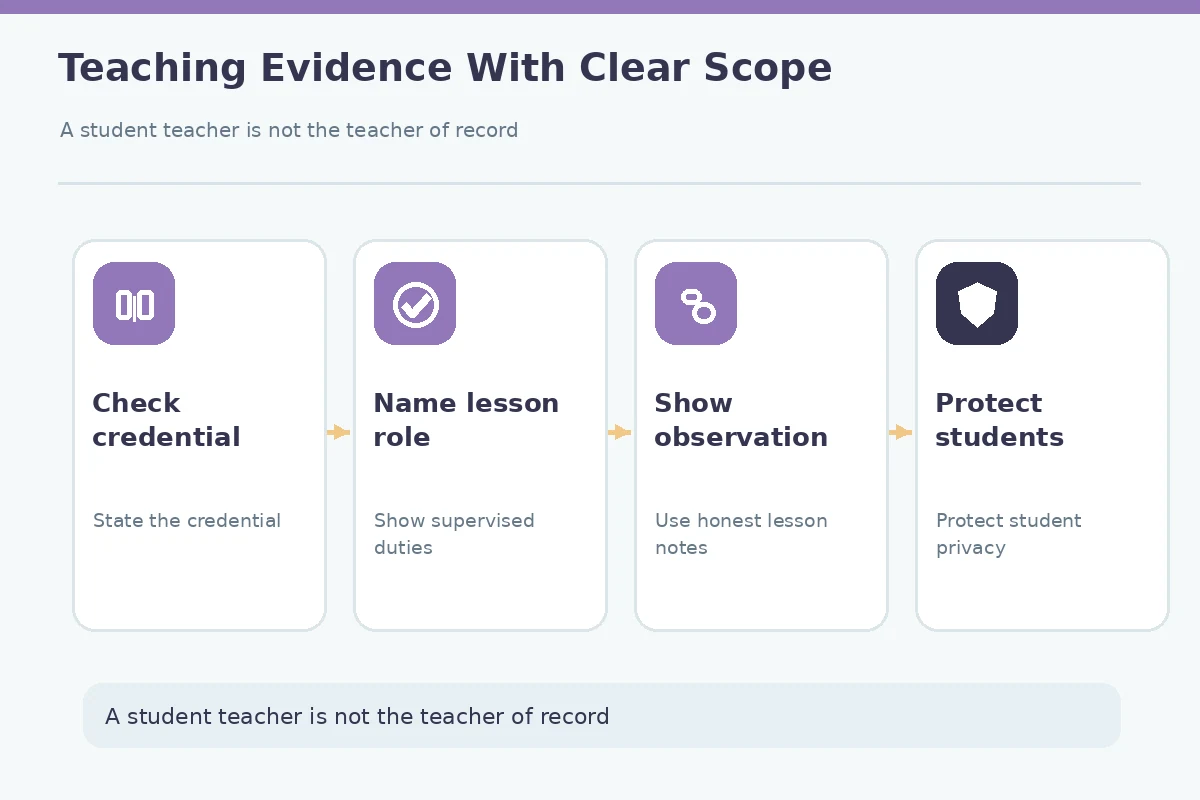
An elementary teacher resume summary should tell a school what grade-level preparation, teaching responsibilities and classroom evidence you can truthfully support. If you hold a current state credential, state its accurate title and coverage; if you are a student teacher or teaching assistant, describe that role instead of calling yourself the teacher of record. Follow with a real instructional example—such as adapting a lesson, collecting classroom observations or communicating with families under supervision—without inventing academic growth percentages.
These writing examples are hypothetical, not verified real candidate outcomes. Adapt only tasks, qualifications and tools that your own history supports. A professional summary is optional; CareerOneStop suggests a brief, role-relevant section rather than generic inflated descriptions. Compare more writing techniques in JobAsk’s resume resources.
Begin With the Job You Can Actually Perform
A clear summary ties the job opening to your documented scope. Mark the vacancy’s required duties, then note which ones you personally performed or practiced. If you only observed a task or helped under supervision, describe it that way. Use the employer’s terms when accurate, but avoid copying responsibilities you have never held. The UC Berkeley resume guide recommends choosing accomplishments that address the employer’s real needs.
Start With Accurate Teaching and License Status
Public-school teaching usually involves state-specific licensure or certification, while private-school requirements can differ. The BLS elementary teacher profile describes the distinction and why state requirements matter. Identify the state and grade coverage only if your real credential records support it. If your license is pending, describe it as pending rather than current. Never copy a desired school’s teaching license name into your summary without holding it.
Distinguish licensed classroom teacher, supervised student teacher, substitute, paraprofessional and after-school tutor. These roles can all provide useful evidence, but they do not convey identical authority or student-contact responsibilities. For each posting, confirm the grade assignment and qualifications before deciding which first sentence fits.
Describe One Real Lesson Design Decision
A helpful teacher summary can name curriculum planning, adapting a teaching sequence or preparing materials, but it should show your role. For example, a student teacher might prepare a guided-reading activity under a mentor’s approval. That is valid evidence when true; it does not establish that they independently selected school-wide curriculum. Specify the subject, type of learning activity and evidence you observed, without turning the summary into a full lesson plan.
Use a lesson-evidence mini-map: learning objective, your preparation, what pupils were asked to do, and how you checked understanding. A resume summary generally needs only the first two or three pieces, while a work-history bullet supplies more detail. If you discuss assessments, use your own documented methods rather than inventing a standardized test-score improvement.
Show Classroom Management Without Overclaiming
Classroom management can mean establishing procedures, redirecting students, supporting transitions or collaborating with a licensed mentor. Describe specific approaches you actually used and, when relevant, who approved them. Claims such as “eliminated behavior problems” are not credible without evidence and may also oversimplify student needs. A genuine example of posting routines and adjusting seating arrangements under school guidance is more concrete.
Do not share identifying student stories, educational records or photos as proof. Replace a story with an anonymized description of the teaching process, and respect the school’s information policies. A district’s requirements may be different from another district’s, so do not present one classroom approach as a mandatory practice across the United States.
Connect Family Communication to Your Actual Role
Teachers communicate with families, school staff and support specialists, but a student teacher may send messages only through or with a mentor. Identify whether you drafted newsletters, prepared family materials, conducted meetings, translated approved information or merely observed. Do not claim independent responsibility for individualized education plans, clinical assessment or protected student records unless your real duties and qualifications establish that scope.
If parent communication is central to the posting, the summary can mention clear updates on classroom routines or cooperative planning, provided the claim is verifiable. Use the word “supported” when your position was supervised. Avoid copying private family feedback into an application or portfolio.

Use an Evidence-Based Summary for Your Career Stage
A beginning teacher may lead with relevant preparation, supervised lessons and credential status. An experienced teacher may lead with grade bands, subject expertise, curriculum work or real team responsibilities. Both should tailor evidence to the posted role. CareerOneStop’s top-of-resume guide recommends a targeted optional summary rather than a string of generic personal qualities.
Ask whether every phrase earns its space: “passionate lifelong educator” is not as informative as the actual grade levels, content areas and lesson responsibilities you can document. If you have several certifications, use the most relevant accurately titled credential; keep the others in a separate section with their correct status.
Write a Sample That Preserves Teacher-of-Record Boundaries
Weak: “Certified elementary teacher who raised reading scores dramatically,” when the writer only completed an observation practicum. Better for a hypothetical supervised candidate: “Elementary education student teacher who planned small-group literacy tasks and used mentor feedback to adjust instruction; preparing for state licensure.” This is a model of honest wording, not a real individual’s reported achievement.
For a licensed experienced teacher with real records, a different summary could mention documented curriculum planning or grade-level collaboration. Do not borrow fictitious test results from templates, and do not imply that a credential application is the same as approval. You can still show preparedness by presenting real lesson artifacts that your institution allows you to share.
Audit Credentials, Classroom Evidence, and Privacy
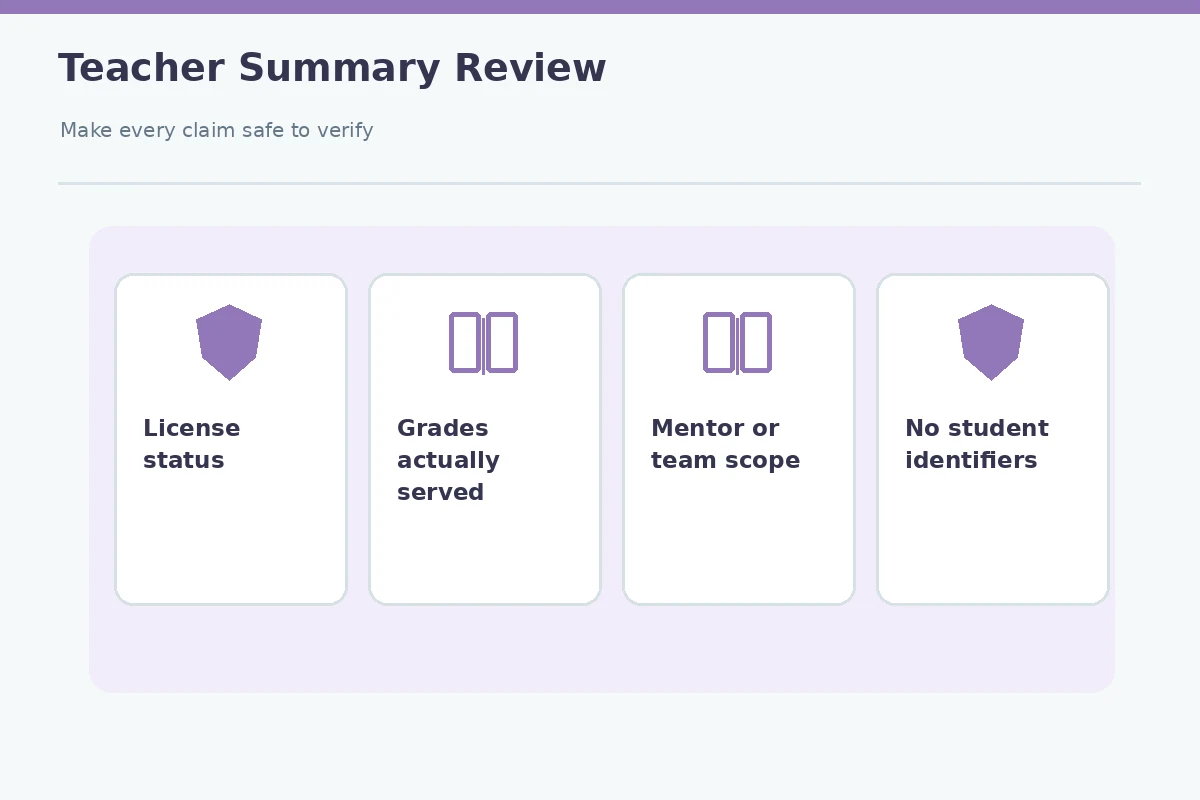
Before submission, check the license issuer, effective dates and endorsements against official records. Compare the summary with actual student-teaching dates and school assignments. Ensure the subject area matches the vacancy and that anonymized examples do not reveal student information. If you list specialized services, verify whether you personally provided them and under which supervision.
Finish with one evidence question: could a mentor or supervisor confirm this sentence without adding caveats? If yes, keep it. If a claim requires quietly removing “under supervision,” revise it. District policies and state licensing rules control real eligibility; resume wording does not override them.
Hypothetical Summary You Can Audit
Hypothetical example for someone whose record confirms the scope: “Elementary student teacher with supervised experience planning literacy activities, adjusting small-group instruction from mentor feedback, and documenting classroom observations. Completing the state certification process; credential not yet issued.” A licensed teacher should instead state the exact active credential and actual grades taught.
Make a personal evidence table before copying any example: claim, source in your work or study history, permitted document or reference, and exact level of responsibility. Delete a claim if you cannot support it. The example above is a writing model only: it does not report a real applicant, employer endorsement, performance improvement, or hiring outcome.
How We Research Resume Summary Examples
On 2026-10-27, the JobAsk drafting process checked public US career guidance and professional role descriptions, reviewed the READY A/B intent seeds and compared topics against the available article index (including B083, B100, B116 and adjacent resume topics). Sources below support the duties and writing principles, not any hypothetical candidate’s achievements. Independent human editorial review, live WordPress slug availability and hiring outcomes are not confirmed.
CareerOneStop source: CareerOneStop explains the optional top-of-resume summary and recommends concise, relevant, supportable evidence.
UC source: UC Berkeley advises tailoring experience descriptions and accomplishments to the actual posting.
BLS source: BLS distinguishes lesson preparation, teaching and assessment tasks and explains that public-school licensure requirements differ by state.
CareerOneStop source: CareerOneStop explains the importance of keeping work experience consistent with the resume summary and relevant skills.
No employment, resume screening, licensing, affiliate or hiring guarantee is implied by these materials. Sources do not endorse JobAsk. Please read our affiliate disclosure and follow the actual employer’s instructions.
Related Guides
- Elementary Teacher Interview Questions: Lessons and Classroom Decisions
- Teacher Resume Skills: Prove Lesson Planning, Assessment, and Support
- Elementary Teacher Cover Letter: Show Lesson Design and Student Support
- Teacher Interview Strengths and Weaknesses: Lesson Evidence and Reflection
- Resume Summary Examples: Write a Specific, Evidence-Based Introduction
No. State pending or in-progress status accurately and check the specific posting’s requirements.
Yes. Name the supervised role, lesson tasks and evidence without presenting it as unsupervised teacher-of-record experience.
Only if the numbers were actually measured, attributable to your described role and permitted for sharing.
Use generalized, anonymized teaching methods, not identifying student records.
No. It is optional; include it when it adds clear, relevant information beyond your credential and work history.