
Entry-level graphic design jobs are easier to assess when you compare the work product, not just the title. A junior designer may prepare social assets, adapt layouts or manage production files, while a more independent role may own identity systems and client direction. Your portfolio needs to demonstrate how you respond to a brief and revise work—not merely show attractive mockups.
This guide uses official occupational descriptions to explain the work, not to promise eligibility, hiring outcomes, wages or interview results. All examples are hypothetical unless explicitly described as a real source statement.
Compare Related Entry-Level Career Guides
Start with the stated responsibilities and what you can genuinely demonstrate, rather than relying on an appealing title. Related job-search guidance is available in the Job Search category.
Distinguish Production Design From Creative Direction
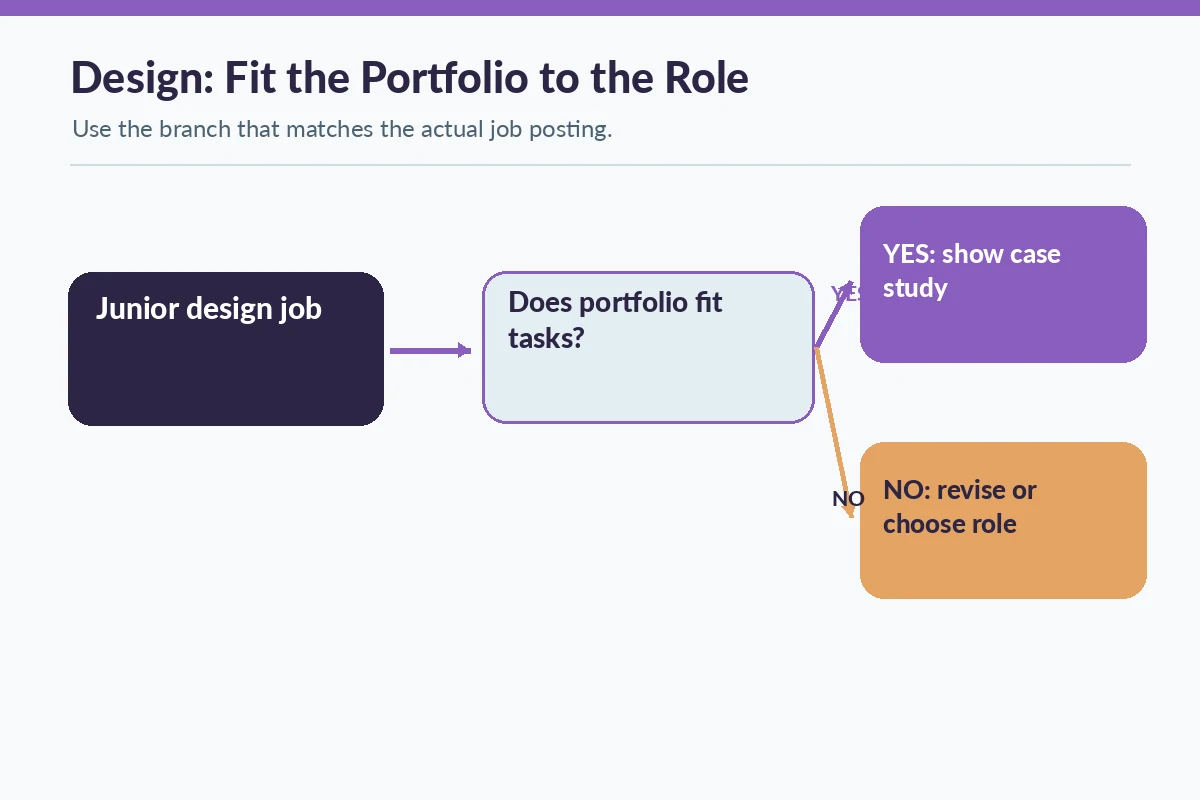
Read junior designer advertisements for the specific artifacts: email graphics, digital advertisements, presentation layouts, packaging adaptations, production-ready PDFs, social templates or web graphics. Ask whether the work begins with an approved brand system or requires creating a new concept from scratch. A role focused on resizing, exporting and proofing assets can be a reasonable entry point, while a listing demanding independent art direction across channels may require a more advanced portfolio.
The BLS overview describes graphic designers as communicating ideas visually and notes that a portfolio demonstrates creativity and originality. It does not certify that every job needs exactly one academic route. Compare a role’s stated education preferences with its production tasks. Small agencies and in-house teams can define “junior” differently.
Build Three Portfolio Cases With Different Problems
Choose three cases that show different decisions: a poster that establishes visual hierarchy, a social campaign with consistent variations and a document or presentation that improves readability. For each case write a short brief: audience, communication goal, size or channel, constraints, work you personally completed, feedback received and the final deliverable. Mark each case as school work, volunteer work, independent practice or paid client work accurately.
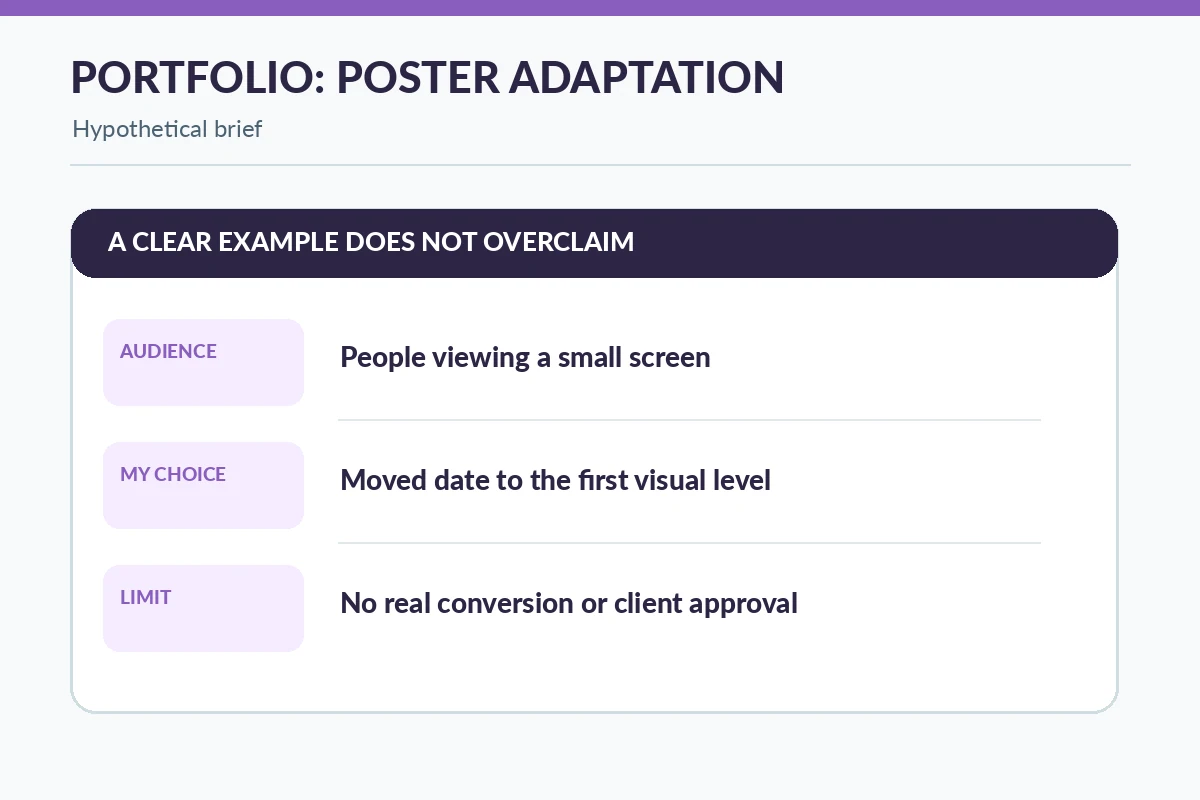
A fictional brief is fine for practicing design, but label it hypothetical and do not put a real business logo on a design without permission. Explain why you chose the hierarchy and what changed after feedback. Avoid inventing click-through performance or claiming a brand approved your design. A clear sequence of rough idea, tested alternatives and final application can be more useful than a polished image with no explanation.

Audit Files for Production Readiness
Recruiters may want to see that you understand deliverables, not just ideation. Keep a checklist for dimensions, legible type, accessible contrast where relevant, brand consistency, linked assets, filenames and export formats specified in the brief. Show a sample asset set with the intended uses. Do not claim universal color or file rules: printer specifications, platforms and employers differ. Learn how to ask the production owner which settings are required.
Create a hypothetical case in which a print poster and a mobile graphic share a headline but have different crops. Explain how you adjusted spacing, checked readability and exported each deliverable. A note such as “tested text at phone size; shortened the title before exporting” shows decision-making. An unsupported statement such as “boosted campaign conversion by 40%” should not appear if you did not collect that evidence.
Evaluate Roles Using the Brief-and-Feedback Test
For each opening, identify who writes the brief, who approves concepts, how revisions arrive and how work is reviewed. Junior roles can include collaboration with copywriters, marketers and senior designers. Search terms such as junior graphic designer, production artist, design assistant and creative services coordinator, then inspect the responsibilities. Two employers can use the same title for very different levels of judgment and pace.
At interview time, prepare questions about the first deliverables, feedback rounds and the balance between original concepts and adaptation work. You do not need an elaborate sales pitch: show a project, explain its constraints and invite critique. If you were responsible only for layout adaptation on a team project, say so. Clear attribution protects your credibility and helps interviewers assess actual readiness.
Tailor Your Resume to Evidence in the Portfolio
Match each application to no more than three important skills from the posting: layout, typography, production workflow, software familiarity, illustration or web asset preparation. Link a representative portfolio case for each. Resume bullets should describe what you made and the context. “Prepared an editable presentation template for a student organization and checked type consistency across slides” is a plausible hypothetical example—not a factual claim about a real candidate.
List software only when you can use it to produce the output requested. If a posting emphasizes Adobe tools and you have used different software, say what you used and show transferable skills instead of inventing proficiency. BLS mentions the importance of design programs and professional preparation, but your application should follow the current vacancy description. Check links and permissions on every portfolio item before sharing.
Recognize Remote and Freelance Posting Risks
Design tests can be legitimate, but clarify the scope, ownership and expected time before producing free work. If a purported employer requests payment for a “workstation,” asks for a bank transfer or uses a copied company identity, verify the organization independently. The FTC describes fake recruiting messages that rely on generic promises rather than verifiable job details.
A safe shortlist includes the official employer careers link, project type, expected software, worksite or remote boundaries, deadlines and portfolio assets you plan to show. Keep your sample designs separate from confidential client deliverables. Never upload proprietary brand files merely to prove competence to an unverified recruiter.
Practice Explaining a Design Decision Clearly
A practical interview rehearsal begins with a six-sentence case study: “The hypothetical audience needed to find the event date quickly. I compared two hierarchies. I enlarged the date and reduced decorative type. I checked the mobile crop. A peer suggested stronger contrast. I revised the final version.” Each sentence points to a visible choice. Avoid saying the solution “worked” commercially without actual measurement.
If a design does not match an employer’s visual style, explain what you would change given a new brief. The goal is not to make every portfolio piece look identical; it is to show that you can interpret constraints and accept feedback. A hiring team can then judge your process rather than guessing your contribution from a screenshot alone.
How We Research These Entry-Level Paths
This article separates occupational descriptions from individual employer rules. We reviewed the linked primary sources on 2026-10-27 and compared the role with other JobAsk entry-level job-search topics to reduce duplicate intent. Sources below support stated occupational duties and safety or recruiting cautions; they do not validate a hypothetical resume example or guarantee a vacancy.
Primary source: BLS describes graphic designer responsibilities and the role of a demonstrable portfolio.
Primary source: FTC warns job seekers about fake remote recruiting messages and payment demands.
Primary source: O*NET describes graphic design layout, client briefs, production files and revisions as occupational tasks.
Our examples do not imply an employer endorsement, an affiliate relationship or a guaranteed outcome. See the affiliate disclosure for the site policy. Confirm current duties, credentials, location and hiring steps on each employer’s official vacancy page.
Related Guides
- Graphic Designer Resume Summary: Portfolio Proof and Revision Process
- Entry-Level QA Tester Jobs: Manual Tests, Bug Reports, and Proof
- Entry-Level Solar Jobs: Installer Training, Roof Safety, and Role Fit
- Graphic Design Interview Questions for Portfolio and Feedback Reviews
- Questions to Ask in a Graphic Design Interview About Briefs and Feedback
A portfolio is a common way to show creative and production skills. Follow the posting and include process, constraints and clear attribution.
They can demonstrate skills when labeled as student or practice projects. Do not present them as paid client contracts.
Start with a small set of relevant, well-explained cases rather than an arbitrary total; quality and fit matter more than a fixed number.
Avoid implying endorsement or permission. Use clearly fictional briefs or materials you are authorized to display.
State your real tools and demonstrate transferable layout, revision and export skills. Be explicit about software you still need to learn.