
Quick answer: Hospitality job boards group jobs that may look similar but involve different work: front-desk requests, housekeeping, food service, events, revenue support and management. Filter by department, hours and location before applying. The AHLA Foundation’s hospitality portal can help you discover roles, but a listing’s exact schedule, physical duties, experience requirements and application channel must be verified with the employer. Do not assume every hotel vacancy offers daytime or flexible shifts.
Select a Hotel Department Before Searching
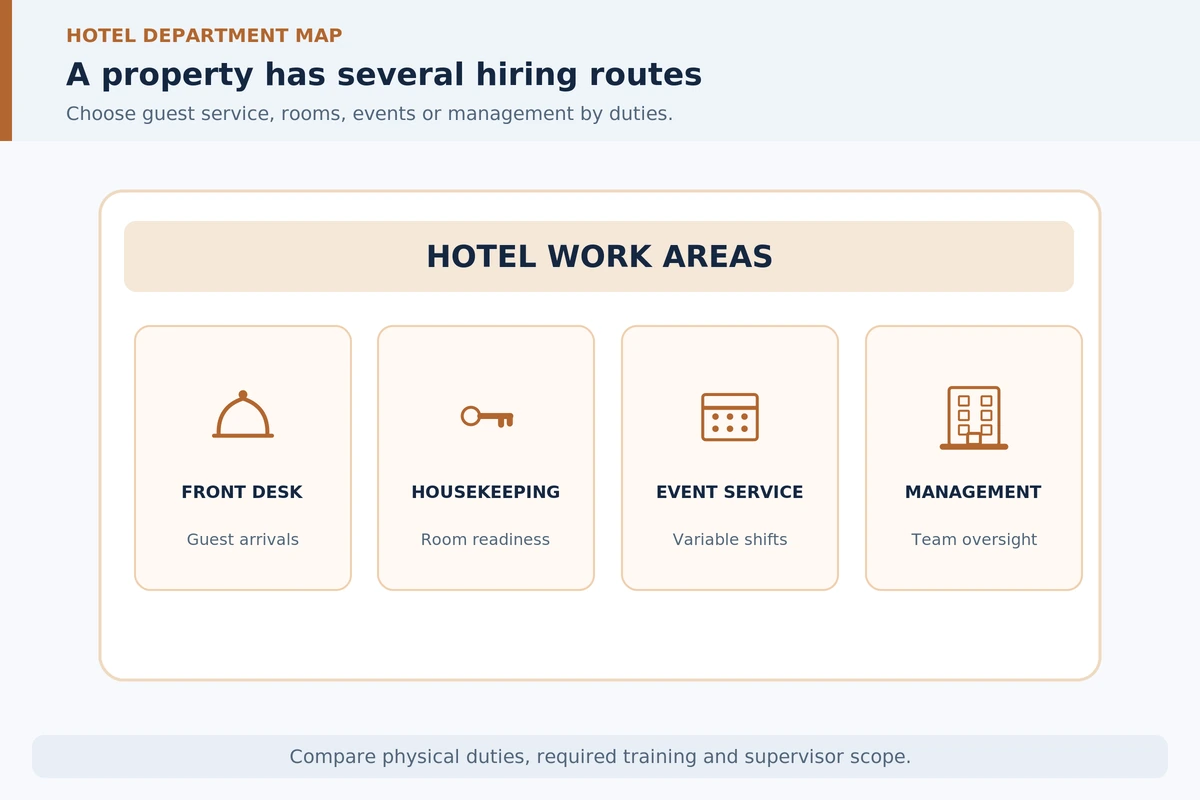
A broad “hotel jobs” query can return roles in reservations, guest reception, room cleaning, banquet setup, maintenance and property management. Start by identifying tasks you would actually perform. Front desk may involve arrivals and records; housekeeping may require repeated physical cleaning and room checks; banquet positions may involve irregular event schedules. Compare the position’s worksite, standing or lifting demands, guest contact and shift pattern before interpreting the title. A single property often has several departments with distinct supervisor and training arrangements.
Use Hospitality Portals as Discovery Channels
The AHLA Foundation career portal links to hospitality job-search and career resources. The HSMAI Foundation also describes careers in hotel sales, marketing and revenue-related work. These tools can reveal departments you might not find through a generic search. Do not assume every job there has been independently audited or remains vacant. Reopen an interesting position on the employer’s official career site, and check for an original requisition, property address and clear application instructions.
Compare Guest Service and Housekeeping Evidence
A guest-service candidate might cite real scheduling, question handling, reservation records or communication examples. A housekeeping candidate might cite a dependable cleaning routine, supply checks or safe reporting of damaged equipment. Neither example should become an invented claim to have used a hotel property-management system. Look closely at the training and tools required. If the listing asks for prior hospitality experience, explain a true transferable skill without relabeling a volunteer event as paid hotel work.
Distinguish Restaurant and Banquet Schedules
Hotel food and beverage postings can include breakfast shifts, evening restaurant service, event setup and late-night cleanup. A generic board may display only “part-time” or “full-time” without the actual days. Read the detailed schedule and any holiday expectations, and ask what time a shift usually ends if the posting permits questions. Specific food safety or alcohol service credentials may apply depending on duties and location. Never imply a certificate is held when the training was merely planned.
Do Not Mistake Management Titles for Entry Roles
The BLS lodging manager profile describes work involving staff operations and guest-service oversight. This is not the same as booking appointments or greeting arrivals at reception. A department supervisor, assistant manager and manager position may have different staffing authority and experience requirements. If you have coordinated a small shift but never hired or managed employees, describe that narrow contribution accurately. Use job-board filters and employer descriptions to separate the levels rather than applying indiscriminately to every “operations” title.

Make a Two-Shift Reality Check
Write down the advertised days, start time, end time, commute, public transportation availability and expected overtime or on-call arrangements. Confirm that the schedule is actually fixed if the job says “flexible.” Consider whether a 6 a.m. breakfast opening or a late event close is sustainable, not merely whether it appears attractive on a job board. Do not share unnecessary personal reasons with an employer. State your actual availability and ask about any unresolved schedule details through the documented hiring channel.
Check Property and Employer Identity
A hotel may use a management company or staffing organization rather than hiring directly under the property brand. Compare the legal employer shown on the application, the worksite and the responsibilities listed in the posting. A hospitality logo copied into a message is not enough to validate a recruiter. The FTC warns about fake recruiters and premature requests for account information. Find the employer’s contact details independently; never pay a fee for a job or provide financial documents to an unverified recruiter.
Record Role-Specific Requirements in One Table
Make rows for front desk, housekeeping, banquet service and revenue support. Add columns for typical tasks from the vacancy, required experience, schedule, location and training. For front desk, verify the type of booking or guest service work. For housekeeping, review safety practices and physical demands. For revenue support, distinguish spreadsheet/report work from management decisions. A simple comparison makes it easier to exclude a role before spending time on a customized application.

Test a Hotel Posting With a Hypothetical Applicant
Hypothetical example: Someone who staffed a volunteer check-in desk and logged visitor requests might research a guest services assistant opening with training. That person should not claim property-management software experience or the authority to handle billing disputes without supervision. A separate housekeeping listing may better fit someone with an established routine of cleaning and supply checks. Neither conclusion predicts a hiring decision. The lesson is to compare evidence, physical duties and schedules rather than choosing by hotel brand alone.
Confirm an Opening Before Uploading Documents
Read the entire employer listing for required documents, location, schedule, background or license requirements and instructions about a cover letter. Use the board to discover opportunities, not to bypass the property’s current hiring process. Track the job reference and date, verify the destination domain, and review file format before submitting. If an employer contacts you through an unexpected account or changes the terms substantially, confirm those changes independently. A board alert does not establish that an offer is authentic or final.
How We Research and Update Job Board Guidance
We compare official board descriptions with professional or government occupation guidance. For this topic, see professional job board, official industry source, official industry source. These sources document the existence and stated purpose of resources and give context for role duties; they cannot confirm that every third-party listing is active, safe or a fit for you. We also reviewed FTC advice on fraudulent recruiters and recommend employer-site verification before sharing personal data.
Examples are hypothetical, not reports of an actual application, salary, hiring outcome or employer endorsement. No source guarantees a job, a qualification waiver or automated screening success. Site relationships and recommendations are explained in our affiliate disclosure. This guide does not contain affiliate links or paid placement claims.
Related Job Search Guides
- Engineering Job Boards: Compare Society Listings and Project Requirements
- Retail Job Boards: Compare Store Careers, Shifts, and Sales Duties
- Online Job Boards: Find Relevant Postings and Verify Opportunities
- Healthcare Job Boards: Find Roles and Check Credential Requirements
- Green Job Boards: Find Energy Roles and Verify the Real Duties
No. They may cover housekeeping, food service, events, sales, revenue operations and management. Filter by department and duties.
No. Read the specific shift and weekend requirements and clarify any rotating or event-driven schedule.
It can demonstrate relevant communication and recordkeeping if described honestly as volunteer work, not as hotel employment.
No. Management may include oversight and staffing decisions; check the exact posting before claiming that scope.
Verify the employer, property and intended application destination independently first, particularly before sending sensitive information.