
Painting jobs with no experience are most realistic when you search for painter helper, painting trainee or supervised preparation work rather than claiming to be a fully trained painter. The Bureau of Labor Statistics reports that painters often learn on the job, but some tasks involve ladders, hazardous coatings and regulated lead-paint work. Start with the employer’s written task list, confirm safety instruction and ask exactly which work a new hire can do under supervision.
Recognize helper, apprentice and specialist advertisements
Entry-level painting advertisements can mix moving materials, protecting work areas, basic surface preparation and application work. Other postings require experience on commercial lifts, specialized spray equipment or industrial sites. The title “painter” does not tell you whether an employer is looking for a first-day helper or a worker who can independently prepare an entire worksite. Search for helper and trainee language, then read the equipment, environment and supervision requirements.
Treat apprenticeships as an organized path with their own eligibility and training standards rather than a synonym for every temporary helper shift. A contractor may train new painters through supervised work, while an established apprenticeship may require formal enrollment and documented instruction. Ask about the specific path and whether there are progression milestones. Do not assume that carrying brushes for a week grants permission to use lifts or remove unknown old coatings.
Learn what a supervised preparation shift can include
BLS describes painters protecting floors and trim, repairing surface defects, preparing surfaces and applying finishes. For a new employee, the useful question is which parts of those tasks the employer will demonstrate and authorize. Measuring a room, laying down protective coverings and organizing materials can be different from sanding old painted surfaces, mixing unfamiliar coatings or spraying a product in an enclosed area.
Imagine a first-day assignment where you are asked to prepare a room. Before acting, confirm which surfaces are included, which materials are approved, what protective equipment is needed and who signs off on the preparation. If you notice damage, dust of unknown origin or a label you do not understand, report it. That is a credible work habit—not evidence that you should diagnose hazards yourself or improvise a cleaning method.

Protect yourself around ladders, coatings and older buildings
Painting work can involve heights, dust, fumes, awkward positions and repetitive movements. The appropriate safety measures depend on the specific task and site. Ask the employer to identify training and protective equipment before assigning ladder, scaffold, respirator, spray or confined-space work. Never present yourself as trained in equipment you have only watched someone use. A job ad that skips all safety detail is a reason to ask questions, not an instruction to proceed without training.
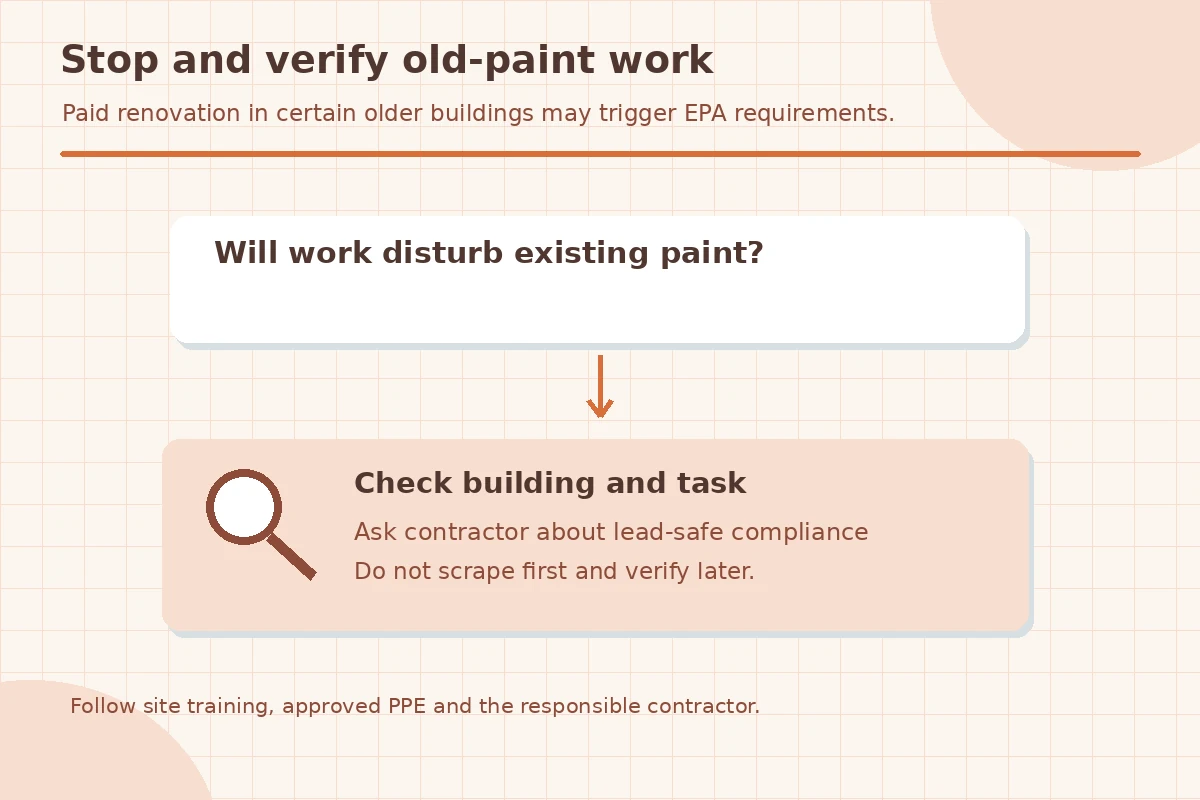
The EPA Renovation, Repair and Painting program regulates certain paid work disturbing paint in pre-1978 housing and child-occupied facilities. The applicable firm and certified-renovator requirements depend on the covered activity and location. If an assignment might disturb old paint, the correct action is to raise the issue with the responsible contractor before work begins, not to sand or scrape first and hope it is harmless. This article is not a substitute for jobsite-specific safety training.
Translate school or home projects into credible evidence
If you helped paint a community room, describe what you actually did: protected furniture, followed a coordinator’s instructions, cleaned ordinary tools or checked a list of supplies. Label the project as volunteer or personal experience. Avoid claiming that a home DIY project is commercial painting experience, and do not use invented square footage, hours or quality scores. A concise application can be specific without making your contribution sound bigger.
Employers may also value punctuality, working as part of a crew, communicating about missing materials and leaving a work area organized. Support each claim with a real example. If you followed a schedule on a school event setup team, describe that coordination and relate it to the crew’s need for reliable handoffs. Do not invent use of commercial sprayers, respirator fitting or scaffold training merely because those phrases appear in the advertisement.

Compare the worksite before accepting a schedule
Residential repainting, commercial maintenance and industrial coating jobs can expose workers to very different conditions. Ask where the work occurs, whether travel between sites is required, the planned start time, whether work is indoors or outdoors and how trainees are supervised. Check any required transportation or driver’s license language, and verify whether the job is employment or an independent contractor arrangement before relying on the advertised compensation.
A recruiter should be able to explain who supplies tools and protective equipment, what training is provided and how you report unsafe instructions. The FTC warns against paying for a promised job or sending money after an unsolicited offer. Ordinary personal purchases are different from a recruiter demanding advance payment to unlock a position. Verify the contractor and opening independently and review the actual terms before sharing sensitive information.
| Listing phrase | Next question | Possible issue |
|---|---|---|
| Painter helper | Who supervises surface preparation? | Duties may be more than cleanup |
| Spray experience required | Is hands-on equipment training required? | Not a beginner assignment |
| Old building renovation | Who handles lead-safe compliance? | Covered paint disturbance |
Prepare for practical questions with an honest example
A supervisor may ask what you would do if a wall color or finish did not match the work order. A careful answer explains that you would stop the affected work, check the approved specification and ask the person responsible before continuing. You need not pretend you can diagnose every coating problem. Another question may concern cleanup: describe following site procedures and keeping supplies organized rather than mixing chemicals or disposing of products without instruction.
A hypothetical beginner introduction could be: “I am looking for supervised painter helper work. I have experience organizing supplies and protecting work areas during volunteer projects, and I am ready to learn proper surface preparation and safety procedures.” Replace the details with your true record. If you have no painting projects, use a different reliable-work example and acknowledge that technical work will require training.
Build a safe first-week learning plan
Keep a short written list of approved tasks, unfamiliar equipment, materials and questions for the supervisor. Ask how finished prep is checked before paint is applied and which mistakes must be escalated immediately. A reliable new hire repeats instructions, uses the authorized materials and reports changes rather than improvising. Learning where the responsibility boundary sits can be more important than appearing fast on day one.
Choose an opportunity where someone can explain training and task scope. If an advertisement requires independent work at heights or hazardous-material removal on the first shift, it may not be suitable for someone without the required preparation. Look for a genuine helper or apprenticeship route instead. No position is automatically safe because the title says “entry level”; the jobsite and actual instruction must support the work.
How We Research First-Job Options and Requirements
JobAsk reviewed the original candidate queue, the WordPress title inventory supplied for this project, relevant search results and linked U.S. government or occupational sources on November 7, 2026. No employer openings, wages or hiring outcomes are guaranteed here. Hypothetical examples are labeled and should not be used as claims of personal work history. Rules, openings and program terms can change; follow the employer and responsible authority. See our affiliate disclosure.
Source: www.bls.gov — BLS details painter surface preparation, on-the-job training and hazards including ladders and coatings.
Source: www.epa.gov — EPA describes when renovation activities disturbing paint in pre-1978 housing and child-occupied facilities fall under lead-safe certification requirements.
Source: consumer.ftc.gov — FTC warns against job offers requiring advance payments, fake equipment checks and suspicious home-based recruiting claims.
Related Job Search Guides
BLS says painters typically do not need formal education to enter, but employers and specialized tasks can have other requirements.
Only within duties the employer properly instructs and authorizes; do not independently attempt hazardous or unfamiliar work.
Do not assume it is safe. Ask the contractor about EPA lead-safe requirements before disturbing old paint.
Yes as a clearly labeled personal project; do not call it paid commercial experience.
Ask about supervision, worksite location, protective equipment, ladders, training, and the precise duties of a beginner.