
Part-time retail merchandiser jobs are not all ordinary store-floor shifts. Some involve a fixed retail location; others assign a worker to visit several stores, replenish displays, rotate materials, check shelf information and upload reports. Start by determining whether the employer is the store, a brand or a merchandising service, then compare the actual visit schedule and travel expectations. A listing that says flexible or part-time may still require specific morning visits, seasonal resets or weekend coverage. Your best application shows careful execution of instructions and reliable documentation, not a vague claim that you love shopping.
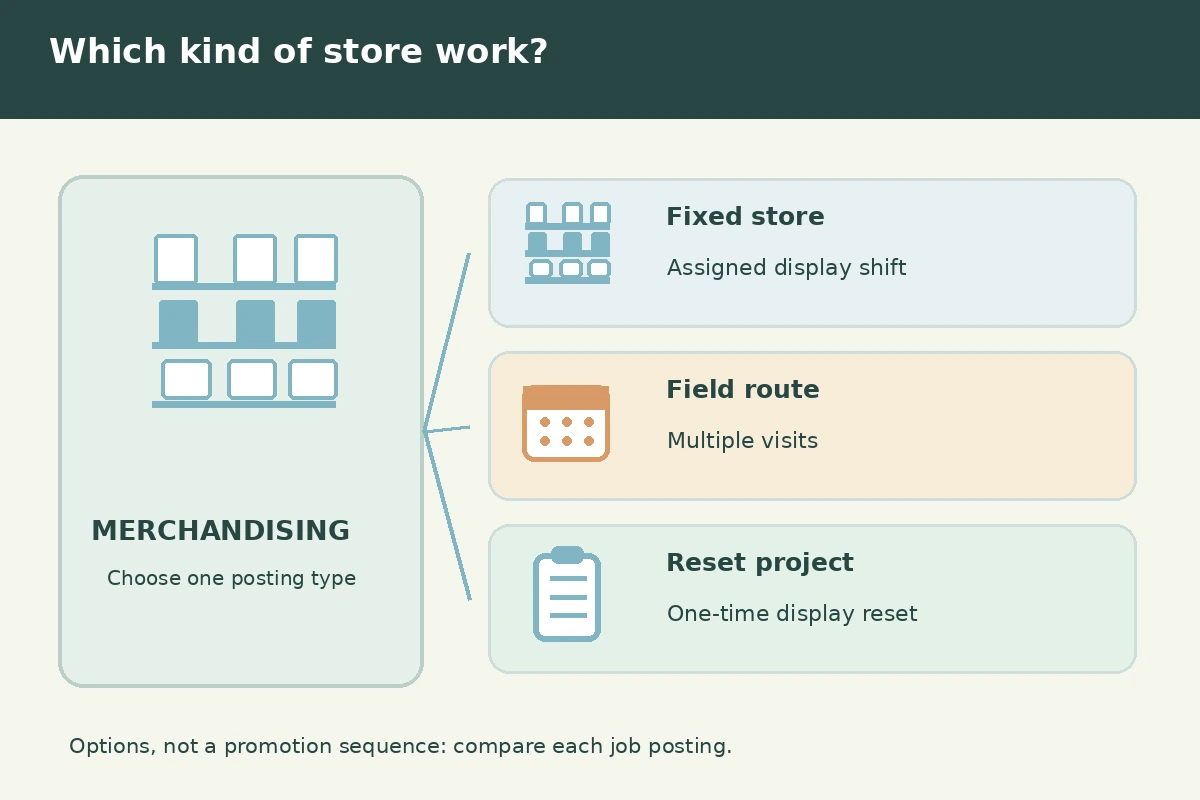
Separate in-store display work from a multi-store route
O*NET describes merchandise displayers arranging products and signs, rotating promotional displays, working with retail staff and sometimes photographing the finished display. A part-time opening may focus on shelf maintenance, visual presentation or a one-time store reset. Read whether you report to a store manager or a field supervisor, whether assignments repeat weekly and which display plan you must follow. A retail employee setting shelves during a scheduled shift is different from a field representative driving between locations with a time-bound task list.
Make a location matrix: for each assigned store, record the expected visit window, address, approximate task scope, contact person and reporting requirement. Do not assume that a two-hour field task means only two hours of commitment if a route spans multiple stores. Ask how assignments are accepted, what happens when a store is closed, and whether you must use a personal vehicle or device. The job ad and written employment terms—not an industry generalization—must answer questions about travel expenses, mileage and compensable time.
Read shelf resets, inventory tasks and physical requirements
A display reset may include following a planogram, removing old signs, changing labels, assembling approved fixtures and documenting the result. Other roles emphasize counting, facing, stocking or alerting store staff about a missing product. Some displays require lifting, carrying or using tools; verify the stated physical requirements and training before accepting. Do not assume ladder, power tool or lift-equipment use is included in every position. Follow employer procedures and request qualified help for work outside your training or authorization.
The word merchandising may also refer to creative visual design rather than routine shelf work. Separate openings that expect independent design concepts, mockups or client meetings from those that follow an established store plan. If you enjoy creative layout but have no store experience, a portfolio of hypothetical display sketches may show planning ability, but it should not be labeled as a completed commercial reset. Name the real assignment, required materials and approval process when describing work you’ve already done.
Confirm which hours are truly yours to schedule
Part-time may mean a consistent schedule at one store, a small number of required weekly visits or assignments accepted when available. A route can include strict store access times and special project windows. Record the earliest and latest allowed visit, deadlines for a report and any required team meetings. If you attend school or another job, compare each task window with transit time and the time needed to upload proof after leaving the store. A role advertised as flexible should still have clear completion and communication expectations.
The FLSA does not provide a fixed number of weekly hours for part-time status. Ask the employer for its expected range and whether hours increase during launches or seasonal resets. Avoid assuming you will always receive enough assignments for a particular budget or that a temporary project will become recurring work. If a listing contains ‘independent contractor,’ request clarity about the actual proposed relationship and terms; this guide cannot determine a worker’s legal classification from a title alone.
| Posting area | Work to verify | Critical question |
|---|---|---|
| Single-store display | Follow shelf or promotional plan | Who approves changes? |
| Field route | Visit multiple assigned stores | How are travel and access handled? |
| Store reset project | Change fixtures or signage | What training and equipment apply? |
Use a clean evidence trail without sharing client materials
A strong work example identifies the plan received, the exact work completed, the photo or checklist used if authorized, and the person who verified completion. A hypothetical resume bullet could read: ‘Reset a student-event merchandise table to an approved layout and recorded remaining supplies for the coordinator.’ This is useful evidence of organization, but it is not proof of professional retail merchandising experience. Do not state an invented increase in sales or a ‘perfect compliance score’ without a real employer record that you are allowed to use.
Many merchandising employers use photographs to demonstrate a display’s final appearance. Never post confidential store instructions, customer images, access credentials or unapproved branded materials in a public portfolio. If a photo is permitted, describe what it demonstrates: placement, signage accuracy, neatness or reporting. If you have retail experience, use precise duties such as checking shelf labels or following a stock rotation procedure. Keep creative design work distinct from following a supplied planogram.

Search actual routes and verify the employer
Search job titles including part-time merchandiser, retail field representative, display associate, store reset associate and visual merchandising assistant. Not all are entry-level; check the duties and required experience. Prefer the direct employer’s application page for a definitive description, and record job location, route radius, expected number of stores, visit windows, equipment, reporting app and hiring contact. A nationwide listing can hide a specific local territory, and a staffing company may represent more than one client.
Treat unexplained requests to purchase supplies or send money before hiring as a warning. The FTC cautions that fake recruiters can promise attractive work and then demand payments. Verify job emails, official domains and the employer’s actual location; avoid transmitting sensitive IDs through unverified messaging links. Ask who supplies signage, fixtures and any required app or equipment. Any legitimate reimbursement policy should be described in the employer’s terms, not inferred from a third-party website.
Interview about store access, reporting and supervision
A useful interview example explains how you followed a layout, found a discrepancy, sought clarification and documented completion. You can describe organizing a community display or school event if that is your true experience, but label it as such. Ask who can authorize changes when a shelf is unavailable, a required product has not arrived or the assigned display blocks a store operation. The merchandiser may be expected to report an issue rather than independently negotiate a change to the retailer’s space.
Before taking a part-time assignment, request clear details about who assigns stores, how far you may travel, how a completed visit is signed off, when reports are due and how schedule changes are communicated. Distinguish fixed-hours positions from per-project work. If the route is incompatible with your commute or mobility requirements, it is better to identify that now than promise a coverage pattern you cannot meet. A factual discussion of availability and task limits is a sign of professional planning.

How We Research This Part-Time Job Guide
We checked these primary employment, occupation, consumer-safety and (where relevant) copyright sources on November 16, 2026: O*NET lists commercial display, placement, signage, store collaboration and photograph tasks for merchandisers.. The U.S. Department of Labor explains that the FLSA does not define part-time or full-time hours; employers generally determine that classification.. FTC warns applicants about unsolicited job texts, requests to pay, and misleading remote job promises.. The topic and intent were compared with the supplied JobAsk WordPress list of existing drafts and published posts. This does not prove that any unpublished WordPress slug is free or that a given job is currently open. Examples are illustrative and should be replaced with your actual work. Employer terms and applicable rules govern specific work arrangements; no job, pay rate, schedule or approval outcome is guaranteed. This article does not recommend paid products. See the affiliate disclosure.
Related Job Search Guides
Some routine display-support jobs accept transferable organization skills, while specialized visual merchandising positions may require direct experience. Read the employer requirements.
Not always. Some jobs assign a fixed site; others require a route across several locations. Verify the territory and store visit windows.
Sometimes, but store access and project deadlines can limit flexibility. Ask which hours and visits are mandatory.
Only the individual posting and employer terms can answer this. Check travel expectations and reimbursement arrangements before agreeing.
Only when the employer and retailer authorize it. Do not disclose client instructions, store data, customers or unapproved brand materials.