
A professional resignation is a clear decision followed by an organized transition. This guide focuses on how to resign from a part-time job— last shift, notice, and handoff. It provides a practical sequence, clearly labeled hypothetical language, and cautions about dates, agreements, confidentiality, and employer-specific procedures. The examples do not describe real employers or guarantee any legal outcome. Verify your actual policy and commitments before you send a message.
Start With the Actual Shift Calendar
Before telling a manager you are leaving, write down the next few scheduled shifts, whether any swaps have been approved, and the last day you can genuinely work. A notice period counted in calendar days is not the same as a number of shifts. Someone working Saturdays may have only one or two shifts left during a two-week interval. That distinction matters for store coverage and for your own commitments.
Put three dates on one page: the day you will notify your employer, your intended final day of employment, and your last scheduled working shift. If they do not match, say so explicitly. Check your employee handbook, offer letter or applicable agreement for any specific notice procedure; do not assume part-time status automatically creates or removes a requirement.
Tell the Manager Before the Schedule Changes
Ask for a short private conversation or call rather than leaving only a message in a group chat. A useful opening is: “I have decided to leave this role. My proposed last day is [date], and my last scheduled shift is [date]. I wanted to discuss coverage before the roster changes.” This is a hypothetical script; replace both dates with real information. Keep your decision clear and your tone neutral.
If the manager is unavailable, follow the workplace’s documented contact channel and send a concise written note. Do not assume silence means that a shift swap has been approved. If your schedule changes after you give notice, request written clarification. You can be helpful during a transition without agreeing to work beyond a date you cannot meet.

Write a Short Letter With Both Dates
A part-time resignation letter does not need a long explanation. Give your name, position, company or department, resignation statement, final employment date, and appreciation where sincere. If the last shift is earlier than that date, include one optional sentence: “My final scheduled shift is currently [weekday, date]; please let me know whether the schedule changes.” Avoid inventing a reason to make the letter sound more acceptable.
Hypothetical example: “Dear [Manager], I am resigning from my part-time associate role, with my last day of employment planned for [date]. My current schedule shows [date] as my final shift. I will complete the assigned closing checklist and flag any outstanding tasks. Thank you for the opportunity to work with the team. Sincerely, [Name].” Confirm the dates before sending, then keep a copy of the message.
Handle Already-Assigned Shifts Responsibly
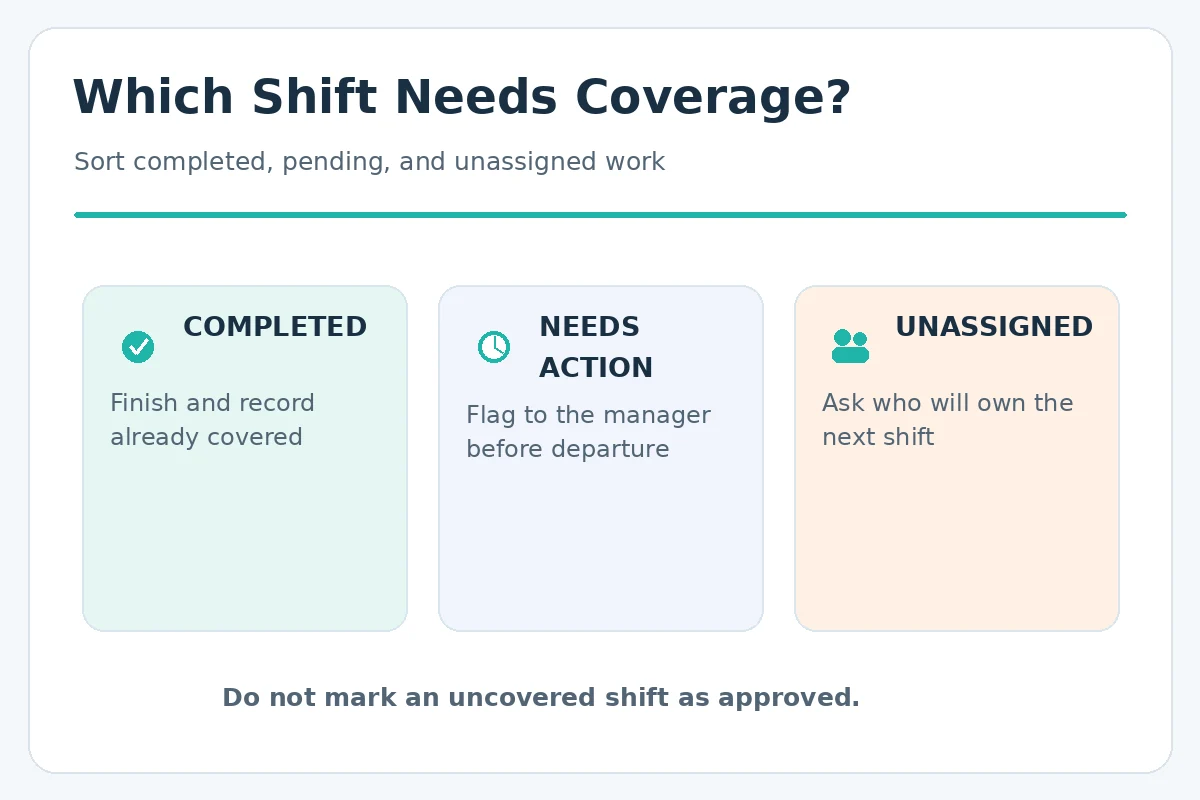
Look for shifts falling after your proposed final employment day, open shift-swap requests, events requiring extra staff, or training you promised to complete. The responsible step is to flag them to a scheduler or manager, not to independently assign a replacement. If a coworker offers to trade shifts, use the employer’s formal approval process so attendance and pay records remain accurate.
Build a simple roster note: “Tuesday opening: covered”; “Saturday closing: manager confirmation needed”; “new employee training: supervisor owns next step.” That is an illustrative format, not a real workplace schedule. Prioritize tasks that would otherwise be left without an owner. Avoid giving anyone your access code or sharing private customer or employee records.
Finish a Small but Complete Handoff
Part-time roles often involve repeatable tasks rather than long projects. Write down the shift-opening and shift-closing responsibilities you routinely perform, unresolved customer requests, the location of approved instructions, and the supervisor who can clarify exceptions. Keep it short enough for a busy colleague to use during a shift. Do not copy customer information to a personal device or email. For a step-by-step method, see how to withdraw a resignation.
For a hypothetical retail role, a useful handoff might note that a price-label discrepancy was reported to the floor lead and requires confirmation before relabeling. It should not claim the issue was resolved if it was not. For food service or health-related work, follow the workplace’s specific safety and privacy practices. Cornell’s knowledge-transfer guidance emphasizes identifying recurring tasks, contacts, and open risks. Our guide “Resignation Handover Document” adds more detail on this.
Confirm Pay, Property, and Access
Before the final shift, ask payroll or HR how you will receive your final pay, whether there are any timesheet corrections, and where relevant tax documents will be available. The U.S. Department of Labor states that federal law does not always require an immediate final paycheck; states may impose different deadlines. Do not make assumptions about accrued leave or unused benefits: their treatment depends on applicable rules and agreements.
Return uniforms, badges, keys, or equipment through the employer’s process and ask for a receipt when relevant. Confirm whether you should retain access to scheduling software through your last day; do not access internal systems after authorization ends. Keep your personal copies of resignation correspondence and pay records through permitted means rather than transferring workplace files. If you want the full process, read how to resign from a remote job.
Avoid Three Common Departure Mistakes
First, do not announce an exact last shift before comparing your calendar with the employer’s roster. Second, do not write an open-ended offer to train replacements if your remaining availability is extremely limited. Third, do not tell coworkers that a shift has been covered unless the manager or scheduling system confirms it. These are small errors that can create avoidable confusion in a shift-based workplace.
A calm sentence can resolve an ambiguity: “I cannot work the shift listed for [date] because it falls after my planned last day. Could you confirm how coverage will be arranged?” This statement is clearer than an argument about whether someone should have scheduled you. You can preserve goodwill without making a promise that conflicts with your next commitment.

Use a Final-Day Review Before Leaving
On your last working day, check that assigned duties were either completed or handed to the named person. Update the timesheet, return applicable property, and ask the manager to confirm your last employment date if it differs from the last shift. Thank colleagues directly rather than sending a broad announcement before your manager has communicated staffing changes.
Keep the result proportionate to the role. You do not need an elaborate farewell letter or an hour-long presentation for a weekend position. You do need a reliable end date, an accurate attendance record, a clear owner for unfinished work, and professional communication. That combination is the practical difference between a resignation note and an effective departure plan. For the fuller picture, see our guide “Resignation Letter for Personal Reasons”.
A Simple Decision Checklist for Your Situation
Before taking action, answer these questions in writing: What date is confirmed and which date is only proposed? Who is authorized to approve a change or assign unfinished work? What records can you keep under the organization’s rules? Which item still needs a reply from your manager, HR, payroll, or IT? Use that short list as a final self-check; do not invent an answer simply to make the process appear complete. If a point involves an agreement or legal right, check the rule that applies to your job and location.
How We Research and Check Sources
JobAsk uses the listed professional and primary guidance as context for practical communication advice, not as a substitute for the employer’s own procedure. These sources were checked on 2026-10-23. Northeastern University: University career guidance recommends a clear resignation and confirmed final date with an orderly transition. Indeed Career Guide: Career guidance discusses departing part-time positions and confirming the final date in writing. University of Washington HR: A university employer example shows that notice expectations may depend on staff category and agreements. U.S. Department of Labor: Federal law does not require immediate final pay in every circumstance; state rules may differ. Where a requirement varies, verify it locally. For transparency, see our affiliate disclosure; there is no claimed paid recommendation in this guide.
Related Guides
- How to Resign From a Part-Time Job and Cover Your Remaining Shifts
- How to Resign From a Job Professionally and Plan a Clean Handoff
- How to Resign From a Remote Job With a Clear Digital Handoff
- Accepting a Part-Time Job Offer: Check Hours, Availability, and Shift Changes
- Part-Time Job Cover Letter: Show Relevant Skills and Honest Availability
Two weeks is a common professional convention, not a rule that applies to every U.S. worker. Review any agreement and employer policy, and check applicable state rules before deciding on a date.
Possibly. State both the last day of employment and the last shift you expect to work, then ask your manager to confirm the schedule so there is no misunderstanding.
Explain the conflict promptly, ask the manager how they will arrange coverage, and do not quietly stop appearing for assigned shifts.
A brief written confirmation is helpful even when the initial conversation is informal: identify the role, your final employment date, and how you will finish assigned work.
Final-pay deadlines vary by state and circumstances. The U.S. Department of Labor notes that federal law does not require immediate final pay in every case; verify local rules and payroll details.