
Retail merchandising experience looks stronger on a resume when it names the physical work you performed: setting a display from an approved plan, replenishing stock, checking labels, flagging count discrepancies and coordinating with store staff. Do not replace those facts with generic claims that you “drove revenue.” A hiring manager can understand the value of accurate shelf execution even without a sales number.
The Bureau of Labor Statistics notes that retail workers may stock shelves, track inventory and help maintain orderly selling spaces. Merchandising roles vary: a store associate, traveling merchandiser and merchandise planner may have different authority. State whether you executed a plan, suggested a change or approved a business decision; they are not the same contribution.
Describe Where and How Merchandising Work Happened
Start with employer, role, location and dates. If you visited multiple stores through a contractor, identify the contracting employer and the field assignment accurately. A store associate who restocked a department may list merchandising tasks, but should not claim to have been the organization’s merchandise buyer or visual merchandising manager without that title and responsibility.
Context matters more than an impressive-sounding label. You might have worked in groceries, apparel, hardware or seasonal promotions. Name the category only when it helps the reader understand materials, fixtures, inventory or service. If your schedule included opening replenishment before shoppers arrived, state that shift context if relevant to the advertised role.
Translate Displays and Planograms Into Resume Bullets
Describe the approved guide or planogram, what you set up, and how you checked execution. For example, a hypothetical associate might write: “Set seasonal shelf displays from approved layouts, checked shelf labels and corrected misplaced merchandise before opening.” This does not claim that you designed the entire merchandising program or selected product assortments.
If you adapted displays based on local space constraints, be precise about authorization. Was the adjustment approved by a supervisor? Did you report that a fixture was unavailable? A strong bullet might emphasize documenting a mismatch and preparing the replacement setup, which demonstrates practical problem solving without pretending to own pricing or strategy.
| Merchandising task | Observable contribution | Do not imply |
|---|---|---|
| Display setup | Executed approved layout | Owned product strategy |
| Shelf labeling | Checked labels and signs | Set prices independently |
| Stock counts | Recorded count discrepancies | Approved inventory adjustments |
| Handoff | Flagged shortages and incomplete work | Resolved all store supply issues |
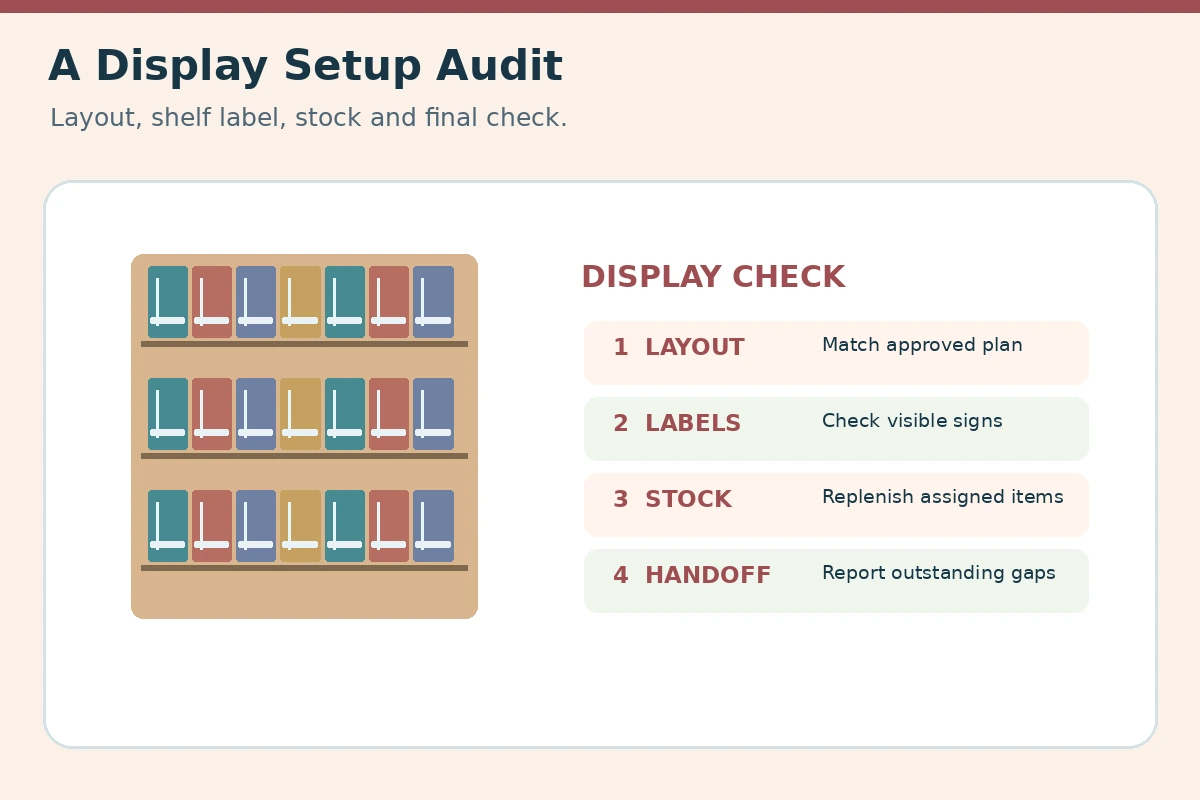
Show Stock Counts and Discrepancy Handoffs
Cycle counts, shelf checks, returns to the stockroom and replenishment are different tasks. Identify the steps you actually completed: scanning an item, comparing shelf quantity with a checklist, recording a discrepancy or preparing a restock cart. Do not imply that you controlled inventory accounting or reconciled financial records if your responsibility was physical counting.
A sample bullet might say: “Checked shelf quantities during assigned counts, recorded mismatches for inventory review, and replenished approved items from backstock.” The verbs reveal your scope. If a supervisor investigated shrinkage or authorized write-offs, describe only your report and follow-up. Avoid including stock-loss estimates you cannot verify or disclose.
Distinguish Customer-Facing Work From Floor Execution
Some merchandising workers spend most of their time behind the scenes; others answer questions about product location, availability and promotions. You can combine those contributions carefully: “Updated promotional signage and helped customers locate merchandise within assigned departments.” Do not add cash handling or returns processing unless you actually performed those duties.
If an employer values teamwork, show a concrete handoff. Perhaps you told evening staff which displays were unfinished or identified an out-of-stock item for ordering review. Those actions demonstrate coordination without an invented customer-satisfaction result. When the job description emphasizes visual presentation, prioritize display work before unrelated sales duties.

Use Metrics Only When Source Records Support Them
Square footage, number of fixtures, items counted or visits completed can help when they come from accurate records and are shareable. They are not mandatory. A percentage increase in sales, conversion or margin should not be credited to you merely because a display changed before a busy weekend. Sales are affected by multiple factors that a floor associate may not measure or control.
If numbers are unavailable, describe verification practices: checking label alignment, dates, product placement and completed handoff lists. Such a process is observable and relevant. If you noticed an issue but another employee made the fix, the resume can say you identified and reported it, not that you personally resolved a system-wide inventory problem.
Tailor Merchandising Evidence to the Target Job
For a store operations role, lead with shelf readiness, replenishment and safety-aware movement of products. For a field merchandiser opening, describe assigned store visits, checklists, approved photos and client reporting if you actually completed those tasks. For a visual merchandising assistant role, emphasize layout accuracy and collaboration with the person responsible for creative direction.
Check that every claim is consistent with your official title and work dates. Avoid listing proprietary layout plans, internal pricing files or store-access details in a public portfolio. The goal is to show reliable execution and handoffs, not to present confidential internal materials as proof. Keep three or four bullets with distinct work products rather than repeating “stocked shelves” several times. When checking a final draft, separate tasks by evidence type: a completed fixture, a count sheet, a replenishment list, and a report to the next shift. If two bullets refer to the same unverified sales claim, replace one with an actual stock or labeling check you can explain. This makes the application useful even without access to storewide performance data.

How We Research and Protect Resume Accuracy
This guide was checked on 2026-11-14 against original primary occupational and resume references: BLS retail sales workers (BLS includes shelf stocking, merchandise arrangement, inventory tracking and customer service among possible retail worker tasks.); CareerOneStop work experience guide (CareerOneStop recommends listing accurate roles, employers and dates, then emphasizing responsibilities and accomplishments relevant to the next job.). We compared the provided WordPress title inventory, the original JobAsk production plan and immediately previous batches for overlap; content is not a claim that private WordPress drafts are publicly indexed. All example bullets are hypothetical and must be adapted to real work. Job requirements and state or institutional rules may vary. Review the JobAsk affiliate disclosure; no paid affiliation is asserted.
More Resume and Cover Letter Guides
It can be part of merchandising work. Describe the specific replenishment or display task and use your true job title.
Only when you have reliable attribution and permission to disclose the number. Otherwise describe the setup and checks you personally performed.
Use it if you actually read or followed one. If you used a supervisor-provided visual guide, describe that accurately.
State that you counted or reported the mismatch and identify the authorized handoff. Do not claim to approve system adjustments if you did not.
Yes. State the actual temporary dates and show the specific merchandising activities that relate to your next role.