
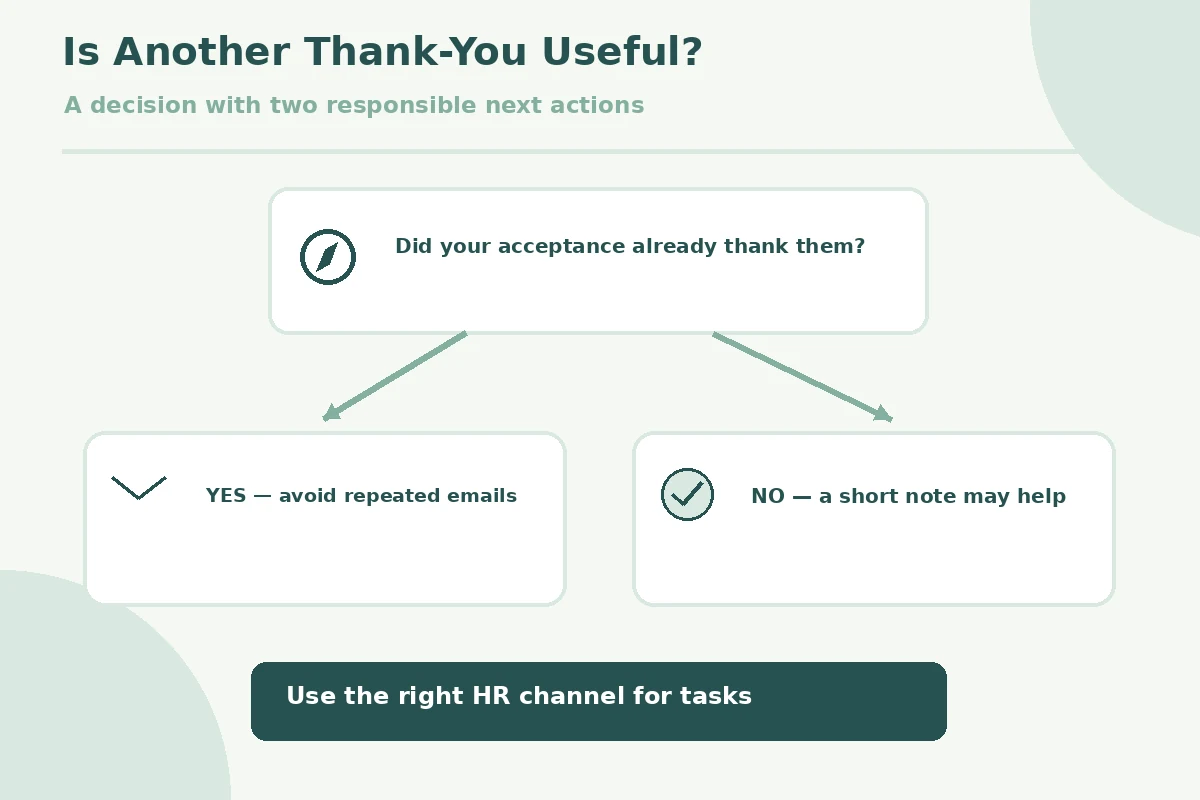
If you have already accepted a job offer through the employer’s stated process, a short thank-you email can acknowledge the people who helped and express readiness for the next step. It is not a second acceptance, a fresh negotiation or an official onboarding submission. Often the acceptance message itself already includes thanks; in that case, another email may add little. Send a separate note only when it has a clear recipient and purpose.
The central distinction is between “Thank you for the offer; I accept” and “Thank you again; I look forward to joining the team.” UC Berkeley’s career-service examples combine clear acceptance with appreciation and a confirmed start date, while Washington University’s career guidance emphasizes reconfirming details as an offer moves into onboarding. This guide helps avoid duplicative or misleading follow-ups.
Verify That Acceptance Actually Happened
First identify the action you completed: a reply email that explicitly said yes, an accepted electronic offer, a signed letter submitted through the correct channel or a documented verbal commitment. Simply thanking the recruiter for making an offer is not the same as accepting it. If you have not accepted, ask for written terms and clarify open questions before using the post-acceptance template.
Check whether the employer sent a confirmation or new-hire instructions. Different systems may require a separate signature or portal step, and a thank-you cannot replace them. Review the original offer for the actual job title, start date and reporting contact rather than relying on memory. If any crucial detail remains disputed, discuss it directly, not as an afterthought in a celebratory email.

Decide Whether a Separate Thank-You Has Value
If your acceptance email already thanked the recruiter and the employer acknowledged it, another immediate note that says exactly the same thing can create unnecessary inbox traffic. A separate thank-you makes more sense when someone invested special time answering questions, introduced the team or provided a clear onboarding handoff. It can also acknowledge a hiring manager who was not included in the final HR paperwork thread.
Keep the purpose small and factual. You might thank the recruiter for coordinating the process, say you look forward to joining in the agreed role, and invite them to let you know if anything further is needed. Do not add flattery about a company culture you have not experienced or claim the employer made promises not present in its written materials.
Use a Short Message That Reflects a Completed Yes
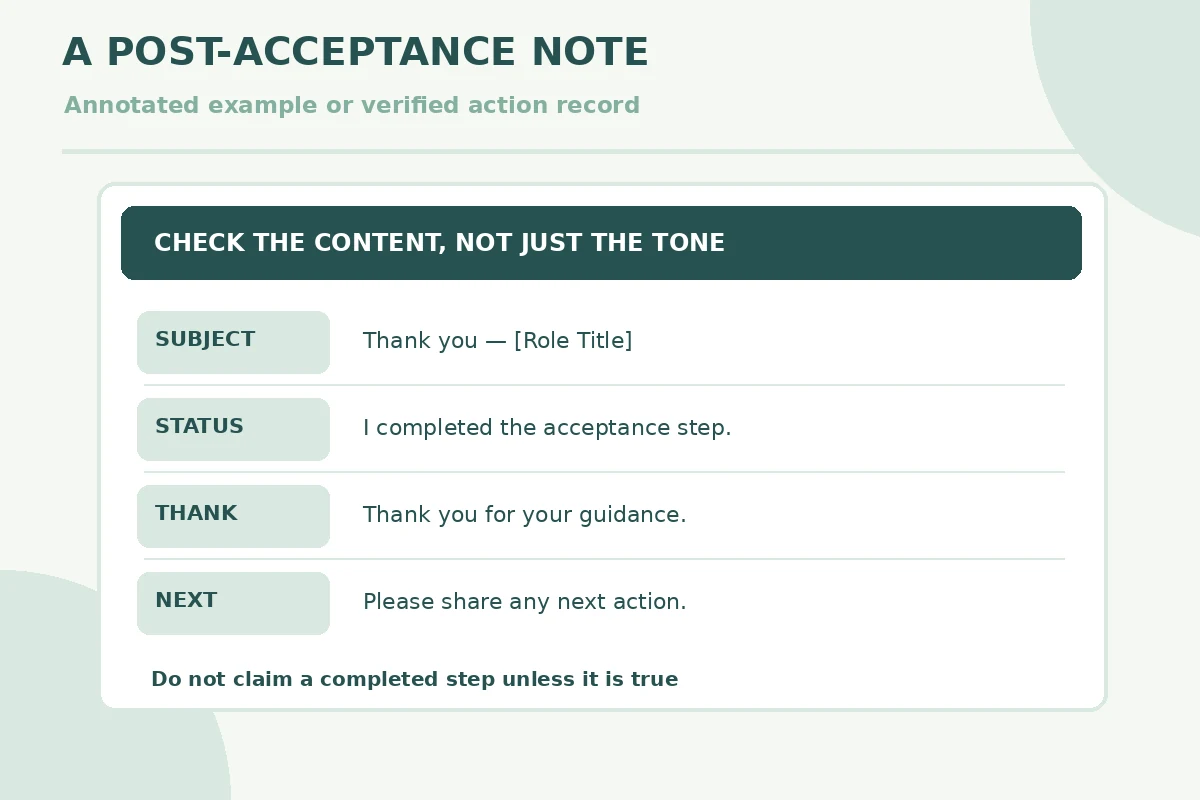
A follow-up note normally needs a subject that stays in the existing conversation, a direct expression of thanks and one sentence looking ahead. You do not need to repeat every compensation term. If the correct start date is already confirmed, mention it only if helpful. Do not say you have completed forms or checks unless you actually did. The email should not be so elaborate that the recipient wonders whether you are introducing new conditions.
Hypothetical post-acceptance note: Subject: Thank you — [Role Title]. Hello [Contact Name], Thank you again for your support during the hiring process. I have completed the acceptance step for the [Role Title] position and look forward to joining the team. Please let me know if there is a next action you would like me to take before my confirmed start date. Best, [Your Name]. Use this only if the statement about completed acceptance is true.
Thank Different People Without a Generic Mass Email
Your recruiter may have handled documents and timelines, while the hiring manager discussed daily priorities. If you write to both, make the messages relevant rather than copying the same long paragraph. A recruiter may appreciate confirmation that the offer is accepted and that you are watching for onboarding instructions. A manager may appreciate one sentence about looking forward to the actual team responsibilities described in the interview.
Do not copy an entire interview panel or guess personal addresses that were not shared. If the employer has one official recruiting channel, respect it. Avoid sending gifts, private documents or elaborate praise in place of genuine communication. If you have no useful new message, no separate thank-you is necessary; professional responsiveness during onboarding can be a better expression of appreciation.
Keep Logistics in the Correct Conversation
If the recruiter sends a secure portal link or a documented checklist, follow that route for forms rather than attaching documents to a thank-you email. Use the HR contact listed in the employer’s instructions for employment eligibility, benefits or payroll questions. Ask an onboarding question only when it is directly relevant, and do not request a reply from people who have already delegated those steps to a named team.
If the start date or work location changes, ask the employer to confirm the new version in writing. Berkeley guidance specifically recommends written clarity about job duties, schedule and starting details. Treat the discrepancy as an operational issue that needs confirmation rather than casually saying you agree with an unverified adjustment.
Protect Private Information After an Offer
A real job offer can be followed by legitimate new-hire instructions, but verify the destination before sharing sensitive data. FTC advice documents impostors who use supposed onboarding messages to solicit financial information and advance payments. An unexpected request to buy equipment, pay a registration fee or send a photo ID to an unverified personal account deserves independent checking.
Keep any thank-you note free of Social Security numbers, banking details, copies of identity documents and passwords. If a link to an onboarding platform seems unfamiliar, ask your verified HR contact or use the employer’s known website to confirm it. A courteous reply is not a substitute for determining whether a sensitive request is legitimate and necessary.
Avoid Making New Promises You Cannot Yet Keep
A thank-you should not commit you to relocation, travel, early training, a particular office arrangement or a different starting date unless these have been agreed. Do not write that you are “fully cleared” while employer checks or credential reviews are still pending. When the offer is subject to stated conditions, acknowledge the actual process and follow the instructions without converting it into a guarantee of final employment.
After sending, save any reply that identifies your onboarding contact or next task. If nobody responds, do not send a chain of increasingly enthusiastic reminders. Use the documented onboarding route for necessary questions and focus on preparing for the role. The aim is gracious closure of the hiring conversation, not extracting another promise from the employer.
How We Research This Offer Scenario
Compared offer acceptance examples with guidance about subsequent employer instructions. The send-or-skip decision tool and follow-up email are original hypothetical editorial examples. We reviewed: official career guidance; professional offer evaluation advice; government and consumer-safety information; additional professional guidance.
These are general U.S.-oriented career communication examples, not individualized legal advice, an employer policy, a documented candidate success story, or a guarantee of employment. Every sample scenario, employer reference and message is hypothetical. Check the actual offer and organization-specific instructions. Affiliate disclosure: no affiliate or sponsorship relationship is claimed.
Related Workplace Guides
- After Accepting a Job Offer: An Onboarding Checklist Before Day One
- Questions to Ask Before Accepting a Job Offer and How to Email Them
- What to Do After Accepting a Job Offer: Your Pre-Start Checklist
- Before Accepting a Job Offer: Compare the Terms That Matter to You
- When to Give Notice After Accepting a Job Offer: Check the Risks
It is optional when your acceptance already expressed thanks; send one when it adds a meaningful acknowledgment or clear next step.
No. State acceptance explicitly through the employer’s required method before treating the offer as accepted.
A brief question is fine if the recipient is responsible; otherwise use the designated HR or new-hire channel.
Not in a simple thank-you. Confirm any unresolved terms in the appropriate written discussion instead.
Do not claim they are complete; follow the actual contingency and onboarding instructions.