
Virtual assistant job application: A virtual assistant job application should show the specific administrative service you can perform, the tools you genuinely know, and the time coverage you can provide. It should not promise unlimited availability, claim experience with every platform, or expose a former client’s inbox to prove credibility. First distinguish employment from independent contract work, verify the client or employer, and then match a small set of safe work examples to the actual posting.
Identify whether the opening is employment or a contract
“Virtual assistant” can describe scheduling, email triage, document formatting, data entry, meeting coordination or specialized support. The title does not establish how the relationship is structured. Read whether the posting describes employee hours, a fixed project, ongoing client support, or a separate freelance service agreement. Do not treat any of these labels as a guaranteed tax or legal classification; clarify terms with the actual organization and qualified advisors where necessary.
Extract the three most important duties from the description. A calendar-centered role requires evidence of invitations, time-zone handling and changes. An inbox role may require sorting and escalation while preserving confidentiality. A research role may demand source checks and versioned deliverables. A candidate who can demonstrate one area convincingly may be a better match than someone who lists every remote tool without examples.
Build a small, privacy-safe work sample
You do not need to reveal real calendars, contact lists or client data to explain your workflow. Create a clearly labeled fictional schedule, a sample meeting agenda, or a redacted process template you have permission to share. CareerOneStop advises that portfolios should clarify the work performed and the applicant’s own contribution. Keep the artifact focused: one sample deliverable, its purpose, tools used and the decision it supports.
A hypothetical sample might show an appointment request arriving in a shared inbox, the assistant checking permitted hours, flagging a conflict and sending an approved confirmation draft for review. Explain which steps you actually did in prior roles and which are merely illustrated. Avoid putting client logos, email addresses, names or internal files into a public portfolio. If a reviewer wants confidential examples, offer a sanitized description instead of violating a prior obligation.
Match tools to tasks rather than padding the skills list
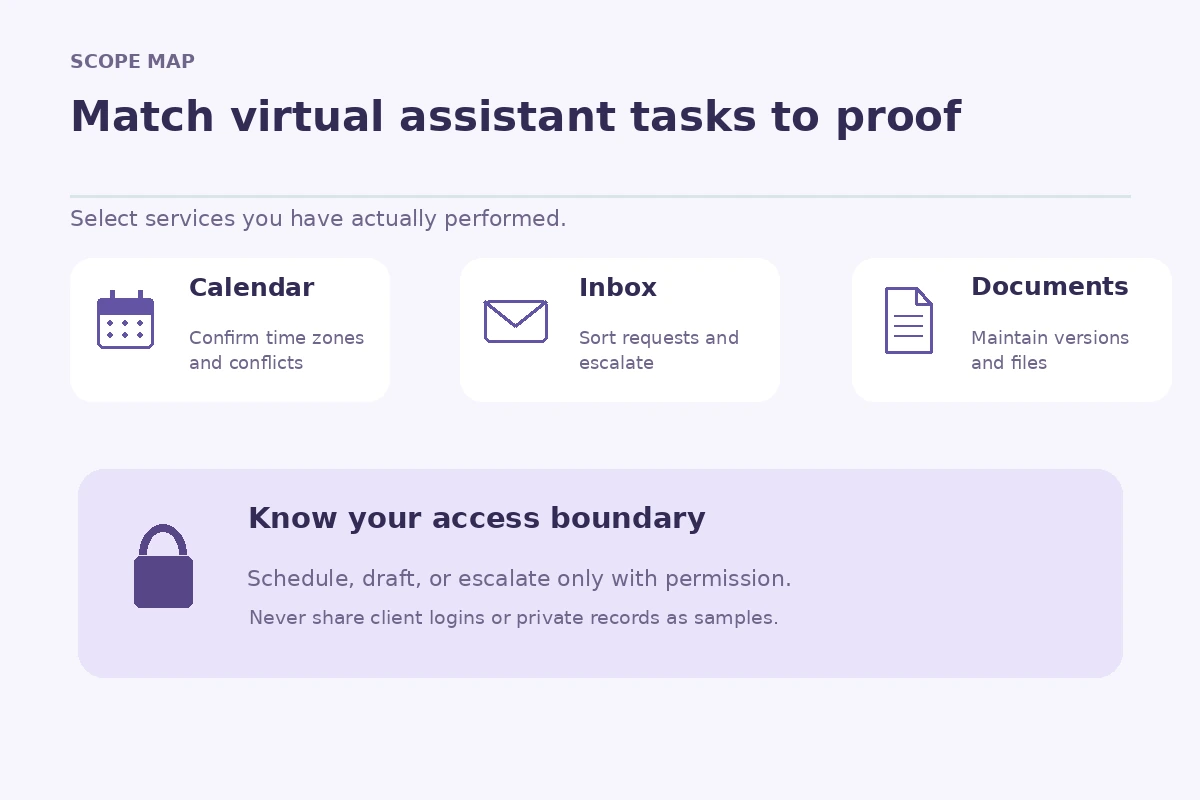
O*NET describes administrative work that includes maintaining calendars, drafting correspondence, organizing files and updating records. That provides useful task vocabulary, but does not establish that every virtual assistant job uses the same software. List a calendar application only if you have used it. Explain whether you scheduled meetings, entered data, edited documents or simply received invitations. Be precise about tool proficiency and permission levels.
If an employer wants unfamiliar software, you can describe a similar process you learned and state that you would follow its onboarding documentation. Never claim advanced automation because you used a basic reminder. A truthful example could say, “Maintained a shared task tracker and notified the owner when a deadline changed.” It cannot support “administered companywide access controls” unless you really did so.
State coverage hours and handoff boundaries
Remote administrative work often depends on when a person is available. Record your time zone, actual recurring hours and notice periods for schedule changes. If the posting requires overlap with a manager or customers in another zone, translate that overlap into your local time before checking an availability box. Do not promise to monitor messages outside paid or agreed hours just to look responsive.
Explain how you handle work that exceeds your authority: flag a conflict, draft a suggested response and request approval when necessary. Scheduling a meeting is different from accessing sensitive financial accounts or signing a contract on behalf of a client. If a form asks about financial administration or travel booking, describe only genuine tasks and boundaries. Written responsibilities and secure access practices matter more than a vague promise to “do anything.”

Screen remote recruiters and suspicious task offers
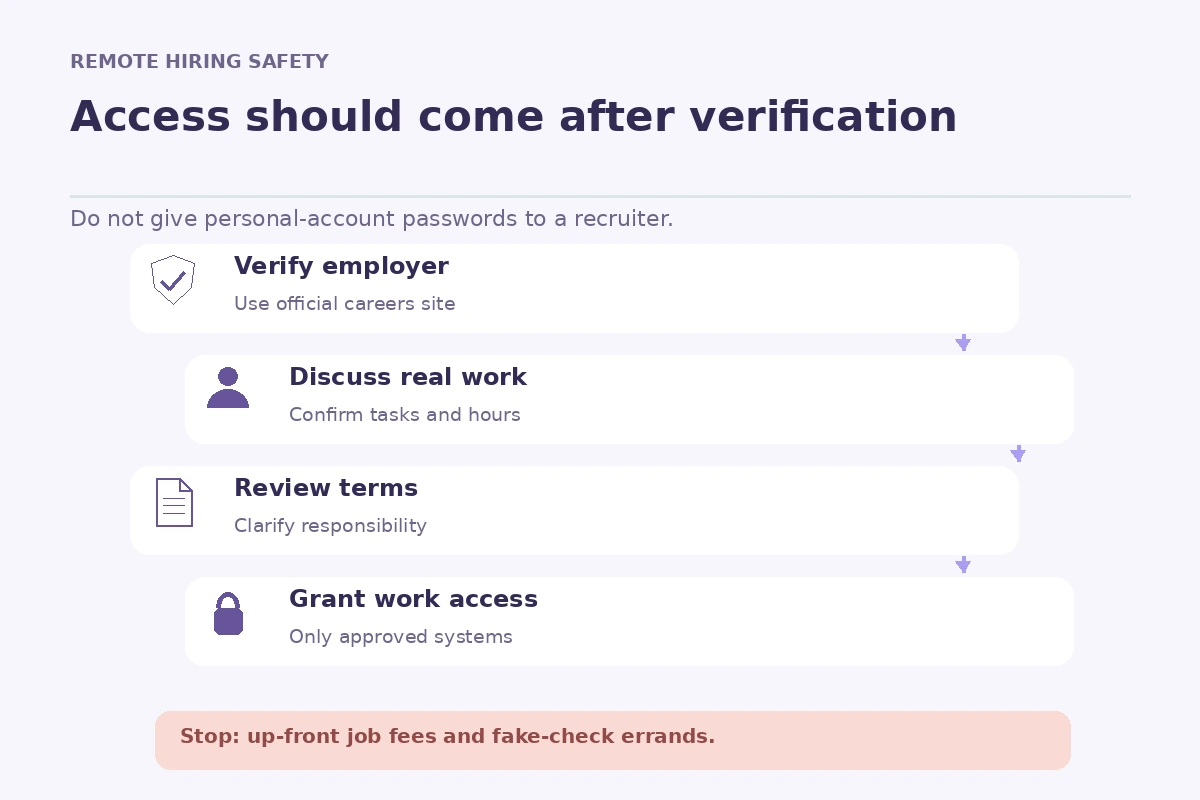
Remote opportunities can attract impersonators. The FTC cautions that scammers advertise work-from-home roles and demand money for starter kits or supposed certifications. Independently locate the employer or client website, check the hiring contact and review whether the same role is advertised through a credible route. An unsolicited interview link, personal messaging handle or glossy offer letter by itself does not verify the organization.
Avoid sending bank credentials, one-time passwords, client logins or copies of sensitive identification to an unverified contact. A genuine employer may collect necessary onboarding details through a secure official process at the appropriate stage; that is different from a stranger demanding information before the job is established. Do not accept a check-purchase or money-transfer task as an “assistant trial.” The FTC specifically warns about fake-check employment scams.
Prepare an application that shows actual ownership
In the application form, link each requirement to one short example: input, action and output. If a task was completed under review, state that. For instance: “Updated weekly appointments from approved requests and highlighted double-bookings for the team lead.” If you only practiced with a simulated calendar, identify it as a training project. Do not invent client testimonials, paid work, response times or productivity gains.
Include an appropriate portfolio link only if the employer requests or permits it. Check that permissions allow the reviewer to view the files without needing a personal account login. Keep sample filenames generic and professional, and inspect sharing settings so confidential folders are not exposed. A single well-scoped sample can be more useful than a folder of unrelated visuals because the reviewer can see what you would deliver.
Confirm submission and protect future access
After submitting, record the official employer or client name, role, URL, date, pay arrangement as described in the posting, expected response channel and any confirmation number. A missing reply does not justify contacting every social-media handle associated with the brand. Follow up through the specified contact route, and do not pay anyone to speed up a hiring decision.
If you receive an offer, verify its origin and clarify supervision, data handling, permitted systems, equipment, working hours and access revocation before accepting work. Never turn over the passwords to your personal accounts. The application stage is a chance to assess whether the job’s boundaries are understandable, not an obligation to share every part of your digital life.
How We Research Online Job Applications
We checked official employer, U.S. government and occupation reference materials on November 4, 2026, and compared these steps with the specific application intent. O*NET: Administrative Assistants (O*NET official administrative assistant task descriptions such as scheduling, records and correspondence). FTC: Work-from-Home Scams (FTC guidance on fake work-from-home recruitment and paying for jobs). CareerOneStop: Portfolios (CareerOneStop recommendations for relevant work samples, clear contribution and privacy-aware portfolio presentation). General role descriptions are context, not proof that a particular job is open or that an employer will hire you.
The examples and visual worksheets on this page are hypothetical and should be adapted only to facts you can verify. Employers may change their portals, assessment stages and role requirements; revisit their current official pages before applying. JobAsk explains its editorial and commercial practices in the affiliate disclosure. No paid placement, hiring outcome or affiliate relationship is claimed here.
Yes when the vacancy permits transferable administrative or project experience. Label school, volunteer and practice projects accurately instead of presenting fictional clients as real employers.
Only with valid permission and appropriate privacy protections; usually a fictional or fully sanitized sample is safer. Never expose confidential contacts, conversations or business records just to demonstrate skills.
No. List tools you have actually used and indicate your level of responsibility. A task-based example showing scheduling or document control is more credible than an unsupported catalog of software names.
Give your actual location or time zone as requested, reliable working hours and any required overlap. Convert posted hours carefully and avoid promising around-the-clock coverage.
Verify the company and process independently and be cautious of up-front payment demands. The FTC warns that fake work-from-home recruiters ask candidates to pay for supposed kits or training.