
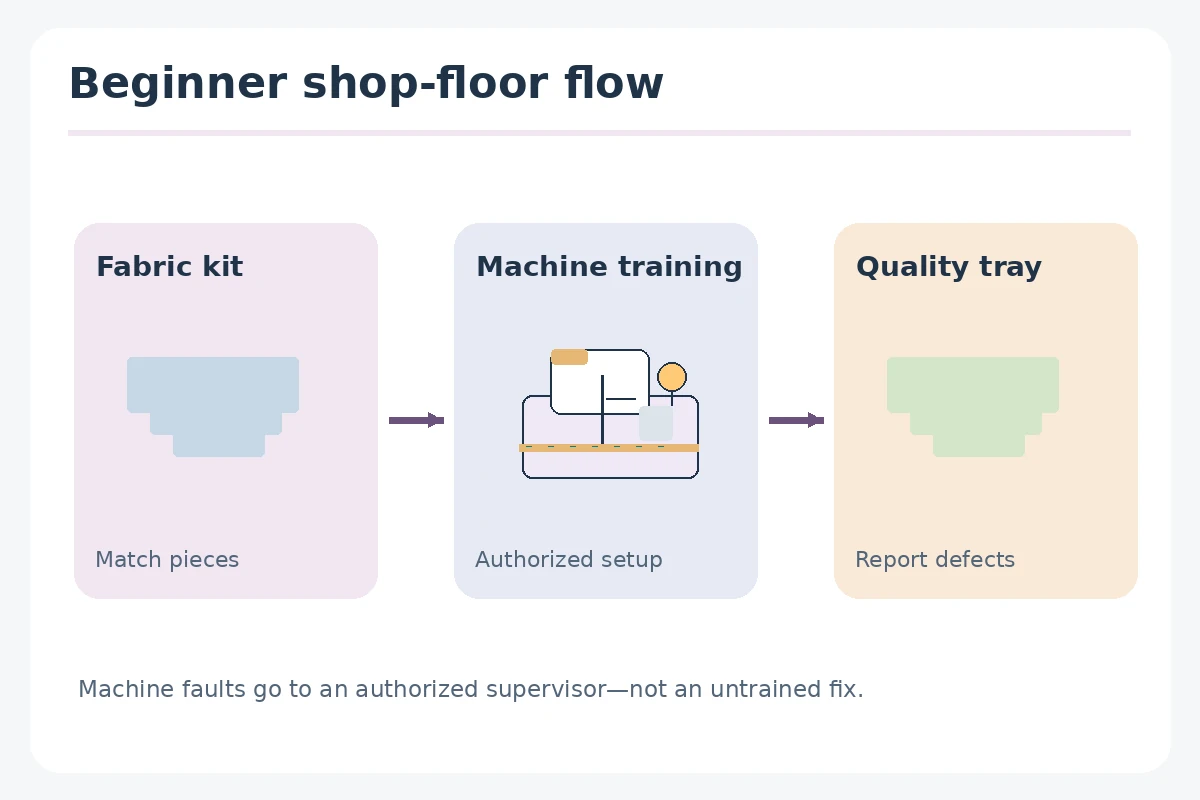
Sewing jobs with no experience can include fabric preparation, simple inspection, packing, hand-finishing and supervised machine training. They are not all identical. A production sewing machine may run faster and use different attachments than a home machine; a workplace may require repetitive motions, quality targets and approved safety procedures. A beginner can compete by showing careful fabric handling, a few dated practice samples and willingness to learn the employer’s actual equipment. Never imply that a home project makes you a trained industrial operator or that you can clear a machine jam without instruction.
Choose a beginner route by equipment and workflow
Look for words such as “production helper,” “fabric prep,” “sample room assistant,” “sewing trainee,” “inspection” and “finishing.” Read the complete duties rather than relying on the title. A helper may sort cut pieces, assemble kits or check labels, while an operator controls a machine and is responsible for stitch consistency. Some postings expect years of machine experience despite describing the work as entry level. Ask which machines you would use, whether practice on the employer’s setup is included, and how performance is measured after training. Do not assume that all sewing positions are in garment manufacturing; upholstery and other fabric products may involve different materials and requirements.
Prepare a modest, honest sample set
If you have access to a safe personal machine, practice a straight seam, a corner, and a seam correction using scrap fabric. Label the material, date, stitch type and what you changed. If you do not have machine access, create a clear hand-finishing or measurement exercise and describe it accurately. Do not submit someone else’s product or imply that practice was paid production. A sample can reveal whether you can align fabric, check a measurement, record a mistake and repeat a step consistently. A hiring manager can still require an on-site assessment, and your sample does not replace approved workplace training or machine authorization.

Understand what a good seam check actually does
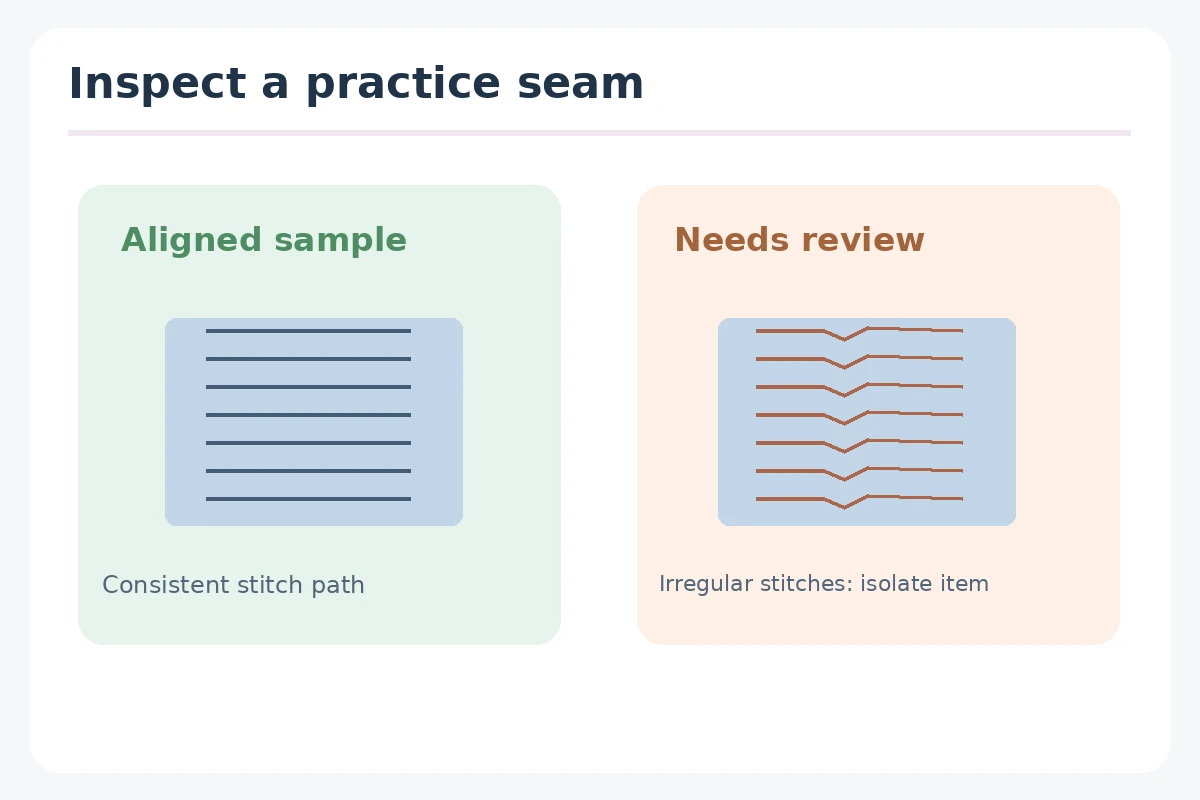
O*NET describes monitoring stitches, thread breaks and defects as parts of sewing-machine work. For a beginner, the safe lesson is to compare output with an approved sample or written specification. Check for visible skips, uneven alignment, misplaced pieces and labeling errors; write what you observed rather than inventing a root cause. If a seam looks wrong, set the item aside in the location your supervisor specifies and ask for review. Do not declare a finished article acceptable solely because the seam looks neat. Production standards may involve strength, measurements and customer instructions beyond what a new employee can assess.
Respect moving parts and maintenance boundaries
Industrial sewing equipment has needles, cutting attachments, power feeds and moving components. Machine guarding and workplace procedures matter even if a home machine feels familiar. Ask how to stop the machine, where to report a problem, and which adjustments trainees may perform. Do not reach into moving machinery or clear jams without following the site’s training and authorization. Wearing loose items near moving parts and using unsuitable materials may also be hazards; follow the employer’s safety rules rather than a tip from a video. Describe safety awareness on your application as a willingness to learn and follow instructions, not a certification you have never earned.
Look beyond speed promises in job advertisements
Some textile postings emphasize output per hour. Ask whether the stated expectation applies during supervised training, after a learning period or only to experienced operators. Clarify breaks, shift length, whether tasks rotate, and who handles quality rework. If the role is paid by piece, request the written pay method and applicable employment terms rather than guessing what an inexperienced worker will earn. A realistic beginner search compares job duties, machine type, physical demands and instructional support. It should not be built around a promise of easy high income from stitching.
Write a resume using observable work and habits
Translate school, hobby or volunteer projects into verifiable examples. “Cut and labeled pieces for a community craft sale using a measurement checklist” can show organization if it happened. “Operated an industrial overlock machine to production standard” should appear only if true. For a personal sample, list the technique and the limit of your practice. If you have completed an actual safety or manufacturing course, provide its exact name; otherwise do not invent a credential. Strong beginner evidence includes following instructions, spotting discrepancies, logging work and handling materials carefully, not an inflated years-of-experience figure.
Prepare for the practical assessment and interview
A job may involve aligning pieces, demonstrating a simple seam or identifying a defect in a sample. Ask the assessor which equipment you may touch and which safety briefing applies before starting. If you have not operated that machine, say so. Explain how you would review the instructions, set up under supervision, test a small approved sample and notify the supervisor if the output differs. An interviewer who sees you clarify tolerances may learn more than from a rushed performance. Avoid making repairs or alterations outside the test directions, especially when the machine belongs to the employer.
Compare the opportunity with a repeatable checklist
Record machine type, training provider, safety induction, inspection method, shift arrangement, production pace, physical requirements and supervisor contact. An opening with a clear training sequence may be a better first step than a vague promise of “quick money at home.” Be cautious with offers that ask you to buy a machine or pay a recruiter before confirming the employer and written terms. Ask who supplies needles, thread and protective equipment. After applying, save the job posting and your sample photos, then follow up using the employer’s stated procedure. The objective is a safe first textile role with tasks you can learn and evidence you can defend.
How We Research Beginner Job Routes
We compared U.S. government occupational descriptions, official worker-protection guidance and role-specific evidence rather than treating any one advertisement as a promise of a vacancy. Requirements can differ by employer, location, task authorization and date. The hypothetical examples above are learning exercises, not fabricated job offers, credentials, or guarantees of hiring. Always confirm the final scope and terms directly with the employer and the relevant authority where applicable.
Sources checked November 10, 2026: www.onetonline.org; www.bls.gov; www.osha.gov. Our editorial and affiliate policy is described in the affiliate disclosure. This informational article does not promise placement, income or hiring outcomes.
Related Job Search Guides
It can demonstrate genuine practice, but label it as personal work. Industrial machines, quality standards and pace may differ substantially.
Not necessarily; production workplaces commonly use their own equipment. Read the posting and verify any requirement to purchase tools before accepting.
Stop or isolate work as your training directs, record what you observed and notify the authorized operator or supervisor. Do not troubleshoot moving parts without approval.
No. Pay arrangements vary. Request the employer’s written pay method, training terms and schedule; do not rely on a headline earnings claim.
Describe the exact machine and supervised practice you completed. Do not claim production competence or a workplace credential you have not earned.