
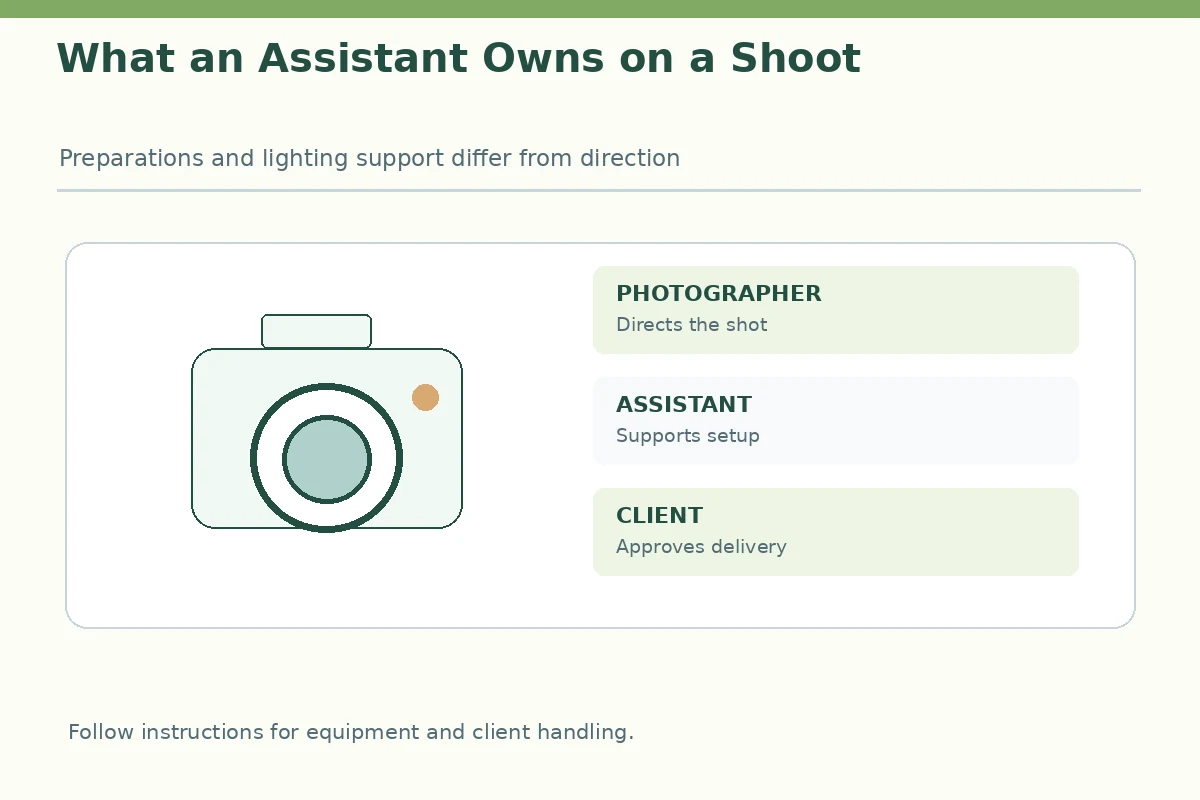
Photography jobs with no experience are easier to evaluate when you separate a photographer assistant position from an independent paid photographer assignment. A beginner might help prepare equipment, set up permitted lighting, organize files or support a studio session. The person directing the shoot may retain responsibility for client instructions, safety and the final image delivery. Build a small sample portfolio using your own permitted photographs, document your contribution, and verify each employer before accepting an invitation to work.
The Bureau of Labor Statistics says photographers plan compositions, use lighting, edit images and maintain portfolios; many photographers initially work as assistants. Some photographers are self-employed and may expect assistants to work on location, carry equipment and manage variable schedules. This does not mean a beginner should promise professional event coverage without supervision. A portrait studio assistant, product photography assistant and school-photo support worker may have very different client contact, handling and travel duties. Read the listing instead of relying on its creative-sounding title.
Compare Real Entry Routes Before Applying
Three names often appear near this search. They do not describe identical duties, hiring standards or authority. Read the actual posting and separate possible beginner tasks from roles that call for previous experience or specialized credentials. Here is a practical comparison for photography jobs no experience:
| Route | Work or boundary |
|---|---|
| STUDIO ASSISTANT | Prepare a backdrop, check inventory and support booked sessions within instructions. |
| PHOTO PRODUCTION AIDE | Label files, prepare props and help a photographer with documented tasks. |
| INDEPENDENT PHOTOGRAPHER | Responsible for client outcome, pricing, releases and final delivery; not the default entry path. |
Build Proof Without Inventing Experience
Build a five-to-eight-image portfolio with work you created and have permission to display. It can include a tabletop still life, an indoor object with controlled window light, a simple before-and-after exposure comparison, a portrait with permission and a mock product series. Show the purpose of each image and what you controlled. For an assisted shoot, list only your contribution, such as “prepared backgrounds” or “organized labeled selections.” Do not imply you shot, edited or owned pictures you merely handled. The U.S. Copyright Office explains that original photographs are copyright-protected; ownership and display permissions matter.
A Four-Step Search and Application Workflow
Step 1: Identify the real work behind the listing
Search photo assistant, studio assistant, photography production assistant and school-portrait assistant separately. Determine whether the employer has a physical studio, a verifiable professional site and documented sessions. Check what equipment is provided, whether travel is required, whether schedules include weekends and whether training is offered. A professional photographer may need help before the shutter is pressed and after files are captured; the job description should say where you fit.
Limit to remember: Do not assume that “assistant” means independent authority to photograph paying clients.
Step 2: Prepare safe and specific sample photographs
Make an honest small portfolio around practical shooting skills. For a product photo, record the lighting setup, intended background and final crop. For an indoor portrait, obtain permission from the person and follow any venue rules. Show only images that you own or can display with permission, avoid exposing private addresses or names and do not use client material from another job as a sample without consent.
Limit to remember: A photo taken during an unpaid event may still have restrictions on copying or public posting.

Step 3: Ask about shoot supervision and equipment
Clarify who directs the shoot, who handles lights, stands, backgrounds and expensive gear, and whether the assistant is trained on setup and lifting procedures. Ask about file naming, backup and handoff methods without requesting access to client galleries in advance. Confirm start and finish times, travel reimbursement and whether the assistant is paid as an employee or contractor; do not assume work status from a casual message.
Limit to remember: Never claim approval to publish, sell or alter client images unless that permission exists.
Step 4: Apply with a contribution-first message
Write a short note linking a permission-safe sample gallery and naming specific tasks you can demonstrate: inventory checks, file organization, basic exposure understanding or customer coordination. If you have only class or hobby work, call it that. Follow the studio’s stated application method and verify the contact independently. A legitimate studio should be able to describe the assignment before asking you for banking details.
Limit to remember: Do not send identification or account details to an unverified social media recruiter.
Which Route Fits? A Decision Table
| What you see | Safer next step | Verify with |
|---|---|---|
| Studio needs equipment setup support | Ask for training and a defined supervised task | Shoot schedule and lead photographer |
| Client images are requested in your portfolio | Seek explicit permission; omit without it | Rights and release status |
| Job asks for costly gear purchase upfront | Verify role and payment terms independently | Employer website and written contract |
An Application or Work Sample You Can Adapt
Illustrative application note: “Hello, I am interested in the Studio Assistant opening. In coursework and personal projects I have practiced adjusting a simple two-light tabletop setup, organizing image filenames and checking that a shot list is complete. My linked sample gallery contains photographs I made and may display; it is not client work. I would welcome training on your studio’s equipment and file workflow. Could you confirm the usual session schedule and whether assistants handle setup or postproduction?” Replace every detail with true experience. Do not send original high-resolution masters simply because someone asks for a free trial gallery.

Mistakes That Make a Beginner Application Less Credible
Do not confuse creative taste with evidence that you can assist on a paid production. A beginner who communicates carefully, arrives for a scheduled shoot, labels files accurately and handles gear according to instructions may be more useful than someone claiming to be “expert” in every camera system. Avoid a portfolio assembled from internet images, watermarked client galleries or portraits whose subjects never agreed to display. Do not assume that crediting an artist automatically grants reuse rights. The copyright and permission decision should happen before uploading a sample, not after a complaint.
A Simple Follow-Up and Verification Plan
Keep a list of studios, local production companies and institutional photo teams, noting verified careers pages and whether positions are seasonal, part-time or scheduled per shoot. Before an interview, write three questions: Who sets the shot list? Who approves client-facing exports? What equipment must an assistant safely learn? After any legitimate opportunity, log what you actually assisted with and whether you have permission to discuss it. A small accurate portfolio improves trust more than a large collection with uncertain authorship.
Review This Role Before You Say Yes
Before you give an employer sensitive information, confirm that it is the correct organization and that the role exists. Read the description for where the job happens, how the work is supervised, whether the training is paid, and which shifts are required. If the employer uses an agency, verify the agency through a trusted source. Do not assume that a recruiter message, a course certificate or a public participation badge guarantees employment. Keep copies of the actual posting, the dates of your communications and the tasks you were asked to complete. If a condition is unclear, request a written explanation rather than filling in the missing facts yourself.
How We Research Entry-Level Job Routes
We reviewed occupational and public-interest guidance on 2026-11-14. www.bls.gov explains bLS describes photography portfolios, on-location work and photographer assistant learning. www.copyright.gov explains the Copyright Office explains photo authorship, rights and permissions. consumer.ftc.gov explains fTC explains how fake recruiters seek money and personal information before actual hiring. We also compared the intended query against the supplied JobAsk inventory. The example people, application notes and practice scenarios here are fictional; they are not active job advertisements, employer endorsements or guaranteed hiring paths. Local eligibility rules, workplace policies and position details can differ. See our affiliate disclosure.
Related Job Search Guides
Some studio assistant roles focus on training and practical skills. Read the position: independent photographer work may need a stronger portfolio, equipment knowledge and client-facing responsibility.
Only when you have the relevant permissions and accurately name your own contribution. Being present on set does not make you the photographer or copyright owner.
It can demonstrate practical tasks if it is honestly labeled and permission-safe. It does not establish that you were the paid lead photographer.
Ask the employer what it supplies and what is truly required. Do not buy costly gear or pay a recruiter based only on an unverified message.
Rights and permissions depend on the photo and its intended use. Check copyright ownership, subject consent where relevant and any client agreement before displaying images.