
IT help desk experience belongs on a resume when you can connect the technical problem you handled with a specific action and a clear handoff. Identify the support channel, the system or device category, what you actually diagnosed, and whether you resolved the request or passed it to a specialist. This is more useful than a bullet that only says “provided excellent IT support.”
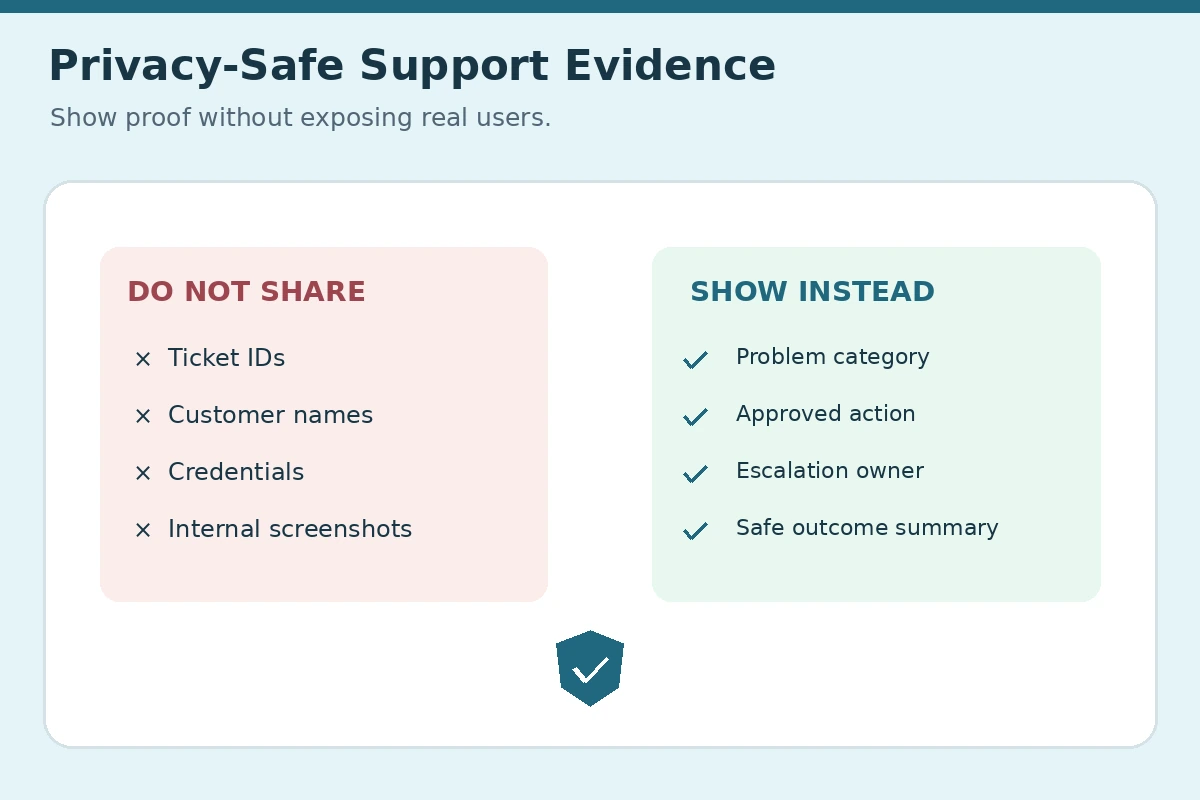
A ticket may contain private names, device identifiers, passwords or internal incidents. Your resume should not. Translate the pattern of work into non-sensitive language, using genuine counts only if you have reliable records and permission to share aggregated information. The Bureau of Labor Statistics lists troubleshooting, documentation, user guidance and escalation-related duties for computer support specialists, but the exact scope varies by employer.
Separate the Support Tier From Your Actual Authority
Help desk roles range from first-contact intake to advanced technical investigation. A first-level analyst may verify a problem description, follow approved steps, reset access through an authorized workflow and escalate unresolved faults. A desktop technician may replace an approved peripheral, while a network administrator may control infrastructure changes. A resume should name the tasks you performed, not borrow another team’s authority just because its name appears in the ticket history.
List the official role title, employer and dates first. Next add a short, accurate context line such as “Internal user support for office laptops and collaboration tools.” If you worked on a volunteer technology desk or a supervised student help desk, label that context honestly. Do not upgrade a school placement to paid employment or describe observation of a network change as production administration.
Build Each Bullet From a Real Ticket Lifecycle
Use a simple evidence chain: reported symptom, your authorized check, your communication to the user, and the disposition recorded in the ticket. For example, an illustrative first-level technician could say: “Documented login failures, completed approved account checks, and routed unresolved access cases to the identity team with clear reproduction notes.” That describes useful work without claiming privileged access.
Compare that with “Fixed every computer problem.” The second wording hides the problem type, omits the user context and suggests impossible breadth. If you consistently provided step-by-step guidance to new employees, describe the instructions and follow-up. If your involvement stopped after opening a ticket, say so; honest triage is still relevant experience.
| Ticket element | Safe resume evidence | Avoid claiming |
|---|---|---|
| Intake | Captured symptoms and impact | Diagnosed systems not tested |
| Troubleshooting | Followed approved diagnostic steps | Access beyond your authorization |
| Escalation | Wrote notes for specialist handoff | Fix delivered by another team |
| Closure | Confirmed outcome when assigned | Unverified resolution rate |

Choose Evidence That You Can Verify and Share
An employer may want to know the type of ticket system, operating environment, remote support method, and knowledge-base documentation you used. Name only tools and platforms you actually touched. A generic technology name is not evidence of proficiency; a short explanation of how you recorded steps or confirmed a fix is stronger. Use exact product names only when they add relevance and are not confidential.
Metrics should represent recorded work, not an imagined improvement. Ticket volume may be misleading if complex issues are treated like password questions. A response-time claim needs a consistent definition and a real report. If you lack verified numbers, show the process: “Updated ticket notes after user confirmation and recorded unresolved issues for the next shift.” This conveys diligence without unsupported percentages.
Show Escalation and Security Boundaries Clearly
Differentiate a solved request from a well-managed escalation. State who owned the next action, such as the network group or information-security team, and what safe reproduction steps you supplied. Avoid giving a resume reader the contents of an actual incident, user identity or protected system inventory. Where access controls restricted your work, emphasize correct routing and adherence to approved procedure.
If you participated in a broader outage, specify whether you monitored alerts, sent an approved update, or performed a change. Do not claim to have restored service simply because your team later closed the incident. A truthful bullet can say: “Collected user reports during a service interruption and maintained status notes for the incident lead.” It tells the reader precisely what you owned.

Match Your Experience to the Next Support Role
For entry-level user support, prioritize listening, problem classification, documentation and customer communication. For a desktop support job, put verified installation, device setup, asset-handling and in-person diagnostics first. For a more technical support position, show only network or software diagnosis you truly performed. Reorder existing facts; do not rewrite history to match the wording of every vacancy.
Review each posting for whether it expects independent decisions, on-call coverage, service-desk routing or supervised troubleshooting. Highlight specific evidence that meets the expectation. If you are missing required experience, include a separate lab or training project with an honest label rather than implying that you performed it in production.
Audit Dates, Tools, and Outcomes Before Submitting
Check the employer name and dates against your records. Verify that your resume distinguishes full-time work from a contract assignment or a campus support role. Remove internal URLs, ticket identifiers, customer screenshots and credentials. Ask whether another person could trace a sensitive situation from the wording of a bullet; if so, generalize the example while preserving your actual responsibility.
Read every bullet aloud and ask: What happened? What did I do? Who approved the next step? What was recorded? If one answer is missing, make the wording narrower. Two good, evidence-backed bullets often tell a clearer story than a long list of tools, superlatives and generic “resolved problems” claims.
How We Research and Protect Resume Accuracy
This guide was checked on 2026-11-14 against original primary occupational and resume references: BLS computer support specialists (BLS identifies problem diagnosis, user guidance, documentation, maintenance and escalation as common computer support duties.); CareerOneStop work experience guide (CareerOneStop recommends listing accurate roles, employers and dates, then emphasizing responsibilities and accomplishments relevant to the next job.). We compared the provided WordPress title inventory, the original JobAsk production plan and immediately previous batches for overlap; content is not a claim that private WordPress drafts are publicly indexed. All example bullets are hypothetical and must be adapted to real work. Job requirements and state or institutional rules may vary. Review the JobAsk affiliate disclosure; no paid affiliation is asserted.
More Resume and Cover Letter Guides
Yes, when the count is real, consistently defined, and safe to share. Otherwise describe ticket types, documentation and handoffs without a number.
Show the value of accurate intake, safe first checks and thorough escalation notes. Do not call escalated tickets independently resolved.
No. List systems you actually supported, with enough context to explain your work. Familiarity with a name is not the same as work experience.
Avoid screenshots containing internal systems, names or access data. Use a permission-approved and sanitized example if a portfolio is appropriate.
A home lab is a project or training activity, not a paid help desk role. Include it under an accurately labeled section when relevant.