
An IT help desk resume with no paid experience should prove how you think through common support problems—not claim you worked a ticket queue you have never seen. Use real practice labs, computer club activities, volunteer technical assistance performed with permission, or coursework to show your ability to clarify a symptom, test a safe hypothesis, document the result and ask for help when needed. Describe personal equipment and simulated issues as labs, not employer incidents. The most credible beginner resume makes your technical limits visible alongside useful support evidence.
Define the specific help desk role first
Entry-level support job postings differ: some focus on password and device guidance, others on software questions, equipment inventory or remote user communication. O*NET and BLS describe diagnosing computer problems, documenting them and communicating steps to users. A basic service desk role is not necessarily a network administrator, security analyst or system owner. Create a two-column list of employer requirements and your actual evidence. An application that asks for basic operating-system troubleshooting can be supported by a home lab; a listing that requires managing production identity access cannot be satisfied by merely watching an online tutorial.
Turn a home lab into a reproducible support record
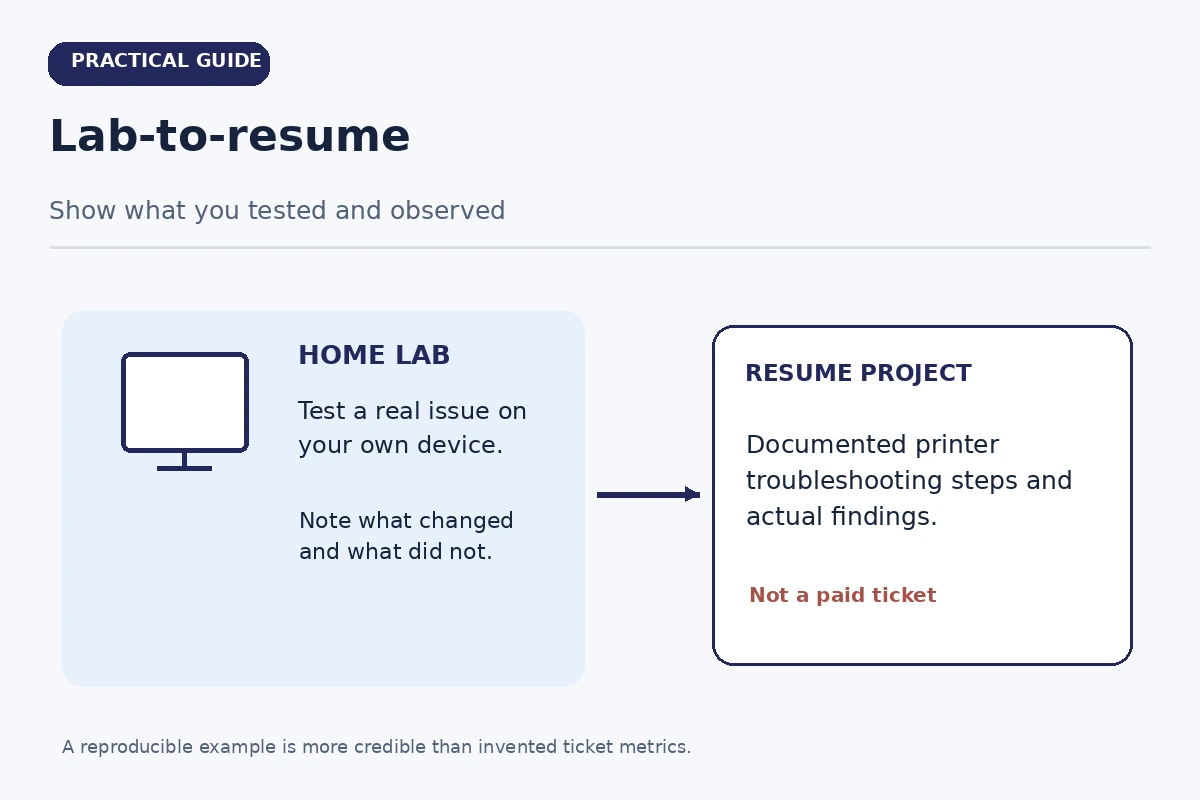
Choose a safe issue you really explored on your own equipment, such as a printer not appearing, a test account lacking access to a local folder or an application failing to open. Write five fields: symptom, environment, checks, observed result and next action. If you cannot reproduce the problem, do not invent a successful fix. A hypothetical practice note might say: ‘Tested a printer connection on a personal laptop; checked cable, device selection and queue status; documented which steps changed the symptom.’ This is a lab, not a customer ticket or a measured service-level achievement.

Show communication rather than only hardware names
Help desk work involves translating technical observations into user-friendly instructions. Describe how you would ask for the error message, reproduce the action, confirm what the person is allowed to share and explain the next step without blame. If you really helped a family member update software, label the context as informal assistance, not a professional contract. A useful practice artifact can contain a sample response: ‘Please confirm the exact message and whether the issue occurs after restart; do not share your password.’ Avoid scripts that ask people to disclose credentials or disable security controls just to make a test appear successful.
Write bullets from observed evidence, not fictional tickets
Hypothetical lab bullet: ‘Documented three repeatable steps for diagnosing a local test printer queue and recorded the observed outcome after each check.’ The number three is part of this invented example; use it only if your own records support it. A school-club example might read: ‘Helped classmates locate approved software instructions and referred account-access problems to campus IT staff.’ That wording shows escalation boundaries. Do not label volunteer or classroom support as enterprise service-desk employment, claim a resolution percentage, fabricate a Jira ticket count or publish a made-up customer satisfaction score.
List technical skills at the depth actually used
Break the skills area into operating systems, basic diagnostics, documentation tools and user communication. If you have only installed software on a personal computer, do not claim that you deployed enterprise applications. If you completed a course with hands-on exercises, name the course and relevant practiced tasks, not every technology mentioned in lecture. Certification and training are separate: a course-completion certificate is not automatically an industry certification. Include dates and issuers accurately, with an ‘in progress’ label when warranted. A short project explanation is often more valuable than a long alphabet soup of tools.
Handle permissions, privacy and escalation properly
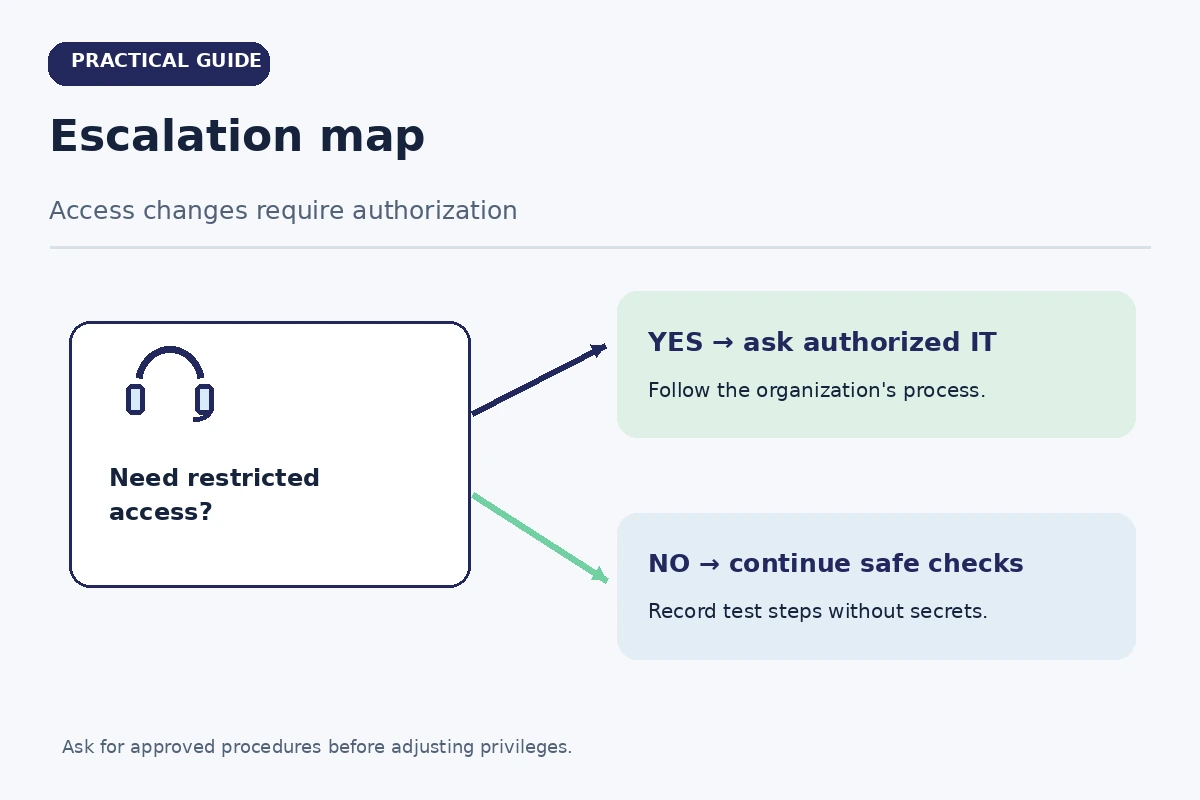
Never include real passwords, IP addresses, credentials, private screenshots or identifiable user records in a publicly linked portfolio. If you show a sample ticket, use fictional data created for demonstration. NIST’s technical-support role description emphasizes approved processes; in an actual organization, a support worker should follow authorization and escalation procedures. A beginner who says ‘I would ask a supervisor before changing access permissions’ demonstrates judgment. Avoid describing security bypasses, privileged account changes or live network modifications as personal achievements unless you were explicitly authorized and the detail is safe to disclose.
Choose a resume order that exposes the strongest proof
Use a precise summary such as ‘Entry-level support candidate with hands-on personal Windows troubleshooting labs and clear issue documentation,’ but only if true. Follow with relevant projects, verified training or education, transferable customer-facing experience and accurately graded skills. A retail or hospitality job may demonstrate calm explanation and follow-through if those are your real duties. Give every lab a name, a tool or environment, the problem and what you learned or verified. Avoid a dense page of brand logos or a list of certifications you merely hope to earn. Keep links accessible and relevant.
Audit each claim before the final application
Open your PDF, test each project link and confirm that a technical reader can follow your described steps. Separate independent lab actions from cases where an instructor directed you, and distinguish an observation from a successful resolution. Remove employer secrets if you have prior unrelated access. If a lab has failed, an honest explanation of tests and escalation can still demonstrate careful thinking. Compare the finished resume with the role’s actual requirements, but do not use every requested keyword unless supported by evidence. Competence grows through practice; the entry-level document should make that path inspectable.
Practice discussing one real troubleshooting lab
For an interview, practice explaining one lab from beginning to end in plain language. Separate the problem statement from your assumptions, the checks from the results, and a safe escalation decision from an unauthorized fix. A technical employer can evaluate that reasoning even when you lack paid tickets. Save a cleaned, fictionalized demonstration note rather than sharing actual access information. A support resume should prove curiosity and documentation discipline without pretending to have production permissions.
How We Research Entry-Level Resume Guidance
We compare official occupational descriptions and other relevant primary guidance with the narrow application intent, then build examples that mark training, permission, experience and credentials separately. Every sample person, project and resume bullet in this article is hypothetical; adapt examples only to events you can verify. We do not predict hiring outcomes or promise a particular applicant-tracking result.
Sources consulted November 11, 2026: onetonline.org — O*NET describes technical support investigation, user questions, record keeping, troubleshooting, and escalation as computer user support work.. bls.gov — BLS explains that help-desk specialists diagnose user problems, document issues, guide users, and escalate recurring or major problems.. nist.gov — NIST describes technical support roles as assisting users with hardware and software in line with approved organizational policies and processes..
This article is informational editorial guidance, not an employer endorsement. See the JobAsk affiliate disclosure for relationship and link policies. The internal next steps below are not paid recommendations.
More Resume and Cover Letter Guides
They can demonstrate relevant technical practice when labeled as projects or labs, not as paid enterprise tickets.
Do not call informal support enterprise ticket work. Describe the actual informal help and any troubleshooting notes you kept.
Document the symptom, safe checks, findings and escalation point. A careful unresolved case is more credible than a fictional success.
Only with a truthful in-progress label if useful. Do not present yourself as certified until you actually meet the issuer’s requirements.
Do not publish real credentials, user details or restricted employer systems. Create fictional, privacy-safe examples instead.