
Bakery jobs with no experience are not all professional baker positions. Some newcomers begin in packaging, front-counter service, basic preparation or a supervised production assistant role. The right entry route depends on whether you want customer contact, repetitive preparation work or training with dough and ovens. Read the actual duties; early morning availability may be more important than an elaborate home-baking portfolio for some openings.
The BLS profile of bakers states that on-the-job training is common and many bakers do not need a formal credential to enter. O*NET documents measuring ingredients, following recipes, checking quality and operating production equipment. Those are useful clues about workplace expectations, not permission to claim commercial food-safety training you have not received. Focus your application on instructions, accuracy, reliability and learning a supervised process.
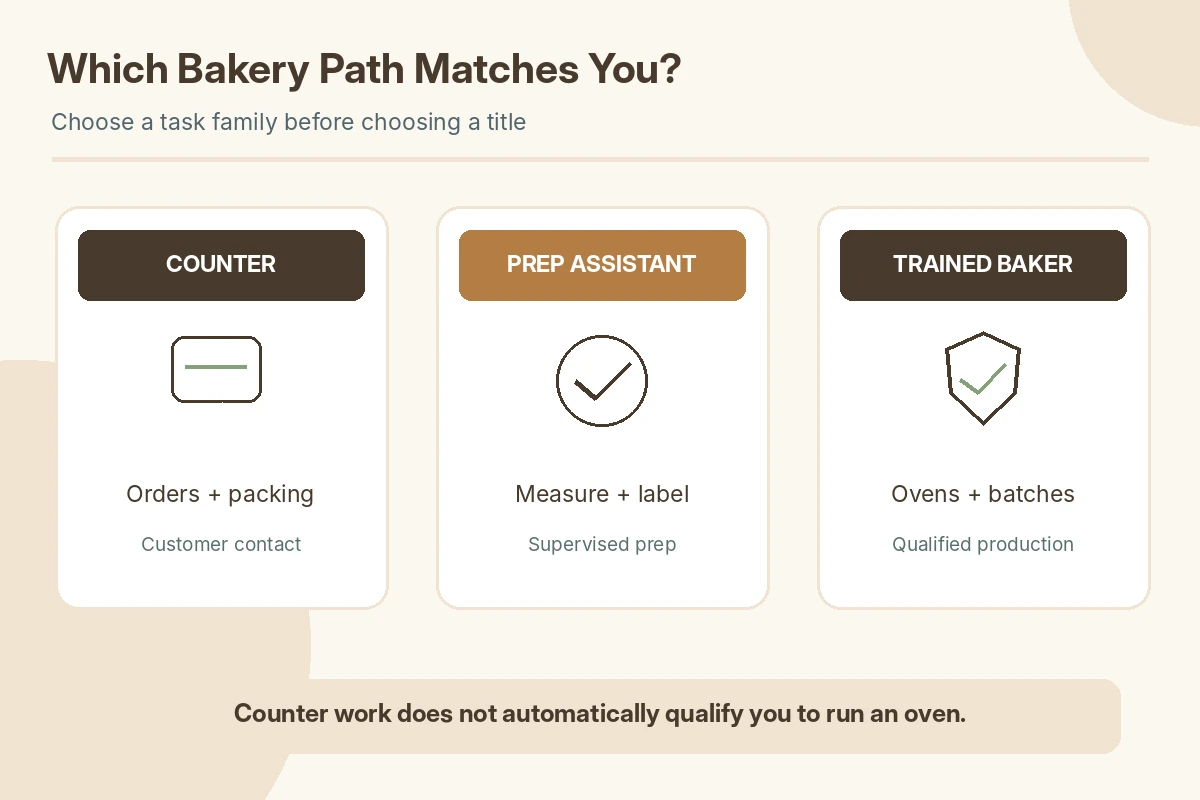
Know the Difference Between Counter and Production Jobs
Bakery cashier or counter assistant work can involve taking orders, packaging items, rotating displayed products and answering customer questions. A production assistant may measure basic ingredients, prepare pans, label products, clean approved surfaces and support trained bakers. A specialist pastry or overnight mixing position may expect prior machine, recipe or commercial bakery experience. All can appear under the vague keyword “bakery jobs.”
Build a shortlist by task rather than brand: counter and service; preparation and packaging; trainee baker; experienced production baker. Ask what a new hire is allowed to do independently, whether the role involves cash handling, and who is responsible for checking measurements. A food counter applicant should not represent themselves as a qualified cake decorator simply because they enjoy baking at home.
Check Start Times and Production Rhythm
Bakeries frequently schedule some work before the store opens or after customer hours. The BLS occupational overview notes early mornings, nights, weekends and holidays as common schedule patterns. Do not assume every bakery uses them; a retail counter may have different hours than a central production facility. Ask for the exact start and end time, how shifts change seasonally, and how training fits into opening routines.
If you rely on public transportation, compare the first available route to the real shift start. Clarify whether working near hot ovens or on the production floor is part of the job, and what protective clothing the employer supplies or requires. A position labeled “part-time” can still involve a difficult commute at 4 a.m.; suitability is a practical question, not a judgment about motivation.
Demonstrate Measurement and Checklist Habits
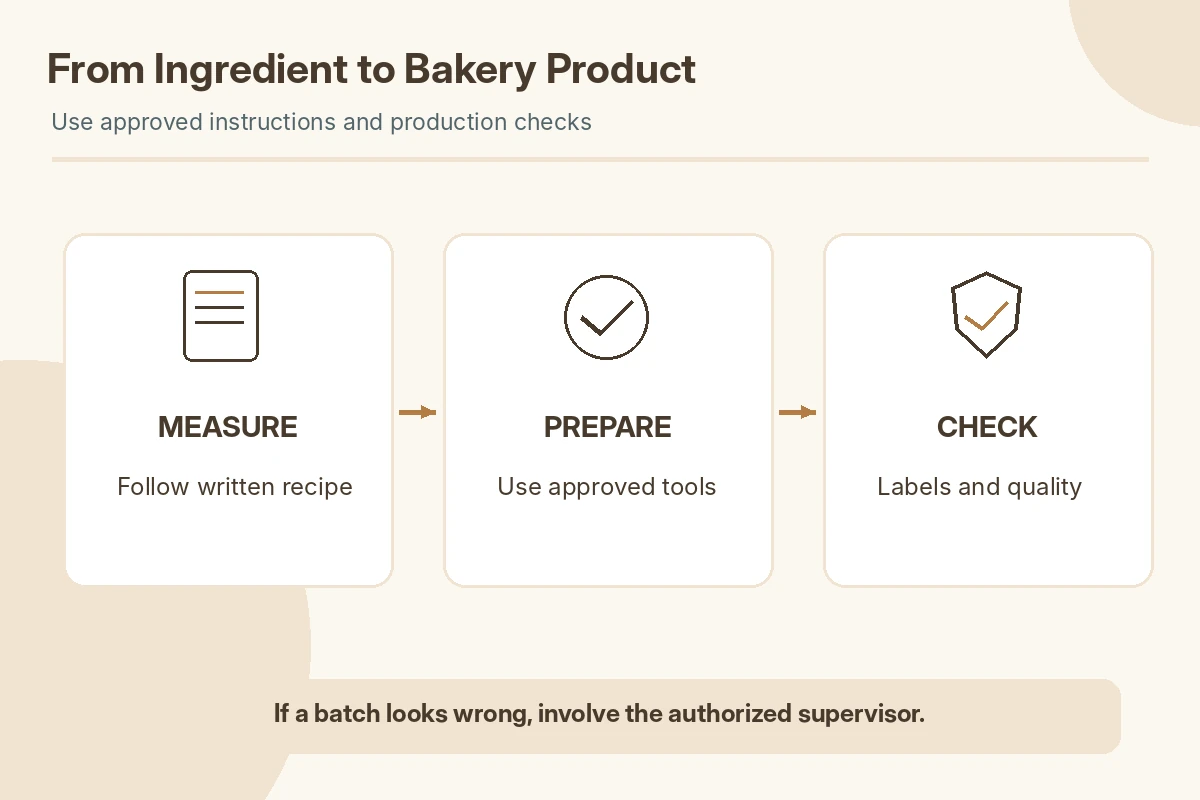
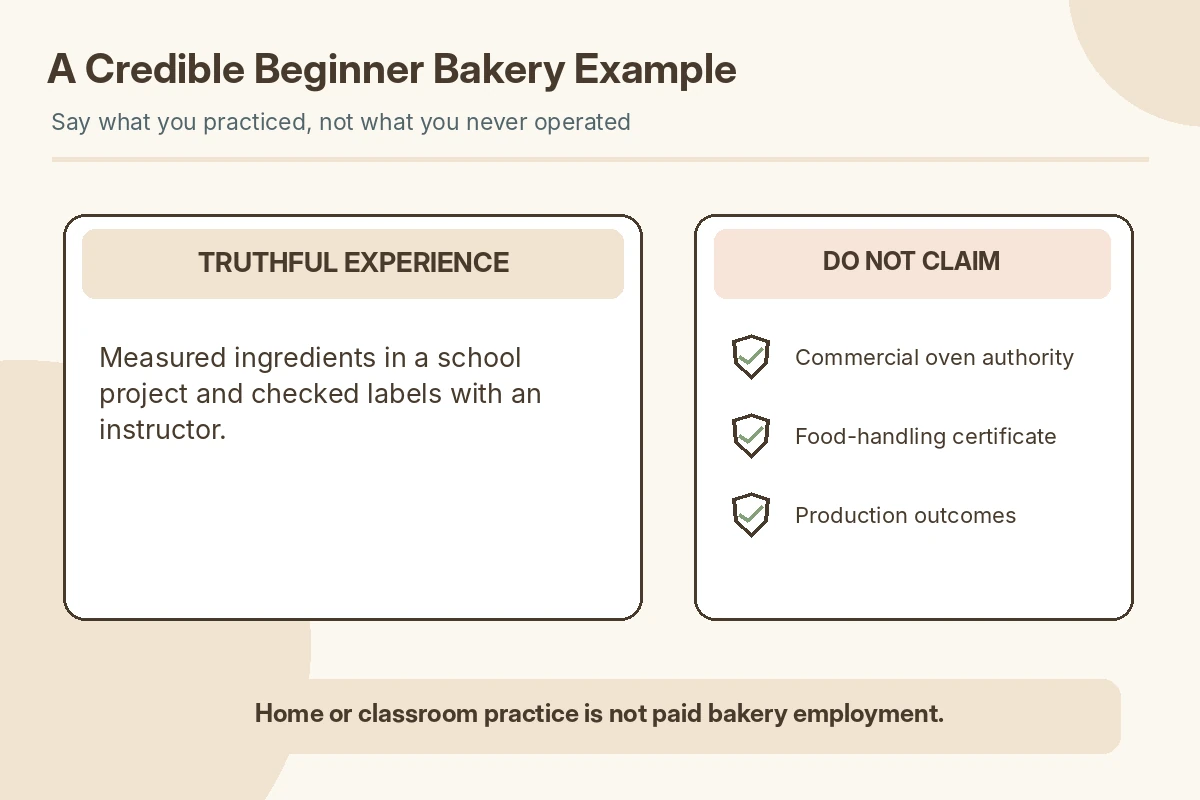
Even a novice can show that they follow instructions. Think about a science lab, classroom kitchen project, community fundraiser, inventory task or supervised food-service volunteer activity. Describe what you measured, recorded, checked or cleaned. Avoid converting a home recipe into imaginary commercial experience. If you made baked goods independently, call it a personal project and distinguish that from work with industrial ovens and batch controls.
Hypothetical sample: “In a school food-preparation project, I measured ingredients against a written recipe and checked the labeled trays with my instructor.” This invented example is only a template for truthful recollection. If you cannot substantiate the school setting or instructor, rewrite or omit it. A hiring manager can teach the local recipe system, but needs to know that you will raise a discrepancy before continuing.
Respect Food Handling and Equipment Boundaries
Bakery work can involve hot surfaces, knives, mixers, allergen-related handling, cleaning chemicals and food-contact surfaces. New hires should receive workplace-specific instructions and be supervised as appropriate. Ask which equipment you may operate, how ingredients are labeled, and who handles product concerns. Do not improvise oven temperatures, alter a batch formula, or make unapproved decisions about allergen information.
When an ingredient label, timer or product appearance does not match expectations, report the discrepancy according to the bakery’s process. O*NET lists product-quality checks and ingredient measurements; it does not mean a trainee can release a questionable batch to customers. This is a useful interview theme: show that you would pause, check approved guidance, and involve the person responsible for the production decision.
Build a Targeted Beginner Application
For a counter position, emphasize accurate transactions, pleasant communication and availability; for prep, describe real measuring, organization and cleaning tasks; for packaging, show correct labeling and repetitive accuracy. List food-handling credentials only if you actually hold them, and verify any local or employer requirement rather than assuming the same card applies nationwide. Avoid statements about product sales growth unless you have authentic records.
Create a concise note that names the job route: “I am applying for the entry-level bakery preparation role and can work the specified early shift. My relevant experience is a documented [school, volunteer or personal] project involving precise measurements and checklists.” Include only facts. If the posting asks for independent commercial baking experience, decide whether it is still realistic to apply or choose a genuine trainee vacancy.
Verify the Opportunity and Ask Useful Questions
Confirm the employer’s location, whether the role is counter or back-of-house, how hands-on training is delivered, how schedules are set and which equipment is restricted to trained workers. Never pay a recruiter for a guaranteed bakery job. Save a verified link, application date and next action; do not mistake a third-party advertisement for a confirmed opening with that employer.
Prepare two questions for an interview: “What tasks does a new employee learn first?” and “Who reviews a batch or label when something looks wrong?” These questions show attention to process without pretending expertise. If you have limited experience, ask what evidence of reliability the manager values and whether there is a clear pathway from helper duties to trained production responsibilities.
How We Research No-Experience Job Paths
This guide uses BLS bakers guide, O*NET bakers profile, FTC job-message advisory. Occupational profiles support descriptions of tasks, training or work settings; FTC materials support the practical scam warnings. None of these sources verifies a particular open position, a hiring manager’s decision, a specific wage offer, or the outcome of an invented candidate example. The cited pages were reviewed on October 26, 2026.
All applicant examples are labeled hypothetical and must be replaced with your own truthful activities. Equipment boundaries and local requirements always depend on the actual employer and jurisdiction. These original illustrations are decision aids, not technical operating instructions or a promise of hiring. There is no claim of a paid referral relationship. See our affiliate disclosure.
Related Job Search Guides
- Restaurant Jobs With No Experience: Host, Busser, and Prep Routes
- Landscaping Jobs With No Experience: Start With Groundskeeping Safely
- Entry-Level IT Jobs Without Experience: Start With Support Skills You Can Show
- Library Jobs With No Experience: Start With Assistant Roles
- Kitchen Jobs With No Experience: Compare Prep, Dishroom, and Trainee Roles
Some beginner roles are supervised and may not require commercial experience; describe home baking accurately as personal practice.
No. Early schedules are common for some operations, but counter and production hours vary by employer.
BLS says many bakers learn at work; individual vacancies and specialties may have different requirements.
No. Sales, preparation, packaging and trained production duties are distinct.
Follow the approved bakery procedure and ask the authorized supervisor before proceeding.