
Internship Job Search Sites are useful only when a listing matches your actual qualifications and you can verify the employer. This guide offers a practical search workflow rather than a pay-to-play ranking, fabricated opening, or guaranteed hiring shortcut. Begin by naming the work you can perform and the location and schedule you will accept.
The core method is: School career center → Student job network → Employer site. Compare each choice with an authentic job description and distinguish discovering an ad from submitting a completed application. Source links below support platform functions and safety checks; hypothetical examples are explicitly marked as examples.
Start With the Internship You Can Actually Accept
Internship searches work best when you specify academic term, location, availability, work format, learning goal, and any school requirement before opening a job board. Two postings both labeled “internship” can differ in start date, minimum enrollment, class year, compensation, scheduling, and required coursework. Make these conditions visible on a one-page shortlist. If you need academic credit, confirm the rules with your school rather than assuming any internship qualifies.
Choose a small family of task-based titles, not just “summer intern.” A student interested in marketing might compare “marketing operations intern,” “communications intern,” and “content research intern” according to the work shown in each announcement. If a title suggests a skill you have not practiced, note that gap honestly. A good target is one whose responsibilities you can explain and whose timetable you can realistically meet. No site can guarantee an internship placement.
Understand What Handshake Can and Cannot Show
Handshake’s official guidance describes searches by internship job type, location, school-related collections, compensation, and on-site or remote format. It also explains that school-connected accounts may have access to school-targeted listings, while unaffiliated accounts may see a different selection. Do not assume all users see identical openings or that your institution automatically has access to every employer. Review your current account and school career center’s guidance.
Use your student profile to express fields, skills, or work preferences accurately. Run one search for a role title and another for the work you want to do. Save relevant roles and note employer deadlines separately; an alert is not an extension of a deadline. If your school operates its own career portal or course-credit process, it may require a separate approval after you receive an offer. Search tools help discover roles, but the academic and employer requirements remain distinct.

Add Career Services and Direct Employers to the Mix
Boston College’s career center recommends Handshake and identifies supplementary resources, including general job boards. A student should also check their own school’s career events, departmental notices, alumni programs, and employer career pages. A broad site may reveal internships across industries; a company page can clarify the exact application link and available locations. The best combination depends on your school and field.
Do not treat a career-center listing as an endorsement of every employer or a waiver of selection requirements. For a specific company, look for the employer’s internship or early-career page and compare the title, term, location, and application instructions. Some listings redirect you to another application system. Record the final submission separately from the saved listing so you know whether you have completed the actual process.
Check Pay, Credit, and Eligibility Separately
Some internships are paid, some may be unpaid, and some may connect to an academic program. A platform pay filter is a useful first screen but does not replace the employer’s written compensation details. If a posting lacks that information, ask a neutral question before assuming pay or academic credit. Whether an unpaid arrangement is lawful can depend on circumstances and applicable rules; this guide does not declare that a specific internship is legally unpaid or that credit replaces wages.
Eligibility may include current enrollment, degree level, graduation window, permitted location, work authorization, and specific course skills. Check the exact advertisement and campus policies. For a hypothetical student who cannot work during weekday mornings, an on-site internship with that schedule is a poor fit even if its title looks ideal. A better search expands acceptable employers or a different term, rather than hiding the conflict until an interview.

Make a Student Evidence Match Without Invented Results
Many internship applicants have projects but little or no paid experience. That is not permission to claim a student assignment was professional employment. Match actual coursework, laboratory practice, club work, community volunteering, or a portfolio piece to the tasks in the posting. State what you made, which tools you used, what you personally checked, and what is available to discuss. If a project was collaborative, distinguish your contribution from the group’s product.
A hypothetical applicant to a communications internship could point to a course project that involved drafting two versions of a campus flyer and gathering peer feedback. The applicant must replace those details with their own work; it is not a documented success story. Avoid invented engagement statistics, company logos, or internship titles. Attach only work samples you have permission to share. Stronger applications make the fit easy to inspect rather than predicting a hiring result.
Organize Timing and Application Requirements
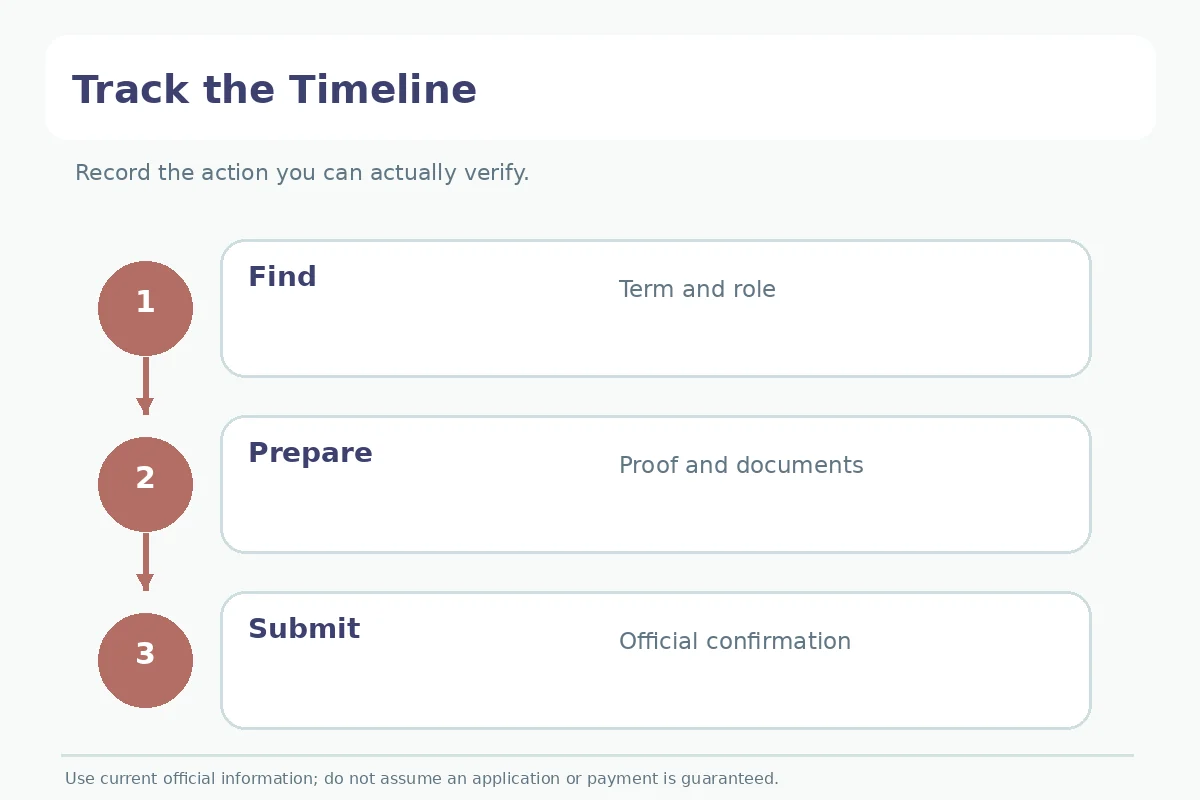
Track each internship by employer, title, location, term, deadline, eligibility, compensation if stated, application destination, and confirmation. The calendar should reflect the real posting, not a generic claim that all companies hire in one season. If an application requires a transcript, recommendation, interview, portfolio, or separate school approval, note that task and its deadline. Make time for a careful review of the requested file format and the form’s required fields.
For searches across multiple sites, deduplicate by employer and requisition or program details where provided. A listing seen in Handshake, LinkedIn, and the employer’s page can still be one role. Follow the employer’s official instructions when there are differences. If a saved opening disappears, check the current employer page; do not submit information through a copied form circulating in private messages. Application completion is a separate status from a saved result or campus event registration.
Protect Yourself From Internship Recruiting Scams
The FTC warns that scammers may imitate recognizable employers and advertise work that does not exist. Internship applicants can be targets too. Confirm the position on an official employer careers page, verify the sender independently, and be cautious about requests for financial information before a legitimate hiring process. Do not pay for the promise of an internship and never follow fake-check instructions to purchase equipment on someone else’s behalf.
If a stranger says you must move to a private chat, pay to secure an interview, or deposit a check to prove readiness, stop. An ordinary application may require identity or enrollment checks at an appropriate later stage, but that is why the authenticity of the process matters. Your best immediate action is to cross-check the posting and contact the actual employer or school career office. Save your shortlist with verification notes so a convincing duplicate ad does not cause you to share data twice.
How We Research: Official Tools and Limits
We reviewed primary platform instructions and public-agency guidance for the specific search, eligibility, or safety statements in this guide: official platform guidance; official platform guidance; professional or public agency guidance; professional or public agency guidance. The instructions and pricing of job-search platforms can change. Verify the current employer announcement, application destination, and product terms before relying on a listing. This research does not confirm that any opening is currently available, that every employer follows the same rules, or that an applicant will receive an interview.
This guide is informational, not an endorsement or a paid placement offer. No affiliate relationship is asserted for the platforms mentioned. See our affiliate disclosure. Any hypothetical example is for illustration only and must be replaced with the reader’s true experience or circumstances.
Related Job Search Guides
- Government Job Search Sites: Separate Federal, State, and Local Hiring
- Construction Job Search Sites: Compare Trades, Apprenticeships, and Employers
- Freelance Job Sites: Compare Project Scope, Fees, and Payment Risk
- Student Job Search Websites: Compare Campus Portals and Real Openings
- Teacher Job Search Sites: Find District Openings and Check Credentials
Handshake describes both school-linked and broader-network access, with differences in which jobs and features users can see. Check your actual account.
Yes. LinkedIn supports an internship employment-type filter; check the employer listing for term, eligibility, and application instructions.
No. Read the specific compensation terms and ask when unclear. Academic credit and legal compensation requirements are separate questions.
Yes, as an accurately labeled educational project. Describe your own work and do not present it as paid employment.
Confirm whether they point to one employer requisition. Follow the official application route and track the final submission.