
A reply to a job rejection is optional, not a requirement to remain employable. It can be worthwhile after a real conversation with a recruiter or hiring team. Thank them for the update, mention one genuine detail if appropriate, and close without demanding a new decision. If the notice is automated or says not to reply, simply move on.
The examples below are hypothetical. Verify the recipient and application instructions, and use your own real experience rather than copying invented claims.
Decide Whether the Rejection Deserves a Reply
Start with the type of message you received rather than an automatic script. A no-reply notification after an online application ordinarily needs no response. A personalized message after a screening call, panel meeting, or extended discussion may justify a short note because someone invested time in a direct exchange. Do not assume that a reply changes the hiring outcome. It communicates appreciation for an actual interaction, not a request to overturn the selection.
Check whether the sender is a real employer contact you already communicated with. An unusual reply address, unfamiliar link, or request for payment is a reason to verify separately instead of clicking. The FTC warns about fraudulent job recruiters who imitate real employers and pressure applicants for private information. A rejection reply should never include banking details, identification numbers, or a fresh copy of sensitive documents.
Write Four Sentences That Have Clear Jobs
Use a simple sequence: acknowledge the decision, thank the person for their time, mention one genuine aspect of the conversation if useful, and end with a courteous close. You do not need an elaborate explanation of your feelings or a new sales pitch. A concrete observation such as discussing the team’s intake process is better than an invented compliment about the employer. Keep the subject line from the existing conversation when replying to a genuine personal email.
Hypothetical reply after an interview: “Thank you for updating me about the operations coordinator role. I appreciated speaking with the team about how requests are tracked and handed off. I enjoyed learning about the work and wish you well with the new hire. Best regards, Jordan.” This is a model, not a message sent by a real candidate; replace the role and detail with your own factual experience before using it.

Separate Gratitude from a Request for Feedback
You can appreciate the interviewer without asking for anything else. If you want feedback, think first about what you already received. After a lengthy interview with a named contact, a single optional question may be reasonable: “If you are able to share one area I could strengthen, I would value the guidance.” Do not ask for confidential comparisons with other candidates, the name of the selected person, or an explanation of internal decision-making.
This article is about replying professionally after a rejection, rather than writing a dedicated feedback request. The JobAsk guide to job-search communications covers related next steps. Avoid sending both a thank-you reply and a second immediate email requesting detailed feedback. A response is not guaranteed, and lack of feedback should not be treated as evidence of disrespect.
Keep Future Interest Specific and Low Pressure
If you would genuinely consider another suitable role, you can say so in one line. For example: “I would be glad to hear about future opportunities that fit my experience with scheduling and client records.” This statement is more credible than asking to be considered for every opening. Do not subscribe another person to updates, demand that your resume be retained, or imply that the employer has promised another interview.
NACE identifies professional communication and career development as observable competencies. That supports the principle of treating this note as a respectful relationship message rather than a transaction. You can also leave the conversation closed. Continued contact is a choice made by both parties, not something a formula or a polite sign-off guarantees.

Compare a Defensive Reply with a Useful Reply
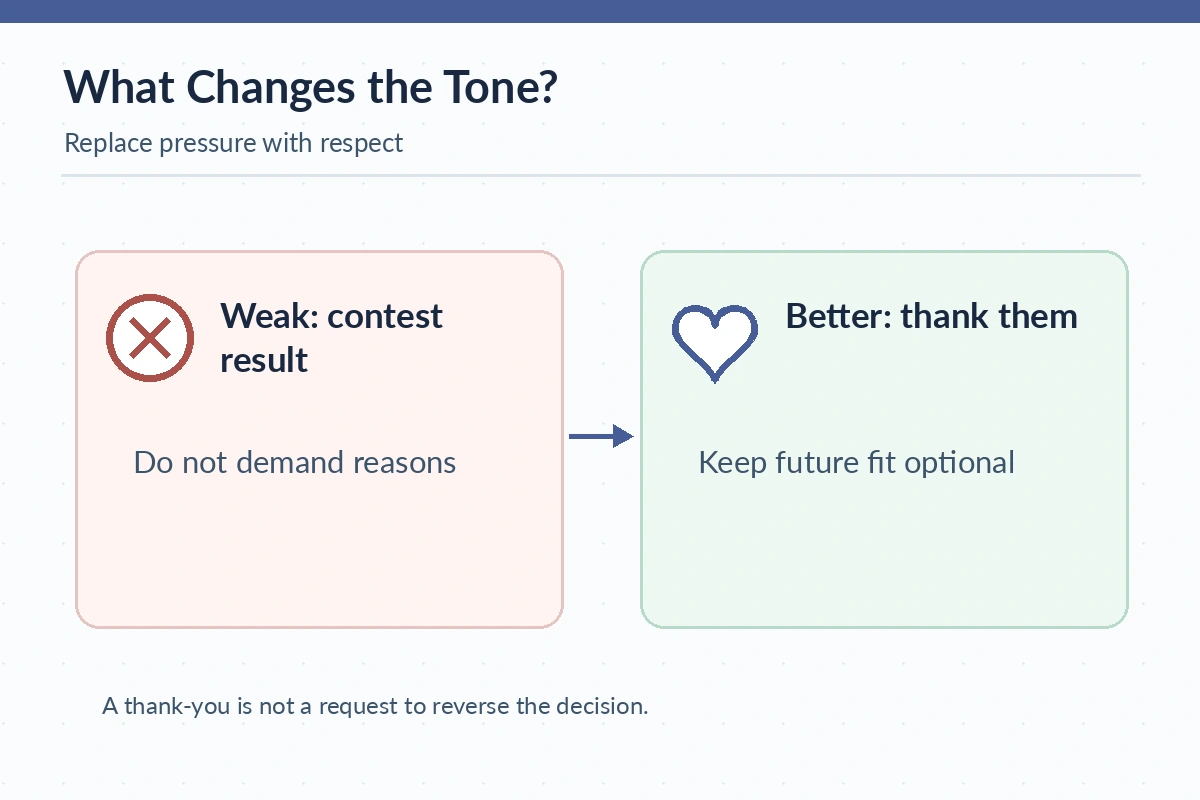
A reply such as “You made a mistake, and I deserve to know why” disputes an outcome the recruiter may not be authorized to reconsider. It invites an argument and can inadvertently reveal information you would not want in an employment record. A better message confirms that you read the decision, thanks the contact for their time, and stops. If you suspect discrimination or a process problem, consider an appropriate separate advice or reporting route rather than litigating it in a thank-you email.
Another common error is an overly emotional essay. A few precise sentences are easier to read and less likely to contain exaggerated claims. There is no evidence that using a particular sign-off, sending at an exact hour, or asking to “stay on file” can secure a later job. Focus on whether this message has a valid recipient, a respectful purpose, and facts you would stand behind.
Check the Recipient Before You Press Send
Look at the previous thread, the recipient address, and the subject. If the employer requested no replies, follow that direction. Remove drafts of arguments, speculation about another candidate, and attachments not requested by the recipient. If you had contact with several people, normally reply to the person who sent the personal decision rather than copying an entire interview panel without reason. This protects privacy and keeps communication proportionate.
A small personal checklist helps: is the email genuine, is a reply appropriate, have I thanked the person without contesting the result, and did I accidentally include sensitive details? If one answer is uncertain, save the message and check the original channel. Professionalism includes knowing when not to send something. Silence after an automatic notice is generally a valid option.
Use the Experience to Improve Your Next Application
Close the application in your tracking system and record what you can factually remember: questions asked, skills requested, and any feedback actually provided. Compare those observations with the next posting, not with imagined reasons for rejection. If a role required a system you have not used, consider an authentic learning project or targeted training without misrepresenting it as paid experience. If you learned nothing new, the most productive step may be applying to another well-matched role.
A rejected application does not prove you were unqualified, and a gracious response does not reverse the decision. The practical outcome of this workflow is a brief, respectful communication and a closed record. Retain private notes for your own search; do not publish names, interview contents, or employer emails without permission. That makes your next step more useful than trying to perfect a message that no reply is required to answer.
How We Research These Email Decisions
This article distinguishes verified guidance about occupational requirements, career communications, or application routes from JobAsk editorial writing suggestions. Example messages are constructed for instruction only, not copied from private correspondence or attributed to employers. Review actual employer instructions and official agencies before sharing personal information.
www.naceweb.org — NACE communication and professionalism competencies emphasize clear, respectful exchanges and career relationship building.
consumer.ftc.gov — FTC describes impersonation and unexpected recruitment messages, supporting verification before replying to suspicious contacts.
www.grammarly.com — Grammarly outlines optional replies after a rejection, respectful thank-you wording, and a low-pressure request for feedback.
We do not promise interviews, employment, payment, or employer endorsement. There is no claimed affiliate relationship in these examples. Read our affiliate disclosure.
Related Guides
- Email a Resume When a Recruiter Asks: Reply, Attach, and Verify
- Interview Invitation Reply Email: Confirm Time, Format, and Next Steps
- Request Interview Feedback After Rejection: A Respectful Email
- Reapply After a Job Rejection: Email About a New Role and Better Fit
- Job Rejection Email Response: Polite Templates and When to Reply
No. An automated notice or a message asking for no replies generally does not need a response. A personalized note after an interview is a possible exception.
You may make one respectful, optional feedback request after meaningful interaction, but the employer may be unable or unwilling to share details.
Only when you genuinely want suitable roles there; describe your interest briefly without implying a promise of future contact.
Not unless the employer asks for it or you are applying to a new posted opening through the correct channel.
Verify the employer and address independently before responding or opening links. Do not share sensitive personal information.