
When an employer emails to ask about salary expectations, answer the actual question without inventing an offer or pretending a pay range is guaranteed. Check the job location, level, schedule, compensation structure, and any stated pay band. Use reputable occupation data as context, then give a range you can seriously discuss—or politely request the budgeted range before naming a number when appropriate.
The examples below are hypothetical. Verify the recipient and application instructions, and use your own real experience rather than copying invented claims.
Identify the Stage of the Conversation
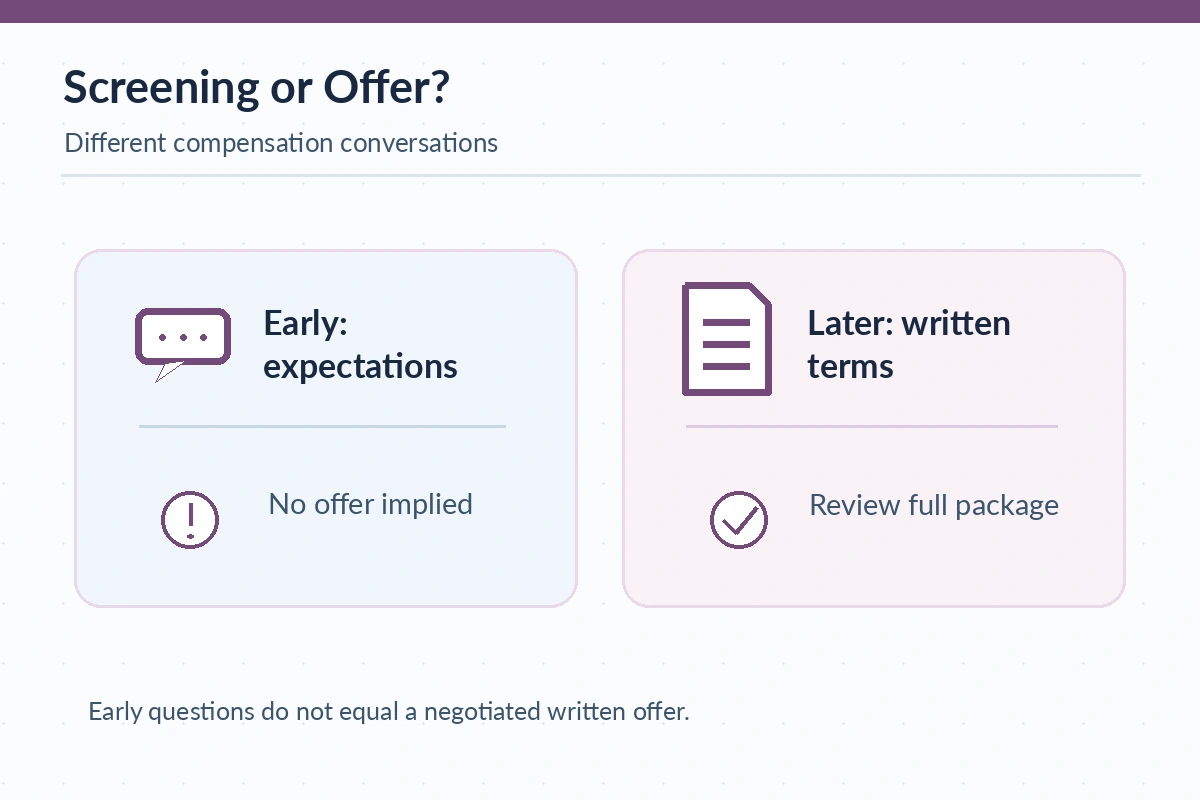
A recruiter asking “What compensation are you seeking?” during screening is not making a job offer. The right reply supplies context for whether expectations align; it does not accept terms that have not been presented. At the offer stage, the questions change: total compensation, written terms, start date, benefits, and possible negotiation. Do not call a preliminary range agreement final, and do not demand a salary revision before an employer has proposed a number.
CareerOneStop’s salary negotiation guidance discusses examining all terms of an actual offer. That is distinct from an expectations email. If you are still clarifying a role, ask whether the job is full-time or part-time, exempt or hourly where relevant, and whether the quoted amount means base pay or total expected compensation. The more accurate the job scope, the more useful your answer will be.
Build a Range from Relevant Evidence
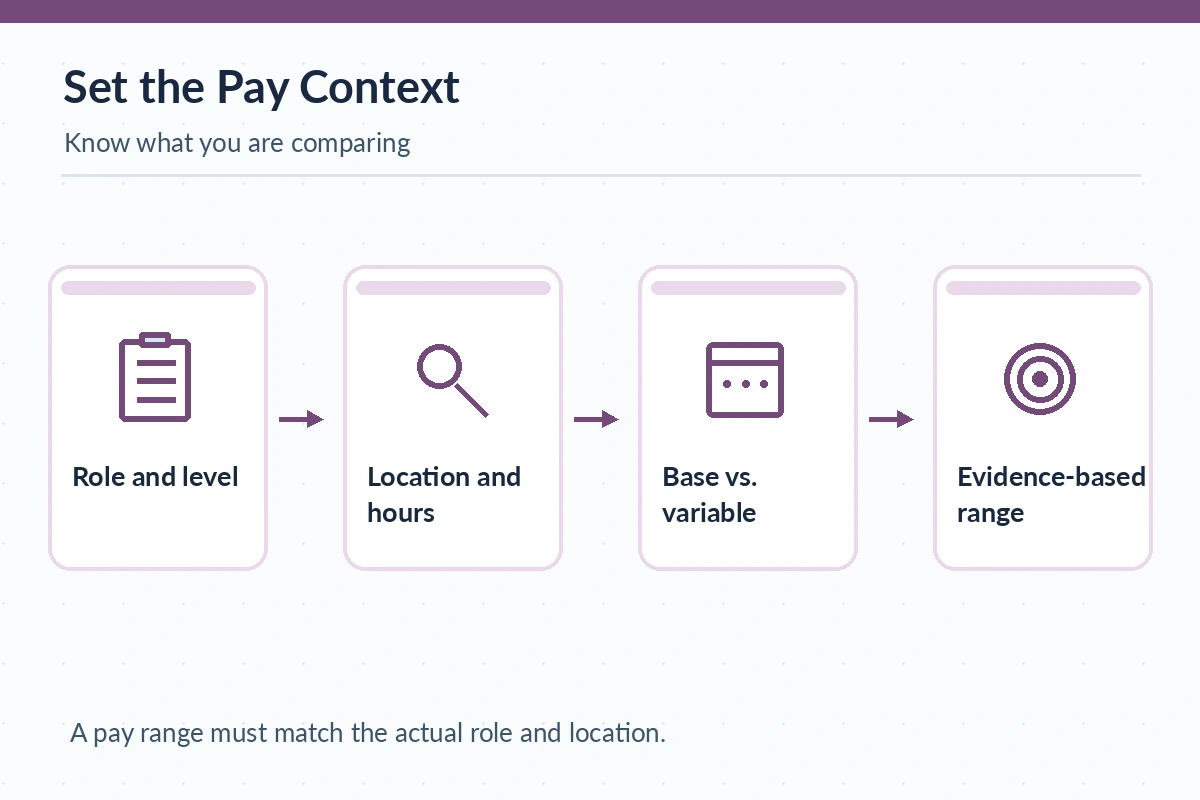
Start with the posted pay band if one is available, then compare the role and geography with occupational data. The BLS occupation finder explains that pay differs by role, responsibilities, experience, and region, and that occupational wage figures have important exclusions. National medians are context, not a binding wage for an individual job. A specialized night shift or commission-heavy role cannot be evaluated by casually copying an unrelated national average.
List your own minimum workable level privately, an evidence-based target, and factors that could change the conversation. Think about paid hours, benefits, duties, travel, supervision, and required credentials. Do not manufacture a competing offer or previous salary to sound confident. If the range is outside the published band, consider whether the role itself is a mismatch rather than framing your reply as a personal exception the employer must grant.
Write a Calm Range-Based Response
A hypothetical email might read: “Thank you for asking about compensation for the operations analyst role. Based on the stated responsibilities and my review of comparable positions in the area, I am targeting a base salary in the range of $X–$Y, depending on the full scope and benefits. I would welcome learning the budgeted range for the position so we can see whether there is a fit.” The letters X and Y are deliberate placeholders for a candidate’s actual research, not recommended salary figures.
If the employer already provided a pay band, respond in relation to that band rather than pretending not to have seen it. When you are truly flexible, describe which elements affect that flexibility instead of saying you will accept absolutely any amount. Be polite, direct, and brief. NACE identifies organized written communication as a professional behavior; clarity is more useful here than ceremonial wording.
Ask for the Employer Range When Useful
If the duties or location are not yet established, requesting the budgeted range can prevent a meaningless answer. Example: “Before I suggest a range, could you share the budgeted base-pay band and confirm whether this is a full-time position based in Denver?” The employer may choose not to disclose it, and some postings already contain the information you need. You should not imply there is a universal requirement to provide that number or use a single template as legal advice.
Salary-history inquiries and pay transparency laws can vary by jurisdiction and change over time. This guide does not interpret local law or advise whether a particular question is lawful. For a specific situation, consult the current applicable rules. When you do have reliable pay information, make an informed decision about whether to proceed, rather than manipulating the conversation to avoid any number forever.

Compare Expectations with a Real Offer
Your expectations email answers what you are seeking. A formal offer sets out what the employer is proposing, including potentially different benefits, incentives, and conditions. Do not write “I accept the salary” in a screening reply unless that is actually your decision on a real offer. Similarly, do not claim a competing package exists. Misleading information can damage trust and distort your own decision-making.
CareerOneStop recommends reviewing job duties, schedules, benefits and training when assessing an offer. In a later negotiation, it is reasonable to explain the skills and value you bring and to ask about flexibility. But here the email needs only enough substance to establish whether the pay conversation can continue. A short answer supported by role and location information is typically easier to revisit if the job scope changes.
Use a Checklist Before Naming Figures
Check whether the pay is annual, hourly, or variable; the job is permanent, temporary, or contract; and the intended worksite is remote, hybrid, or onsite. An annual salary may conceal substantially different schedules, and a quoted total may include uncertain bonuses. Convert figures to a consistent unit for your own comparison only after the assumptions are clear. Avoid making tax or take-home-pay promises without the candidate’s actual circumstances.
If a posting gives a range, confirm that your proposed figure is compatible with the advertised level. If you see an unusually generous unsolicited offer and pressure to provide bank details, verify the employer separately. An honest email does not require a table of fabricated industry averages. Provide the range you can defend and be ready to say what information would change it.
Close With a Specific Next Step
End by inviting a relevant reply: confirmation of the job level, pay band, or next hiring stage. Do not demand an immediate decision or convert an expectations exchange into an ultimatum. You can keep a private note of the source, location, date, and assumptions behind your figures so you can update them if responsibilities change. The message should not contain confidential data about another employer or a made-up competing package.
The outcome to seek is a transparent conversation, not guaranteed pay or an offer. If the employer’s budget is incompatible with your needs, decline or continue only if other verified terms change the fit. If the range aligns, proceed to questions about duties and evaluation criteria. This keeps your written answer accurate through screening, interviews, and any later formal offer discussion.
How We Research These Email Decisions
This article distinguishes verified guidance about occupational requirements, career communications, or application routes from JobAsk editorial writing suggestions. Example messages are constructed for instruction only, not copied from private correspondence or attributed to employers. Review actual employer instructions and official agencies before sharing personal information.
cloudfront.careeronestop.org — CareerOneStop provides guidance for evaluating a formal offer, identifying typical local pay, and negotiating calmly when a real offer exists.
www.bls.gov — BLS explains wage data and variation by occupation, responsibilities, experience and area.
www.naceweb.org — NACE outlines communication and professionalism in employer interactions.
We do not promise interviews, employment, payment, or employer endorsement. There is no claimed affiliate relationship in these examples. Read our affiliate disclosure.
Related Workplace Guides
- Decline a Job Offer Due to Salary: Decide When to Stop Negotiating
- Thank-You Email for a Job Offer Before You Make Your Decision
- Decline a Job Offer by Email: Clear Templates and a Decision Checklist
- How to Accept an Internship Offer: Email, Dates, and Practical Details
- Job Offer Acceptance Email: Confirm the Role, Terms, and Start Date
Not necessarily. You may give a researched range or ask for the budgeted band where appropriate; follow any employer instructions.
They can provide context, but a relevant local role, level, schedule, and duties matter for the range you choose.
No. Expectations describe your target during screening; negotiation responds to terms of an actual offer.
Only if one genuinely exists and you choose to disclose accurate details. Do not invent leverage.
Ask a concise clarifying question about the budget, work location, or job level before committing to a figure.