
Quick answer: Email is usually the simplest way to thank an interviewer promptly, especially when a hiring decision may happen quickly or the employer already communicates by email. A handwritten card can be appropriate when the relationship and organization support a personal note and mailing will not make it arrive after the decision. Use a short, legible, professional card—not a gift, an oversized keepsake, or a substitute for requested follow-up information.
Start With How Fast the Decision May Move
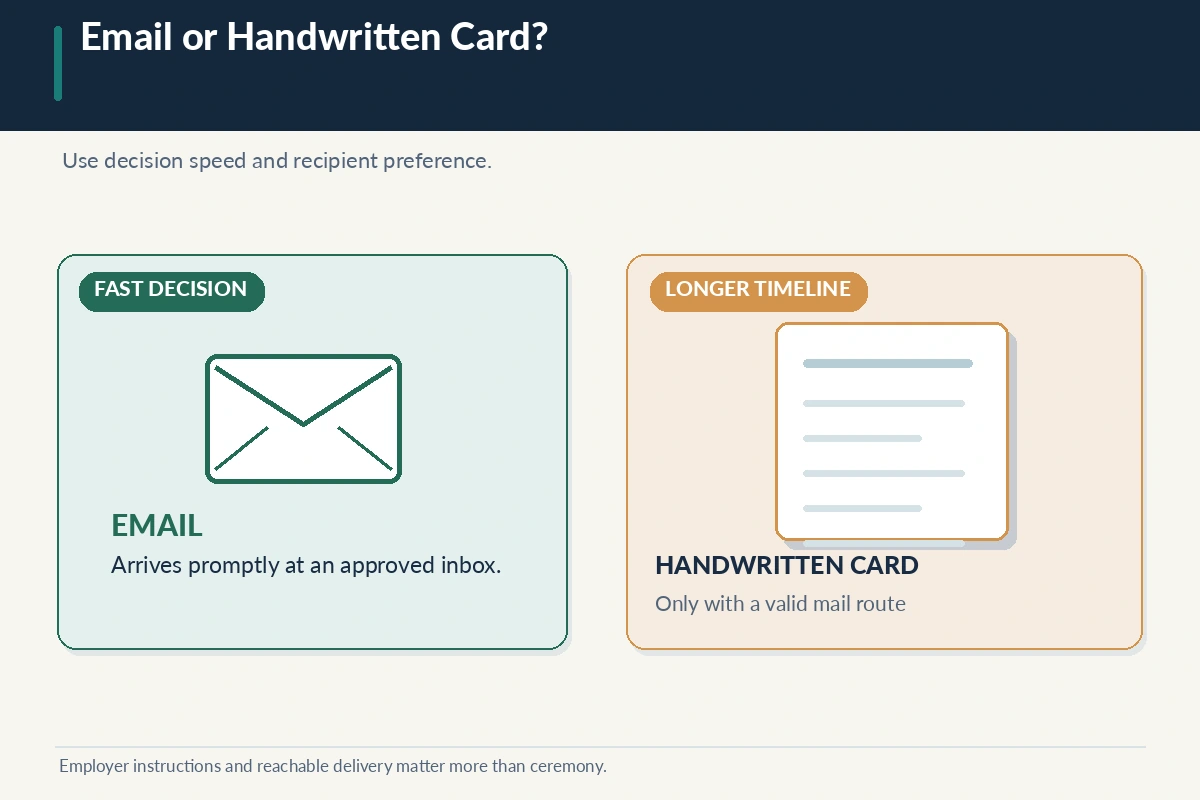
Northwestern’s career center says email is the better choice when the organization is making a fast hiring decision; handwritten notes can be appropriate when the culture and timeline support them. A paper card needs an accurate address, mailing time, delivery handling, and someone who can route it to the recipient. Do not assume a card mailed today reaches an interviewer tomorrow. If the employer discussed a decision within a day or two, email is usually the practical route.
University of Washington Bothell recognizes email, typed letters, and handwritten notes as acceptable forms of thanks in different circumstances. The goal is appreciation, not choosing the most elaborate medium. A concise email that reaches the right person often does more to continue the conversation than a beautiful card delivered to an empty office after the recruiter has finished interviews.
Check the Interviewer’s Communication Preference
If the invitation, recruiter, or interviewer used email for all scheduling, that channel is familiar and may be the best choice. If the person explicitly invited a handwritten note or gave an office mailing address, a card may be appropriate. Do not request a personal home address or search for private information to mail a card. Use public workplace contact information that is suitable for professional correspondence.
University of Minnesota’s career guidance advises a small professional-looking card, neat handwriting, and dark ink. Consider whether you can write legibly; a printed letter or email is better than a card the recipient struggles to read. Do not attach gifts, cash, promotional items, or anything that could conflict with organizational rules. A thank-you is a message, not an attempt to influence a decision through material value.
Write a Card With a Real Conversation Detail
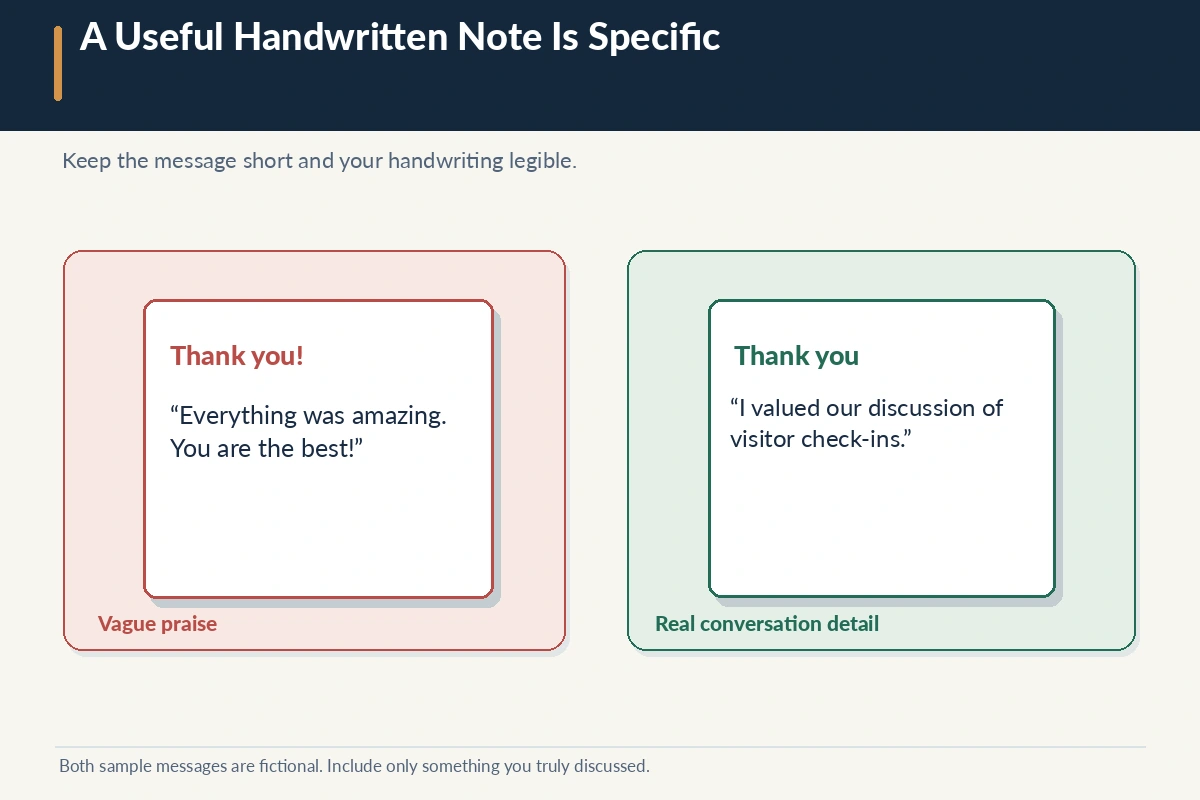
On a small card, three to five sentences may be enough. State why you are writing, thank the interviewer by name, mention a verified topic from the meeting, and close with professional interest. For example, a hypothetical card might read: “Thank you for discussing the visitor services position with me. I appreciated learning how the front desk coordinates event check-ins. Our conversation reinforced my interest in supporting an organized guest experience. Best regards, Taylor Lee.”
The job and conversation above are invented sample wording. Never copy the detail unless it actually happened. Avoid generic compliments about a manager’s personality, appearance, or generosity. The University of Minnesota notes that handwritten cards are usually shorter than other options. Concise, specific gratitude is the point; repeating an entire interview answer is not necessary.
Address and Mail the Card Professionally
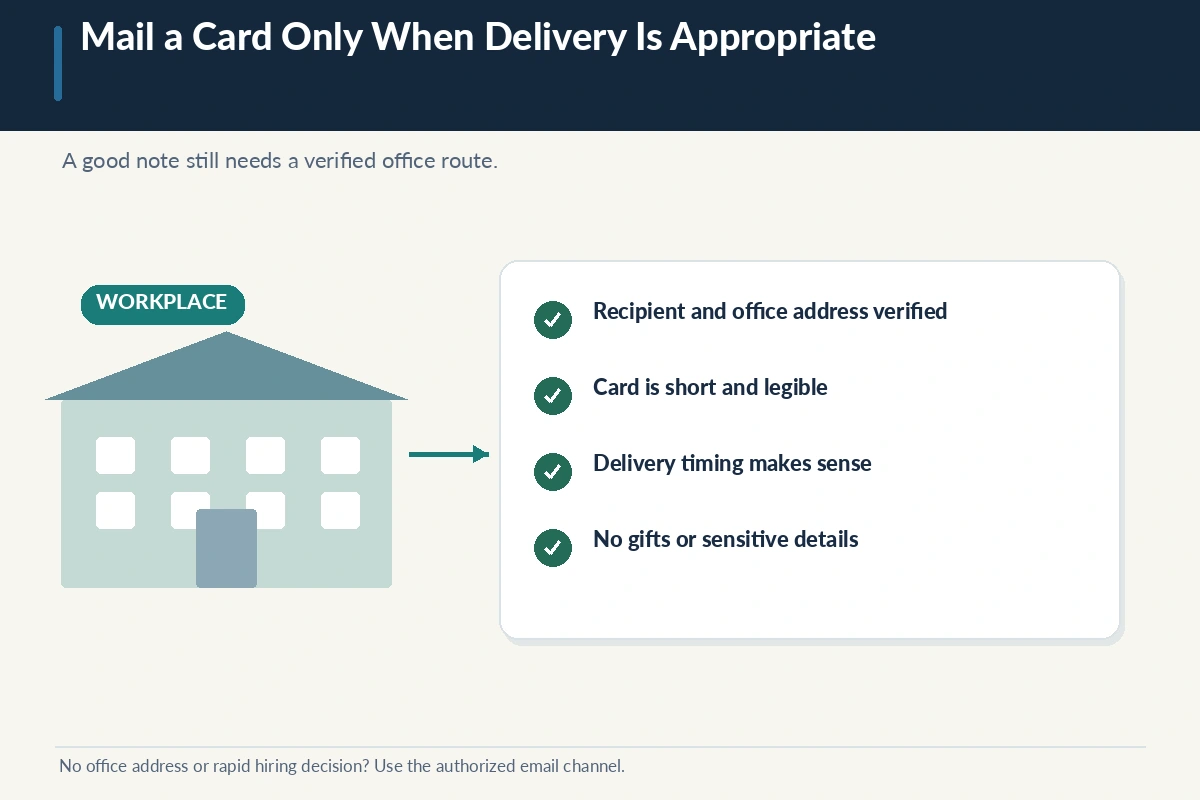
Use the interviewer’s correct professional name and workplace address only when it is known and appropriate. Confirm suite numbers, department names, and office location from the organization’s official contact details or instructions. You can hand-deliver a note only if the workplace and interview procedures allow it; do not show up uninvited to locate an interviewer after the meeting. Mail through ordinary channels and allow for delivery variability.
A sensible envelope identifies the person’s name, role or department when verified, and the organization’s office address. Do not use an unverified personal address, and do not write private application details on an exterior envelope. If the employer is remote-first with no stable physical location, email is often a more reliable method. Avoid treating delivery as evidence that the interviewer read the note or that the hiring process has advanced.
Decide Whether to Send Both Email and Paper
Sending both can sometimes make sense when a formal relationship supports an extra personal touch and a mailed card will arrive later. However, two identical messages are redundant. If you already sent a thoughtful email, do not mail a second card solely to increase the number of contacts. Northwestern frames thank-you notes as professional follow-up based on culture and timeline, not a contest to generate repeated touches.
If you choose both, keep the email timely and the paper note brief, perhaps with a different genuine reflection rather than a second copy of the entire text. Do not send a card to someone who declined additional contact or a gift to someone constrained by workplace ethics policies. Hiring process instructions have priority over generic etiquette. One accurate note is generally enough.
Recognize When a Card Is a Poor Fit
Handwriting is not inherently more respectful. A large employer processing remote interviews across regions may have no simple mail route for individual interviewers. A government employer’s office may have slower internal mail handling; Harvard Law’s career guidance cautions against postal notes to government employers because of delays. If you lack a verified office mailing address, do not improvise. Follow the official email or applicant portal instead.
Likewise, do not use a card as a way around a recruiter who requested centralized communication. A note to a personal social media address or home address is not made appropriate by good handwriting. If a rapid follow-up document is required, an email or secure portal submission is more useful than waiting for paper. Timely and authorized delivery outweighs the format’s sentiment.
Apply a Medium-and-Message Checklist
Before choosing a channel, ask: Is there an identified recipient? Does the employer use this communication method? Will the message arrive while it is relevant? Is the text brief, true, and legible? Did the interviewer ask you to send any document through a specific route? A no to the first two questions is a good reason to use the approved email channel rather than forcing paper.
The University of Virginia says email is now common and acceptable after interviews and describes timing differences for mailed notes. University of Minnesota emphasizes short handwritten text and professional presentation. Neither source suggests that a note guarantees an offer. Keep a copy or photo for your private records if useful, but do not share the card online without permission. Then let the hiring process follow its actual timeline.
How We Research and Verify Follow-Up Advice
How We Research: We reviewed these primary university career resources on October 28, 2026: Northwestern Career Advancement; University of Minnesota Career Services; University of Washington Bothell; University of Virginia Career Center. We checked the public JobAsk search footprint and the historical local slug index for overlap, and kept this article focused on handwritten thank-you card after interview. The examples are invented to demonstrate wording, not real employers, interviews, results, hiring probabilities, or endorsement. Employer-specific instructions override general advice. A public search cannot verify unpublished WordPress drafts. There is no confirmed affiliate arrangement on these editorial links; read the affiliate disclosure.
More Interview Preparation Guides
- Video Interview Thank-You Email: Mention the Conversation, Not the Platform
- Panel Interview Thank-You Email: Thank Multiple Interviewers Without Copying
- When to Send an Interview Thank-You Email: Same Day, Weekend, or Late
- Internal Interview Thank-You Email: Show Readiness Without Assuming a Transfer
- Short Interview Thank-You Email: Write a Specific Note Without Filler
Not universally. It depends on employer preference, the likely decision timeline, and whether the card can be delivered appropriately.
A brief card can be appropriate in some settings, but a personalized note written after the conversation will better reflect what was discussed.
Usually one thoughtful note is enough. If both are appropriate, avoid duplicate text and respect employer contact rules.
Use the employer-authorized email or portal; do not locate a private residence or guess a department address.
No. Keep professional thanks separate from gifts that may be inappropriate under workplace or hiring ethics policies.