
Quick answer: For a remote project manager job, check the actual project scope, ownership of milestones, time-zone overlap, reporting cadence, and authority to approve changes before applying. Then connect each requirement to a real project artifact or handoff you can explain. Remote work does not imply the manager can set every deadline, approve budgets, or work without scheduled collaboration.
Read the Project Scope Before the Remote Label
A remote project manager may coordinate software releases, operations programs, client delivery, implementation tasks, or another defined scope. The title alone does not reveal who owns resources, funding, risks, or final decisions. The O*NET project management profile includes schedules, stakeholder communication, milestones, progress reporting, and plan changes. These are occupation-level tasks, not automatic permissions for every role.
For each job, extract the deliverable, stakeholders, project size if given, planning responsibility, and approval owner. Separate “coordinates” from “approves” in the posting. A project coordinator who prepares a status report has valuable experience but should not claim budget authority simply because the report was used in a senior manager’s meeting.
Check Distributed-Team Working Hours
An employer may say “remote” while expecting overlap with a specific headquarters or client time zone. Note meeting windows, recurring planning calls, escalation availability, and deadlines. If a role requires real-time incident coordination or frequent client calls, flexible location may not mean flexible hours. Confirm whether meetings are recorded or summarized and which tasks may proceed asynchronously.
Build a simple coverage grid: candidate local hours, stakeholder hours, standing meetings, and handoff times. If the schedule requires unreasonable overlap for your actual availability, do not assume the organization will redesign it. An honest application can ask which windows are mandatory and which are arranged by the team; it should not promise an availability you cannot reliably maintain.
Map Milestone Evidence to Your Real Role
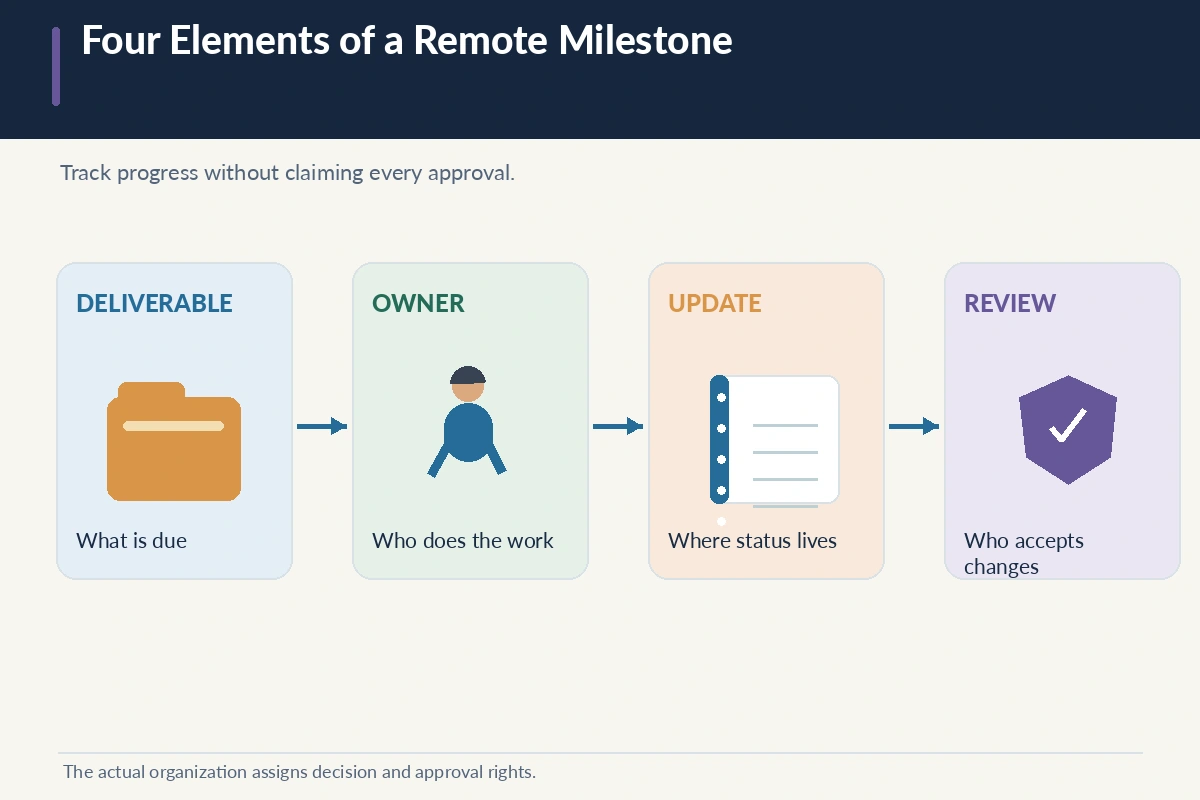
Choose one real project and document the intended outcome, your assigned actions, the status artifacts you maintained, and who made final decisions. A fictional example: “I updated the team task board for a student event and sent blockers to the faculty lead.” This illustrates coordination, not professional program management. An experienced manager should use actual signed-off project artifacts or safe descriptions where confidential records cannot be shown.
The key distinction is ownership versus participation. A milestone is evidence only when you can explain which part you controlled and how completion was confirmed. Avoid invented on-time delivery percentages, budget reductions, customer testimonials, or formal authority. If another team delivered the final feature, credit them and explain the handoff you personally coordinated.
Assess Asynchronous Reporting and Escalation
Distributed work benefits from concise updates that record the current status, next owner, blockers, and decision needed. Evaluate whether the role maintains a written project log, stakeholder summaries, dependency map, or issue register. Some organizations use specific software, but a named tool is less useful than evidence of a consistent reporting process. Claim proficiency only with tools you truly know.
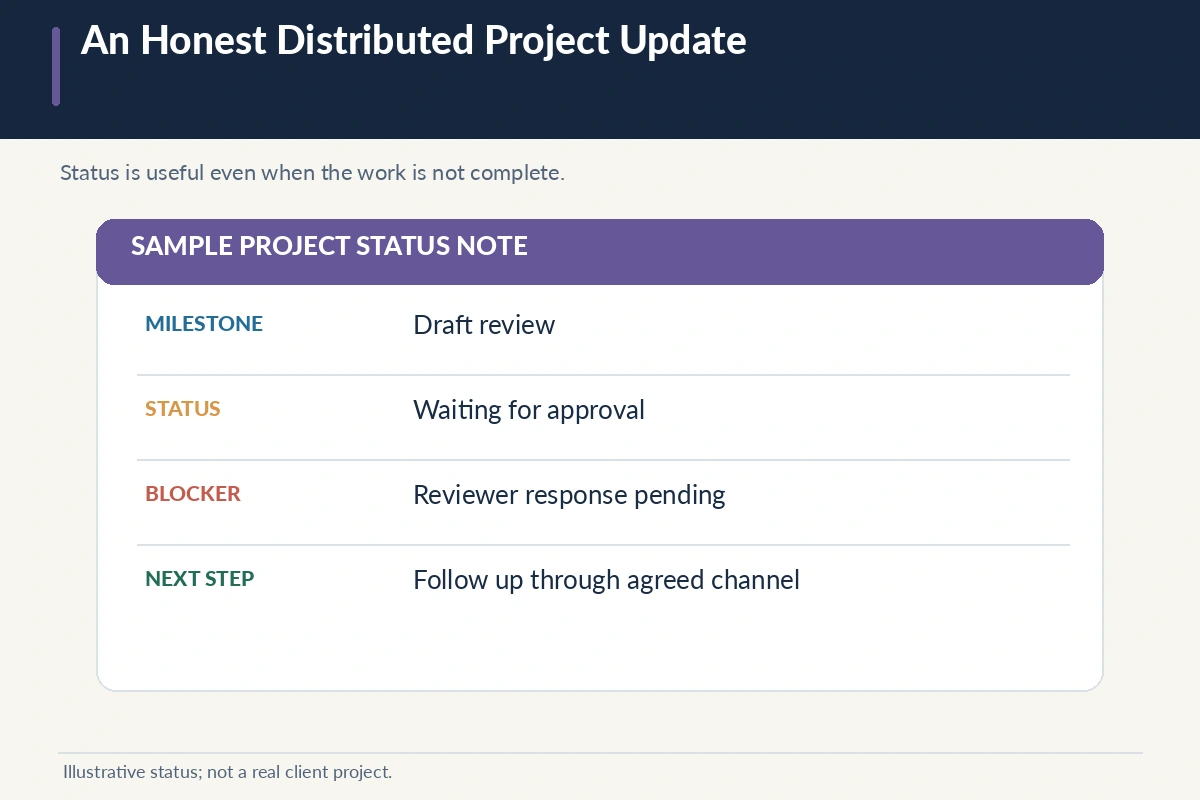
Use a hypothetical status note: “Milestone: draft review. Status: waiting for approval. Blocker: missing reviewer response. Owner: assigned lead. Next action: follow up in the agreed channel.” It makes no promise that the project is finished. A manager should know when to escalate rather than privately changing deadlines or authorizing spending outside granted limits.
Identify Who Can Approve a Scope Change
Write down who proposes changes, who assesses consequences, who recommends a new plan, and who can actually approve the change. A remote project manager might coordinate all the documentation while a sponsor or another designated authority decides. Do not convert responsibility for maintaining a tracker into authority to extend a deadline or approve procurement. Ask for the escalation policy and approval structure when the posting is vague.
Create a decision-rights map with lanes for contributor, project manager, and sponsor. Contributors raise impacts, the manager consolidates trade-offs and communicates them, and the authorized sponsor approves when the organization requires it. This is an illustrative governance pattern, not a universal rule: actual approval rights vary by company and project.
Verify the Hiring Organization and Portfolio Boundaries
Check that the vacancy exists on the employer’s real careers page and that the recruiting contact matches a verified route. Remote management roles can be impersonated like other online jobs. The FTC work-from-home guidance recommends independent research and cautions against job fees and fake equipment checks. Do not share internal roadmaps, confidential clients, proprietary budgets, or restricted project screenshots as application samples.
If you need to demonstrate project skill, use sanitized descriptions with permission or a fully hypothetical exercise. Be explicit about what is fictional. The NACE competencies can help describe collaboration and technology practices but do not substitute for actual professional project experience. Never imply that a self-created sample was a paid client engagement.

Select Roles With a Scope-and-Authority Checklist
Before applying, verify role title and employer, project type, deliverables, core working hours, reporting expectations, decision rights, and required experience. Write “unknown” when not disclosed. If the role exceeds your present experience, identify a realistic coordinator or junior path rather than claiming senior governance responsibilities. Do not hide a central qualification gap behind a remote-work preference.
Keep a brief application log with the verified vacancy link and the project artifact you will discuss. When interviewing, ask who approves trade-offs and how decisions are recorded across time zones. This page is about distributed project delivery and authority—not a general job-board roundup, a generic project manager interview guide, or a guaranteed remote hiring route.
How We Research and Verify Remote Roles
Sources checked on October 28, 2026: O*NET occupation data, FTC consumer guidance, NACE career-readiness competencies. We compared the topic with the transferred JobAsk slug index and public search results. These sources support duties and security cautions, not particular live vacancies, salaries, job offers, or hiring outcomes. Fictional examples are explicitly hypothetical. Private WordPress draft inventory was not available for an exhaustive canonical check. Our editorial links do not imply affiliate compensation; read the affiliate disclosure.
Related Guides
- Tell Me About Yourself as a Project Manager: Show Your Role in Delivery
- Project Manager Interview Questions: Show Scope, Risk, and Delivery
- Project Manager Resume Summary: Explain Delivery Scope and Risk Decisions
- Remote Part-Time Customer Service Jobs: Verify Hours, Tools, and Hiring
- Part-Time Remote Data Entry Jobs: Verify Duties and Avoid Scams
No. Stakeholder meetings and client delivery may require specific time-zone overlap or fixed availability.
No. Describe tracking work separately from spending or final approvals unless you actually held those responsibilities.
Use authorized, sanitized evidence or a clearly labeled hypothetical project artifact.
Describe your assigned milestone or handoff and credit the team or sponsor for their work.
Compare deliverables, stakeholder hours, report cadence, decision rights, and required experience—not just the remote label.