
Quick answer: If you lack one preferred qualification, a cover letter can explain the related experience you do have. Do not claim a required license, legal credential, clearance, or authorization you have not earned. Compare the job’s essential criteria with your actual record first; then use one concise example to show where your skills transfer and what you are still learning.
Separate Mandatory Criteria From Employer Preferences
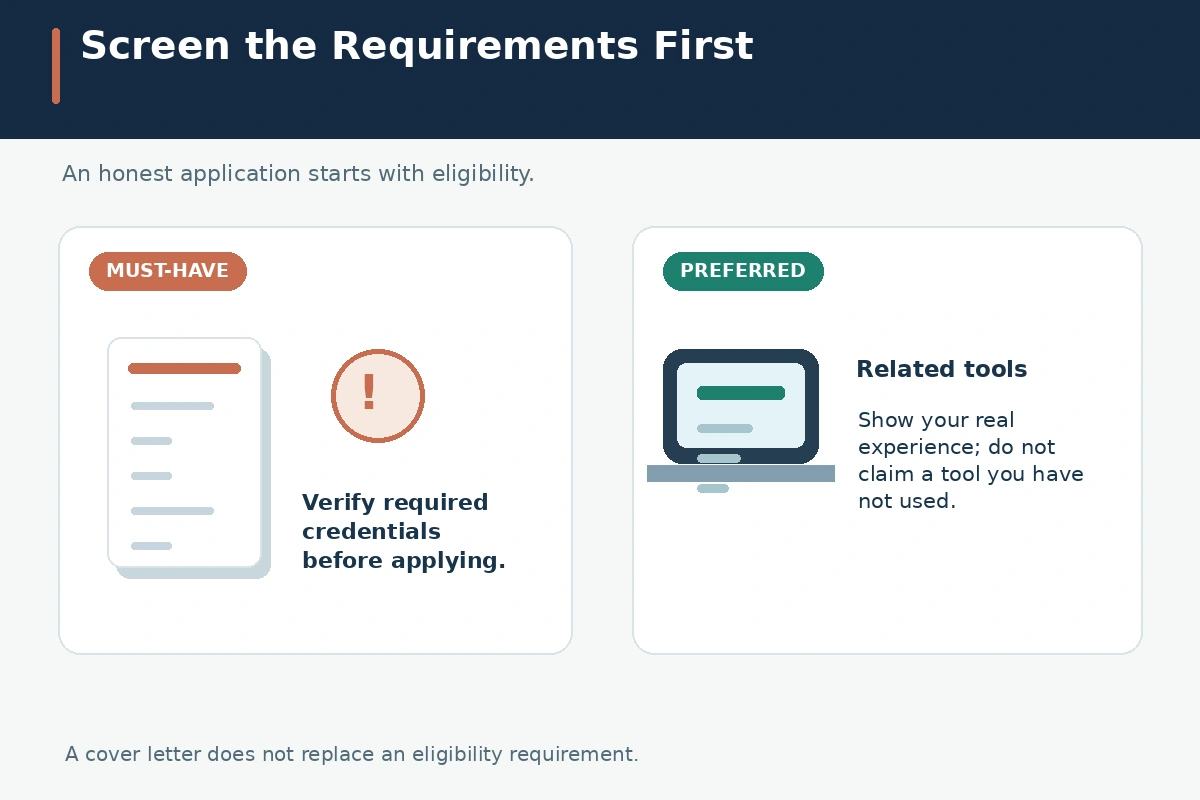
Read each requirement in context. “Required active state license” is not interchangeable with “preferred familiarity with scheduling software.” A role may specify a legally necessary credential, location eligibility, work authorization, certification, schedule, or experience threshold. A cover letter cannot waive a legal rule or make an applicant qualified for work they may not perform. Where the requirement is a non-regulated preference, an employer may have discretion, but do not presume it will be waived.
Make two columns before writing: “must verify” and “preferred or transferable.” Read the complete posting, including duties and any application questions, rather than treating each bold bullet as the same kind of condition. If you are unsure whether a credential is mandatory, use the employer’s official clarification route. Never answer “yes” to a screening question you cannot honestly satisfy just because the letter offers an explanation.
Choose the Closest Evidence Rather Than an Excuse
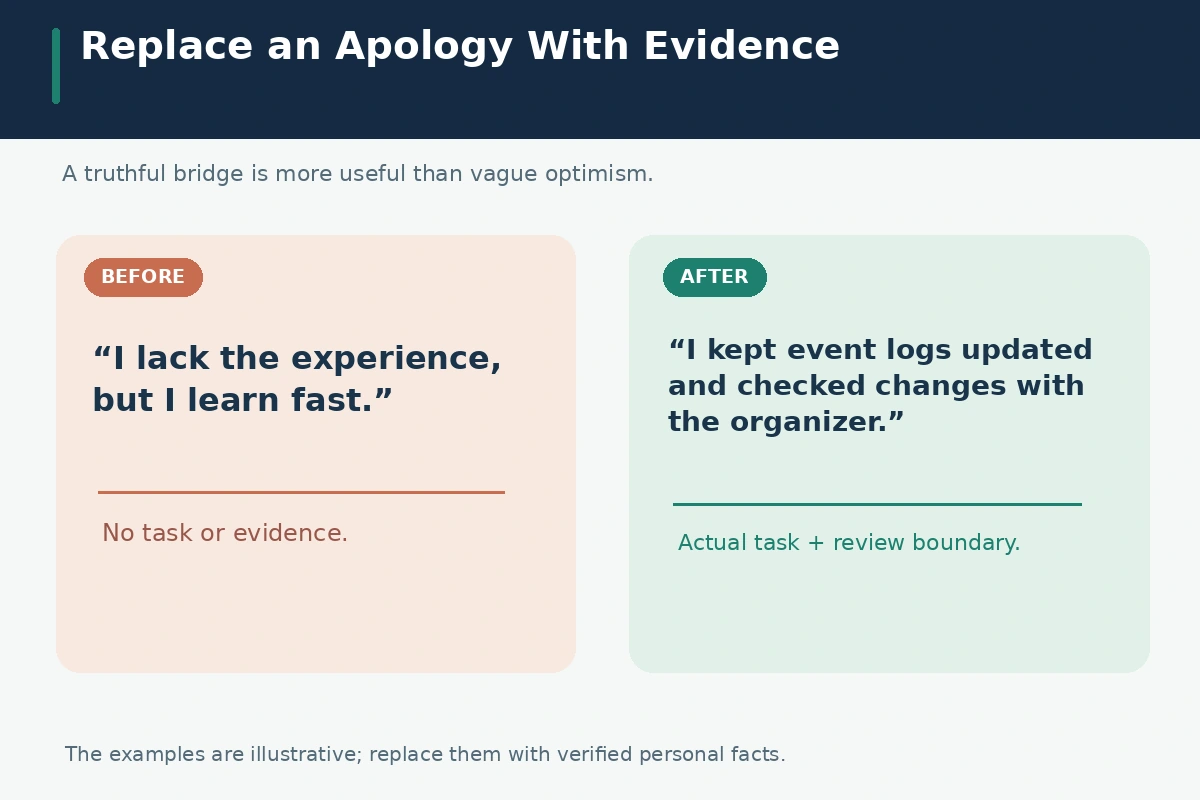
A common weak opening says, “Although I do not have the experience requested, I am a fast learner.” That centers the gap without proving what the applicant can contribute. Start with the actual work you have done. A hypothetical community volunteer might have scheduled events, updated participant lists and escalated conflicting requests. These tasks may be relevant to an office coordination opening even without the exact job title. Describe the setting and what you personally handled.
University of Pennsylvania and Michigan career guidance both recommend linking examples to key duties. Use their approach to pick one or two credible experiences, not a long defense of every missing line. Do not invent metrics or borrow a coworker’s achievement. If the employer requests three years of direct experience and you have fewer, state your real timeline on the resume; the letter can discuss the nearest relevant work without changing the dates.
Build a Four-Part Qualification Bridge
Try this sequence: name a core task in the job, point to a related task you actually performed, explain the specific method you used, and state how that experience could apply with appropriate training. In a wholly hypothetical example: “Your coordinator role emphasizes accurate schedule changes. In a campus volunteer group, I updated a shared event calendar and confirmed changes with the designated organizer. I would bring that habit of documenting changes to your team’s scheduling process.”
This example claims neither a real vacancy nor a hiring result. Its value is that a reader can see the work and its boundaries. The sentence does not quietly turn volunteer coordination into paid management experience, claim a software certification, or promise error-free performance. If the comparison feels stretched, find a better experience or acknowledge that the particular role may not fit yet. A truthful bridge can be modest and still useful.
Explain a Missing Tool Without Fabricating Proficiency
Suppose a posting prefers one customer relationship management platform and you have used a different, genuinely comparable system. You can name the system you used, the records you handled and the process you followed, while avoiding a claim that you know the target software. You might write, “I have documented support requests in [software actually used], including follow-up status and notes, and would need training on your platform.” Replace the bracketed phrase only with a verified personal fact.
For technical tools, methods and regulated tasks, transferability has limits. Experience entering appointments does not establish medical coding competence; a class assignment does not create a professional license. Avoid “expert,” “certified,” or “fully trained” unless you can substantiate those words. When the posting expects a tool from day one, you may still decide not to apply. The goal is an honest fit explanation, not a workaround for the employer’s criteria.
Use Training as Evidence Only When It Has Happened
An applicant may be taking an actual course, completing a defined project, or preparing for an exam. Distinguish the stage correctly. “Completed the introductory course” is different from “enrolled,” “studying,” or “licensed.” If you mention future training, specify the real status without predicting an outcome. Do not list a certification as earned when it is pending. Keep the letter’s main space for work you can already explain and demonstrate.
A modest hypothetical line is: “I am currently studying spreadsheet lookups and have used basic sorting and validation for volunteer rosters.” It works only if both clauses are true for the applicant. It does not make the applicant proficient with every spreadsheet function. University career guidance rewards relevant examples and clear writing; it does not support turning a plan into an accomplished credential. Keep future steps subordinate to verified experience.
Write a Brief Paragraph That Matches the Posting
A useful middle paragraph can handle one gap without announcing it as the headline. For a hypothetical records assistant role: “I have not held the records assistant title, but I have maintained a weekly inventory log for a student organization, checked missing entries with the responsible volunteers, and documented corrections. Those habits relate to the accuracy and follow-up described in your posting.” This is sample phrasing, not a claim about a real candidate or employer.
If you lack several major requirements, avoid trying to explain every one in the letter. That produces a defensive page and may signal poor fit. Focus on an eligible role where you have meaningful evidence, or consider a training or entry-level path first. CareerOneStop notes the cover letter should be tailored and brief. A strong paragraph explains what is actually transferable; it does not substitute persuasion for eligibility.
Check the Application for Consistent Claims
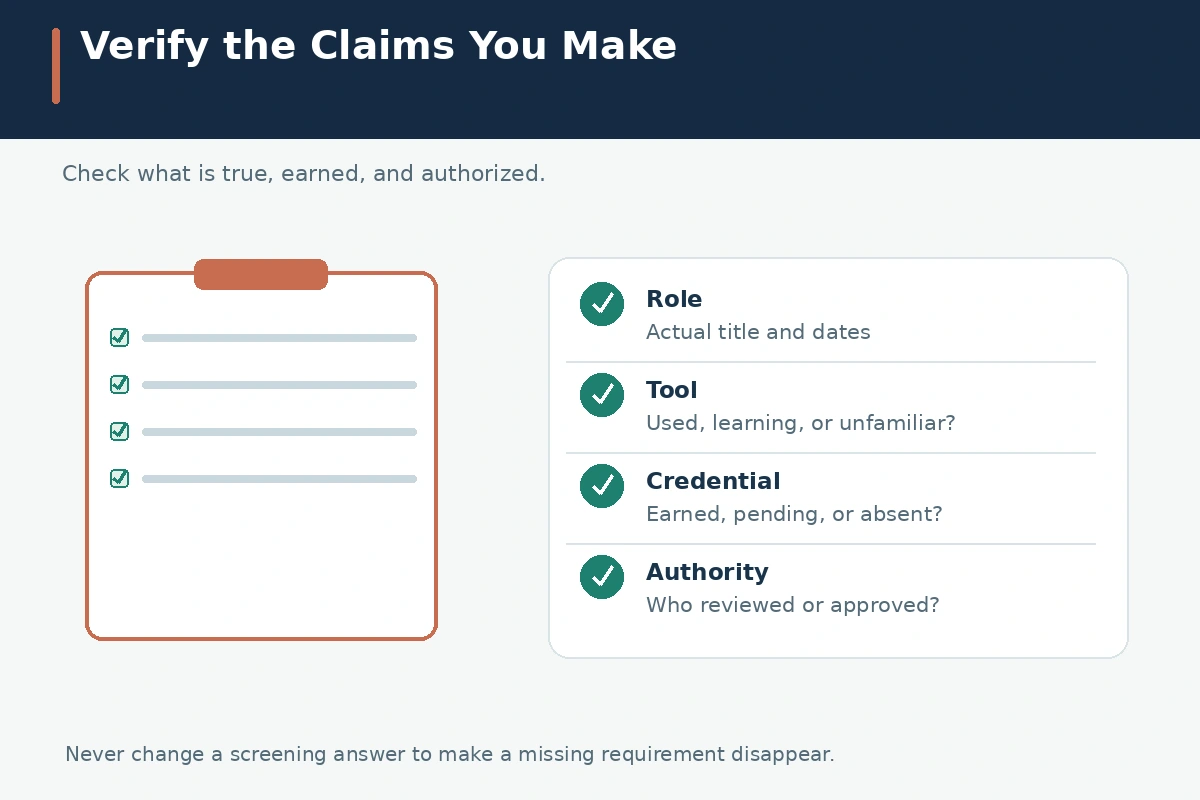
Compare every line against your resume and any application fields. Dates, role titles, course status and tool claims should tell the same factual story. If your resume says “assisted with onboarding,” do not let the letter say “directed the onboarding program” without a true basis. Read the job’s instructions again to see whether specific qualification questions require direct answers. Do not use the letter to dodge or contradict a screening form.
Finally, test whether you could describe the example in an interview without inventing details. Explain what you did, who approved decisions, what tools were available, and what you learned. If you would need to make up a supervisor, client, result or certification, revise or remove the example. A careful application can communicate potential and limits together, while acknowledging that the employer may require criteria you do not meet.
How We Research and Check Cover Letter Advice
How We Research: We reviewed the following original U.S. employment and university career resources on October 28, 2026: CareerOneStop, U.S. Department of Labor; University of Pennsylvania Career Services; University of Michigan Career Center. The sources support general advice on applications, evidence and formatting, not claims about any employer’s current hiring decisions. We compared this specific intent with the historical JobAsk slug index and publicly searchable pages; that does not prove unpublished WordPress slugs are free. All sample people, positions, employers and outcomes in this guide are hypothetical. Employer instructions have priority. These editorial references are not presented as paid endorsements. Read our affiliate disclosure.
More Resume and Cover Letter Guides
- Electrician Cover Letter: Explain Training and Safety Without Overclaiming
- New Graduate Nursing Cover Letter: Explain Clinical Training Honestly
- Referral Cover Letter: Mention a Connection and Show Your Fit
- Data Analyst Cover Letter: Explain Your Project and Decisions
- Cover Letter After a Career Break: Explain the Gap and Show Readiness
Usually not. Explain the closest truthful experience and how it relates to a specific task instead of writing a long apology.
No. Do not claim eligibility or authority for regulated work that you do not hold; verify the actual requirements.
You may, if it is true and relevant. Distinguish studying, enrolling and actual proficiency.
Answer accurately. A letter must not contradict the years or dates you give in the application.
Name the actual task, setting, method and its connection to the advertised duty; do not call it paid employment.