
Quick answer. Entry-level purchasing jobs often involve helping a team track requests, orders, supplier details and delivery records. The O*NET Procurement Clerks profile includes tasks such as tracking requisitions, preparing purchase orders and comparing prices or dates. “Purchasing assistant” is not necessarily the same as a buyer or purchasing manager with independent approval authority. Read the specific job advertisement and show evidence of careful recordkeeping, communication and follow-through. This guide does not list current vacancies or advise you to make real purchases without authorization.
Separate Procurement Support From Buyer Authority
Purchasing support roles may maintain order records, match request details and follow up about deliveries. Other jobs with similar titles involve supplier selection or spending decisions. O*NET lists purchasing assistant among related titles under Procurement Clerks, but an advertisement may use a title differently. Determine whether the position processes approved orders, prepares drafts for review or has actual authority to select vendors. The distinction helps you evaluate fit and avoid overstating your decision-making experience.
Mark action verbs in the posting: prepare, track, reconcile, request, approve and negotiate do not mean the same thing. If the description expects you to approve spending, ask what authorization and training apply. A beginner who has worked with invoices or event supplies may know organization and follow-up without knowing procurement policies. Present the transferable tasks honestly; do not imply you can bind an employer to a contract because you once compared prices.
Follow the Request-to-Receipt Workflow
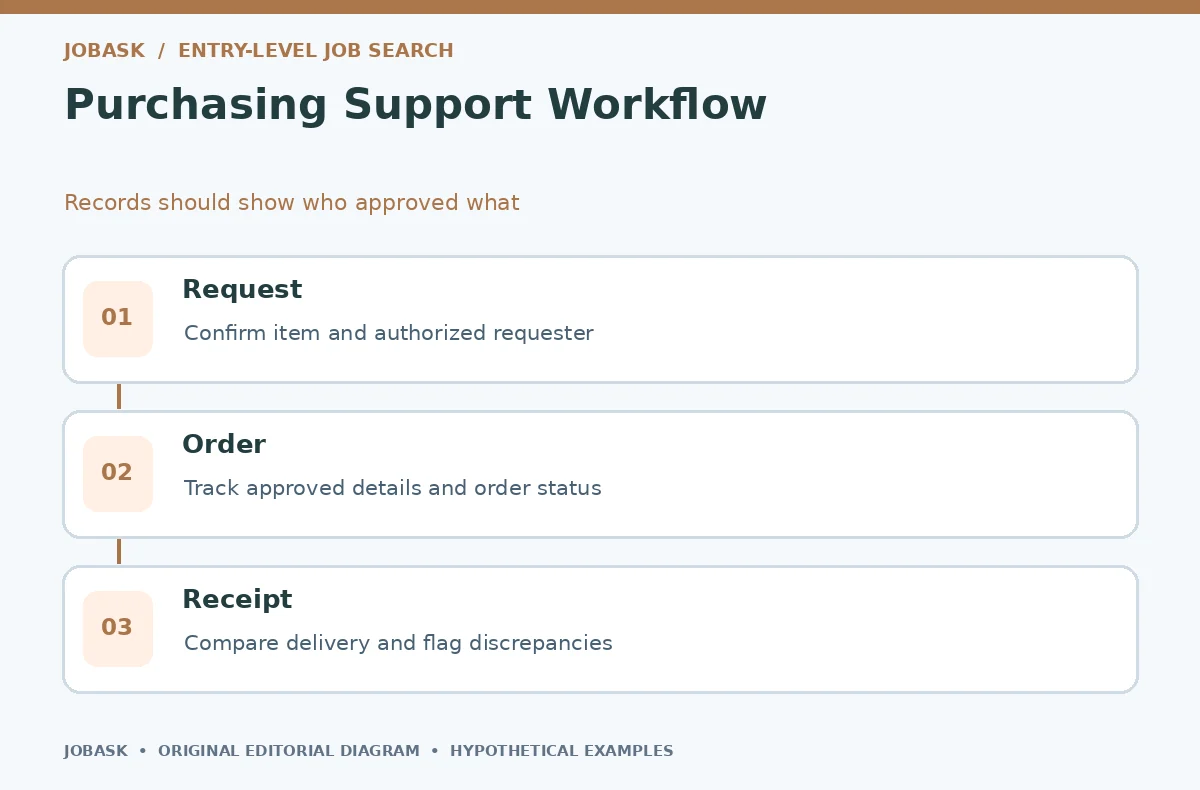
A useful mental model begins with a purchase request, continues through an approved order and ends with delivery confirmation or issue resolution. Keep the original request identifier, item description, quantity, requested date and approver separate from later changes. O*NET describes tracking purchase orders and requisitions, so status visibility can matter as much as entering a form. In a real organization, systems, segregation of responsibilities and document requirements vary.
Build a fictional practice worksheet with columns for request ID, requester, item specification, supplier quote, approval status, order number, expected date and receiving note. Do not pretend it is an employer’s actual system. If an order arrives incomplete, the correct general response is to preserve the record and ask the authorized person about next steps rather than silently changing the original quantity. Explain the difference between a documented correction and an unapproved purchase.
Use Transferable Coordination and Math Evidence
Entry-level candidates may have experience coordinating class supplies, tracking volunteer materials or comparing estimates for a legitimate event. Those are not identical to corporate procurement, but they can show organized recordkeeping and clear communication. Specify what you did: maintained a checklist, checked quantities, requested clarification or noted delivery issues. Avoid fictional cost savings, supplier relationships or contract wins. A careful candidate can acknowledge the limits of an example without making it sound weak. Our guide “Entry-Level Data Entry Jobs” covers how to verify duties and show accuracy.
A fully hypothetical bullet could say: “Tracked supply requests for a student event, flagged incomplete item descriptions and sent updates to the organizer before ordering.” It illustrates a transferable sequence; it is not evidence that any real student achieved it. If you did not handle money or choose vendors, say so. If asked about spreadsheets, describe real functions you have used and do not claim proficiency in a purchasing platform that you have never seen.
Compare Quotes With All Relevant Details
Price alone may not make supplier offers comparable. The O*NET tasks mention examining price, specifications and delivery dates. In a practice exercise, verify that quoted items match the requested product and that quantities, delivery timing and any authorized conditions are clear. An apparently cheap quote for a different item or date is not equivalent. Do not use a web article to interpret contract language, tax obligations or government procurement rules; refer such matters to the organization’s responsible staff.
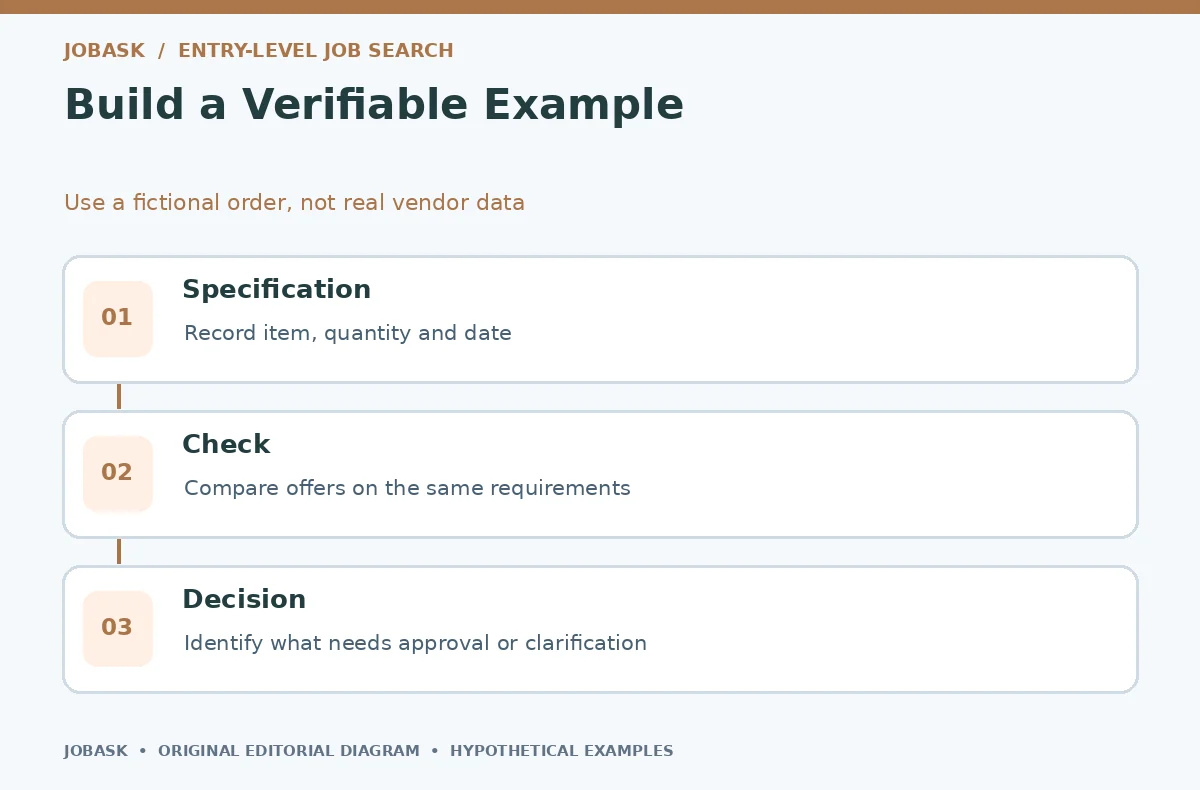
Imagine three fictional offers for office folders: one matches specification and timeline, one lists a different package size and one omits delivery information. Instead of inventing a winning vendor, mark which offer needs clarification and what data would allow an authorized comparison. In an interview you can explain that discipline. If the employer uses a formal scoring template, you would learn and apply that template rather than making private assumptions about which supplier should be chosen.

Verify Employer Context and Administrative Controls
A genuine purchasing job listing should identify the organization, the team or reporting line, and enough responsibilities to distinguish it from general clerical work. Independently verify the company and recruiter. FTC cautions that employment scams can use real-looking branding to request money or personal information. Do not buy supplies or route money to a stranger in anticipation of reimbursement from an employer you have not confirmed. Purchasing job titles are especially unsuitable excuses for handling unverified payments.
At interview, ask which purchasing system the team uses, how incoming requests are validated, who approves suppliers and how delivery discrepancies are resolved. Clarify whether contact with suppliers is part of the position and who handles sensitive pricing or contractual details. These questions reveal the real workflow and signal that you respect permission boundaries. Do not assume a specific corporate purchasing policy is universal, or promise authority that only the employer can grant.
| Check | Reader action |
|---|---|
| Specification | Record item, quantity and date |
| Check | Compare offers on the same requirements |
| Decision | Identify what needs approval or clarification |
Build a Focused Resume and Follow-Up Record
Start with a resume that highlights truthful documentation, spreadsheets, math checks, organization and cross-team follow-through. Keep an example of an invented request-to-receipt table in a separate practice folder if you want to discuss your reasoning. Apply to positions whose tasks match your capabilities and stated qualifications, not every opening with the word “buyer.” Where education or related experience is listed as essential, treat it as a real constraint to evaluate.
For each application, store the original job description, employer URL, exact title, date and your specific supporting examples. Prepare a response to “How would you handle a missing item?” that begins by checking the order and receiving details before escalating through the responsible person. Avoid invented negotiations or savings figures. The guide’s useful result is a clearer support-role target and documented evidence, not a forecast of interviews or hiring.
How We Research Beginner Roles
We reviewed O*NET’s procurement-clerk summary and detailed tasks, the BLS purchasing occupations overview and FTC job-scam advice on October 20, 2026. This guide intentionally stays within purchasing support workflows and avoids interpreting contract, tax or procurement law. The original request-to-receipt diagram uses invented records to show how permission and verification affect everyday tasks. We did not interview buyers, examine actual supplier contracts or check private vacancy inventories; outcomes and duties remain employer-specific.
Original Examples, Sources, and Disclosure
Role-specific primary sources reviewed October 20, 2026 for entry level purchasing jobs: www.onetonline.org — O*NET reference; www.onetonline.org — Detailed reference; www.bls.gov — BLS reference; consumer.ftc.gov — FTC reference. Purchasing orders, supplier quotes and student event records here are imagined practice material; they are not instructions to authorize spending or interpret contracts. Actual teams set approval limits and record procedures. Review JobAsk commercial disclosure to understand site transparency. No purchasing vendor recommendation, tracking URL or paid affiliate invitation appears in the article.
Related Job Search Guides
- Entry-Level Purchasing Assistant Jobs: Compare Quotes and Track Orders
- Entry-Level Logistics Jobs: Start with Shipping and Inventory Records
- Entry-Level Logistics Jobs: Start With Shipping, Receiving, and Records
- Entry-Level Construction Jobs: Find a Suitable First Site Role
- Entry-Level HR Jobs: Compare Assistant, Records, and Recruiting Support
No. Responsibilities and authority can differ substantially. Read the posting and ask who approves vendor and spending decisions.
Organized documentation, accurate quantity checks, supplier communication and tracking of requests or deliveries can be relevant.
Yes, if real and accurately described. Explain your tasks and do not invent cost savings or purchasing authority.
No universal requirement fits every title. BLS describes different expectations for buyers and managers; support jobs have their own postings.
Ask about the order system, approval paths, handling of mismatched deliveries and who communicates with suppliers.