
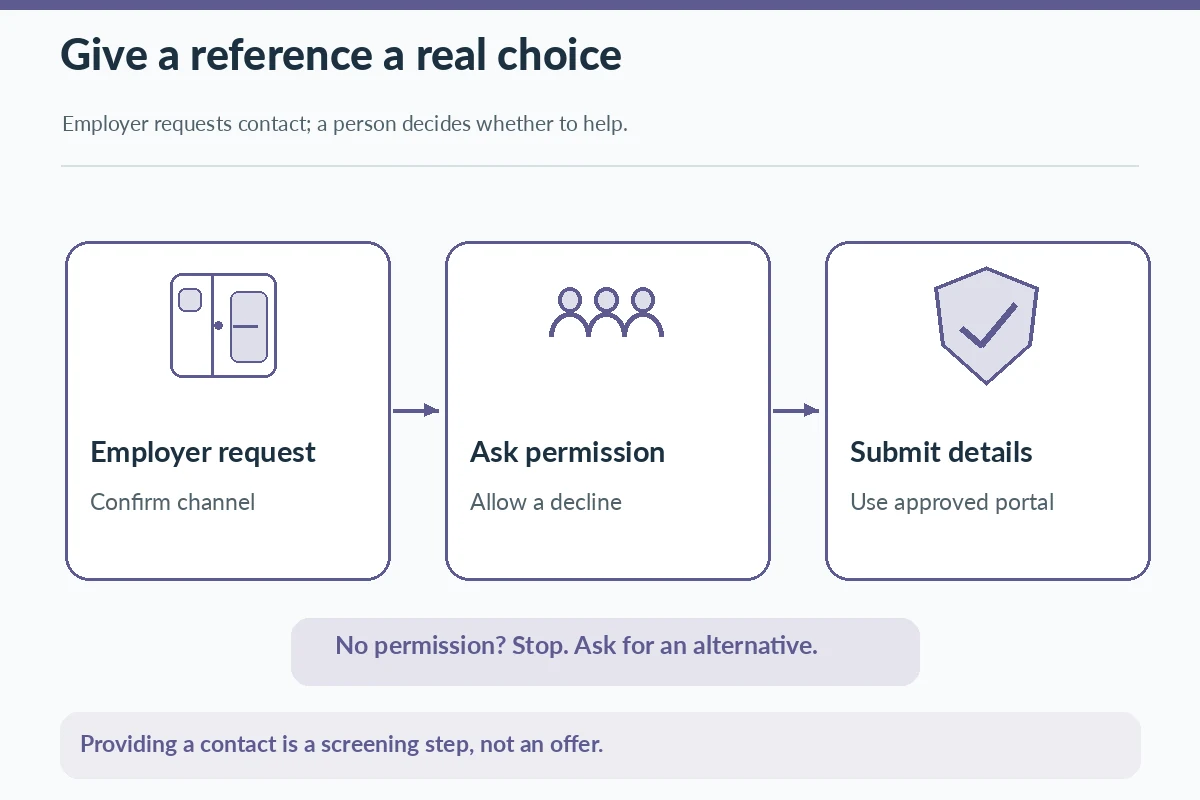
When an employer asks for references after an interview, first verify that the request came through the real recruiting process. Ask each proposed reference for permission, confirm their preferred contact details, and submit only what the employer requests through its stated secure channel. A reference request is a step in screening, not proof that an offer has been made. Your follow-up should focus on accurate receipt, availability and consent rather than asking a reference what they said about you.
Read the reference request as a task, not an offer
A recruiter may request references before an interview, between rounds or near a final decision. The timing varies and does not independently establish that a job is yours. Read the original email for the number of references requested, relationship requirements, format, deadline and method for submission. Some employers collect names in an applicant portal; others use a separate reference-check provider. Never assume an unfamiliar external form is legitimate without confirming it through the employer’s published contact route.
Boston University’s career center explains that references can discuss work-related qualifications and employers may contact them by telephone or survey. A manager, instructor or project supervisor is only a good choice if they can honestly describe your work. Do not enlist a relative to impersonate a supervisor or supply a fabricated employment history. Treat references as other people’s private information that you may share only with their knowledge and permission.
Get permission and accurate contact details first
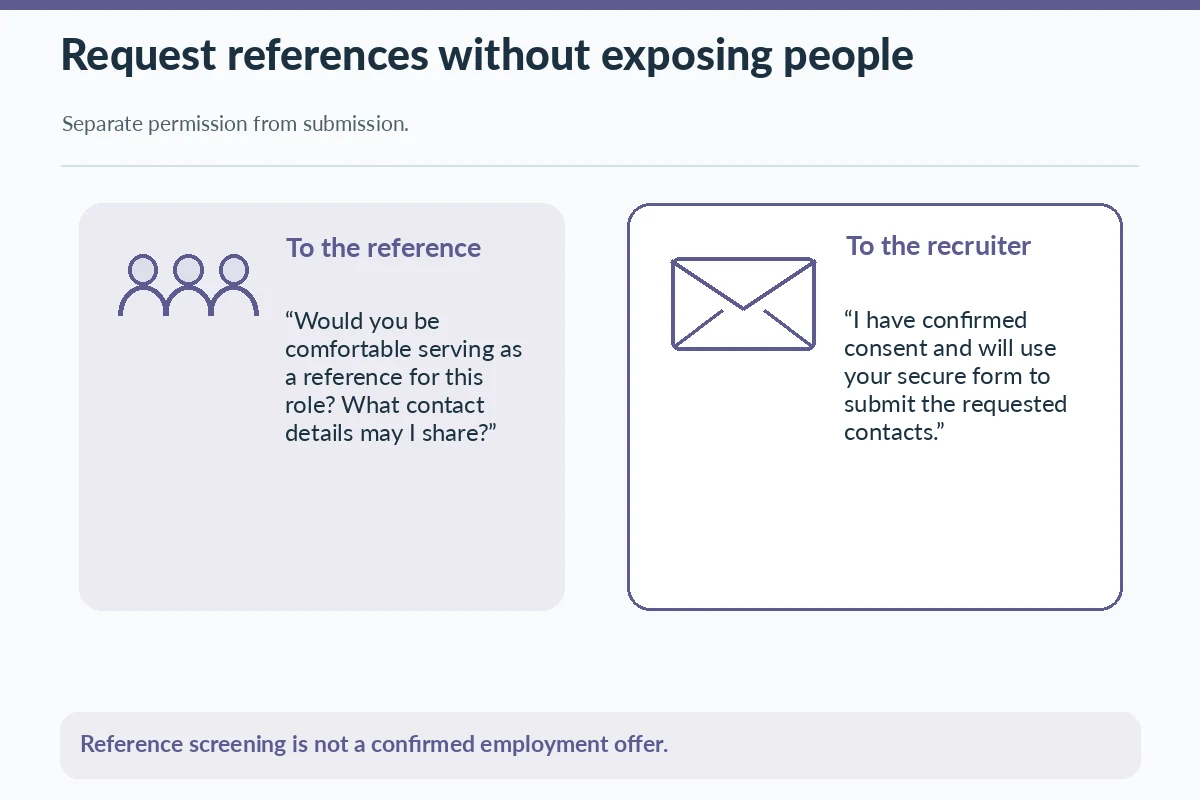
Write to the person before sending their name or contact information whenever possible. Say which job you are applying for, why you believe they can describe your work, what the employer may ask and the likely contact period if known. Give the person a genuine chance to decline. A person who once supervised you is not automatically available, comfortable or authorized to discuss every employer’s work. Use the address or number the reference approves for this purpose.
A hypothetical note could say: ‘Hello [Name], I’m being considered for a Project Support role. Would you be comfortable serving as a professional reference about the scheduling and documentation work we did together? The employer may contact references in the next stage. If yes, which email or phone number should I list?’ Don’t send a colleague’s personal number just because it appears in your phone. For a current manager, consider whether disclosure would affect confidentiality and discuss appropriate alternatives with the recruiter.
Reply to the recruiter using the approved channel
Subject: References for [Position Title] — [Your Name]. Hello [Recruiter Name], thank you for the next-step instructions. I have confirmed that [number] references are willing to be contacted. I will submit their details through the secure form referenced in your message by [date], or please let me know if you prefer another authorized route. Thank you, [Your Name]. This example assumes permission has truly been obtained; otherwise say when you expect to confirm availability.
Do not paste a full reference list into a large email thread if the employer supplied a secure system. Avoid attaching performance evaluations, coworker phone lists or signed letters you were not asked to send. If an identity-verification link or file upload instruction looks unfamiliar, use the employer’s verified website or known recruiting contact to check it. A real request should not require you to purchase a ‘reference package’ or disclose unrelated financial information to an unverified intermediary.
Prepare references with role context, not a script
Once a reference agrees, send the position description and your current resume or a brief summary of relevant duties. Explain the kind of work the employer may want to verify: deadlines you handled, collaboration, quality checks or scope of your responsibilities. Be accurate about dates, titles and the reference’s relationship to you. Never ask them to invent achievements, claim an employer you never worked for or conceal facts they are obligated to state truthfully.
Make it easy for a busy reference to locate the relevant project without sharing confidential employer records. For example, a former supervisor could be reminded of a ticket-tracking workflow you supported, but shouldn’t receive customer data or private incident logs to refresh their memory. If a reference needs time, tell the recruiter honestly; don’t list a replacement without checking. A reliable handoff benefits both the employer and the person willing to support you.
Follow up only on receipt or a real obstacle
After submitting the list, save the confirmation from the applicant portal or the acknowledged email. If there is no receipt and the employer’s instructions imply one should appear, ask the recruitment contact to confirm that the submission arrived. If a reference reports not receiving a promised link, verify the address and tell the recruiter through the same official channel. Do not pressure the reference to reveal interview questions or exact statements they made about you.
If the recruiter says the team is still conducting checks, thank them and wait for the next update. University career resources advise limited status contact after the decision window, not repeated attempts to accelerate the process. A reference check can be part of a longer review that may include other requirements. Until the organization issues a written offer, avoid announcing that you have been hired or changing your current employment arrangements.
Protect sensitive relationships and unusual reference situations
Applicants sometimes cannot use their current supervisor because their job search is confidential. Tell the employer truthfully and ask whether a former supervisor, teacher, volunteer lead or client contact would be acceptable. The employer decides the requirement, so do not claim an exemption exists. If a proposed reference is unavailable, ask for an alternative rather than supplying an unapproved person’s contact. For contractors, explain the actual business relationship instead of inventing an employee title.
Some organizations use standardized employment verification instead of personal recommendations. Separate verification of dates and job title from a qualitative reference about performance. A recruiter may request one or both. Do not forward identity documents, tax forms or other sensitive records under the assumption that they are normal reference details. If needed, verify the process with the organization before uploading any personal information.
Close the loop respectfully with each reference
When you learn that a reference has been contacted, you may thank them for their time without asking for confidential details. If you accept a position, let them know the outcome and express appreciation. If you are not selected, you can still thank them and ask whether they would be open to future contact. A one-time permission for this role should not be treated as perpetual permission to share their phone number for every future application.
Before submitting another reference request, update the reference with the new employer, role and likely timing. Keep a private tracker recording consent, contact method and whether you have completed the submission, but do not publish or forward the list. The key distinction is that a reference’s participation is their choice, and the employer’s interest in contacting references is a recruitment step, not a confirmed job offer.
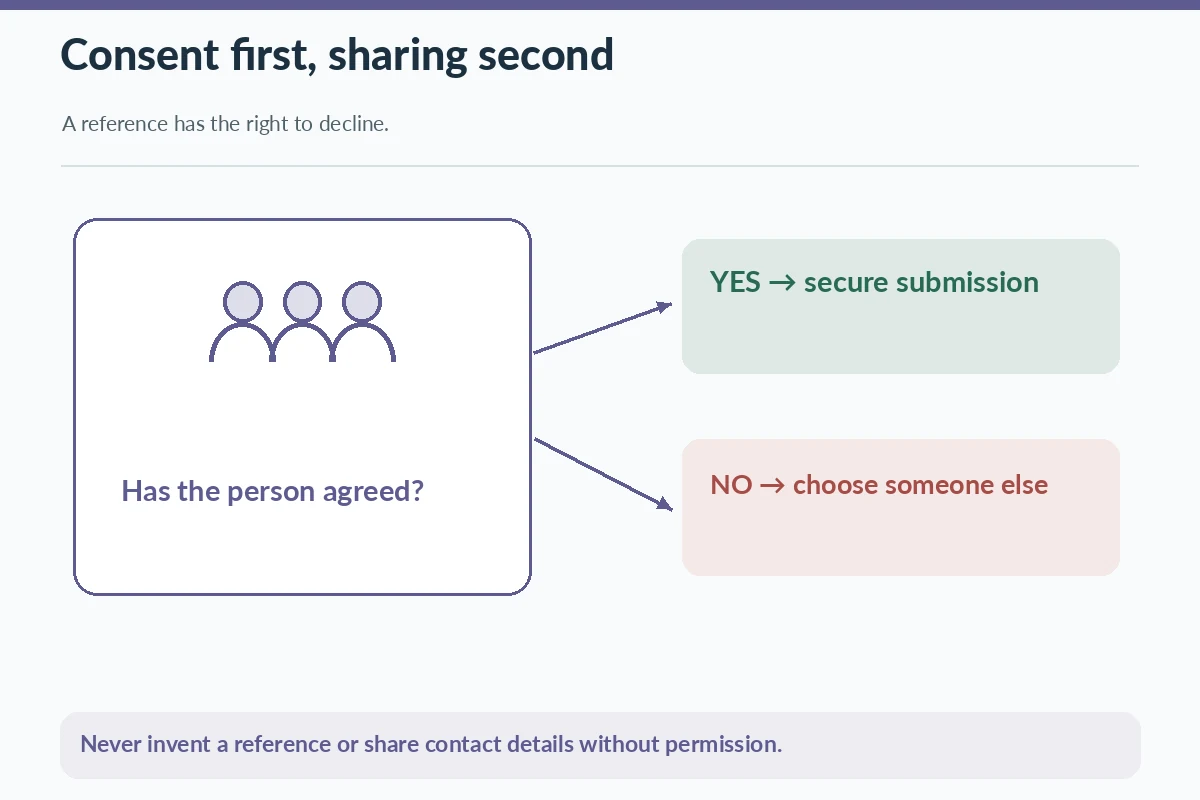
| Question or stage | Best first route | Important boundary |
|---|---|---|
| Reference name | Permission confirmed | Share approved contact |
| Employer request | Verified recruiting channel | Avoid unrelated data |
| Post-submission | Receipt or specific issue | Do not pressure references |
How We Research and Check Follow-Up Advice
This guide compares documented interview-follow-up recommendations with primary institutional guidance for this specific situation. Examples are hypothetical; they do not describe a real applicant, actual selection, guaranteed response date, or employer policy. We reviewed the cited sources on 2026-11-05 and compared this article with the site topic inventory for distinct intent. Employer and school instructions override generic timing suggestions. For relationship and funding disclosures, see the JobAsk affiliate disclosure.
Sources reviewed: Boston University — Boston University advises asking a reference for permission, alerting them before employer contact and sharing context about the role.; Boston University — Boston University advises a brief status inquiry after the stated decision window and discourages repeated follow-up messages.; GoGovernment — GoGovernment advises notifying professional references that an employer may contact them and sharing relevant job context.. Use the vacancy instructions and the documented recruiting channel for your own case.
More Interview Preparation Guides
Not necessarily. It indicates a recruiting step, but hiring decisions and any other checks may still be pending.
No. Ask permission and check whether that person can appropriately speak to your work before providing their contact information.
Explain that situation honestly and ask whether the employer accepts another appropriate professional reference.
Avoid pressuring them for private conversation details. Thank them and focus on what the employer has formally communicated.
Follow the verified employer instructions. Use the provided secure portal or approved contact route when available.