
Quick answer: A cashier cover letter without register experience should not pretend that you have processed retail payments. It should explain a genuine match: listening to customers, checking amounts, keeping records organized, following procedures, and learning point-of-sale systems under store supervision. A school fundraiser, volunteer event, or previous service role may offer useful evidence when described accurately. Tie that evidence to the employer’s posting and its training expectations.
Read the Posting for the Kind of Checkout Work
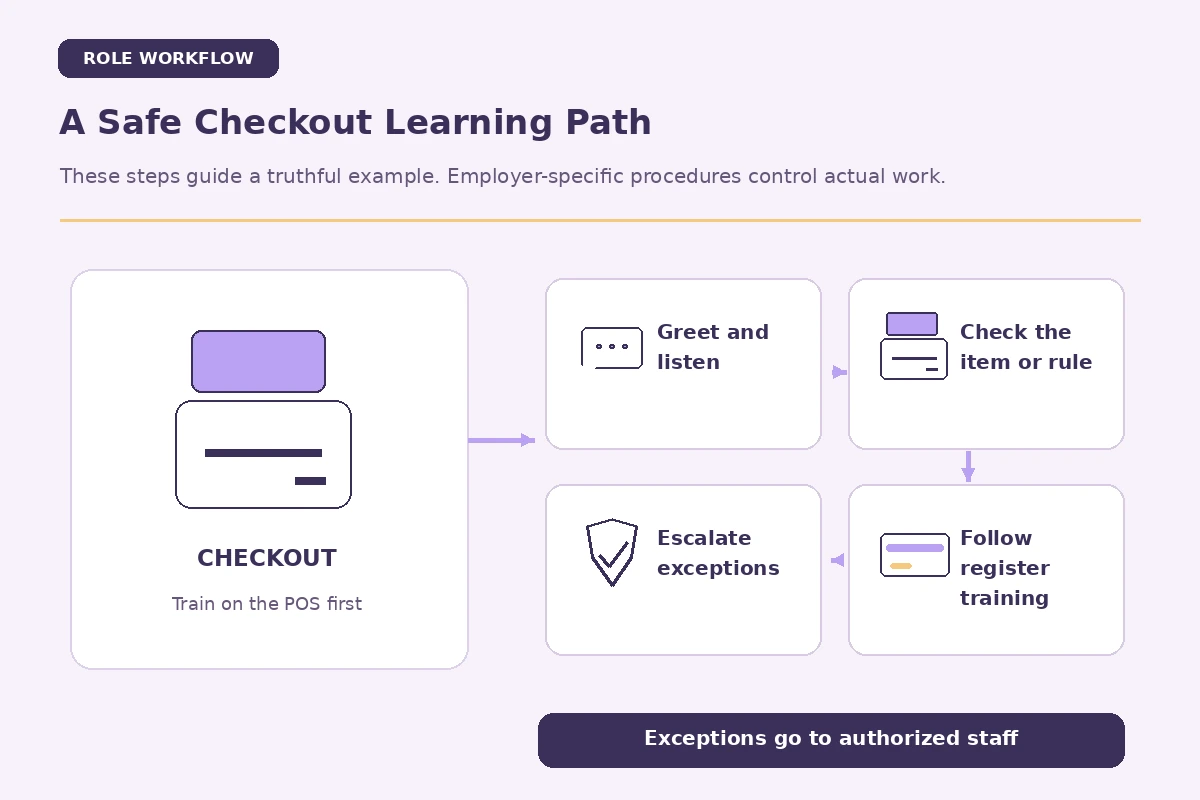
A grocery cashier, ticket-booth clerk, self-checkout attendant, and store cashier may have different duties. Some process returns or price checks; others focus on bagging and assisted checkout. The BLS cashier profile lists scanning purchases, handling payments, providing receipts, and responding to customers. Use that information to understand the occupation, then use the real employer posting for what you must address. If a task involves handling payments or restricted merchandise, state readiness for approved instruction rather than claiming existing authorization.
Choose One Credible Customer-Contact Example
If you have greeted visitors, answered questions, or directed people at an event, describe a real occasion when you listened, confirmed the request, and provided an appropriate next step. The purpose is not to convert event hosting into retail experience. It is to show communication that carries over to a checkout environment. “At a school event I checked attendee names against a list and sent unresolved questions to the organizer” is a truthful kind of example, if you did it. Do not invent customer satisfaction scores or stories about refunds you never processed.
Model a First-Time Cashier Letter You Can Adapt
Hypothetical cover letter: “Dear Store Hiring Team, I am interested in the Cashier position advertised at your location. In a school fundraising event, I helped organize a sign-in table, checked written lists against the coordinator’s records, and answered visitor questions using the event instructions. I have not operated a retail POS register, but I am comfortable checking details carefully and would follow your training for payment handling, age checks, and returns. I can discuss the evening shifts shown in your posting. Thank you for considering my application. Sincerely, Applicant.” The example is invented and must be replaced by your own experience.
Separate Basic Math From Handling Store Funds
Being comfortable with arithmetic is helpful, but it does not prove you have balanced a commercial cash drawer. If you counted supplies, double-checked an event total, or used a spreadsheet in class, name the task and its setting. Do not say “handled $10,000 in daily sales” unless you genuinely did so and may disclose it. Payment systems, refunds, discounts, and reconciliation procedures belong to the retailer and its training. A credible letter promises careful learning, not instant authority to override transactions.

Explain How You Respond to a Confusing Question
A customer might ask about a price, a promotion, a return rule, or a missing item. Your transferable skill is to listen, verify an available source, and seek help if the answer is not yours to decide. A hypothetical volunteer at a ticket desk could have looked up an event policy and directed an exception to the lead. Present the real steps you took in your own setting, not that invented example as your history. Do not promise refunds, exceptions, or discounts without the store’s approval process.
Add Reliable Shift Fit Without Overpromising
Cashier positions frequently involve standing and can include evenings, weekends, or holidays. Mention the particular schedule advertised and your true availability. Avoid saying “any shift, anytime” if classes, transportation, or another responsibility limit you. Store managers also value an honest statement about learning routines and arriving prepared for scheduled work. You can mention how you followed a volunteer rota or group-project deadline, but do not describe a school timetable as paid workplace attendance.
Use Training Language Instead of ATS Claims
You do not need to imply that your letter will pass an automated screening system. Instead, use the real job title, one matching behavior and one accurate training statement. The O*NET cashier description helps you distinguish duties from personal qualifications. An applicant who has never scanned a product should say that plainly if relevant, not hide the gap behind “expert POS operation.” The objective is a believable introduction the recruiter can compare with your resume.
Perform a Final Checkout on Your Own Claims
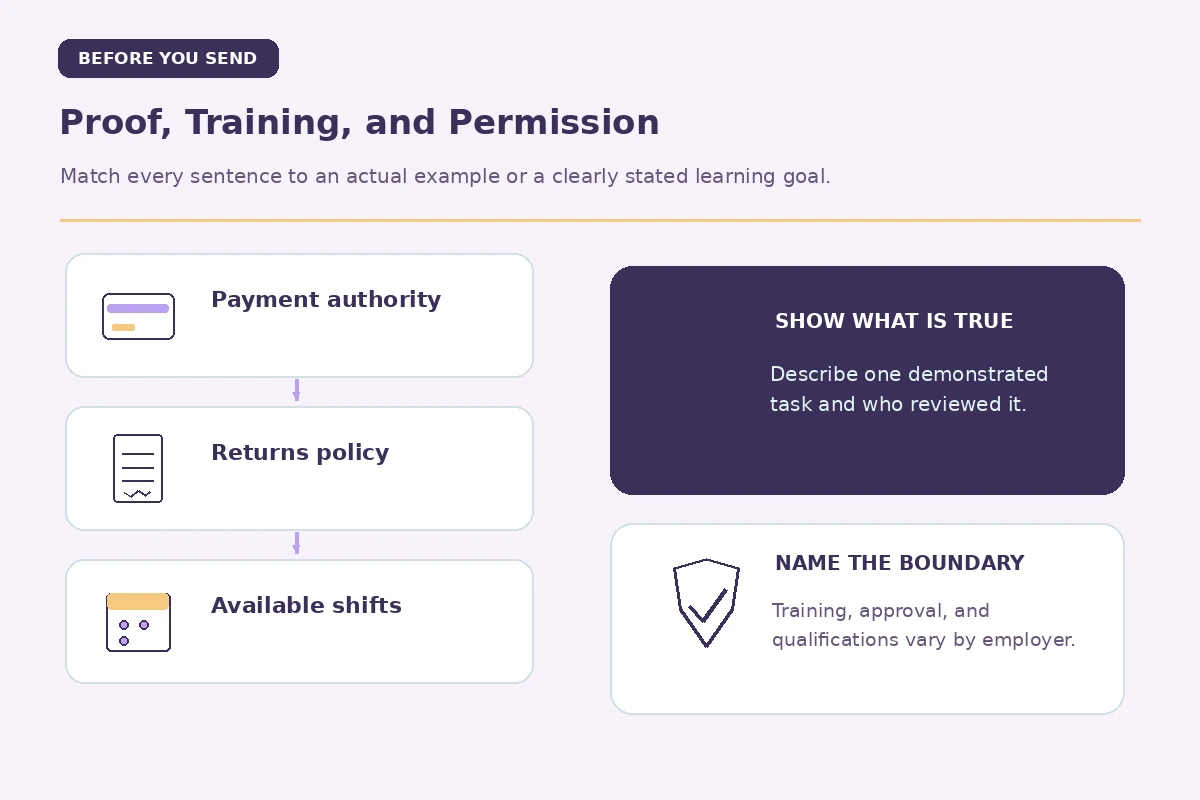
Before sending, put every claimed skill into one of three groups: demonstrated, studied, or willing to learn. The first may include a real customer interaction; the second a classroom spreadsheet; the third a POS procedure you have not used. Check that the wording keeps those groups separate. Also verify the store location, job number if supplied, recipient address, attachments, and whether a cover letter is actually requested. If it is optional, a concise, role-specific note is usually more useful than a long generic biography.
Separate a Helpful Customer Example From Payment Authority
Read the strongest evidence sentence in your letter and underline the action you actually took. Did you answer a visitor question, verify a list, count event supplies, or explain a posted policy? Those are concrete actions. Did you instead write that you approved a return, counted a commercial till, or corrected a receipt when you have never done so? Replace that claim with a training statement. This small audit also prepares you for an interview follow-up about the tools you used and who made exceptions. You can be ready to learn without pretending that a school activity was paid register work.
How We Research These Cover Letter Examples
This guide uses the U.S. Department of Labor-sponsored CareerOneStop advice on writing cover letters to check when a letter is useful and why it should connect real skills to the advertised job. It also compares the role with official occupational descriptions and the relevant professional task or safety guidance. Those sources provide context, not an assurance that a specific employer offers training or waives credentials. Confirm the actual job posting before applying.
All sample letters and scenarios in this article are explicitly hypothetical. They must be rewritten from the reader’s own education, volunteer activities, employment and permissions; never copy invented results or confidential records. We have no verified hiring outcome or automated screening guarantee to report. For information about site relationships and recommendations, read our affiliate disclosure. This guide contains no affiliate product recommendation.
Related Guides
- Hotel Housekeeping Cover Letter With No Experience: Prove Reliable Room Checks
- Cashier Jobs With No Experience: Learn Register Basics and Approval Rules
- 911 Dispatcher Cover Letter With No Experience: Show Accuracy and Training Readiness
- Cover Letter With No Work Experience: Use Coursework and Volunteer Proof
- Event Coordinator Cover Letter With No Experience: Prove Planning and Handoffs
Some employers train new cashiers; check the specific posting and represent your training status accurately.
Yes. Explain your real responsibilities and whether you handled money, lists, or visitor questions; do not upgrade them to retail work.
Only if you genuinely have relevant experience and it is permitted. Otherwise say you will learn store procedures.
No. Add specific evidence of careful work or service and connect it to the role.
Mention them only when the posted schedule and your real availability support the claim.