
Quick answer: A hotel housekeeping cover letter without hotel experience can still demonstrate the habits that matter: following an assigned sequence, respecting guest spaces, checking supplies, reporting damage, and reliably finishing a shift. Use a true example from cleaning, volunteering, hospitality, school, or another scheduled task. Do not invent a history of servicing hotel rooms, using commercial chemicals, or inspecting room readiness when you have not been trained to do that work.
Understand the Room Assignment and Inspection Route
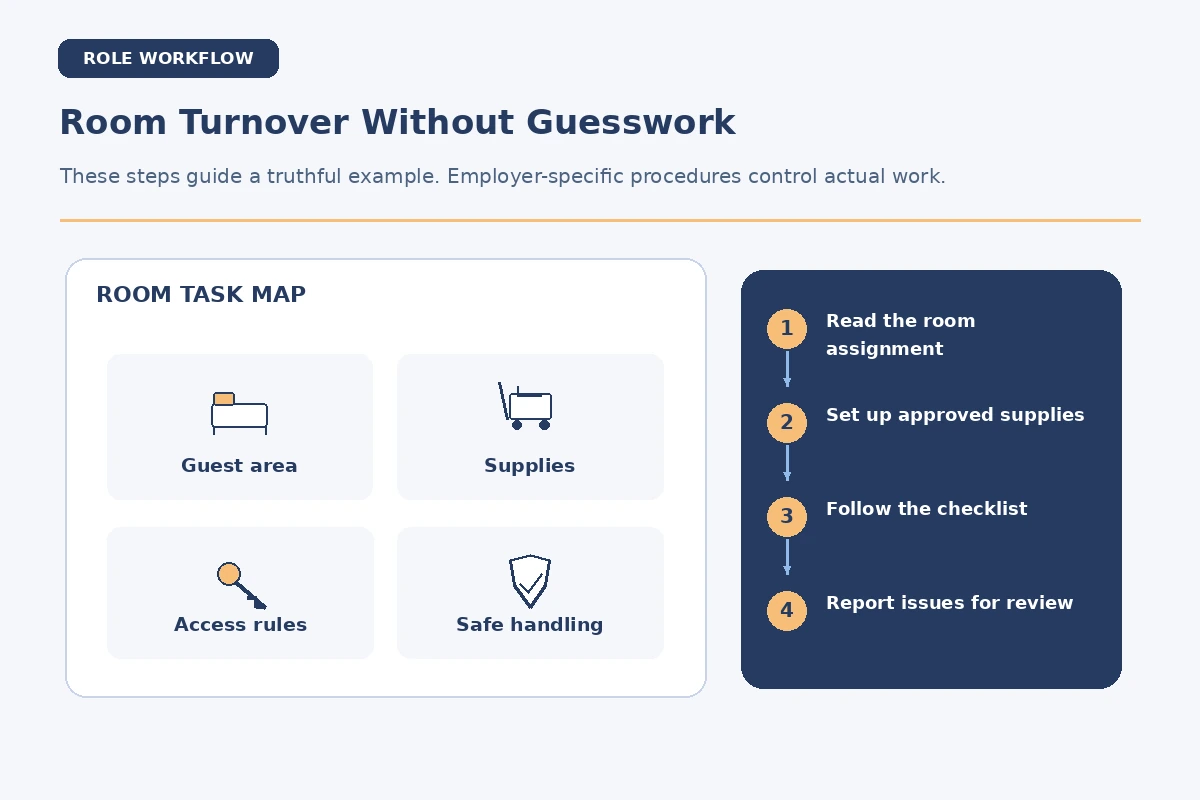
The word housekeeping can cover guest-room turnover, public areas, laundry, or long-stay property cleaning. Read the vacancy to identify exactly which one the employer needs. A hotel room attendant may prepare beds, replenish supplies, vacuum, and report items requiring maintenance. The O*NET housekeeping profile describes these duties. Do not claim that every hotel follows the same room checklist, inspection score, or staffing target. In your letter, name one duty from the actual posting that your honest background can support.
Use a Real Cleaning or Organized-Task Example
Prior hotel work is not the only way to show reliability, but a household chore is not automatically a professional cleaning credential. If you cleaned a community space during volunteering, describe how you worked from the assigned checklist, separated used supplies from clean materials, and reported a broken item. If your example comes from household responsibilities, label it accordingly. A specific action such as “I checked each assigned table and returned supplies to the storage area” gives the employer something useful to assess; “I am the cleanest person I know” does not.
Build a Brief Letter Without a Fake Hotel History
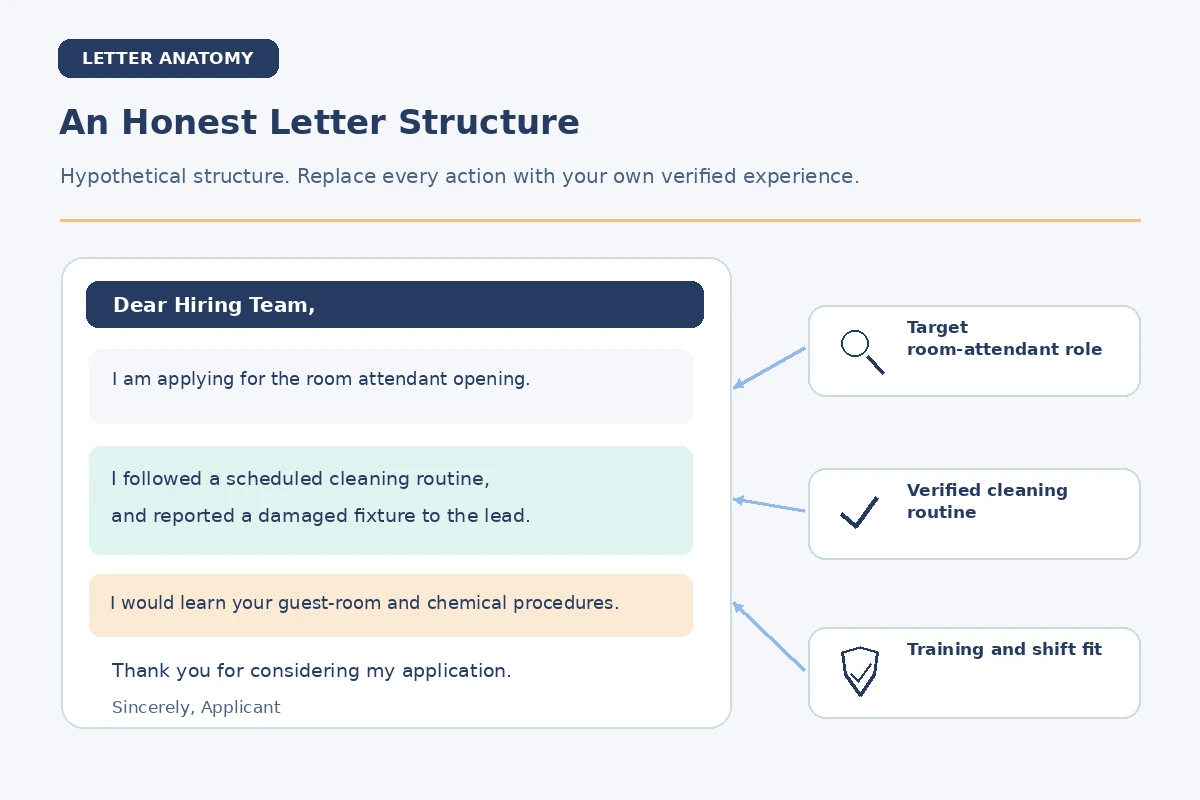
Hypothetical cover letter: “Dear Housekeeping Manager, I am applying for the Room Attendant opening advertised by your property. Although I have not held a hotel housekeeping position, I have completed scheduled cleaning duties while volunteering at a local community center. I followed the posted room checklist, stocked approved supplies, and reported a damaged fixture to the coordinator instead of attempting a repair. I am interested in learning your property’s guest-room procedures and can discuss the shift schedule listed in the vacancy. Thank you for reviewing my application. Sincerely, Applicant.” The example is fictional; replace it with your own verified experience.
Distinguish Cleaning Technique From Chemical Authorization
A hotel may use specific protective equipment, labeling systems, carts, and chemical-handling instructions. Do not write that you can mix products, operate industrial equipment, handle sharps, or treat biohazards without training. Your transferable evidence is following a rule, reading labels, separating tasks, or alerting the team when a hazard appeared. The employer provides the actual procedures. “I follow assigned cleaning instructions and ask before using unfamiliar products” is stronger than an unsupported declaration that you can safely clean every kind of spill.
Respect Guest Privacy and Property
Room attendants work around guest belongings and private spaces. Keep your example focused on respecting access rules, checking assigned areas, and reporting lost property through the proper channel. Never describe opening bags, photographing guest items, or removing belongings under your own authority. Even if you have only done a volunteer cleanup, you can discuss your habit of using an approved storage location and contacting the supervisor about unattended items. Do not invent a property-specific lost-and-found procedure; identify your willingness to learn it.
Explain Pace Without Making Up a Rooms-Per-Hour Target
Hiring teams may ask how you manage repetitive work and shifting priorities. Describe a task sequence you actually used: gather tools, complete one area, check what was missed, restock, and notify the lead. Hotel room times and performance standards vary by assignment and property. Do not promise an arbitrary number of rooms per hour to look experienced. Your letter should show method and care without suggesting that a fast turnover permits skipped cleaning, unsafe chemical practices, or unapproved entry to occupied rooms.
Connect Your Availability to Actual Coverage Needs
Some hotels schedule early starts, weekends, holidays, or evening public-area coverage. Identify the schedule in the actual posting and state only the hours you can reliably work. If you also have a long commute or school obligations, clarify any limitation without publishing private details. The BLS occupational listing covers maid and housekeeping work, but it cannot tell you a particular hotel’s shift assignment. Do not state that you can work every shift unless that is accurate.
Check the Final Letter Like a Room Checklist
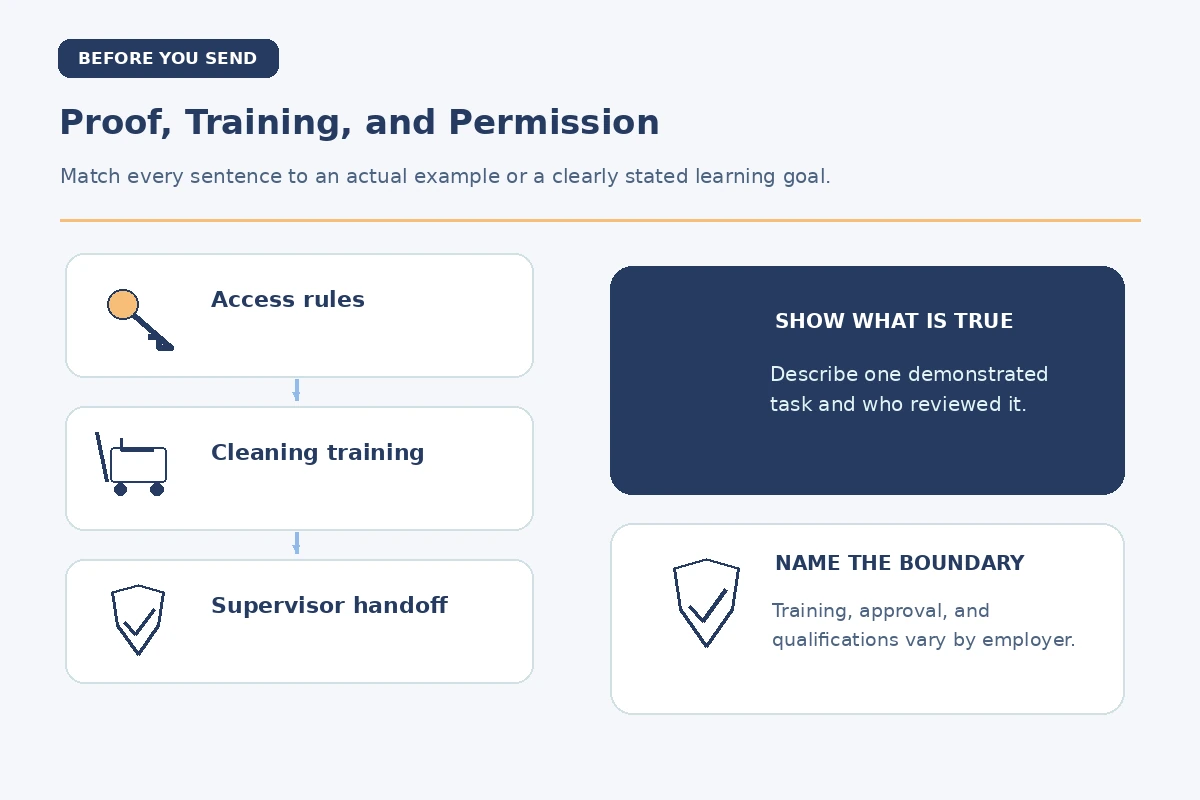
Review the letter from top to bottom: correct property name, exact role, one truthful routine, safe boundary, stated availability if relevant, and requested application format. Ask whether any sentence implies formal training, inspection authority, or guest-data access you do not possess. Keep the writing direct enough that the manager can find the match quickly. Remove generic praise about luxury brands that you cannot link to an actual reason for applying. A readable, accurate application is more persuasive than a list of invented hotel procedures.
Use a Simple Before-and-After Task Record
You may rehearse your evidence with a two-column note titled “Assigned work” and “What I checked.” A genuine event-cleanup example might include setting out tables, returning supplies, and informing the coordinator of a damaged fixture. Do not claim guest-room inspection if your real experience was a volunteer hall cleanup. If a potential employer uses its own checklist, say you are ready to learn it rather than describing a procedure you have not seen. This approach helps you write about reliability and reporting without inventing time targets, confidential guest details, or chemical training.
How We Research These Cover Letter Examples
This guide uses the U.S. Department of Labor-sponsored CareerOneStop advice on writing cover letters to check when a letter is useful and why it should connect real skills to the advertised job. It also compares the role with official occupational descriptions and the relevant professional task or safety guidance. Those sources provide context, not an assurance that a specific employer offers training or waives credentials. Confirm the actual job posting before applying.
All sample letters and scenarios in this article are explicitly hypothetical. They must be rewritten from the reader’s own education, volunteer activities, employment and permissions; never copy invented results or confidential records. We have no verified hiring outcome or automated screening guarantee to report. For information about site relationships and recommendations, read our affiliate disclosure. This guide contains no affiliate product recommendation.
More Resume and Cover Letter Guides
- Cashier Cover Letter With No Experience: Prove Service and Payment Readiness
- Hotel Front Desk Cover Letter With No Experience: Guest Service and Handoffs
- Event Coordinator Cover Letter With No Experience: Prove Planning and Handoffs
- Cover Letter With No Experience: Honest Examples That Show Potential
- Laboratory Assistant Cover Letter With No Experience: Labels, Logs, and Safety
Yes, identify it as household work and explain a relevant routine. Do not label it paid hotel experience.
Check the posting; do not claim professional chemical-handling knowledge without training and authorization.
No. Only report a measurable rate you actually achieved in a comparable, documented setting.
Describe the scheduled tasks, written instructions, checks and safe handoffs you truly completed.
Yes, if you can actually meet the stated schedule and it is relevant to the vacancy.