
For an entry-level or experienced consulting application, format the letter around the actual role, a relevant problem you helped solve, the evidence behind your analysis, and why this firm’s work fits your background. Do not imitate vague claims about being a strategic leader. A strong example might concern organizing competing inputs, testing assumptions, or presenting a recommendation for review. Label academic case projects honestly, and never claim that you advised a paying client if you did not.
First: choose a format that fits this exact application
Before drafting, examine the actual employer instructions and the material you can verify. A cover letter is not a substitute for a résumé, screening questions, a research statement, or an official submission form. The format should make the job title, your contribution, and the next step obvious to a reader. If a detail is missing, distinguish it from a fact instead of filling it with an invented name or outcome. This guide addresses one specific format problem rather than offering a universal template for every vacancy.
Identify the consulting role instead of promising generic impact
The word consulting covers varied work: operations support, technology implementation, research, advisory services, and industry-specific projects. Read the posting and identify whether the job emphasizes structured analysis, client communication, technical delivery, or project coordination. Mention one verified aspect of the firm’s practice if you have a reliable source. Do not presume the client industry, travel schedule, or project responsibilities from the firm’s brand alone. A focused opening should connect to a documented role rather than declaring that you can solve any business problem.
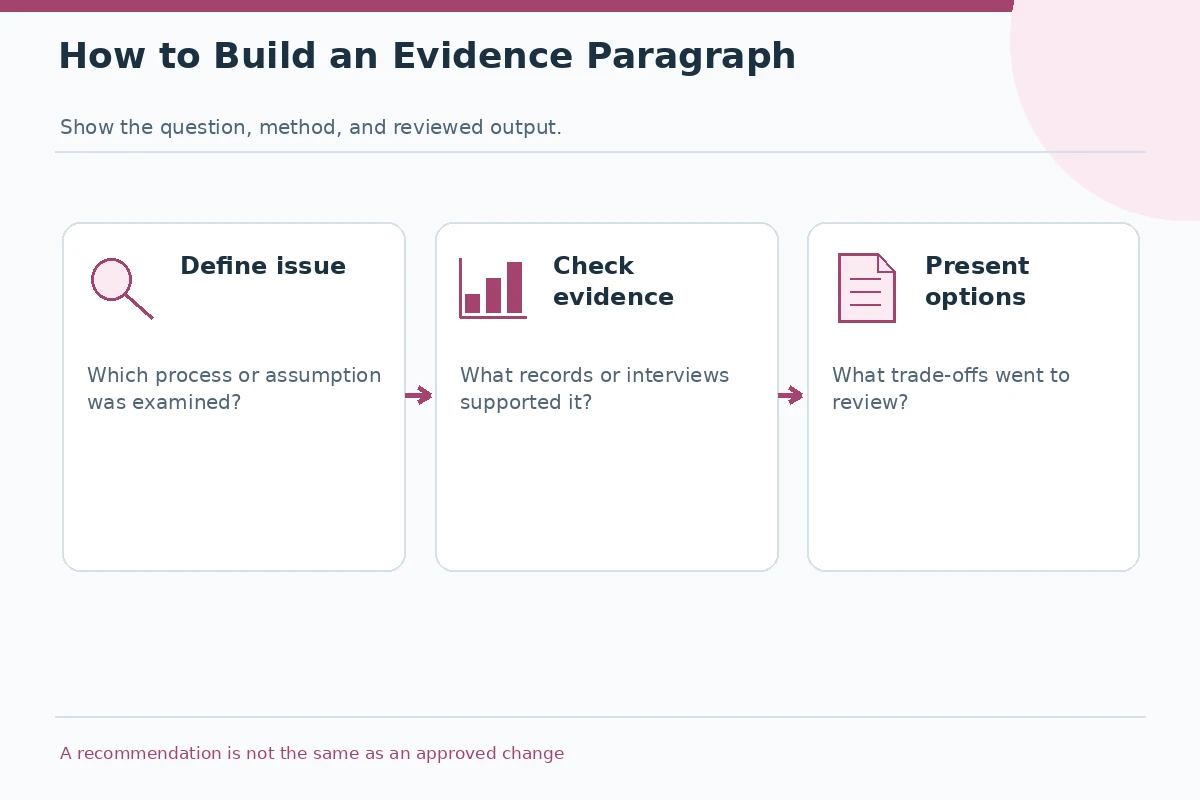
Use a compact problem–method–evidence paragraph
A useful middle paragraph introduces a problem, explains the method you used, and reports an outcome you actually observed. For example, during a class operations project, a student might classify duplicate service requests, compare several workflow alternatives, and prepare a decision memo for an instructor. That example demonstrates structured thought without pretending it was a client engagement. If you use quantitative claims, be able to document the measurement and your own contribution. Otherwise, evidence such as a verified review or clearly described deliverable can still be persuasive.
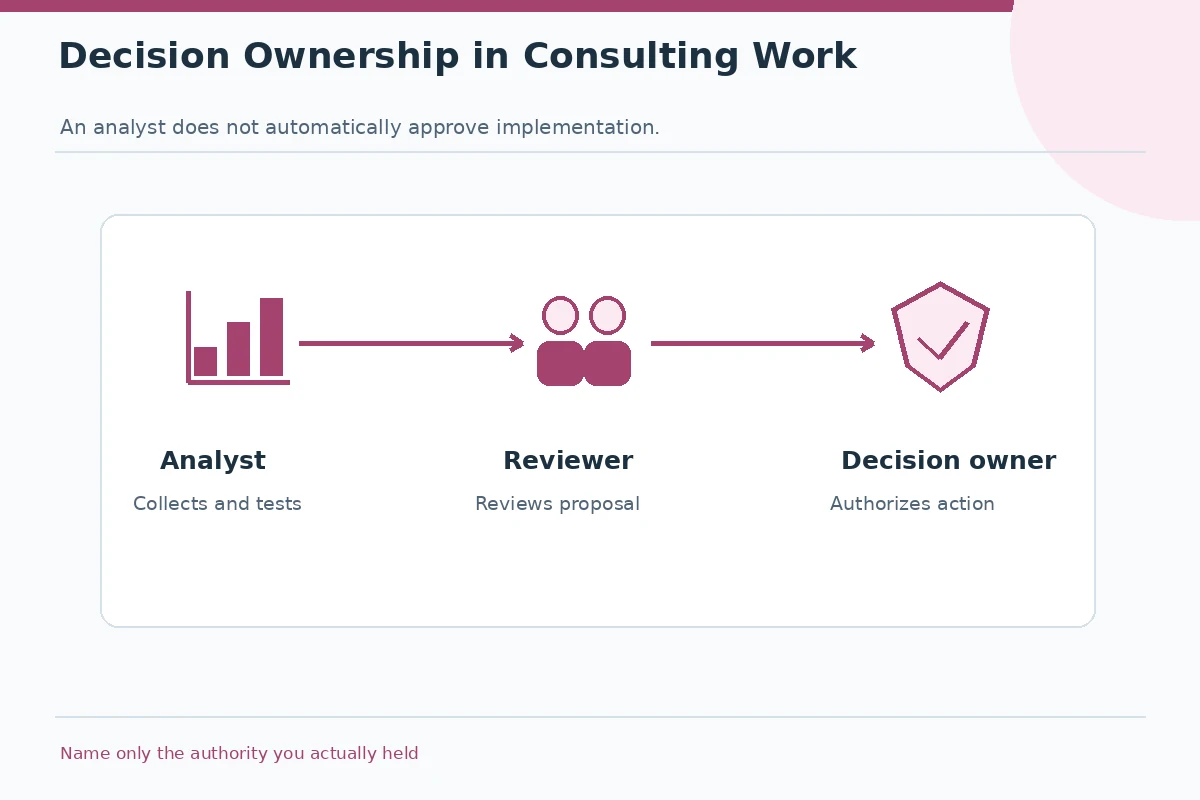
Separate analysis from recommendation and approval
In many consulting settings, one person gathers evidence, another reviews it, and a client or authorized leader makes a decision. Show where your responsibilities ended. Did you build the spreadsheet, draft the presentation, facilitate stakeholder interviews, or approve an implementation? The distinction matters. For an entry-level role, an example of identifying an assumption and bringing it to a senior colleague can demonstrate good judgment. Avoid saying that you “transformed a client’s business” when you only drafted background slides.
| Decision point | What to show | What to avoid |
|---|---|---|
| Role match | Posting-specific work focus | No invented client |
| Problem evidence | Task, method, reviewed output | No guaranteed impact |
| Decision ownership | Your contribution and reviewer | No assumed approval authority |
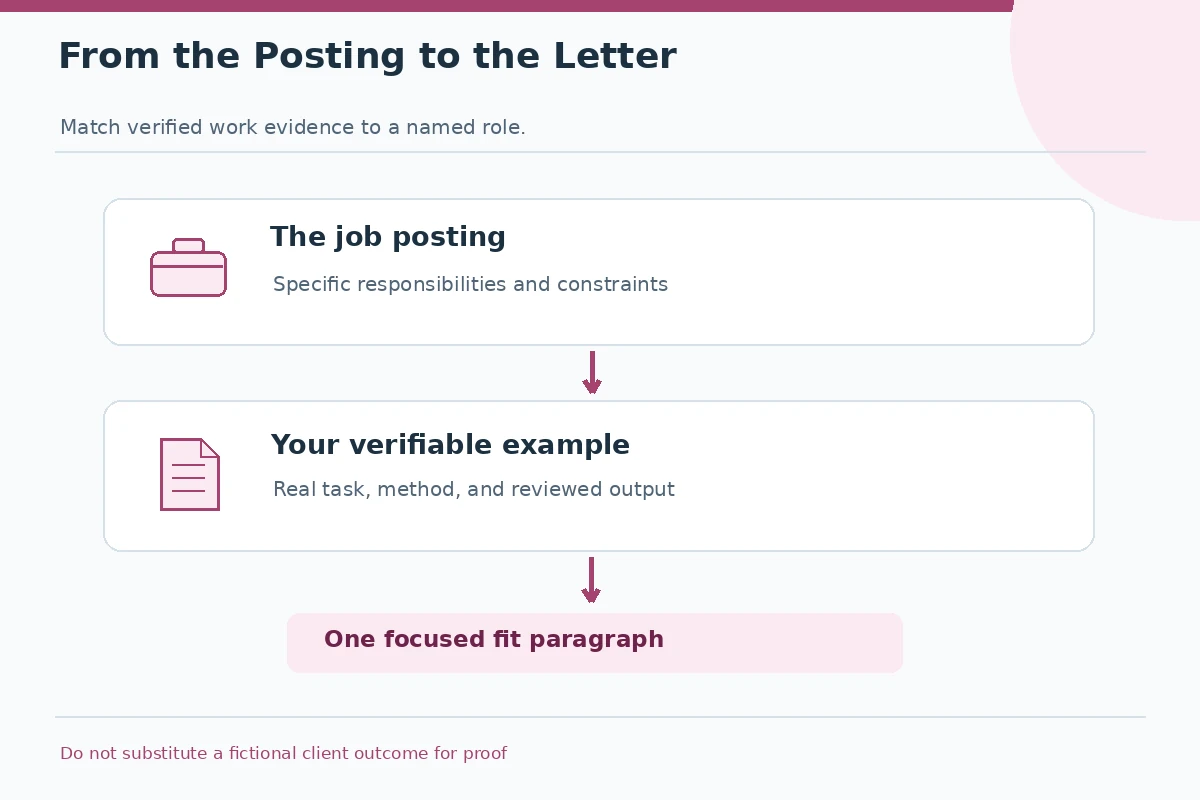
Make the fit paragraph about the actual work
Use the role description to connect your skills to the kind of projects being hired for, such as process mapping, data quality, service design, or implementation tracking. If you know the firm from a legitimate event or publication, reference only what you verified. Do not put confidential interview notes, private client names, or internal consulting deliverables in the letter. Generic statements about prestige and culture are weaker than a precise link between the posting and a task you can explain step by step.
Choose a clear one-page layout for a standard business application
A conventional consulting letter can use your contact details, date and recipient when verified, salutation, opening, two short evidence-and-fit paragraphs, and a close. For a typical nonacademic application, one page is a practical target unless the employer requests otherwise. Use a readable standard font, straightforward margins, and left-aligned text. Avoid long bullet inventories or a table comparing invented skills to a fictional client. A recruiter should be able to identify the job, your real contribution, and your reason for applying without hunting through decoration.
Explain teamwork without taking credit for the whole engagement
Consulting work often involves teams, stakeholders, and reviewers. When describing a real assignment, use “I” for your actions and “we” only when discussing a shared outcome with appropriate attribution. If you gathered interview notes and a team lead presented the findings, say so. If an analysis was approved but never implemented, do not invent savings or customer outcomes. For students, a simulated case can be useful if labeled a simulated case. The goal is to demonstrate a repeatable approach, not a level of seniority you have not reached.
Draft a specific closing and submission check
End by expressing interest in discussing how your analytical or communication skills relate to the posted duties. Verify the firm name, practice area, location, and role identifier. Make sure your résumé dates, project names, and claims agree with the letter. Remove sensitive client information and proprietary screenshots. Check all attachments and the final PDF or DOCX according to the employer’s instructions. If the posting asks for a short answer rather than a letter, provide the answer in that field instead of trying to attach an unrequested document.
A worked example: do not upgrade a classroom case into client work
Imagine a candidate whose evidence is a supervised campus project analyzing appointment delays. The weak version says, “I advised a major health provider and delivered significant savings.” A truthful version says, “For a university case project, I mapped appointment handoffs, compared two workflow options, and presented the trade-offs to the course team.” The candidate could then explain how that analysis relates to an advertised process-improvement analyst role. The format is convincing because it offers a real method and relevant judgment, not a fictional employer outcome.
Hypothetical wording: revise the claim, not just the layout
Too broad: “I transformed client operations and guaranteed major savings.” More specific: “In a university case project, I mapped handoffs, evaluated options, and presented trade-offs for instructor review.” These are fictional teaching examples, not a candidate’s real achievement or an employer endorsement. Adapt the structure only if the underlying activity and status are true in your case. Do not copy project figures, job identifiers, affiliations, authorship, or approval decisions into your own application unless they match records you can honestly explain. A polished layout cannot rescue an unsupported claim.
Check the final copy against the evidence
Read the document as a reviewer who has only the job posting and your résumé. Can that person find the exact role and understand why your experience matters? Are the dates, names, work settings, and project statuses consistent? Can you explain every named tool, action, and outcome if interviewed? Reopen the final file or form entry after saving and check visual layout, text readability, links, and attachments. Keep a version record for the application rather than overwriting unrelated letters. No font, template, or keyword guarantees selection.
How We Research This Guide
We used these primary professional resources: Penn advises using concrete, tailored examples in cover letters., UT Dallas describes a conventional readable letter with opening, specific evidence, and closing., Texas Tech distinguishes address/header conventions and recommends matching the role and employer context.. The sources were checked November 16, 2026. They support the relevant letter conventions, application context, and safeguards; they do not certify any individual employer policy or hiring result. We compared this topic with JobAsk’s existing general cover letter pages and selected a more specific reader problem, then wrote illustrative examples rather than presenting fictitious real-world experience. No affiliate product or paid partnership is recommended here. See affiliate disclosure for the site policy. The employer’s own instructions control the final submission.
More Resume and Cover Letter Guides
Yes, if you label it as a competition or class project and describe your actual contribution.
No. Avoid confidential details; describe work type and your responsibility instead.
A short list can work if requested or useful, but concise paragraphs often make the reasoning clearer.
Only if you actually held that responsibility and can support the claim.
Show relevant technical delivery and review evidence instead of forcing a generic strategy story.