
For digital marketing experience on a resume, state the channel you supported, the exact work you owned, who approved it, and which results you can verify. Drafting a social post is different from approving an advertising budget. Monitoring a dashboard is different from designing the attribution model. A persuasive work-history section identifies the distinction so a hiring manager understands your genuine contribution.
BLS describes market research analysts as collecting market information, assessing campaign effectiveness, and presenting findings. Digital marketing teams may combine campaign production, search content, email, analytics, advertising, and customer research. Your resume does not need every marketing keyword. It needs concrete examples of your assigned tasks, tools you truly used, relevant outputs, and truthful limits on shared results.
Identify the channel and the deliverable you handled
Start with the employer or project label, actual role, and dates. Then specify which channel you supported: organic search, paid search, social media, email, content marketing, analytics, or several in a coordinated campaign. For each channel, name a deliverable such as scheduled posts, landing page copy, email drafts, reporting dashboards, or a competitor research brief. Avoid “ran all marketing” when you assisted with one production phase.
A general title such as “Marketing Assistant” benefits from a sentence explaining the team context. Did you prepare assets for a manager, update entries in a publishing calendar, or send an approved campaign? A colleague choosing strategy is not the same as you executing an assigned task. The answer determines whether to use “supported,” “drafted,” “scheduled,” “analyzed,” or “led.”
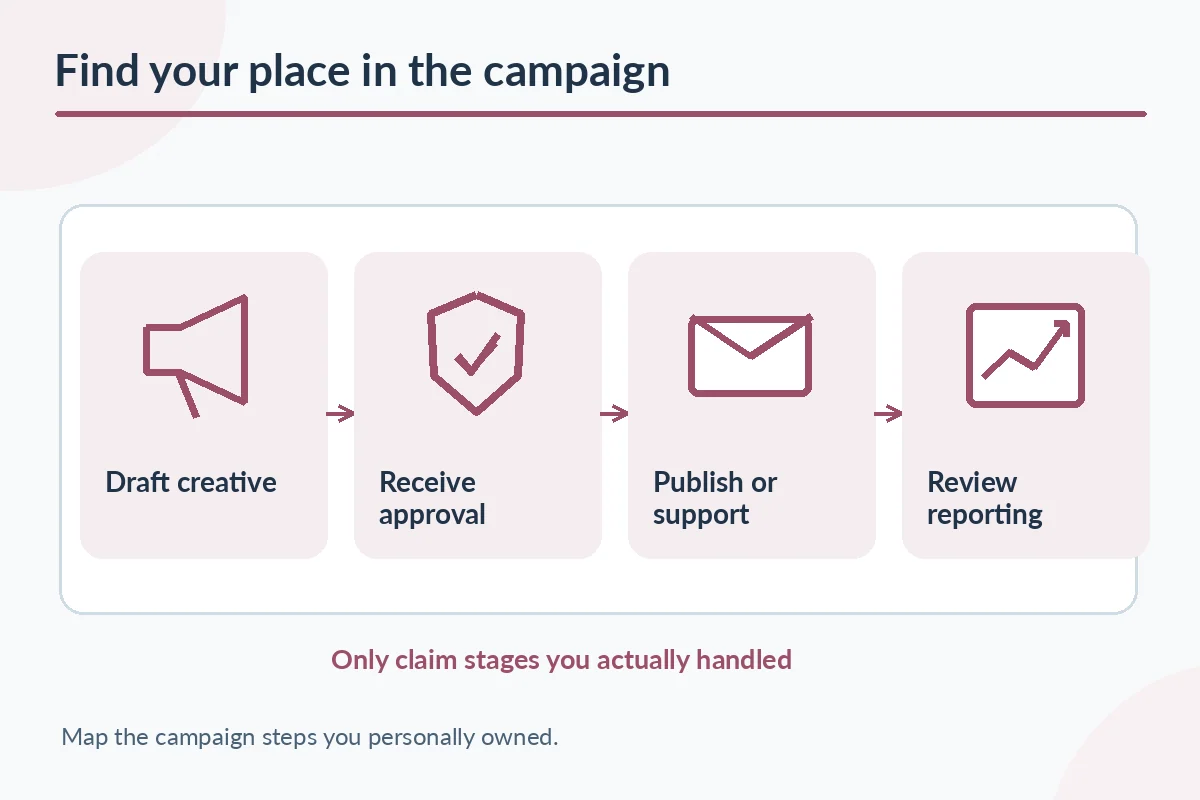
Build evidence from the workflow before citing metrics
Strong bullets can describe a process: reviewed an editorial calendar, checked UTM tags against a brief, prepared draft copy for approval, updated a content inventory, or validated a report’s date filters. These show actual competence even without dramatic numbers. For example, “Prepared weekly channel summaries from approved dashboards and flagged missing tracking fields” is a hypothetical bullet to adapt only if true.
Map the workflow from request to draft, review, publication, and analysis. Note which stages you performed and which required approval. Do not take credit for a content strategist’s brief or a designer’s assets. If your work was freelance or academic, label the relationship accurately rather than making a client or company sound like a direct employer.
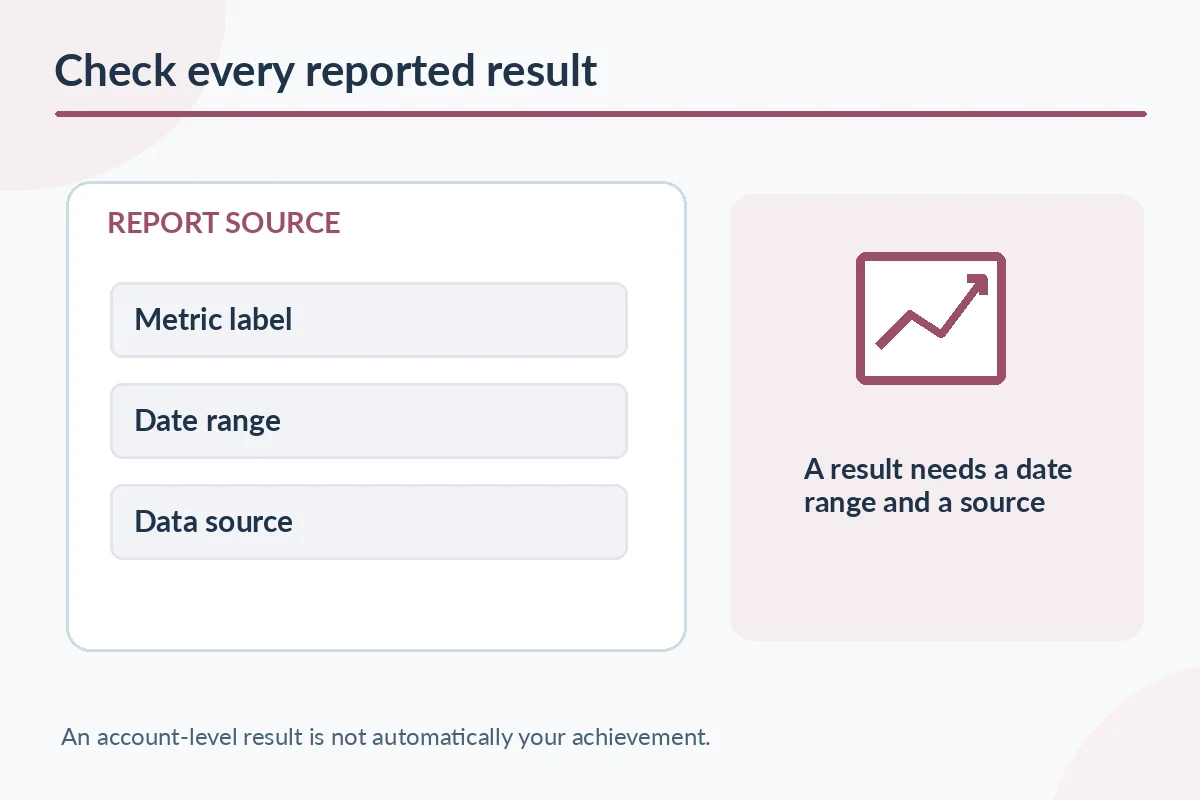
Attribute campaign results to the right source
Marketing dashboards can show impressions, clicks, conversions, revenue, or engagement, but these labels depend on settings, definitions, date ranges and data quality. Check the analytics tool, reporting interval and what your team considered a valid measure. Never fabricate growth figures or imply that a rise in traffic was exclusively caused by your post. An accurate statement might say you monitored specified metrics or prepared a report used by the team.
If you contributed to a campaign that improved a reported measure, clarify your part and the scope of the team result. For example, “Supported content updates during a campaign that reported increased organic visits” may still need evidence for the increase and permission to disclose it. If you cannot substantiate the statistic, omit the number and describe the approved work you completed. Measurability is not an invitation to guess.
State platform proficiency at the actual access level
There is a difference between watching a tutorial, viewing a read-only analytics panel, drafting in a content system, publishing with approval, and configuring tracking or budgets. Name the actual platforms and tasks. If you only prepared copy in a shared document, do not claim hands-on access to an ad account. If your manager approved spending, say you supplied reporting or creative materials rather than “managed paid advertising budgets.”
Tools become meaningful when connected to actions: prepared email segments using approved lists, checked page metadata in a CMS, or pulled a weekly spreadsheet report. Be careful with protected customer data and access permissions. Do not include user-level analytics exports, internal audience lists, ad account IDs, or client credentials in a resume attachment.
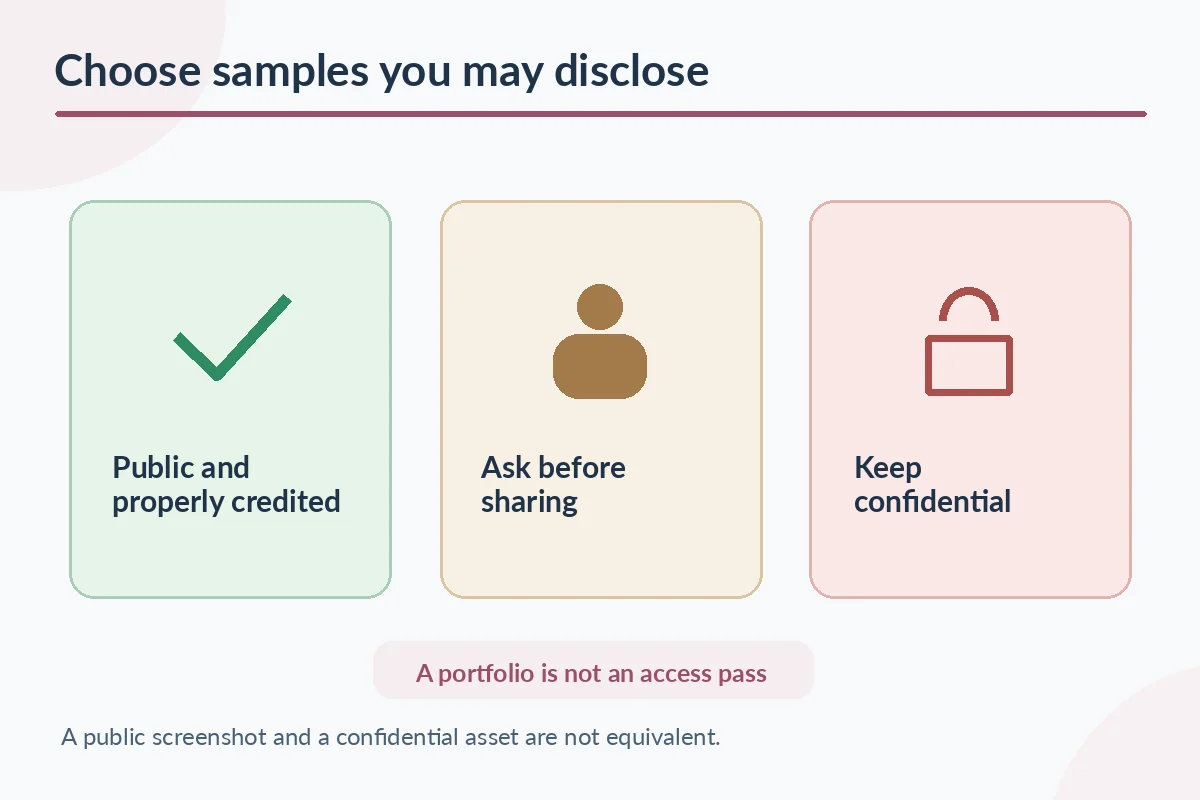
Select portfolio examples with permission and context
Public posts can be easy to link, but their existence does not establish that you wrote or approved them. State your contribution beside the link, such as draft copy, editorial coordination or reporting support. For internal content, ask whether a sanitized excerpt is permitted. A mock example must be labeled as a mock example, not a published campaign or paid client result.
If a campaign produced sensitive metrics or proprietary customer research, use a generalized description of your workflow. Do not publish private conversion data to strengthen a resume. A hiring manager can assess your thinking from a short explanation of the assignment, approval path, and method you used, even when the underlying material must remain confidential.
Tailor the bullets to the next marketing role
For an email coordinator role, lead with list hygiene, draft reviews, scheduling and approved reporting. For a content role, emphasize briefs, editorial calendars, SEO research, copy revisions and publication checks. For an analytics assistant job, bring forward data quality, date ranges, reporting and communication of findings. Targeted ordering is helpful; inserting keywords for tools you never used is not.
Before sending, check that every result has an attributable source and every claimed responsibility fits your actual access level. Review dates, campaign relationships, public portfolio permissions, and the meaning of any acronyms. Your strongest digital marketing work history may be a few carefully qualified bullets rather than an impressive-looking collection of unverified percentages.
How We Research Work Experience Examples
We checked BLS Market Research Analysts, CareerOneStop Work Experience, CareerOneStop Resume Formatting on October 29, 2026. These sources describe typical occupation duties and reliable approaches to work-history writing, not a guarantee about any particular employer or applicant. Every quoted resume line in this article is hypothetical and must be rewritten to match the reader’s documented tasks, employer, role and dates.
We deliberately separate observation, assistance, approved independent tasks, and decision-making authority. We do not invent metrics, certifications, outcomes, or employer endorsements; private project or customer records should never be shared without approval. For transparency about the website, read the affiliate disclosure.
Related Guides
- Entry-Level Digital Marketing Jobs: Choose a Channel and Show Your Work
- How to Put Volunteer Experience on a Resume Without Overclaiming
- Research Experience on a Resume: Explain Methods, Records, and Your Contribution
- Marketing Interview Questions: Campaign Choices, Data, and Collaboration
- How to Put Internship Experience on a Resume With Accurate Role Details
Yes, with accurate team attribution, verified source and permission. Make your individual contribution explicit.
Describe approved duties, reporting methods, channel scope and deliverables without protected numbers.
Not necessarily. Distinguish read-only reporting from configuring tracking, choosing methodology, or owning analysis.
If it is appropriate to share, identify your exact role in the content rather than implying sole authorship.
Label it as a personal, class, or hypothetical project, not a real employer or client campaign.