
The best entry-level digital marketing job is one whose daily tasks match a skill you can demonstrate. Search for marketing assistant, digital marketing coordinator, content coordinator and relevant channel-support roles, then read each description for the balance between writing, publishing, research and reporting. A listing titled “marketing analyst” may involve a different education and statistics threshold than a content coordinator role.
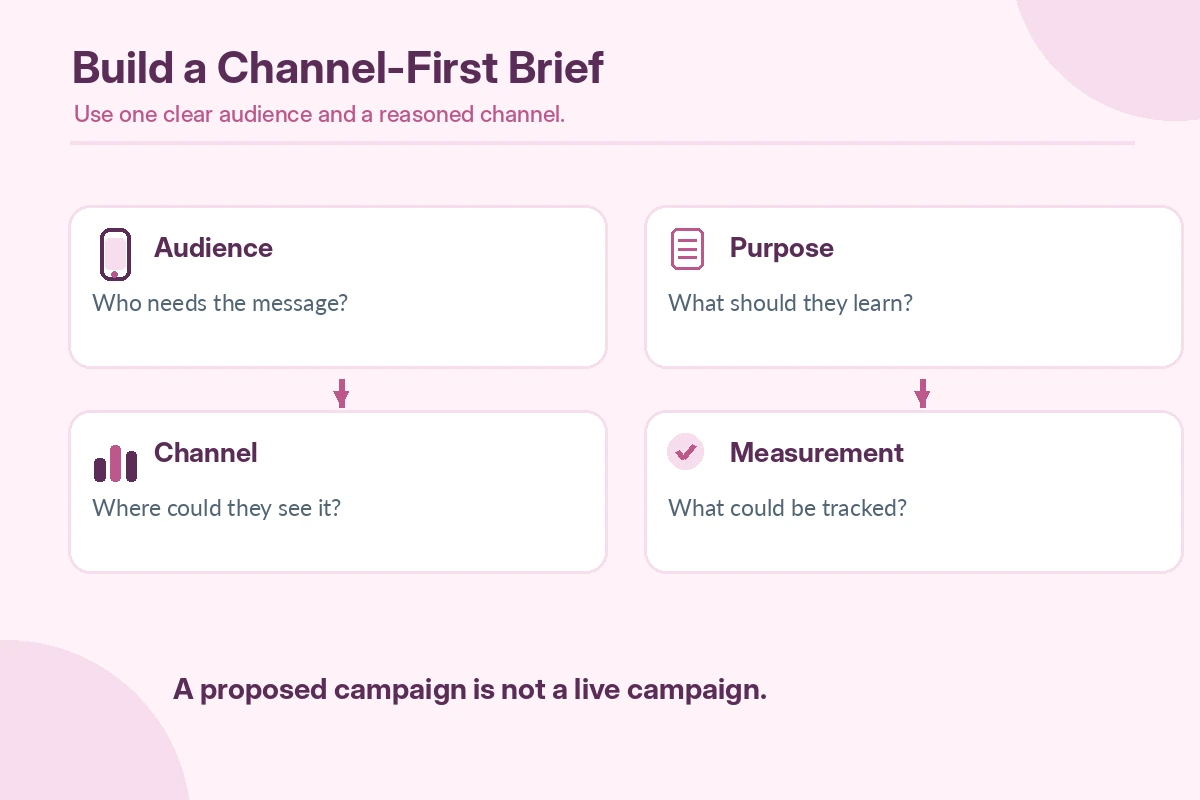
Instead of inventing a successful campaign, build one small, hypothetical practice project with an audience definition, a message, a channel choice and an honest measurement plan. This article shows how to package that work and screen misleading entry-level ads. Nothing here implies that an unpaid sample ran as a real ad or improved a company’s sales.
Identify the Work Hidden Behind Each Marketing Title
Look for coordinator listings that involve calendars, draft review, campaign assets, email scheduling or reporting support. Some roles focus on social posts; others require spreadsheets, segmentation, website content or vendor coordination. Do not assume every position called “digital marketing” runs paid advertising or provides creative ownership. Copy the verbs from the posting into your tracker: draft, schedule, analyze, coordinate, publish, test or report.
The O*NET profile for market research analysts and marketing specialists covers research, online-market analysis, campaign planning and web metrics, but that broader occupation should not be confused with every junior coordinator. BLS says market research analysts typically need a bachelor’s degree. Treat that as a distinction when you see analyst tasks in a job ad, not as an automatic requirement for all marketing assistant roles.
Make One Portfolio Piece With a Clear Audience and Goal
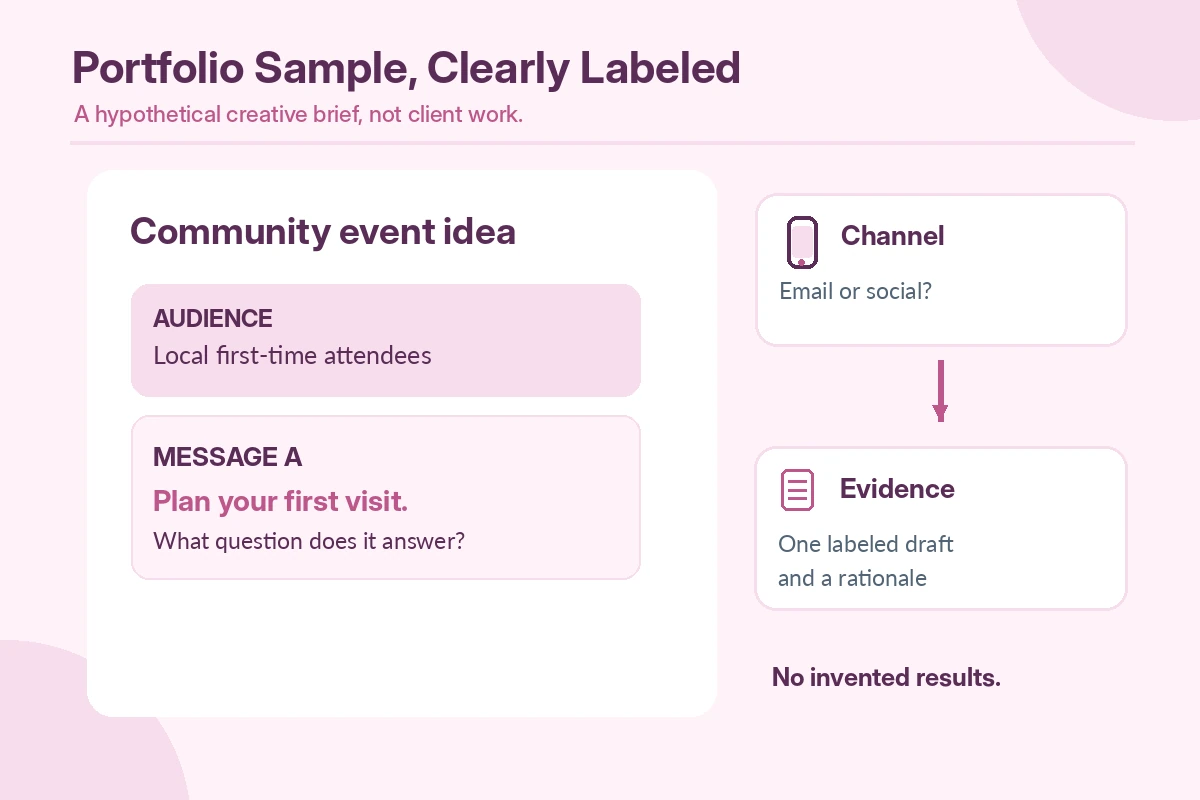
Choose a fictional community event or a personally owned creative project. Write a one-sentence target audience, a specific problem, two message variants and a reason for selecting a channel. Draft a short email or social post, then explain how a reviewer should judge whether the message matches the audience. Put hypothetical concept; not a live campaign above the work sample. Avoid invented brand names that could be mistaken for actual clients.
A complete mini portfolio page might show a creative brief, one mock asset, a content calendar excerpt and a reflection on trade-offs. Why was email a better fit than a short video? Why did you avoid targeting an audience you could not reach? Do not display fictional impressions, engagement rates or revenue as actual results. A reviewer should be able to see your thinking even when there are no performance data.
Understand Metrics Without Pretending Clicks Are Sales
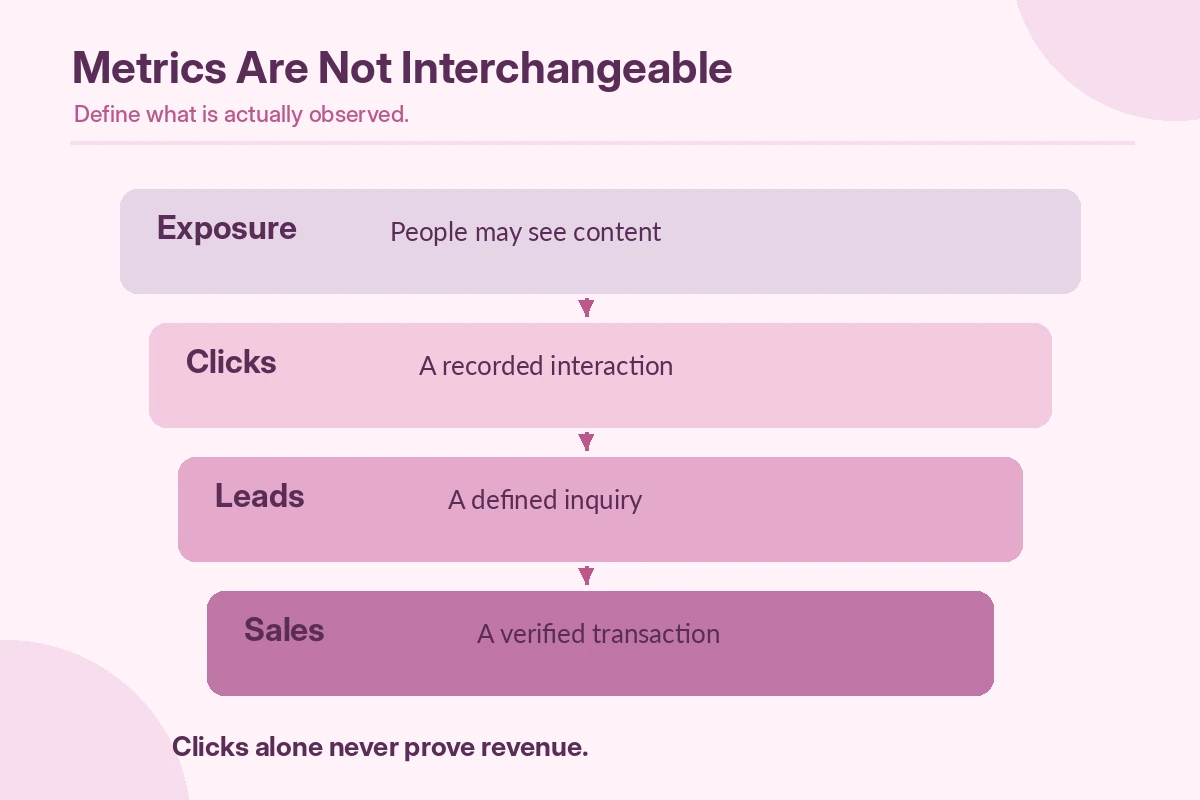
Metrics depend on the campaign objective and what was actually measured. Reach and impressions describe exposure, clicks describe responses to an element, leads depend on a defined qualified action, and purchases or revenue require verified transaction data. A high click count is not proof of increased sales. Before writing a resume bullet, ask: what was the denominator, what event was tracked, and do I have permission to disclose this information?
For a hypothetical case study, specify the measurement plan instead of manufacturing measurements. For example, propose unique tagged links for two messages and define what a sign-up would count as. Explicitly state that no campaign ran and no results were collected. For actual student or volunteer projects, describe the audience, channel, your own contribution, the tracking limitations and only the results supported by records.
Check Degree Requirements and Channel Training Needs
Advertised qualifications differ widely. A coordination role may value writing, organization and comfort with basic analytics, while research-oriented roles may demand formal quantitative training. The BLS classification for market research analysts includes research methods, statistics and communication among relevant preparation areas. Do not borrow a requirement from that occupation and claim every marketing hire needs it. Let each specific role description control which prerequisites count as mandatory.
Keep a skills ledger: writing samples, spreadsheet tasks, content planning, analytics terminology, accessibility checks and experience receiving feedback. If you completed a course, name the course and a tangible assignment rather than claiming mastery from enrollment. A portfolio is supplementary evidence; it does not override a non-negotiable degree or work-authorization condition in an advertisement.
Screen Marketing Job Posts for the Work You Want
Some openings labeled “marketing” are primarily direct sales, street promotion or commission-based prospecting. Those can be legitimate but they serve a different intent from digital campaign coordination. Read the compensation structure, tasks, required travel and target metrics before applying. Ask whether you would write content, maintain a campaign calendar, handle customer calls or spend your day approaching prospects. Reject vague ads that will not explain the assignment.
Fake remote marketing “optimization” jobs can also masquerade as easy paid digital tasks. The FTC task-scam advice warns about deposits to unlock alleged earnings. Verify vacancies through the employer site; do not buy a starter package or pay money to unlock work. Once a role checks out, customize your project summary around the channel and responsibility it actually requires.
Explain Your Work Without Manufactured Results
A portfolio interview may ask what you would change after feedback. Prepare an answer that separates a creative choice from evidence: “I chose this message for an audience new to the event. I would ask three readers whether the next step is clear; if the copy confused them, I would revise the call to action.” This is a proposed usability review, not proof that the sample generated sign-ups. Name the limitation before being asked. That level of precision matters when a job description calls for campaign reporting or cross-team communication rather than only visual taste.
For a short application routine, collect five job descriptions, categorize them by channel and select one cluster you can realistically serve. Assemble a one-page brief, one properly labeled creative mockup and a small table listing what was not tested. Do not add fake follower counts or customer quotes to make a new portfolio look older. When you send a resume, use a sentence that connects your actual strengths—writing, research, spreadsheets, or coordination—to the chosen vacancy, and keep analyst roles separate if you do not satisfy their quantitative requirements.
How We Research This Entry-Level Role
The O*NET marketing specialists profile informs the examples of research, campaign support and web measurement. The BLS market research analyst profile supports the degree distinction for an analyst occupation; it is not a blanket digital-marketing requirement. FTC reporting supports the warning about pay-to-unlock online tasks. All example campaign figures are intentionally omitted because no real campaign was measured.
This guide is independent informational content. The examples are explicitly hypothetical and do not represent actual employers, candidates, interviews, or performance results. Check the current official vacancy and confirm important requirements with its hiring team. You can read our affiliate disclosure; no paid placement relationship or hiring guarantee is implied.
Related Guides
- Digital Marketing Experience on a Resume: Show Campaign Tasks and Attribution
- Entry-Level Marketing Jobs: Choose a Role and Build Honest Samples
- Entry-Level Marketing Jobs: Match Your Skills to a Real First Assignment
- Entry-Level Customer Service Jobs: Match the Channel and the Skills
- Entry-Level Graphic Design Jobs: Choose Junior Roles and Portfolio Proof
Yes. Label the work as a hypothetical concept and show decisions and deliverables without claiming a campaign was launched.
No. Clicks measure a particular interaction. Sales require verified purchase data and an appropriate attribution method.
Not necessarily. Coordinator tasks may focus on execution and organization, while analyst roles commonly emphasize research and data interpretation.
No. Explain which metrics you would track and state that no live results were collected.
Check whether the tasks are actual digital marketing, direct sales, or suspicious paid online tasks, and verify the employer before sharing information.