
Entry-level medical receptionist jobs focus on supporting the patient journey through appointments, messages, records and front-desk communication. They do not automatically authorize clinical advice. Search for medical receptionist, clinic office assistant, medical front desk or patient services representative, then compare which duties belong to the role in that particular workplace. A hospital unit clerk may have different hours and systems from a neighborhood outpatient clinic.
This guide is about entering a medical office role, not about part-time shift selection alone. It shows what an applicant with retail, administrative or volunteer experience can prove, how to handle a hypothetical call without disclosing private information, and how to recognize tasks that should be routed to licensed or authorized staff. Examples are hypothetical, not real patient interactions.
Read the Posting for Administrative Versus Clinical Duties
The O*NET medical secretaries and administrative assistants profile lists answering calls, scheduling appointments, greeting visitors, managing documents and routing messages. These are office responsibilities requiring accuracy and communication. A posting may add insurance paperwork, payments, referrals or specific electronic systems. Copy those tasks into a checklist to see whether the job is mainly reception, records support or a mixture.
If the advertisement refers to taking vital signs, assisting with procedures or administering medications, examine whether it is a combined clinical role with separate training or credentials. Do not treat a medical receptionist title as permission to provide clinical care. Ask how the practice separates patient-service work from medical decisions and which person receives a symptom-related question.
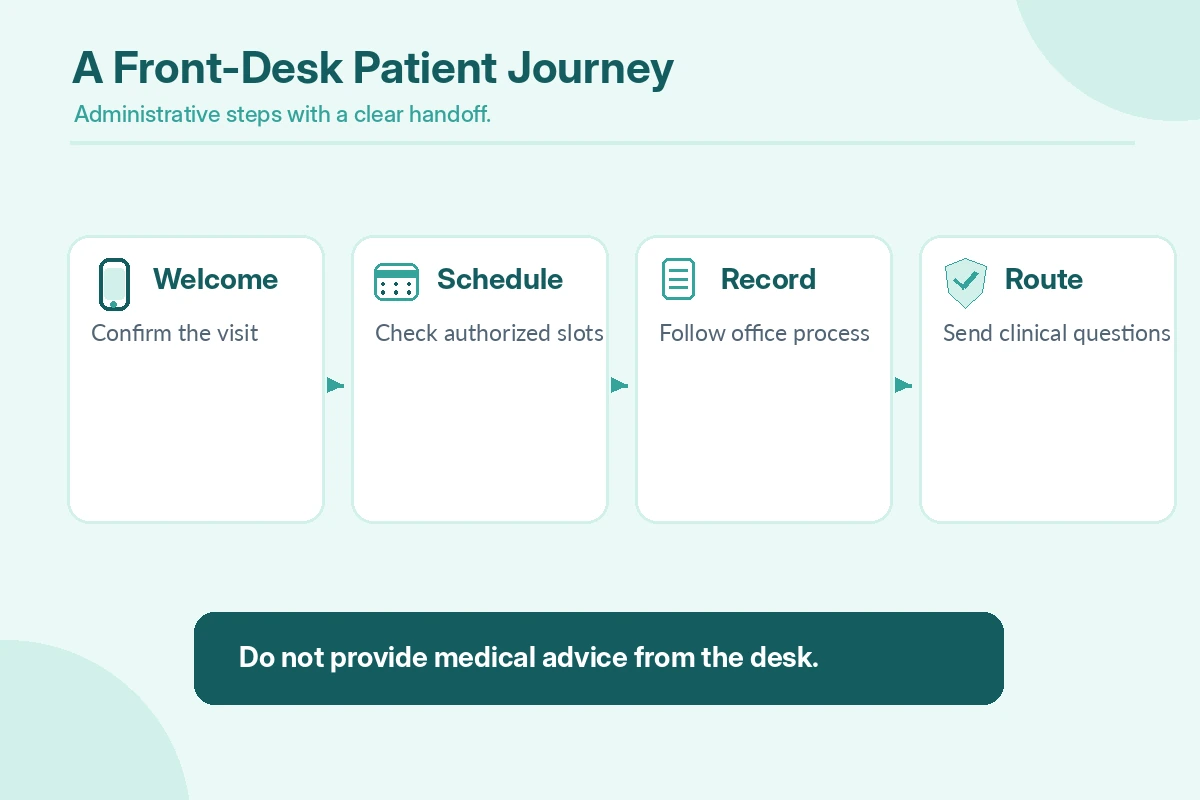
Practice Patient-Friendly Scheduling and Message Routing
For a safe hypothetical exercise, write an imaginary scheduling request without using real patient names, addresses, dates of birth or diagnoses. Show how you would confirm what service is requested, identify what information your workplace is permitted to collect, check appointment availability and route questions outside your role. Do not put any sensitive medical information in an application portfolio.
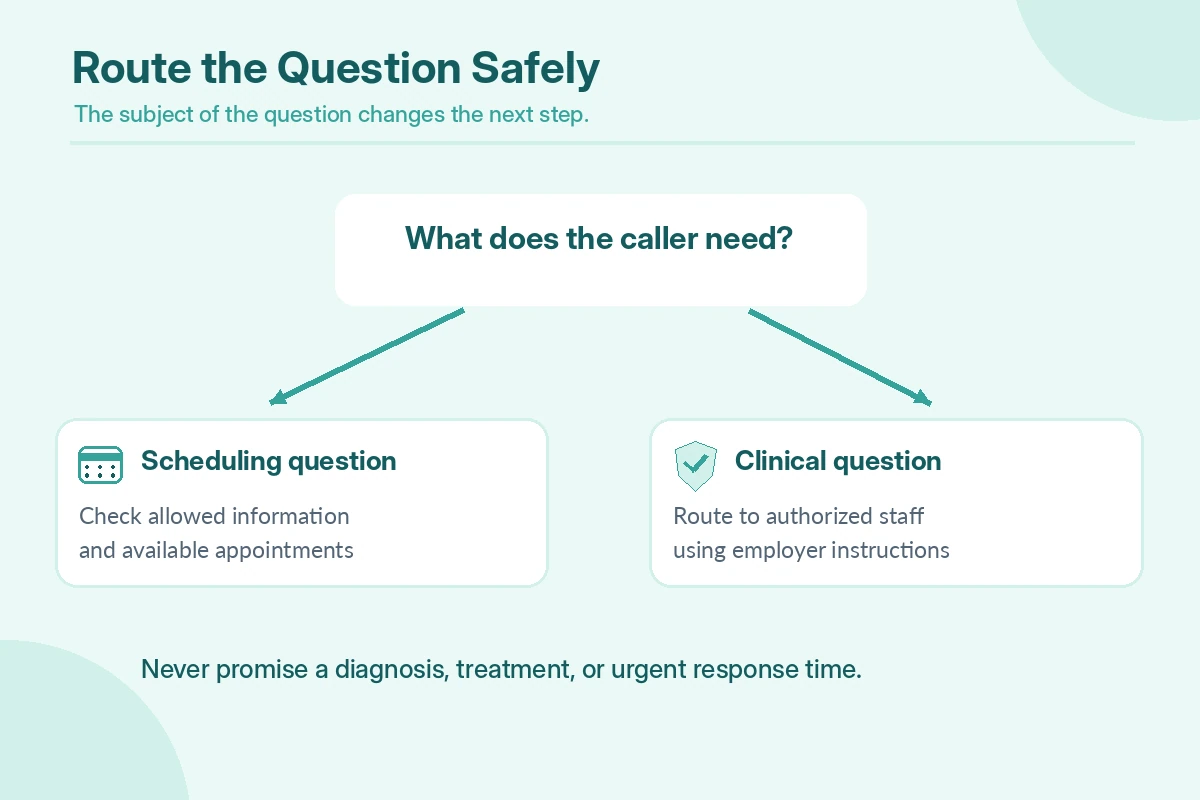
A useful work sample is a short call-flow card: greet, identify request, check authorized scheduling information, confirm the next step and document the handoff. The answer to a clinical question is not to improvise advice; refer it according to employer instructions. The value of the example is organization and good boundaries rather than pretending you have used a particular medical records system.
Translate Retail and Office Experience Into Clinic Evidence
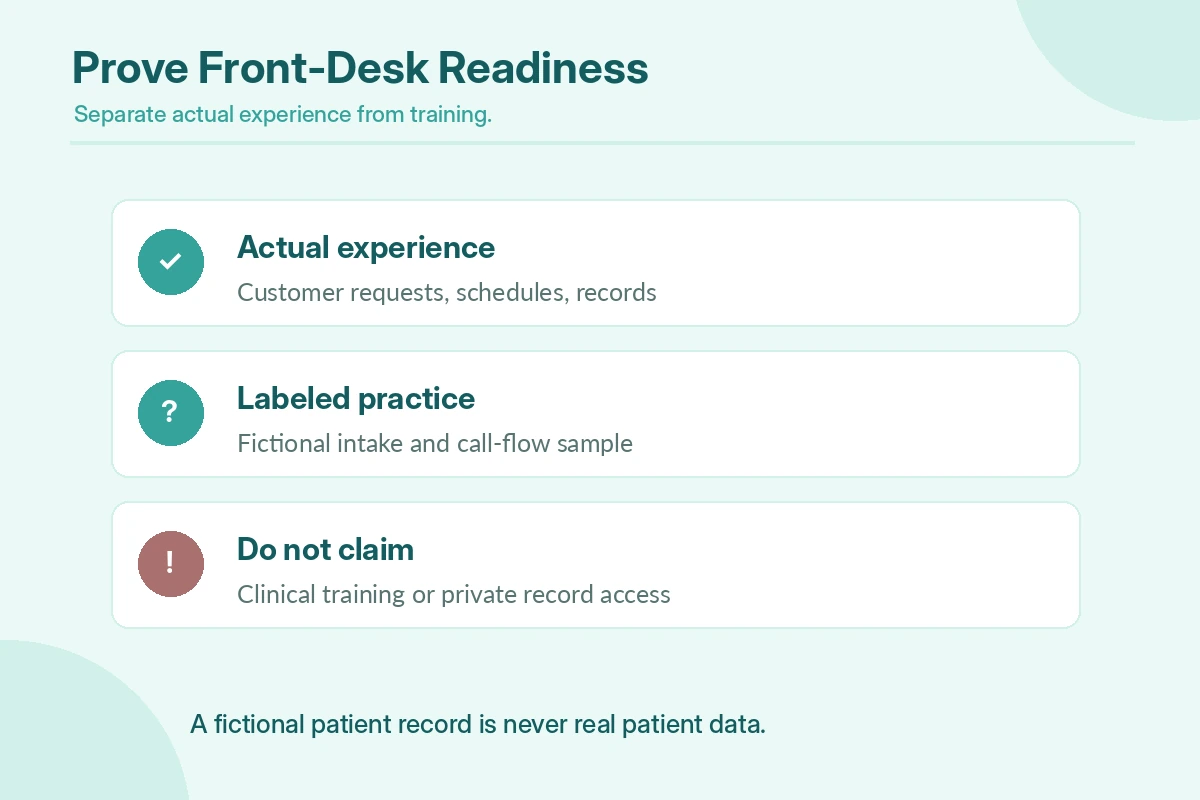
Customer-facing experience can demonstrate welcoming visitors, staying calm with a queue, confirming details and routing a concern. General office tasks can show careful data entry, appointment changes and document handling. Choose a true example and state the setting correctly. “Scheduled volunteer appointments” does not become “managed a medical practice,” and a classroom software lesson does not become live electronic-health-record administration.
The BLS guide to secretaries and administrative assistants notes that medical administrative roles require familiarity with medical terminology and office procedures. For applications, distinguish familiarity from proficiency: list a terminology course if completed, a system only if truly used, and a privacy-awareness exercise as training rather than compliance certification.
Compare Clinics, Hospitals, and Specialty Offices
A small practice may combine check-in, phone triage routing and billing support; a larger hospital may divide these tasks across dedicated desks and departments. Verify the employer’s duties rather than assuming a single standard workflow. Ask how appointments, referrals and urgent messages are routed and whether the shift includes opening or closing responsibilities. Avoid promising a patient a specific treatment or appointment outcome.
Read the requirements for insurance terminology, typing, multitasking, software, onsite work and any employer-specific training. If a vacancy requires prior experience with an electronic records platform, ask whether comparable systems or training are accepted. Keep realistic notes about standing or sitting demands, exposure to emotionally difficult interactions and the support available when a situation escalates.
Apply Without Using Patient Information as Proof
A strong application might describe a documented reduction in scheduling errors only if you have reliable records and authorization to share that fact. Otherwise, use a truthful task statement: “Confirmed appointment details and escalated conflicts to a coordinator,” where it accurately reflects your experience. Never include screenshots of patient portals, schedules or documents obtained through work. A fictional sample can demonstrate a process without risking anyone’s privacy.
Check the organization’s real careers page and avoid recruiters who request money for hiring or sensitive information before you have verified the process. The FTC describes fake job advertising even on ordinary job platforms. A good first role should specify who supervises reception staff, how to handle exceptions and what training is provided; a job title by itself cannot answer those questions.
Ask About Escalation and the First Weeks of Training
During an interview, ask what a new receptionist learns before working independently, who confirms appointment changes, and how nonroutine phone calls are handed off. You can also ask whether insurance forms or payment questions are part of the role and which supervisor reviews uncertain cases. These questions help you assess whether the advertised “entry-level” role has a real training process. They are not a request for protected patient information. If a practice asks you to improvise clinical advice, make sure you understand who is authorized to handle those questions and what the workplace expects.
To prepare without healthcare employment, rehearse a brief fictional front-desk exchange with a friend. One person asks to reschedule an appointment; the other confirms the next step using only imaginary details, then explains that clinical questions must be routed. Afterwards, evaluate whether your language was clear and respectful and whether you asked for unnecessary details. A completed role-play is evidence of practice, not a claim of medical records access. In the resume, keep customer-service or office experience under its actual employer and add any relevant training with honest dates and status.
How We Research This Entry-Level Role
O*NET supports the scope of medical receptionist and secretary tasks. The BLS occupation profile supplies context on medical administrative knowledge and different office roles. FTC guidance supports independent vacancy checks. This article does not establish universal clinical delegation rules or substitute for the hiring employer’s workplace training and applicable regulations.
This guide is independent informational content. The examples are explicitly hypothetical and do not represent actual employers, candidates, interviews, or performance results. Check the current official vacancy and confirm important requirements with its hiring team. You can read our affiliate disclosure; no paid placement relationship or hiring guarantee is implied.
Related Guides
- Part-Time Medical Receptionist Jobs: Front-Desk Duties and Scheduling
- Medical Receptionist Cover Letter With No Experience: Scheduling and Privacy
- Entry-Level Laboratory Assistant Jobs: Match Samples to Training Limits
- Entry-Level CAD Drafter Jobs: Evaluate Drawing Tasks and Review Limits
- Receptionist Resume Summary: Show Front Desk Skills and Visitor Flow
An administrative receptionist should not improvise medical advice. Follow the workplace process to route clinical questions to authorized staff.
Yes, for customer communication, queues and accurate record handling, but describe the original setting rather than relabeling it as healthcare.
Many medical office roles value that knowledge; the exact level, training and hiring prerequisites differ by employer.
Use only clearly fictional information created for practice, never real patient records or screenshots from a workplace system.
No universal equivalence exists. Read tasks and credentials carefully when a posting mixes administrative and clinical duties.