
Quick answer: Start with funeral attendant, greeter, or service-support listings—not a funeral director job presented as an entry-level shortcut. An attendant may prepare rooms, guide guests, and support a service under direction. Arranging funerals, embalming, and other regulated functions are different responsibilities. Read the actual posting and ask what training and supervision are provided.
A calm approach, punctuality, and respect for privacy are valuable evidence even without funeral-home experience. The role can involve standing, moving supplies, weekends, and emotionally difficult interactions. Do not promise counseling, licensed work, or experience handling remains unless you genuinely hold the required training and authority.
Separate Funeral Attendant Work From Licensed Service Roles
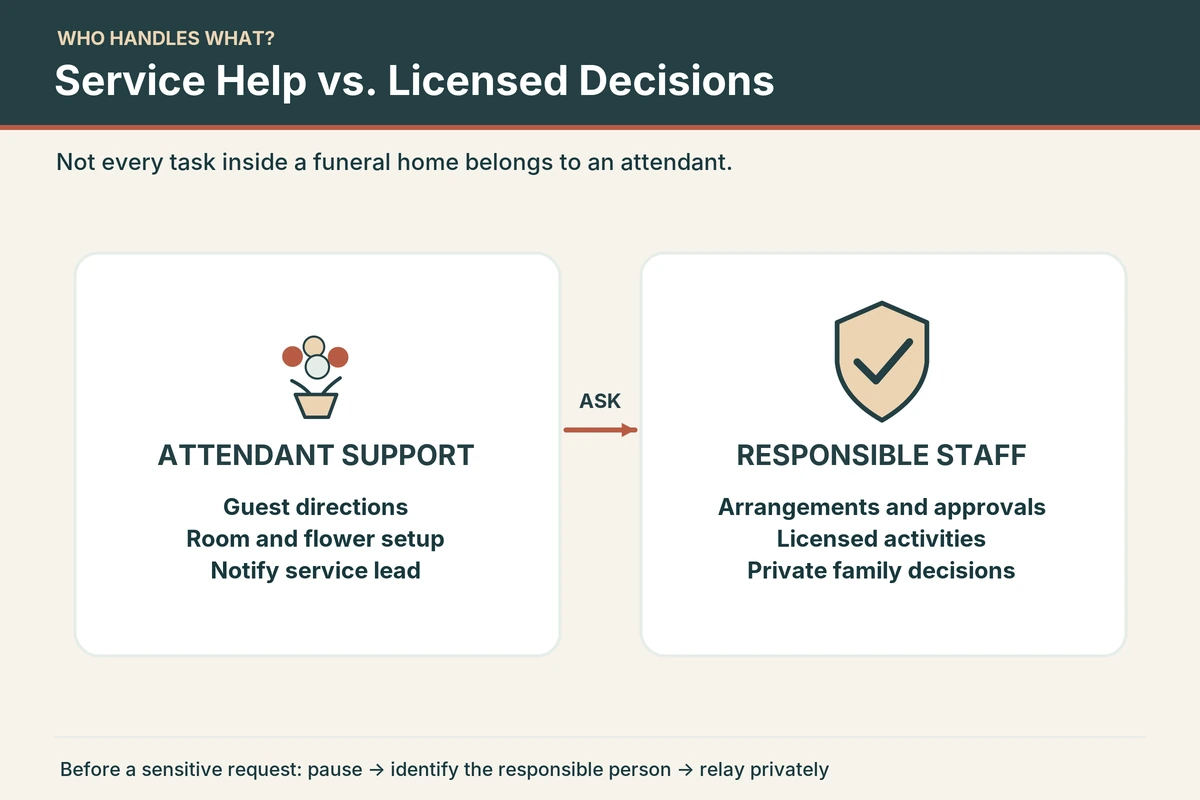
On O*NET’s funeral attendant profile, duties include welcoming visitors, arranging flowers, preparing rooms, assisting the funeral director, and caring for equipment. Those are concrete service tasks, not a promise that an attendant may plan a funeral, provide grief counseling, or perform technical preparation independently. Search for “funeral attendant,” “service assistant,” and “funeral home greeter,” then compare the verb in each requirement to the authority actually granted.
The BLS training table separately identifies funeral attendants and morticians. An employer may use a broad title like “funeral assistant” for very different work, so ask whether the opening is public-facing support, transport, administrative coordination, or a licensed-track position. If the description mixes these functions, request a written task breakdown before saying you can perform all of them.

Compare the Most Realistic Starting Tasks
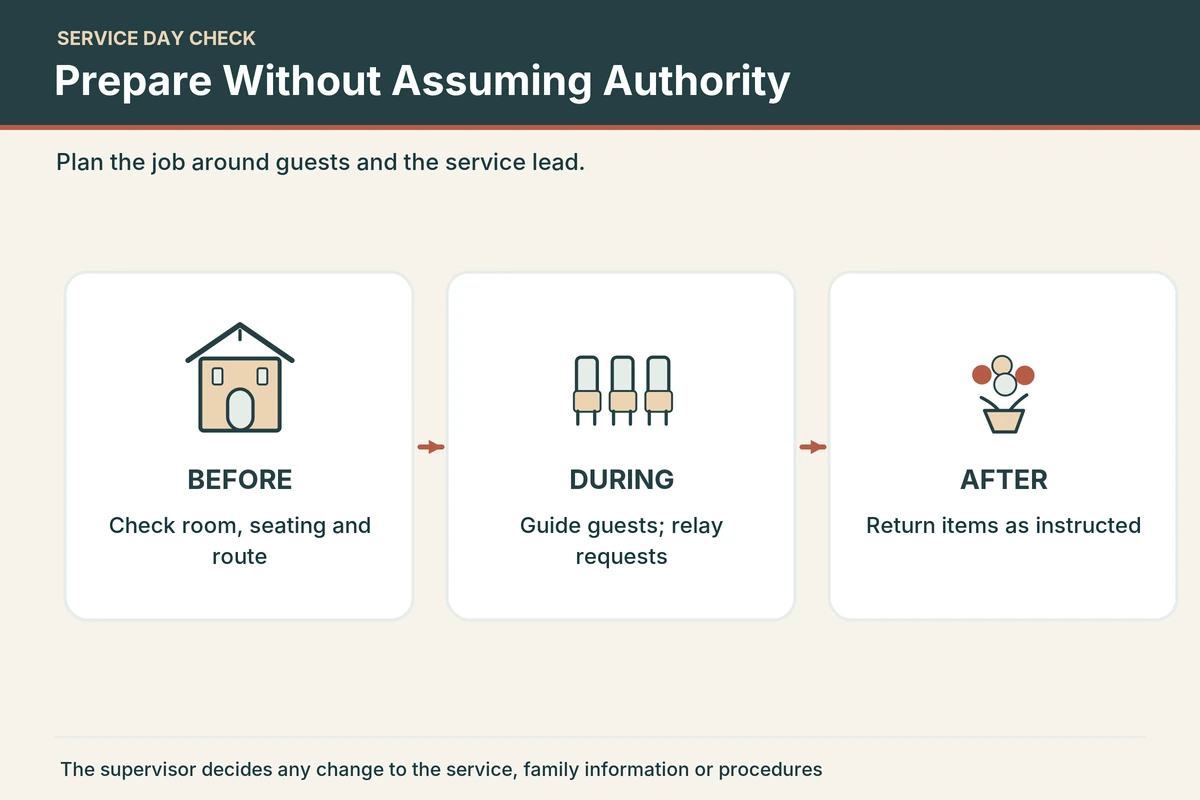
A front-of-house attendant might greet guests, show families the correct room, put out programs, check accessible entrances, and reset seating after a ceremony. A preparation or logistics assistant might move supplies or help with authorized vehicle and equipment tasks. These are examples, not a guarantee of duties at every firm. Clarify what lifting, driving, evening work, and contact with sensitive materials the actual job requires.
A useful job comparison has four columns: guest interaction, physical duties, schedule, and required training. A person comfortable meeting families but unable to lift heavy equipment might favor greeting and room support. Someone who prefers setup still needs to know who gives instructions, when a service must be ready, and how to report a problem without improvising in front of mourners.
Show Evidence of Calm and Discreet Service
Relevant experience does not have to come from a funeral home. Event ushering, hospitality, volunteer reception, religious or community event setup, and inventory organization can demonstrate courtesy and dependability. Describe the actual work: “Welcomed visitors, checked room assignments, and alerted the event coordinator when seating needed adjustment.” Do not change a volunteer role into paid employment or present an imagined outcome as a verified achievement.
If you have no relevant work at all, prepare one truthful example from school, caregiving for a relative, or organizing a community activity. State what you did, what you checked, and when you asked for direction. For this field, showing that you know when not to speak on behalf of a family or funeral director can be more relevant than making grand claims about compassion.
Screen Training, Privacy, and Physical Requirements
The BLS funeral service overview explains that licensed roles have specialized education, supervised training, and licensing requirements that can vary by state. Ask which employee is responsible for regulated tasks and whether the particular attendant position requires driving clearance, training, or other screening. Do not assume an entry title removes those requirements.
Ask how a new attendant learns the service sequence, whom to contact if a guest needs assistance, and what information must remain private. Check whether you can safely meet stated standing, lifting, and on-call expectations. If an employer assigns a task outside your training, the appropriate response is to clarify and involve the responsible supervisor, not to complete it simply because an event is underway.
Use a Short, Respectful Application Message
An example, clearly hypothetical: “I am applying for the funeral attendant opening. Through community event volunteering, I have welcomed visitors, prepared rooms, and followed time-sensitive instructions. I would welcome training in your service procedures and understand that funeral arrangements and licensed activities require the appropriate staff.” Replace the experience with something you can personally verify; never invent a prior family-service role.
Keep the message brief and attach the document format requested. A simple one-page resume can list customer-facing duties, event preparation, schedule availability, and appropriate licenses only if held. Avoid sharing private family stories to prove empathy. If the posting requires a driver’s license or weekend availability, answer honestly rather than hoping those details will be overlooked after hiring.
Evaluate Interviews and Working Conditions
Ask an interviewer: “What does a new attendant handle before, during, and after a service?” “Who guides a guest when a difficult or unexpected request comes up?” “How is the weekend schedule communicated?” and “Which tasks are reserved for licensed staff?” The usefulness of an answer lies in a named process and responsible person, not a general statement that the team is supportive.
Ask about anticipated hours, on-call duties, compensation structure, and safety instruction in the same practical manner. A business may need flexibility around services, but that does not eliminate the value of clear expectations. If the job description changes during the conversation, ask to confirm the revised duties in writing before committing.
Verify the Employer Before Sharing Personal Data
Find the funeral home through a separately sourced business website or directory and make sure the role appears in its official recruiting channel. Do not rely only on a texted link or a recruiter’s display name. The FTC’s job-scam guidance warns about early requests for financial information and recruiters who avoid basic details about the actual job.
Never pay an individual to unlock an interview or send banking information before a legitimate hiring process establishes why it is required. Keep a record of the posting, location, person you contacted, and stated schedule. When an offer arrives, compare those details with the written terms and flag any last-minute changes to tasks involving vehicles, vulnerable families, or regulated work.
How We Research Entry-Level Opportunities
This guide draws on published occupational descriptions, government guidance, and task-specific safety resources: onetonline.org; bls.gov; bls.gov. Those sources describe typical work or regulations; they do not verify any particular job posting, wages, employer policies, or a job offer. All suggested application messages and scenarios are hypothetical and must be rewritten using your actual experience. Review JobAsk’s affiliate disclosure; this guide makes no affiliate recommendation.
Related Job Search Guides
- Call Center Jobs With No Experience: Find Support Roles and Show Readiness
- Barista Jobs With No Experience: Prepare for a First Café Role
- Bank Jobs With No Experience: Compare Teller and Branch Support Duties
- Hotel Jobs With No Experience: Choose Front Desk or Housekeeping
- Restaurant Jobs With No Experience: Host, Busser, and Prep Routes
Some attendant and guest-support positions may not require mortuary school; funeral director and embalming roles have different training and licensing rules. Verify the particular posting and state.
Not necessarily. Ask the employer to define any transport, preparation, or physical duties and who supervises them. Do not assume the title answers this question.
Services and on-call arrangements can require variable hours. Confirm the actual shift pattern and notice period instead of assuming a standard office week.
Use true examples of event setup, greeting visitors, records accuracy, reliability, and teamwork, labeling volunteer work correctly.
Offer respectful service and careful escalation rather than claiming professional counseling skills or authority you do not possess.