
Quick answer: Graphic designer resume skills work best when each design ability can be traced to a real project. List the layout, typography, illustration, image editing, or production tools you used, then point to a portfolio sample and explain your contribution. “Creative” and a long inventory of software do not tell an art director what you actually delivered. Keep the resume easy to read and verify that you have permission to show any client materials.
All sample resume statements in this guide are hypothetical. They are illustrations of honest wording, not genuine candidate outcomes, hiring guarantees, or evidence that a particular employer accepted the claim. Use only your own verified experience and the qualifications required by the actual posting.
Build Skills Around the Design Brief Rather Than Logos
Graphic design projects begin with a message, audience, medium, and constraints. The BLS graphic designers guide describes meeting clients, selecting typefaces and layouts, creating imagery, incorporating feedback, and reviewing work before delivery. Your resume should reflect which of those stages you handled. A design student may own concept sketches and layouts; a production artist may maintain templates and prepare approved files. Do not call yourself the brand strategist if your actual assignment was to format assets from an established style guide. Name a deliverable and your role before listing the tools.
Group Typography, Layout, and Production Separately
Typography concerns hierarchy, legibility, spacing, and relationships between text elements. Layout concerns grids, alignment, visual balance, and how information flows across a page or screen. Production concerns export settings, file organization, bleed or trim specifications when relevant, and final checks. The O*NET role profile includes setting type sizes, arranging illustrations and text, and reviewing final layouts. Use these more specific concepts instead of “excellent visual design.” If your work has only been digital, do not imply print press experience; if you have worked with a print vendor, identify the actual preparation and review activities.

Describe Tools Through Actions, Not Claimed Mastery
A useful software claim pairs the application with the task: “Illustrator — created scalable icons,” “InDesign — laid out a multi-page brochure,” or “Figma — organized interface mockups.” Use those examples only for tools you really operated. Reading a tutorial does not justify “advanced Photoshop,” and experience in Canva is not interchangeable with proficiency in every Adobe application. If a listing requests accessibility or responsive design, show the related work rather than selecting a buzzword. A short tools subgroup may make sense, but it should not bury your more distinctive layout and review skills.
Connect Each Portfolio Piece to a Specific Contribution
For every shareable project, prepare a short note naming the brief, your individual work, the revision process, and what the final artifact demonstrates. A group project may be excellent evidence, but acknowledge coworkers’ contributions. If a site, campaign, or client design is confidential, seek permission or build a self-initiated example instead. Do not paste a screenshot containing account details or pass a private creative brief off as public. Portfolios do not need invented conversion metrics to show ability; clean page hierarchy, coherent branding, and a clear before-and-after comparison can convey real design decisions.
Show Revision Work and Final Checks
Graphic designers review proof versions and incorporate feedback. A resume bullet can describe adjusting type hierarchy after readability feedback, correcting export dimensions, or checking image resolution prior to delivery. Explain the feedback source only as precisely as you can verify. Avoid “improved sales by 40%” unless such a business outcome is supported and attributable. If you collaborated with an art director, say you implemented approved revisions rather than claiming final approval. A design manager often needs to know whether you can finish and check a deliverable, not only produce an attractive first concept.
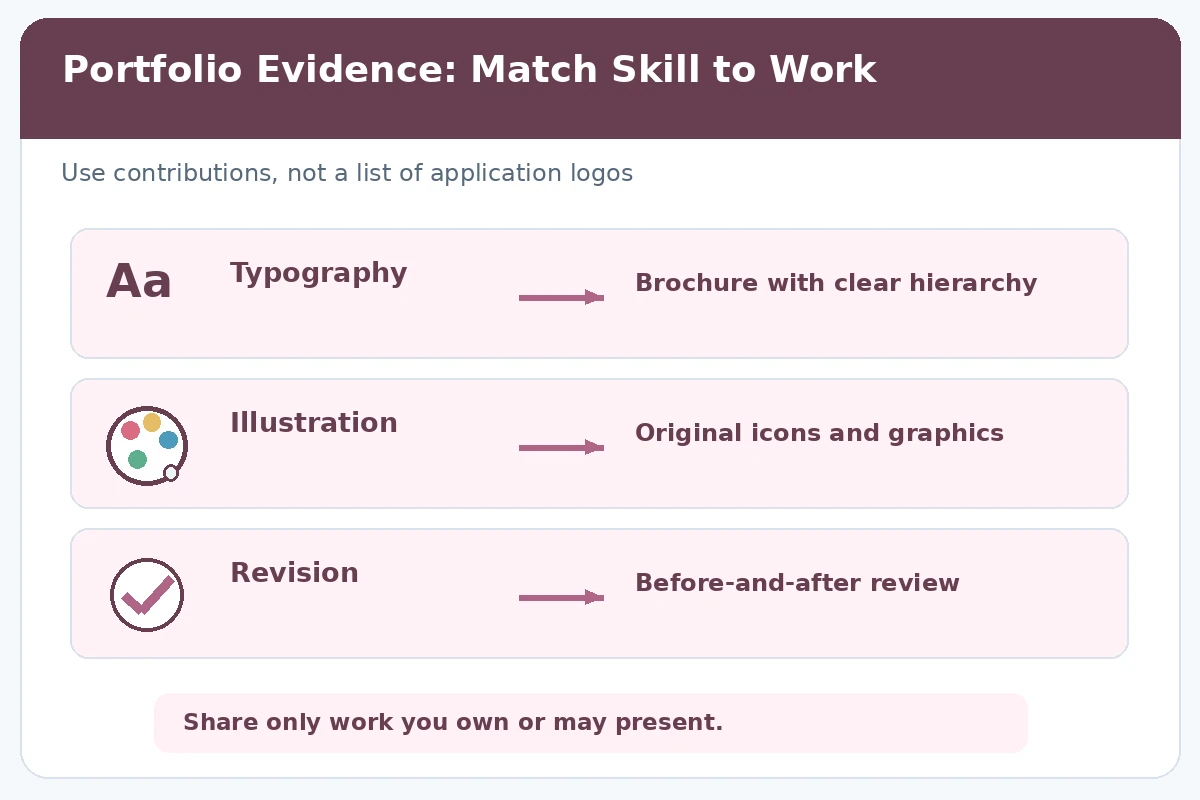
Use a Hypothetical Portfolio-to-Resume Example
Hypothetical coursework example: “Designed a three-page event brochure for a class project, tested type hierarchy with peers, and revised spacing for legibility.” This appropriately identifies the project as student work. Hypothetical staff example: “Produced approved social graphics using a shared brand template and checked final crops against requested placements.” This does not suggest ownership of the entire campaign or its results. Replace all parts with your real project details. If the sample was jointly produced, name the work you personally designed or revised and avoid implying a full independent commission.
Keep the Resume Itself Readable as a Document
A designer may be tempted to use a multi-column, heavily decorated resume. Yet the file still needs recognizable headings, selectable text, correct dates, and legible contrast. CareerOneStop</a advises a simple readable layout and a clean type hierarchy. Treat the resume as an information document while letting your separate portfolio demonstrate visual creativity. Test the exported PDF and follow any application system instructions about DOCX or PDF. A resume that is hard to read undermines even an excellent list of layout skills.

Check Tool Versions, Permissions, and Final Claims
Review every listed tool for current familiarity and remove products you learned only briefly. Do not cite a brand client relationship that cannot be verified or publish proprietary design files without authorization. Confirm that links actually open and that the project image matches the skill you claim. If you include a personal redesign of an existing brand, label it as an independent concept, not commissioned client work. Keep your contribution visible: research, layout, illustration, revisions, export, and handoff are different capabilities. An honest portfolio mapping is more persuasive than a resume filled with unsupported adjectives.
Turn the Posting Into a Final Evidence Checklist
Open the actual vacancy next to your resume. Highlight each requirement that is both relevant and true for you, then locate one supporting experience bullet, education record, approved sample, or verified credential for it. If you cannot explain a claimed skill in one clear sentence, narrow or remove that claim. Keep job titles, dates, software names, and training statuses consistent across your resume and application form. Do not fabricate results or confidential customer information to make a bullet sound impressive. The strongest final version is selective: it demonstrates the specific work you can do and indicates where additional training or approval is still required.
How We Research Skills and Employment Claims
This guide was built using the checked professional and primary sources BLS graphic design profile; O*NET graphic design profile; CareerOneStop resume guide. Occupational descriptions identify possible tasks, not proof that any individual applicant completed them. We separated job duties, qualifications, and independent authority, and wrote each example as hypothetical. For site relationships and disclosures, read our affiliate disclosure. No hiring results, employer endorsements, or affiliate partnerships are assumed.
More Resume and Cover Letter Guides
- Accounts Receivable Resume Skills: Invoices, Aging, and Cash Application
- Event Planner Resume Skills: Vendors, Run of Show, and Reliable Handoffs
- Graphic Designer Cover Letter: Connect Portfolio Work to the Role
- Graphic Designer Resume Summary: Portfolio Proof and Revision Process
- Graphic Designer Cover Letter: Explain Portfolio Choices and Feedback
No. Include software you can genuinely use for tasks relevant to the target role.
Yes. Identify it as coursework and describe your own contribution.
Only when you have the necessary permission and have protected confidential material.
No. Keep the resume itself legible; use a separate portfolio to demonstrate expressive visual work.
State your specific work and credit the collaborators appropriately.