
Quick answer: Event planner resume skills should help an employer see what you coordinated before, during, and after an event. Name real schedules, vendor requests, registration work, budget tracking, and escalation procedures; show which documents or teams you handled. Do not confuse organizing volunteers with holding contract authority or tracking expenses with approving payments. A short timeline and a truthful statement of your role can make even a student or community event useful evidence.
All sample resume statements in this guide are hypothetical. They are illustrations of honest wording, not genuine candidate outcomes, hiring guarantees, or evidence that a particular employer accepted the claim. Use only your own verified experience and the qualifications required by the actual posting.
Anchor the Skills List to Event Type and Actual Ownership
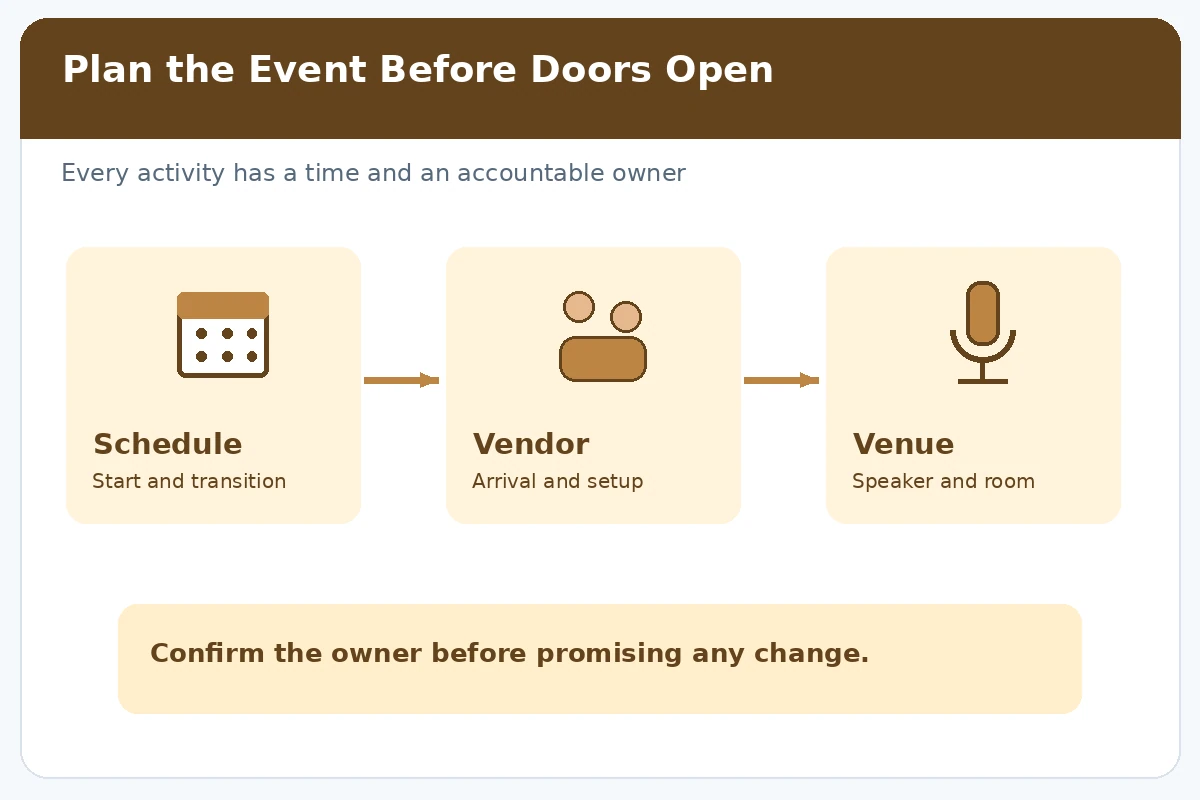
A corporate meeting, student conference, nonprofit fundraiser, and wedding have different logistics. The BLS event planner profile describes meeting clients, considering venues, soliciting bids, arranging services, monitoring events, and following up on bills. Choose the subset you actually performed. If you set up registrations and signs, record those tasks; do not claim you negotiated a venue contract. The number of event types you can name is not proof of ownership. Explain the purpose, participant needs, schedule, and the particular operations for which you were accountable.
Show the Run of Show as a Coordination Tool
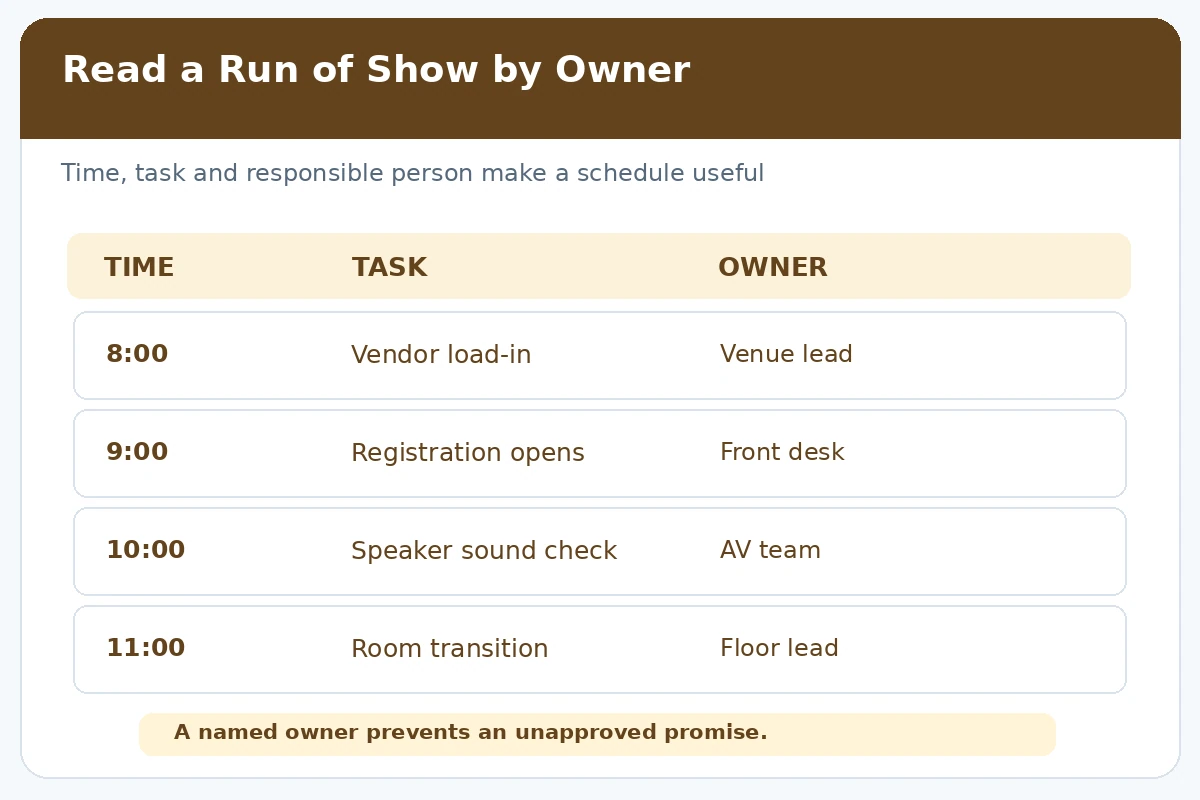
A run of show organizes start times, transitions, speakers, room changes, audiovisual cues, and the people responsible for each step. If you used one, explain whether you drafted it, updated versions, briefed staff, or followed assigned cues on event day. Keep the description accessible to employers unfamiliar with your particular venue. A candidate might describe coordinating speaker arrivals and communicating schedule changes, while another handled registration opening and end-of-day counts. Do not imply that a schedule proves the whole event ran without problems; note what you monitored and whom you notified when something changed.
Separate Vendor Communication From Contract Approval
Connect Budget Tracking to Source Records
Event budgeting includes anticipated costs, invoices, approved changes, and expense records. Someone responsible for an expense tracker should describe maintaining actual budget lines and flagging variations; that is different from authorizing vendor payment. If you compared quotes to a plan, name the comparison and whom you informed of a difference. Do not invent a large event budget or claim savings that were not measured. For a volunteer fundraiser, you may describe tracking donated materials or managing a sign-in sheet without pretending that you administered a corporate finance system. Employers value a clear record of accuracy and scope.
Describe Attendee and Accessibility Handoffs
Event coordination is partly about the attendee experience: registration queues, directional information, session transitions, and communication with venue staff. If you helped with accessibility requests, name how you routed them to the authorized person and complied with stated plans, without disclosing participant medical information. A useful bullet might explain updating a check-in list, confirming room labels, and notifying the coordinator about a changed access path. These tasks show service and judgment without claiming authority to make safety or accommodation decisions. Use the posting to select the aspects relevant to its audience and venue.
Write a Hypothetical Role-Specific Achievement
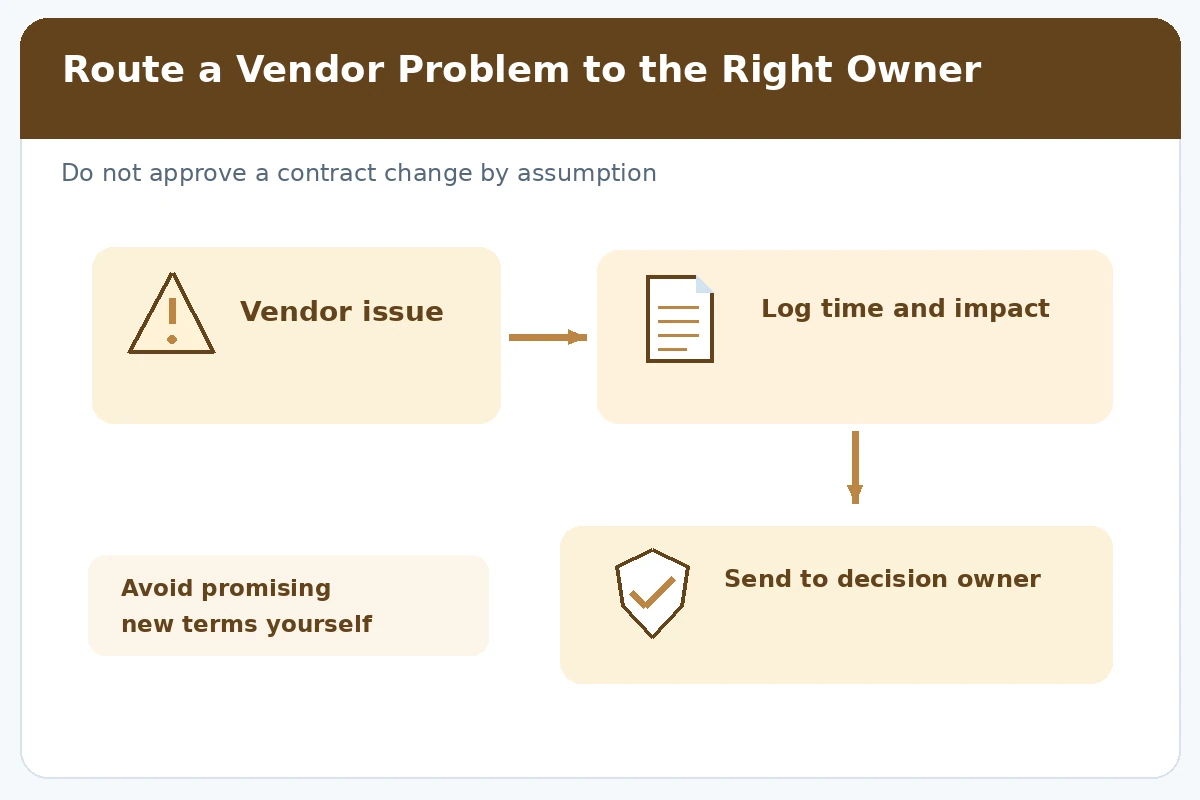
Hypothetical student example: “Maintained a run-of-show sheet for a campus workshop, confirmed speaker arrival windows, and relayed room-change updates to volunteer leads.” The statement shows task ownership without invented results. Hypothetical venue-support example: “Logged AV and catering requests, recorded delivery status, and referred contract changes to the event manager.” This does not claim contract authority. Replace the setting, scope, and verbs with verified experience. If you held only a one-day volunteer role, label it accordingly; do not represent it as multi-year professional event management.
Group Skills Around Planning, Delivery, and Follow-Up
A useful resume grouping can include “Planning and Schedules,” “Vendor and Venue Coordination,” “Attendee Operations,” and “Tracking and Handoffs.” Use one or two bullets to connect each group with evidence. You do not need a catalog of every software product mentioned in event planning. CareerOneStop</a suggests a focused skills section that matches the target posting. A venue-heavy role may benefit from proof of room plans and vendor coordination; an association conference role may emphasize registration and speakers. Both can be demonstrated without overstating decision authority.
Check Event Examples for Privacy and Accuracy
Before sending, verify the event name or describe it generically if permission to name it is unclear. Remove attendee contact details, contract rates, private budgets, and internal venue security plans from portfolio samples. Ensure your resume correctly distinguishes a planner, coordinator, assistant, or volunteer and the actual dates worked. If you describe a resolved disruption, say what you did and who made the decision; do not suggest you personally approved a venue evacuation, safety change, or supplier payment without that authority. The final review should make ownership, documentation, and escalation obvious to a reader.
Turn the Posting Into a Final Evidence Checklist
Open the actual vacancy next to your resume. Highlight each requirement that is both relevant and true for you, then locate one supporting experience bullet, education record, approved sample, or verified credential for it. If you cannot explain a claimed skill in one clear sentence, narrow or remove that claim. Keep job titles, dates, software names, and training statuses consistent across your resume and application form. Do not fabricate results or confidential customer information to make a bullet sound impressive. The strongest final version is selective: it demonstrates the specific work you can do and indicates where additional training or approval is still required.
How We Research Skills and Employment Claims
This guide was built using the checked professional and primary sources BLS event planners profile; O*NET event planner profile; CareerOneStop resume guide. Occupational descriptions identify possible tasks, not proof that any individual applicant completed them. We separated job duties, qualifications, and independent authority, and wrote each example as hypothetical. For site relationships and disclosures, read our affiliate disclosure. No hiring results, employer endorsements, or affiliate partnerships are assumed.
More Resume and Cover Letter Guides
- Graphic Designer Resume Skills: Connect Layout, Software, and Portfolio Proof
- Hospitality Skills for a Resume: Guest Service, Handoffs, and Accuracy
- Warehouse Worker Cover Letter: Prove Reliable Picking and Handoffs
- Delivery Driver Resume Objective: Show Route Reliability and Safe Handoffs
- Hotel Front Desk Experience on a Resume: Show Guest Records and Shift Handoffs
Yes. Identify the volunteer setting and the specific coordination tasks you actually completed.
No. State which parts of the schedule you created or maintained and who directed the event overall.
Only if the figure is real, shareable, relevant, and matches the authority you had.
No. Describe quote collection and routing for approval instead of negotiation.
Explain your observation, communication, records, and handoff without taking credit for the manager’s decision.