
An HR assistant resume summary should emphasize the administrative tasks you have actually completed—maintaining personnel records, scheduling interviews, preparing onboarding materials or responding through approved channels. It must not turn a support role into independently setting benefits policy, making hiring decisions or disclosing private employee records. The strongest summary names what information you handled, the process you followed and whom you supported, while preserving confidentiality and the limits of your authority.
These writing examples are hypothetical, not verified real candidate outcomes. Adapt only tasks, qualifications and tools that your own history supports. A professional summary is optional; CareerOneStop suggests a brief, role-relevant section rather than generic inflated descriptions. Compare more writing techniques in JobAsk’s resume resources.
Begin With the Job You Can Actually Perform
A clear summary ties the job opening to your documented scope. Mark the vacancy’s required duties, then note which ones you personally performed or practiced. If you only observed a task or helped under supervision, describe it that way. Use the employer’s terms when accurate, but avoid copying responsibilities you have never held. The UC Berkeley resume guide recommends choosing accomplishments that address the employer’s real needs.
Identify the HR Support Duties in the Posting
An HR assistant may handle employee file updates, recruitment paperwork, interview scheduling and orientation support. The O*NET profile describes such record and coordination activities, but it does not imply every assistant makes hiring or benefits decisions. Highlight the tasks specifically required in the vacancy and that you can verify from your own record. If the job asks for HRIS experience, check which system and operations are actually needed.
Write a quick scope ledger: collected, checked, entered, forwarded, authorized. Most assistants contribute to a process; a manager or specialist may control policy exceptions and final decisions. A clear summary should reflect whether you maintained files or approved their release. Do not take credit for a company-wide staffing policy simply because your tasks supported recruiting.
Show Reliable Records Work Without Exposing Data
Personnel records may contain addresses, leave details, performance information or identifiers. You can show competence by describing safe categories of actions—verified form completion, organized approved files, reconciled missing documents—without reproducing private material. A strong summary might note experience updating onboarding trackers if that is true, not quote actual employee details or private system screenshots.
For confidentiality language, prefer the actual process you followed to generic “fully compliant with every privacy law.” If your role involved restricted-access records, describe that access was limited according to the organization’s procedure. Do not claim professional legal certification from routine file handling. Workplace rules vary, and a resume is not a legal compliance attestation.

Describe Recruitment Coordination Honestly
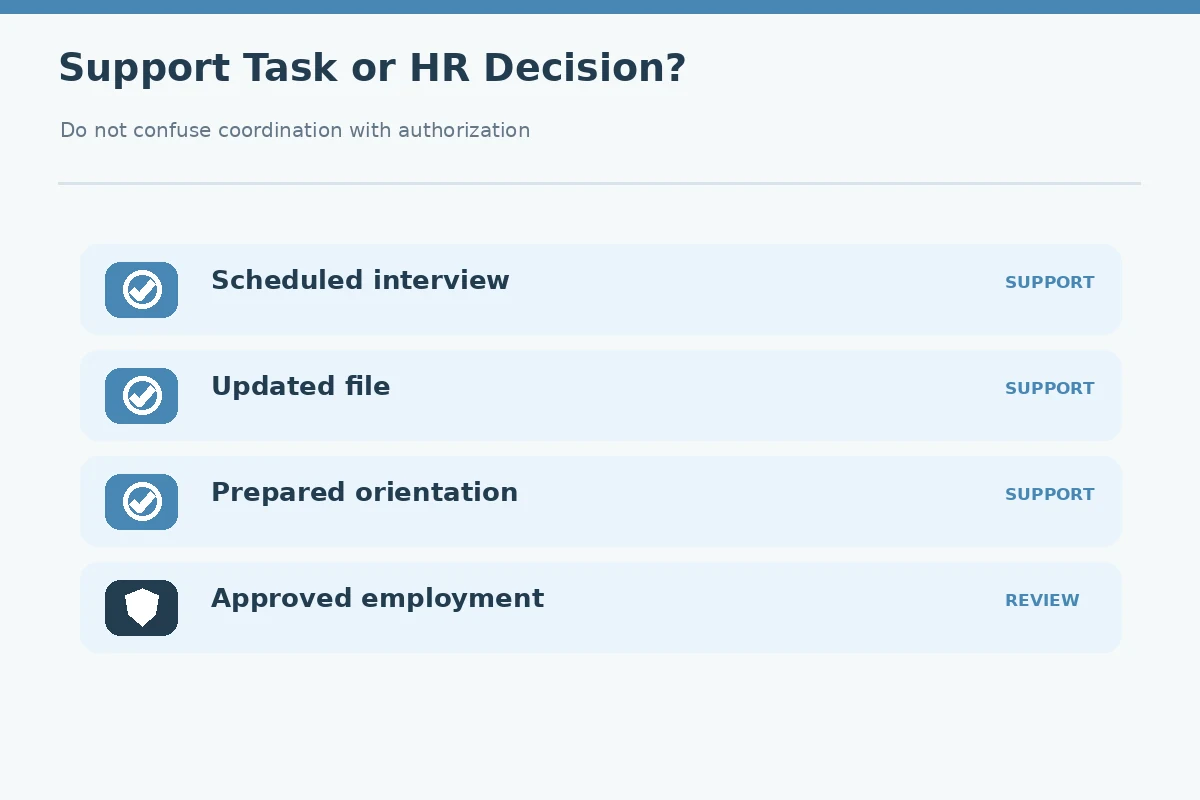
Interview scheduling, invitation messages and candidate-status tracking can provide valid HR administrative evidence. They are not the same as screening applicants, approving headcount or selecting hires. If you contacted candidates with a manager-provided message, use “coordinated interviews” or “sent approved scheduling information” rather than “managed hiring decisions.” Keep the focus on verifiable coordination and clear communications.
A hypothetical student club recruitment role can prove email coordination or calendar organization, but label it a student organization rather than human resources employment. If your history includes paid HR support, name the specific recruiting activity and systems only when true. Use the summary to bridge the work to the vacancy, leaving details to bullets below.
Use Onboarding Evidence That Fits Your Scope
Onboarding support might involve sending paperwork checklists, preparing orientation materials, checking receipt of documents or booking a room. It usually does not mean authorizing work eligibility decisions or determining benefits entitlement. Compare the role’s onboarding language to your actual tasks. Never say you verified immigration status or legal eligibility unless that was truly your assigned and qualified work under the employer’s process.
For example, “prepared orientation packets and maintained completion reminders for the HR team” can be valuable if verified. It should not become “directed all new-hire compliance.” If you assisted someone else with a complex system, say assisted. Mention any relevant process improvement only when you have real evidence of what changed and can describe it without revealing employee information.
Tailor HRIS and Communication Claims to the Employer
HR information systems, spreadsheets and shared document tools serve different purposes. State which application you used and what you did inside it: entered a field, updated a status, exported an approved report or maintained a checklist. Do not copy software brand names from a job advertisement to inflate your technical range. The same principle applies to answering employee questions: routine procedure explanations differ from individualized benefits decisions.
CareerOneStop recommends a summary that highlights skills and accomplishments relevant to the job, and the rest of the resume should substantiate that opening statement. In HR support, privacy and authorization boundaries are central to whether that sentence is truthful. Use safe, nonidentifying examples of a filing workflow or scheduling handoff.
Replace Policy Claims With Administrative Evidence
Weak: “Experienced HR leader who transformed hiring policy and guaranteed total employee compliance,” when the person scheduled interviews. Better if accurate: “HR administrative assistant who coordinated candidate calendars, tracked onboarding documents and routed policy questions to the appropriate HR specialist.” The revised statement shows useful tasks without borrowing the decisions of managers.
This example is hypothetical, not a documented successful applicant. Adapt it only to tasks you personally completed. If you did make an authorized hiring decision, describe the real decision and role accurately in the experience section. Otherwise, avoid words such as owned, directed and approved when they create a false impression of authority.
Run a Confidentiality and Ownership Audit
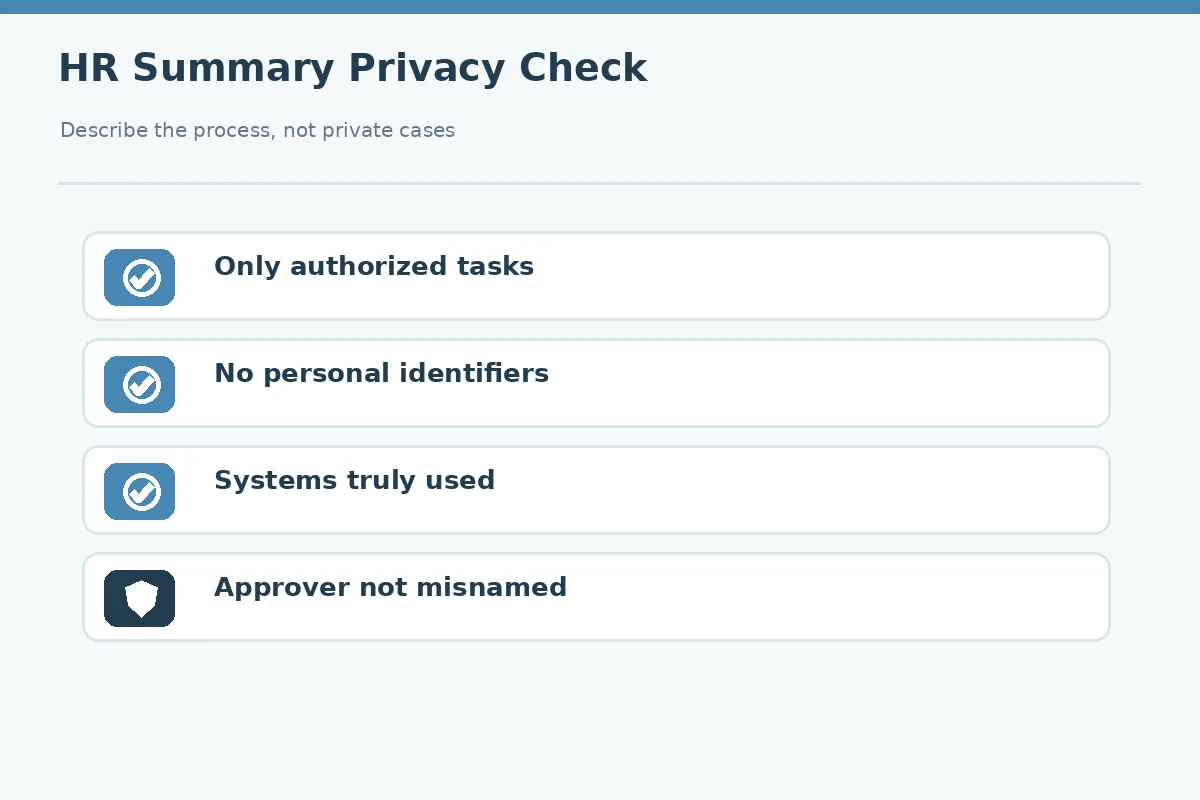
Check that the summary, job titles, organization names, dates and software claims match your work history. Then ask: does any phrase reveal private employee data, imply access I did not have, or turn a routine administrative support task into an HR policy decision? Remove it or narrow it to the action you can prove. Your strongest evidence often involves careful process, coordination and documentation rather than attention-grabbing statistics.
Do not include sensitive metrics or case narratives from private personnel files as writing samples. Confirm each point against the opening and ask a trusted reviewer whether the meaning is accurate without needing private context. No template guarantees an interview, and strong language should never come at the expense of trust.
Hypothetical Summary You Can Audit
Hypothetical example for an employee with relevant administrative experience: “HR administrative assistant with experience scheduling candidate interviews, organizing onboarding checklists and updating employee records through approved systems. Coordinates document follow-up with designated HR staff while respecting access limits.” This does not claim authority to hire, adjudicate grievances or design company policy.
Make a personal evidence table before copying any example: claim, source in your work or study history, permitted document or reference, and exact level of responsibility. Delete a claim if you cannot support it. The example above is a writing model only: it does not report a real applicant, employer endorsement, performance improvement, or hiring outcome.
How We Research Resume Summary Examples
On 2026-10-27, the JobAsk drafting process checked public US career guidance and professional role descriptions, reviewed the READY A/B intent seeds and compared topics against the available article index (including B083, B100, B116 and adjacent resume topics). Sources below support the duties and writing principles, not any hypothetical candidate’s achievements. Independent human editorial review, live WordPress slug availability and hiring outcomes are not confirmed.
CareerOneStop source: CareerOneStop explains the optional top-of-resume summary and recommends concise, relevant, supportable evidence.
UC source: UC Berkeley advises tailoring experience descriptions and accomplishments to the actual posting.
O*NET source: O*NET describes human resources assistants’ responsibilities for processing personnel documentation, maintaining employee files and helping with orientation or approved inquiries.
CareerOneStop source: CareerOneStop explains the importance of keeping work experience consistent with the resume summary and relevant skills.
No employment, resume screening, licensing, affiliate or hiring guarantee is implied by these materials. Sources do not endorse JobAsk. Please read our affiliate disclosure and follow the actual employer’s instructions.
Related Guides
- HR Assistant Interview Questions: Confidential Records and Hiring Support
- HR Coordinator Resume Summary: Show Records, Hiring Support, and Privacy
- Library Assistant Resume Objective: Prove Patron Help and Materials Accuracy
- Customer Service Resume Summary: Prove Requests, Records, and Follow-Up
- Graphic Designer Resume Summary: Portfolio Proof and Revision Process
Potentially. Explain real transferable records, scheduling and communication skills without relabeling unrelated employment as HR work.
No. Only claim tools you know and can accurately demonstrate.
No. Scheduling and candidate communication differ from selection authority.
Describe your real authorized record-handling process without exposing private employee information.
Only if your real role and authority justify the term. Otherwise name the packet, tracking or coordination steps you supported.