
If the recruiter who scheduled your job interview leaves the company, changes roles, or stops handling the vacancy, first verify who now manages candidate updates. Use the original employer domain, application portal, or official HR contact—not a surprising message from an unfamiliar account. Keep your inquiry factual: name the position, interview date, and the contact who previously coordinated scheduling; ask where status questions should go. Do not resend identity documents, banking information, or full application materials just because someone claims to be the replacement recruiter. A changed contact can cause an administrative delay, but it does not tell you whether you were selected.
Identify signs of a real recruiting handoff
There are several ordinary ways an interview contact changes. An employer might send an out-of-office reply naming a teammate, the original recruiter may introduce a new colleague, or the applicant portal may list an updated point of contact. Those signals differ from an unexpected social message claiming that the old recruiter is unavailable and demanding immediate verification through a new link. Write down where each instruction came from, and use the channel that you can confirm independently rather than trusting a polished signature or logo.
A recruiter’s failure to reply is not itself evidence that they left or that your application was discarded. Check your original correspondence for alternative contacts and any instructions about the hiring timeline. If an automatic reply says an inbox is no longer monitored and gives a business address, confirm that the address belongs to the official employer domain before writing. If no replacement is identified, use the public careers contact or applicant portal instead of guessing an employee’s email address.
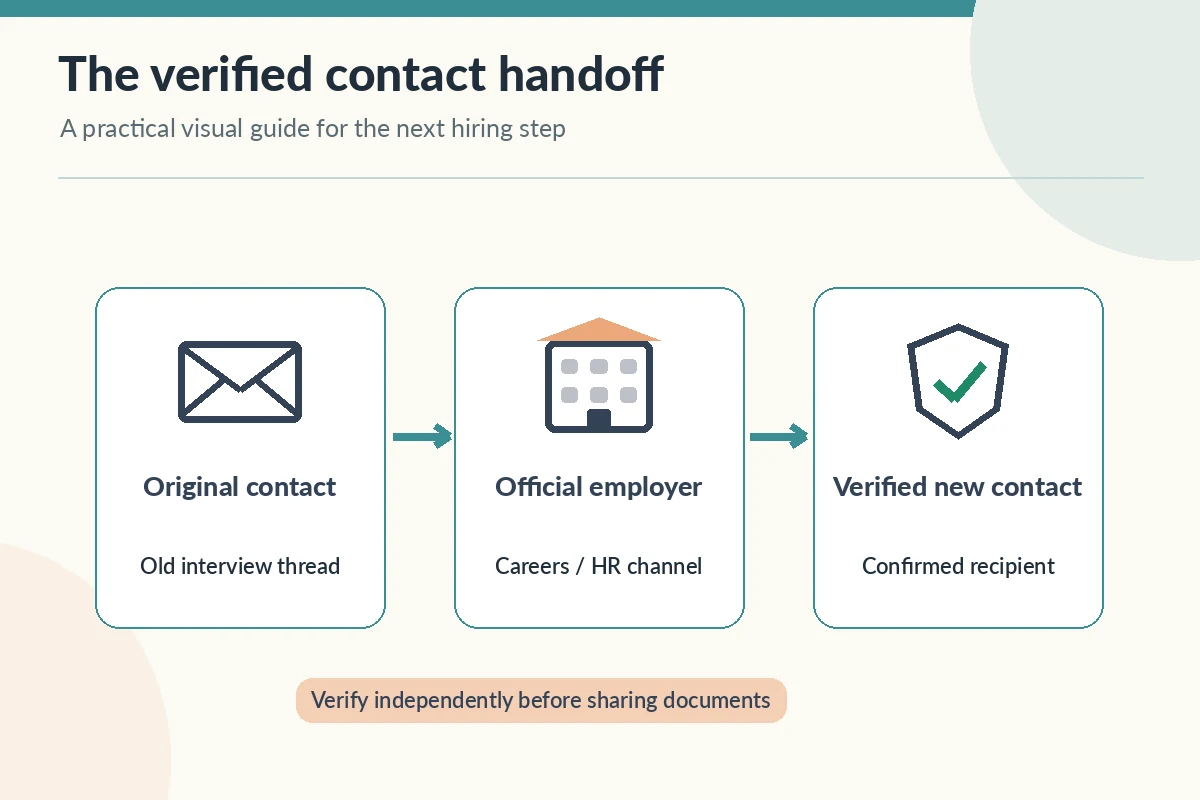
Verify the replacement through trusted channels
The Federal Trade Commission has documented impersonation scams in which fake recruiters claim to represent familiar employers and ask for personal information or money. To verify a new recruiter, visit the employer’s website yourself using a known address and consult its published careers or HR contact details. For a staffing agency, go to the agency’s established website or call its published main number. Do not rely solely on a phone number, QR code, or link in an unsolicited handoff message.
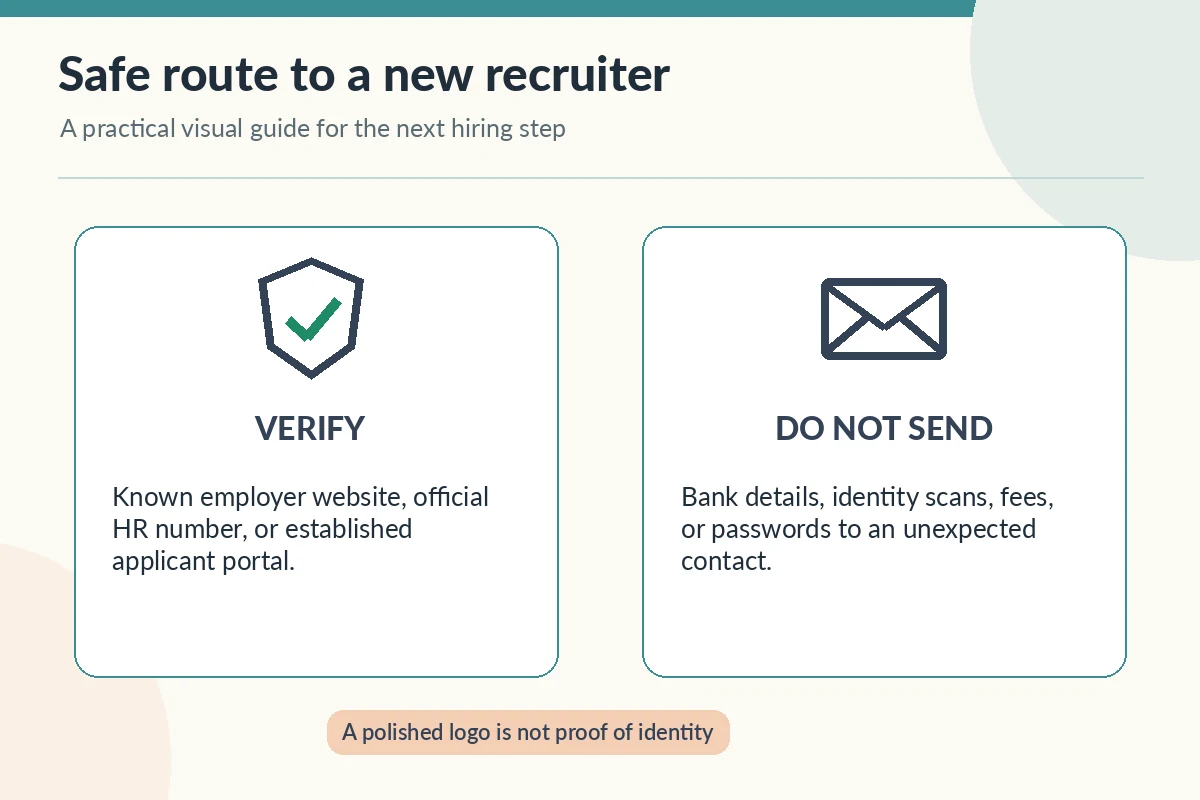
A legitimate contact change should not require you to pay a transfer fee or send banking data to keep an interview appointment. If the new person asks for documents, first confirm the employer, the specific hiring stage, the secure submission process, and why the documents are needed. Stop if the request appears unrelated to the process or cannot be independently verified. This is a precaution about recruitment impersonation, not a claim that every unexpected staff change is fraudulent.
Preserve just the facts needed for the new contact
A concise handoff record needs the job title or requisition ID, interview date, the name of your previous coordinator, any next-step date you were given, and the email thread or portal reference. You need not send copies of private interview notes, reference lists, passport details, or a full resume unless the verified recipient actually requests them through an approved method. Providing too much information can slow the process and unnecessarily expose details unrelated to a status inquiry.
For example: ‘I interviewed for the Scheduling Assistant role on October 14 and received a note that Taylor would coordinate next steps. I understand the recruiting contact may have changed. Could you confirm the best person or mailbox for a status inquiry?’ This is an illustrative message using fictional names and dates. It seeks routing rather than implying that a particular employee left or that the candidate is already approved.
Use the original timeline when deciding to write
The University of Washington Bothell career guidance emphasizes using the employer’s own response window to time a follow-up. A recruiter transition does not automatically justify sending five inquiries at once. If the stated update date is in the future, wait unless the original contact tells you the process has changed. If the date has passed and an official contact change is confirmed, send one status question to the new approved channel. Keep the original subject thread when that helps the employer locate the history.
If you are told the new recruiter is still receiving candidate records, ask when it would be reasonable to check again. A handoff can delay replies, but you should not guess its duration or promise that someone will respond. If the new contact says to use the applicant portal exclusively, stop emailing individuals. Respecting a documented routing process is more useful than collecting as many employee addresses as possible.
Avoid forwarding sensitive documents to strangers
Treat a new instruction to upload identity documents, submit direct-deposit information, buy equipment, or pay a processing charge as a separate verification event. The FTC warns that fake recruiters may create convincing hiring communications and push for financial information. Even if you previously had a legitimate interview, an attacker can impersonate a later handoff. Confirm the sender and the portal through an independent employer channel before supplying data; do not rely on the apparent urgency of the request.
If the employer requests updated availability or a new resume, give only the information actually needed through the established process. Never publicly post a screenshot showing the recruiter’s direct telephone number or a private email trail to ask strangers whether the contact is real. You can instead describe the suspicious request without exposing personal information and consult the company’s verified help channel.
Know what to do if nobody owns the update
If you cannot locate a verified replacement, one neutral message to the published hiring mailbox is sufficient: identify the interview and ask which channel can confirm next steps. You do not need to claim personal urgency or contact an executive. Record the attempted contact, any automated response, and the date you checked the official portal. USC’s career guidance recommends making a note of interviewer contacts and reaching out once a promised date passes; it does not require bypassing company communication rules.
If the employer cannot give a new date, keep the application marked ‘status unknown’ and continue other interviews. A change of recruiter may be administrative, but there is no basis for inferring that it helped or hurt your candidacy. When a verified new contact finally replies, thank them for clarifying the handoff and send only the requested information. Close outdated duplicate threads so future messages go to one approved place.

How We Research Interview Follow-Up Decisions
We checked career-center guidance and, where relevant, employer-process or consumer-protection information, then separated source-backed advice from editorial examples written for this situation. Sources reviewed: University of Washington Bothell; USC Career Center; FTC guidance on impersonation; Federal Trade Commission. All people, dates, sample roles, and correspondence shown here are illustrative rather than real hiring records. JobAsk may contain commercial links; see our affiliate disclosure. Nothing here guarantees employer contact, an interview outcome, or a job offer.
More Interview Preparation Guides
Check a verified out-of-office reply, the application portal, or the employer’s public careers team. If you receive an unsolicited replacement notice, independently confirm the sender through a known company channel before responding.
No. It may affect communication but does not establish whether the role is active, filled, paused, or closed. Ask the verified hiring contact about the actual status and next step.
Only if a verified contact requests a new copy or you need to update an approved application record. A status inquiry normally needs the job title, interview date, and requisition, not a bundle of sensitive documents.
Do not pay. Independently contact the employer through a verified website or phone number. The FTC describes fee requests and urgent financial-data demands as job-scam warning signs.
Only if the employer has permitted that channel or directed you to it. Otherwise use the official HR or recruiting route; sending several messages to different staff can create confusion rather than speed an update.