
When an employer requests a writing sample by email, the challenge is not just composing the message. You must select work that demonstrates the advertised skill, identify your own contribution, confirm that sharing it is permitted, and deliver an accessible file or link. A persuasive sample is one you can explain without disclosing a client, participant, classmate, or employer’s private information.
Match the requested genre before choosing a file
A policy-research opening may call for an analysis memo, while a marketing role may prefer a short public-facing article or edited campaign copy. Do not assume the longest paper is the strongest sample. Read the vacancy for length, topic, format, and whether they want an original piece or a published one. Tufts career advice explicitly links writing-sample choice to the type of writing the role involves.
If you have only academic work, an edited course assignment may be suitable when the employer accepts it. Introduce it as an academic exercise, not client work. A sample press release drafted for class is not a released media statement; a mock policy memo is not an official agency recommendation. The context matters as much as the prose because the reviewer may ask how the work was researched and reviewed.
Run a permission check before sharing a document
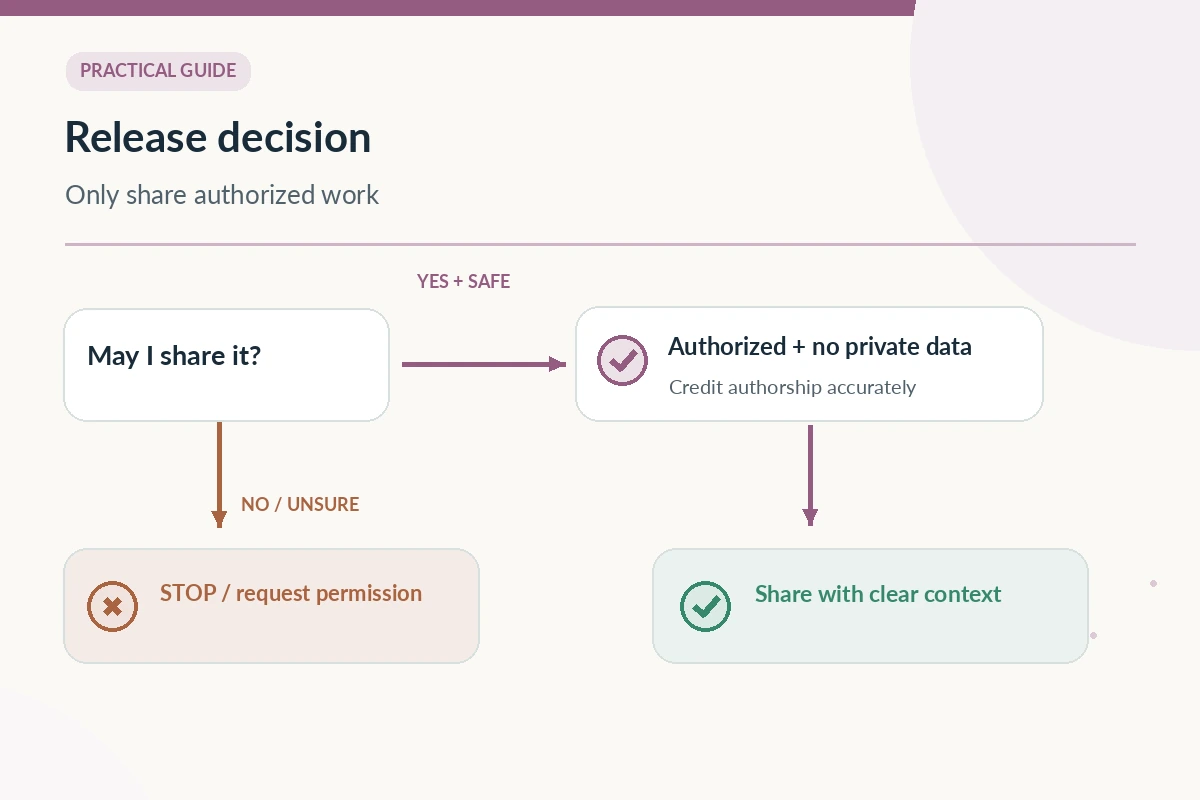
Ask three questions in order: Do I own or have permission to share the work? Does the file contain confidential or identifying information? Can I accurately describe my contribution? A document can be your own draft and still include nonpublic employee figures, participant notes, internal strategy, student information, or protected customer details. Merely deleting the cover page is not a complete privacy review.
UMBC’s career-center guidance specifically recommends protecting confidential material in samples. For co-authored work, credit collaborators and say which sections or revisions were yours; obtain permission when needed. Anonymization may require more than replacing names, because distinctive case details can identify people. If you cannot make a sample safe, create new original work on a public or clearly fictional topic where the posting allows it.
Choose between an attachment and a portfolio link
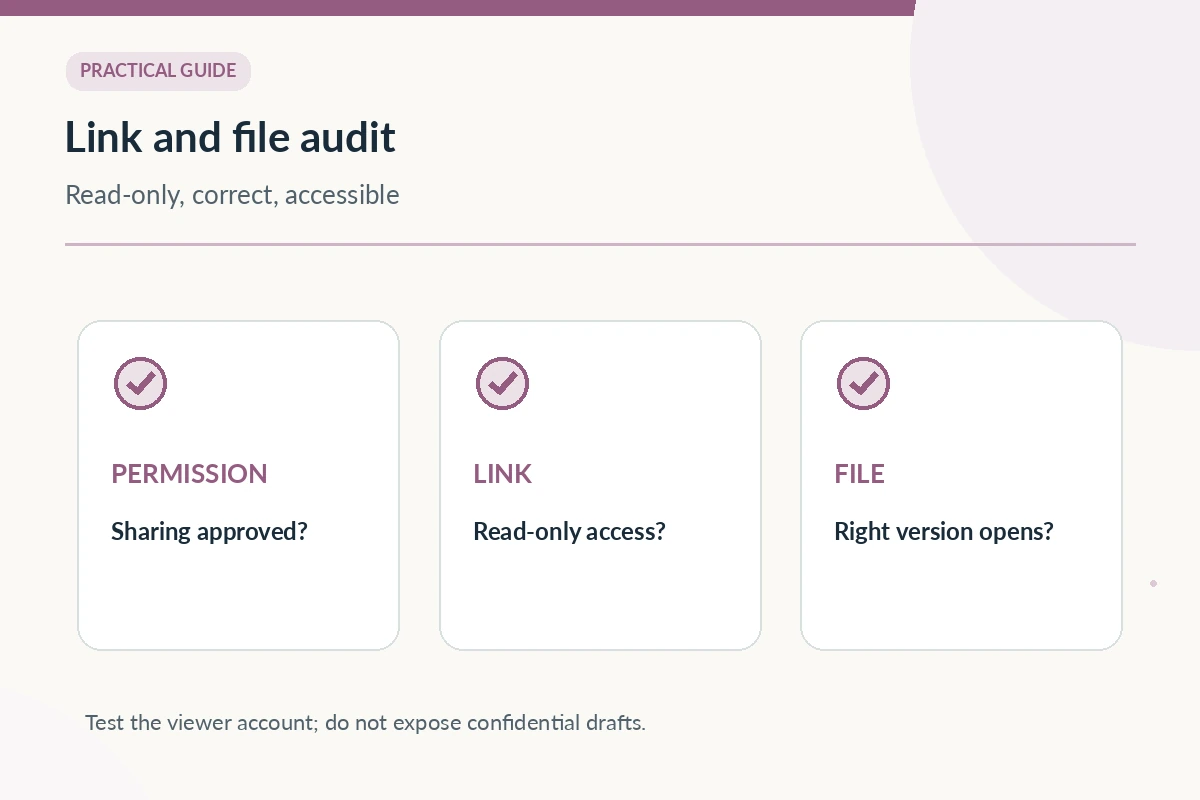
If the employer specifies a PDF attachment, use the requested format and file size. If a share link is accepted, open it in a private browser session to confirm that it does not require a personal login or grant edit access. Check the target document, not just the folder. A link with broad access also means people outside the hiring team may be able to view the material, so avoid using it for unpublished sensitive work.
A writing sample should have a readable title and context, such as ‘ApplicantName_ResearchMemo_Excerpt.pdf’ when an excerpt is permitted. If it is cut from a longer report, add a brief note explaining the excerpt and your contribution; UMBC mentions labeling excerpts. Remove tracked changes, comments, unrelated sheets, or hidden notes that the recipient should not receive. Do not send an editable document when a read-only final version is more appropriate and accepted.
Write an email that identifies the sample accurately
Fictional example: Subject: Communications Assistant Application — Applicant Name. Dear Hiring Team, I am applying for the advertised Communications Assistant opening. Attached are my resume and a short writing sample, as requested. The sample is an original, unpublished newsletter article I prepared for a university course; it was not distributed on behalf of a real client. It demonstrates how I organize an audience-focused update and revise for clarity. Thank you for reviewing my materials. Best, Applicant Name.
Do not write ‘my published campaign’ if the piece was never published or ‘my analysis’ without identifying co-authors where relevant. The email is a cover note, not the sample itself. If you attach a separate letter, keep the body concise. The reviewer should immediately know what was sent, why it matches the role, and what limitations apply to any example.

Audit access, attribution, and hidden content
Check every link, file name, and document’s first page against the application instructions. Open attachments outside the editor you used to create them. For a shared online document, remove write permission, test the view with another session, and confirm the correct version opens. If access is restricted by the employer’s system, ask what alternative they accept rather than bypassing it through a personal cloud folder.
Keep a private copy of the exact version sent and a note about what was approved for sharing. If you are asked later for editable source files or previously restricted material, do not assume your first email authorized additional disclosure. Confirm the scope of the request and verify the recipient independently when it arrives unexpectedly.
Handle a missing sample without misrepresenting authorship
A candidate with no sharable professional sample can often prepare a fresh illustrative document: for example, a one-page public-resource explainer or fictional product update. This is appropriate only when the application instructions permit an original unpublished sample. State clearly that it is independently created for demonstration, not a published client result. Do not copy confidential employer work or other authors’ articles and present them as yours.
If the posting requires published clips or samples meeting a particular format, do not imply that your personal draft meets those requirements. Ask the official hiring contact whether alternative evidence is accepted, or decide whether the role fits. Clear attribution and careful access control are professional signals, not distractions from good writing.
How We Research Job Application Emails
Our guidance prioritizes the advertised application channel, accurate claims about an applicant’s experience, and careful handling of documents. We reviewed primary university career-center resources and official technical or consumer-protection guidance relevant to this specific scenario. The email examples are fictional teaching illustrations, not actual employer requirements, employment offers, or claims of successful delivery.
Sources checked November 11, 2026: careers.umbc.edu — Career-center guidance explains sample choice, collaboration, excerpt labeling, and confidentiality.; careers.tufts.edu — Tufts advises choosing work in the genre relevant to the role and identifying hypothetical press samples.; careers.tufts.edu — Application cover-letter guidance explains email bodies and requested attachments.; myusf.usfca.edu — Official university guidance prioritizes the employer’s specific file and delivery instructions.. Before using any tools or offers mentioned on this website, read our affiliate disclosure.
Related Job Search Guides
Often yes if the employer accepts academic work, the piece fits the requested genre, and you label it accurately.
Name the collaborative context and specify which portions, research, or edits were yours; check whether permission is needed.
Not necessarily. Check link permissions, test viewer access, and avoid posting anything confidential or restricted.
Do not assume removing one name makes it safe. Consider agreements, contextual identifiers, sensitive data, and permission.
Follow the posting. Unrequested large files or restricted material can create problems; offer additional evidence only when appropriate.