
A lab technician resume summary should tell the reader what kind of lab you worked in, which sample or equipment tasks you performed, and how your work was checked. Avoid treating all ‘lab technician’ jobs as the same: biological research assistance, environmental sampling, quality-control support, and regulated clinical testing can involve very different training and responsibilities. BLS describes biological technicians as assisting scientists with laboratory setup, data collection, and observations. If your experience is in a different setting, name it accurately instead of importing a research-lab job description. Keep the top summary brief and anchor it to documented procedures.
Name the laboratory context before listing instruments
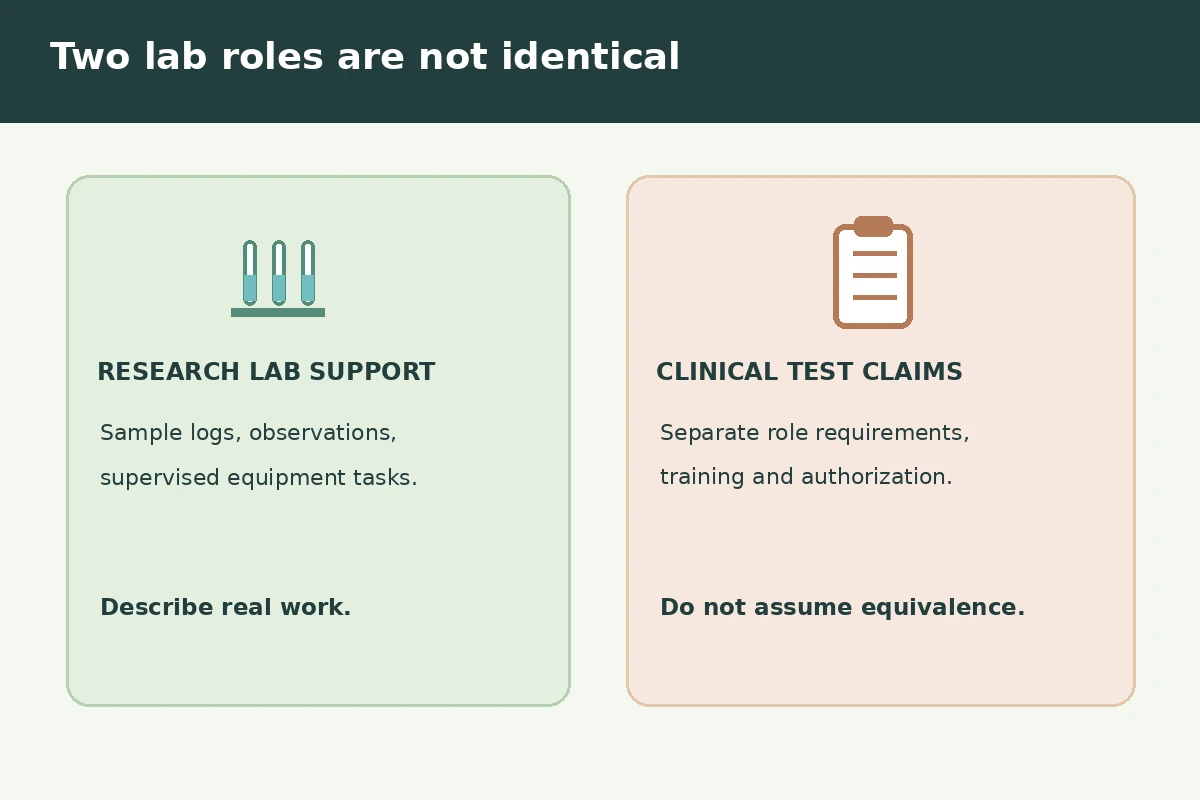
Start with the employer’s lab type and your actual position. A university biological research lab may involve preparing labeled samples, maintaining logs, setting up equipment, recording observations, and supporting researchers. An industrial testing lab may use a different review and quality process. A clinical diagnostic laboratory has separate professional, certification, and regulatory considerations. Do not write ‘medical laboratory technician’ merely because you worked with tubes in an academic biology course. The setting and the tasks are more important than a broad phrase such as ‘highly trained scientist.’
Make an evidence sheet with the source of your experience, your assigned procedure, your training, and the person who reviewed the results. If you operated an instrument under supervision, state that detail. If you observed a procedure but never ran it, say ‘observed’ or omit it. When you list sample types or tools, make sure you can discuss them without revealing confidential patient, study, or employer data. Instruments are valuable keywords only if you know what actions you actually performed with them.
Follow the sample record instead of claiming test ownership
O*NET describes biological technicians as supporting experiments, collecting samples, using instruments, and recording results. Your resume can show the path from labeled material to a complete work record: receipt or preparation, identification, authorized handling, observation, log entry, and review. This is not a laboratory technique tutorial; the safe procedure is controlled by each laboratory. A candidate whose duties were labeling and tracking specimens should not claim that they independently conducted or interpreted diagnostic tests.
A hypothetical bullet might read, ‘Prepared sample labels and maintained a traceable observation log for supervised university research experiments.’ That demonstrates a real administrative and laboratory function without inventing quality outcomes. If you performed approved quality-control checks, describe the recorded task and to whom you reported discrepancies. Do not turn one class experiment into daily production work, or state that a procedure met a standard when you never evaluated it. Keep dates and methods consistent with your experience section.
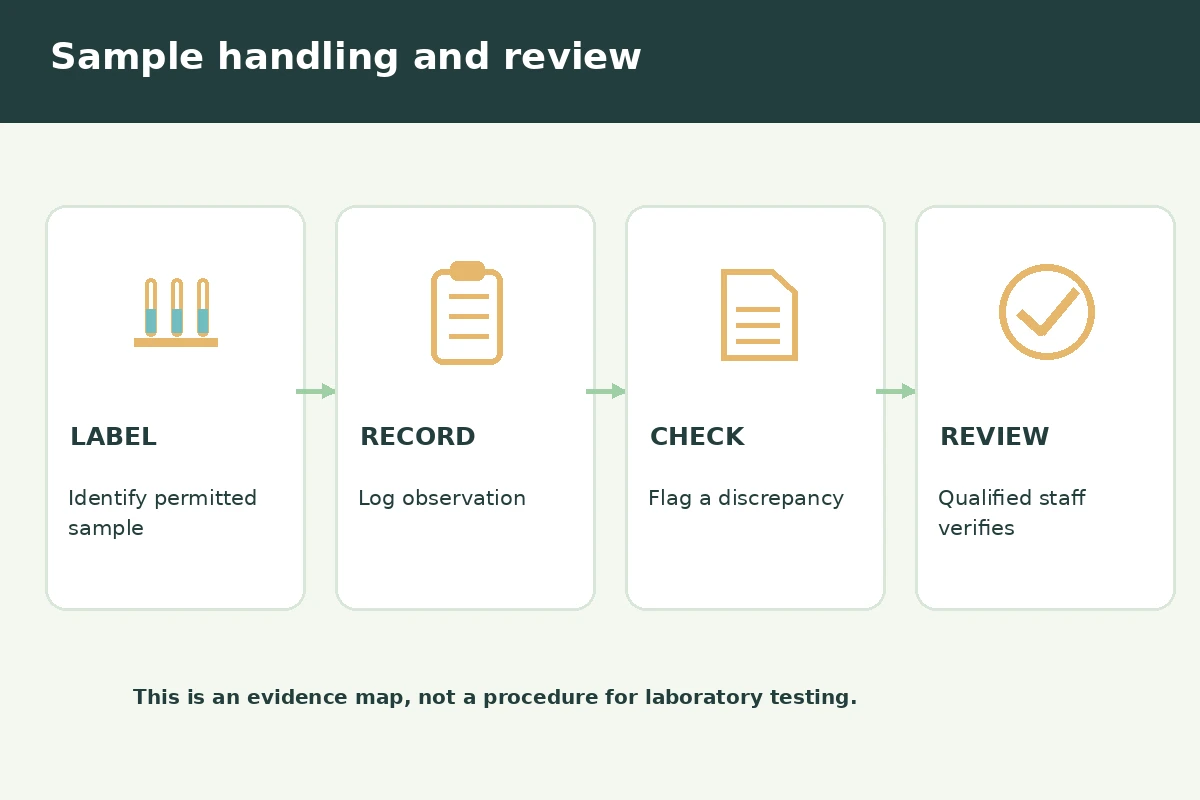
| Evidence area | What can be said | Boundary to verify |
|---|---|---|
| Sample preparation | Training and assigned methods | No independent clinical testing claim |
| Instrument checks | Actual setup or record tasks | Do not claim certification by observation |
| Recorded results | Correct log and escalation path | Do not invent accuracy rates |
Write a summary that identifies method and supervision
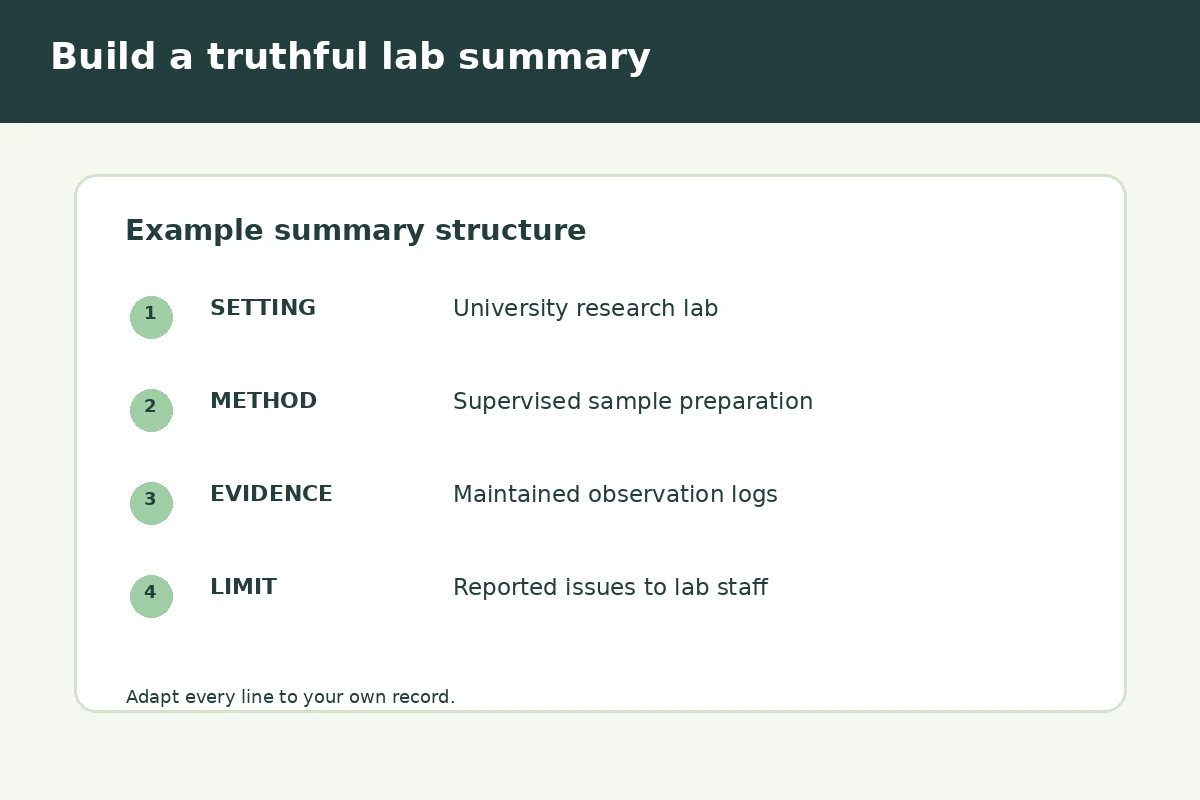
A hypothetical research-lab summary could read: ‘Laboratory assistant with supervised experience preparing biological research materials and maintaining sample records. Familiar with documentation checks, bench organization, and reporting irregularities to research staff. Seeking a lab technician role with defined methods and review procedures.’ This is deliberately narrower than a statement that the candidate independently runs a regulated clinical lab. Replace the lab and method details with what you can verify from training logs or legitimate work assignments.
Someone with actual paid laboratory work may use a stronger evidence-first opening: ‘Lab technician supporting [actual lab type] workflows, specimen logs, and documented equipment checks. Records observations and escalates discrepancies according to assigned procedures.’ Fill in bracketed details only after reviewing real records, and never leave placeholders in the final resume. A current license or certificate belongs by its exact title and status; do not imply that one research course confers authorization for patient testing.
Distinguish chemistry safety from vague claims of care
OSHA’s laboratory chemical exposure standard establishes a chemical hygiene plan framework for covered lab work. It does not mean that every lab, every material, or every worker has identical obligations; applicability depends on the workplace and hazard. Your resume should mention safety training only when completed. ‘Followed assigned chemical hygiene procedures’ can be defensible when true, while ‘certified laboratory safety officer’ is not acceptable without the genuine designation. Never describe hazardous procedures step by step in a public resume or use operational shortcuts as evidence of efficiency.
Describe how you handled uncertainties: checked documentation, asked a supervisor before unfamiliar work, reported a mismatch, or followed the assigned labeling process. These are useful professional signals. Do not claim clinical specimen access, hazardous chemical disposal authority, safety training completion, or emergency responsibilities you did not have. If a job posting lists a different laboratory discipline, confirm which skills genuinely transfer and what requires employer training or a specific credential.
Choose a measured result only when supported
Some resume examples manufacture a round sample count or a dramatic accuracy percentage. Instead, use a metric only if a legitimate record states what was measured, over which period, and what your individual contribution was. It may be enough to describe a consistent logging procedure, an instrument-check checklist you maintained, or a corrected discrepancy that a reviewer confirmed. A lab manager can assess your discipline from evidence without a made-up claim that you ‘eliminated all errors.’
An approved aggregate volume such as a documented weekly sample batch may support a bullet, but it does not automatically belong in the summary. Keep meaningful context: research sample preparation differs from final diagnostic result release. If you have a real quality-control or proficiency-testing credential, identify the issuer and exact purpose. If no authorized numbers are available, demonstrate your methods, records, and supervisory review rather than guessing.
Review the final line for role and credential mismatch
Place the draft beside the vacancy. Does the title say research, clinical, environmental, food testing, or quality control? Does it require specific procedures, protective training, education, or licensure? Match your wording only to capabilities you can substantiate. If the posting demands independent work that you have not been trained for, do not present coursework as equivalent job qualification. The BLS biological-technician profile is a source for typical research duties, not a promise that it applies to every medical laboratory opening.
Before export, check technical terms, date ranges, capitalization of credential names, and the consistency of the summary with your project bullets. Remove any hidden confidential data in screenshots or attachments. A useful summary communicates precise scope in ordinary language, even to a hiring manager who does not use the same instrument model. When something requires a trained reviewer or a laboratory director, respect that line. It is a strength, not a weakness, to make your responsibility visible.
How We Research This Resume Guide
For the occupational descriptions and the specific boundaries discussed here, we checked these official and occupation-based sources on November 16, 2026: BLS explains research lab assistance, experimental setup, observations and data recording.. O*NET identifies instrument setup, specimens, experiments and recorded results.. OSHA laboratory standard describes the chemical hygiene plan framework where applicable.. We compared candidate topics with the supplied WordPress list of drafts and published posts, and searched for overlapping public resume-summary intent. The examples are hypothetical writing models, not a claim that any person or employer achieved the stated results. Real credentials, license or training requirements, employer procedures and confidential information must be independently verified. We do not recommend paid products on this page; see the JobAsk affiliate disclosure.
More Resume and Cover Letter Guides
Name the lab type, evidence-backed procedures or equipment, traceable records, and your actual level of responsibility.
It can be valuable evidence if labeled as coursework or a supervised project rather than paid production or clinical employment.
No. List instruments you actually used, maintained, or worked with in a stated capacity. Observation is not independent operation.
Only with valid, permitted source records and a clear connection to your own duties; avoid invented percentages or perfect-performance claims.
No. Duties, professional credentials, lab policies and legal requirements differ; confirm the actual job posting and your qualifications.