
Online tutoring jobs differ in subject level, learner age, session format, employment arrangement and payment for work outside the call. Before applying, choose the exact subjects and levels you can teach, then compare how a platform handles scheduling, materials, feedback and cancellations. A role advertised as flexible is not necessarily available whenever you log in, and “teaching online” does not automatically mean a school teaching appointment.
The Bureau of Labor Statistics describes tutoring as goal setting, practice, explanation and feedback, with qualifications that vary by employer. A tutoring platform may add its own screening or subject assessments. Verify each opportunity on the organization’s official hiring page and avoid presenting access to real student information as a portfolio asset.
Start With Subjects You Can Actually Teach
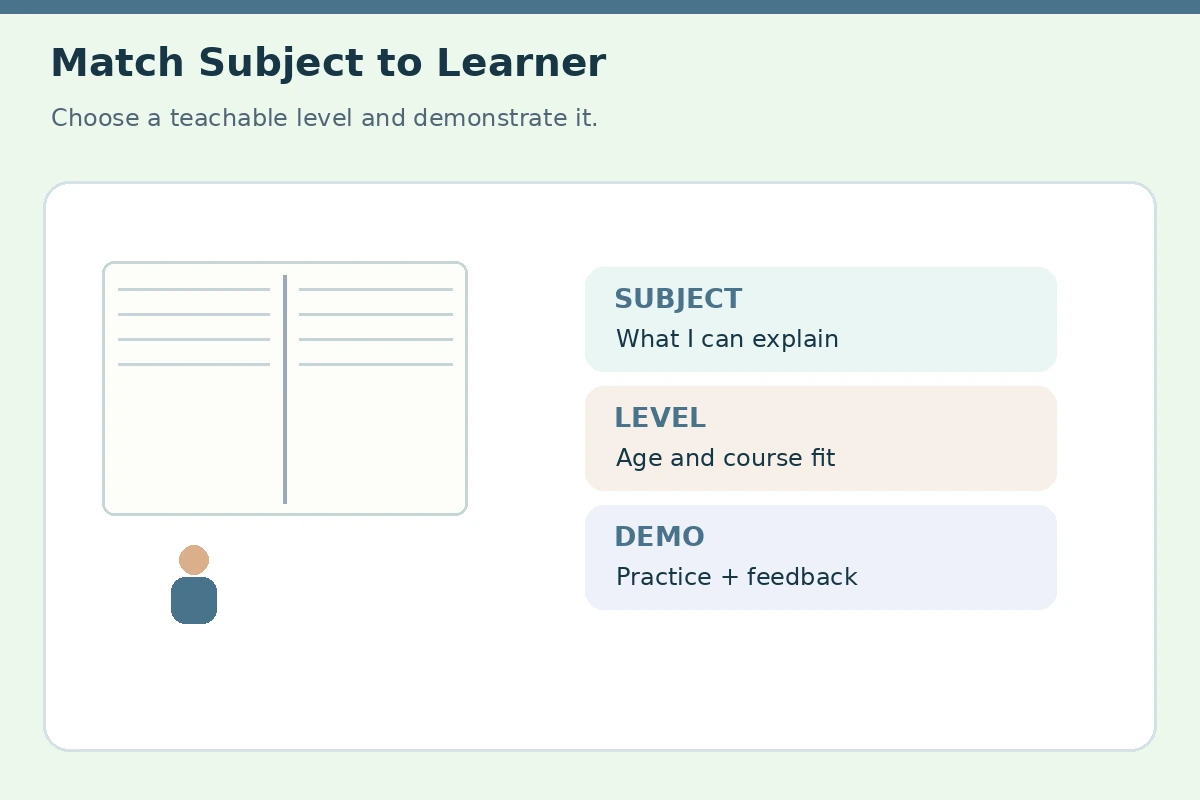
Write a short subject inventory with the grade or course level you can support confidently. Separate middle-school math from advanced calculus, conversational English from specialized test preparation, and school assignments from professional certification coaching. Platforms may screen subjects differently; a general college degree does not prove competence in every advertised topic. If you do not meet the posted requirements, choose a more suitable subject rather than fabricating a score or teaching license.
Prepare one example of how you explain a common concept, one practice activity and one way to check comprehension without simply giving the learner the answer. A short, self-created sample is more useful than a list of subjects you cannot demonstrate. If you completed informal peer tutoring, label it accurately and distinguish it from a paid classroom teaching appointment or an institutional tutoring contract.
Compare Live, Asynchronous, and Group Sessions
Live one-to-one tutoring often requires reliable audio, video or a digital whiteboard. Asynchronous question review involves different deadlines and written feedback; small-group tutoring requires facilitating several learners. The posting should state which formats are part of the role, whether work happens at scheduled times and how long each session lasts. Ask whether you will receive assigned students or must find your own clients.
Build a compatibility grid: learner age range, subjects, technology, hours of availability, time zone and expected preparation time. Test your equipment with personal material rather than uploading student files. A platform that handles scheduling may still expect you to complete session notes or parent communication, and this extra time may or may not be compensated. Confirm the agreement rather than assuming that all online instruction models are identical.
| Compare | Question for the platform | Your evidence |
|---|---|---|
| Subjects | Which ages and assessments? | Sample explanation |
| Sessions | Live, group, or written feedback? | Teaching demo |
| Paid time | Preparation and cancellation terms? | Real time budget |
| Student data | Approved tools and contact route? | Privacy-safe methods |
Inspect Payable Time and Contract Terms
Some platforms compensate only the minutes in a completed session, while others include preparation, cancellations, meetings or administrative tasks. Read the written agreement for when a session counts as completed, late-cancellation policies, payment schedule and deductions. Distinguish a payroll employee, independent contractor and private tutoring client relationship without making blanket claims about the legal classification of all platform tutors.
An example from one platform should not be treated as a guarantee for another. Calculate your own time budget based on scheduled lessons, expected preparation, travel-free setup, session documentation and gaps between appointments. Do not invent hourly earning projections from a promotional headline. If the service asks for money to unlock “guaranteed student leads,” verify the business carefully and compare it with FTC warnings about paying to obtain a job.
Protect Students and Follow School Rules
Tutoring can involve minors, learning difficulties, school assignments and family contact information. Ask who authorizes communication with a student, what platform is approved for meetings, how sessions are recorded and who can view progress notes. Do not use your private social accounts or publish identifiable student work to demonstrate success. A remote environment still requires professional boundaries and a clear channel for reporting safeguarding concerns.
In school-affiliated settings, the US Department of Education advises checking whether education technology is approved and how protected education information is handled. Not every independent tutoring relationship is subject to the same rules, but discretion and consent remain essential. Use anonymized, fictional examples in applications. If a family asks for a practice lesson, confirm whether it is a screening demonstration or a paid live session.

Prepare a Session Demonstration, Not a Score Promise
A practical demo can show a short learning goal, an explanation, a practice question, feedback and a next-step suggestion. Choose your own sample material or content the employer explicitly permits. A platform may evaluate communication, subject knowledge, patience and technology use. If asked to show past student scores, explain your method without disclosing private student details or manufacturing improvement percentages.
For example, you can demonstrate how you identify a misconception in fractions and adapt the next exercise. Avoid claiming that any tutor can guarantee a grade rise: learners have different histories and circumstances. If you use interactive tools, be ready to explain what happens when audio drops or the student cannot access the worksheet. Reliable session recovery can be just as important as a polished introductory video.
Find and Compare Authentic Online Openings
Search the subject plus “online tutor,” then the institution or tutoring organization’s own career page. Record the company identity, role status, student population, assessment process, schedule, payment terms and technology requirements. An official recruitment page should explain how to apply; a social-media contact promising instant work does not substitute for independent verification. Check whether the listed position is currently accepting applications.
When two platforms appear similar, compare who supplies students, how support requests are handled, whether materials are provided and how cancellations affect your time. Preserve a copy of your application details without storing student or client records. In interviews, ask what the tutor is expected to escalate to a teacher, coordinator or parent. Choose the role whose teaching scope and terms you can explain, not the one with the loudest earnings claim.

How We Research Remote Work Openings
We checked source guidance on 2026-11-14: BLS tutor occupations (BLS explains tutoring subject guidance, goal setting, practice, feedback, preparation, and variable qualifications.); Tutor.com apply page (Tutor.com lists online tutoring as a remote service and describes a platform application and availability model.); Education Department privacy guidance (US Education Department explains that schools should assess approval and security of educational apps and services handling protected education information.); FTC remote job scam guidance (FTC warns that remote-work scams can involve fake upfront charges and fake equipment checks; verify an employer independently.). This article offers an evergreen method for evaluating opportunities, not confirmation that any employer is hiring now. The original JobAsk production plan, supplied WordPress post-title exports, prior batch topics, and public search results were reviewed for overlap. Employer requirements can change: verify vacancies and employment location on the official career site. Any application examples are hypothetical and should be adapted only to real work. Please read the JobAsk affiliate disclosure; no partnership or affiliate approval is claimed.
Related Job Search Guides
Requirements vary by platform, subject and student population. Some positions require a license or degree; others focus on subject knowledge and screening.
No universal rule applies to every offer. Read the agreement and ask how session preparation, notes, cancellations and meetings are counted.
Only with appropriate permission and applicable institutional safeguards. Synthetic lessons and anonymized explanations are usually safer.
No. Employment structures vary. Confirm the proposed arrangement in the actual contract and seek appropriate advice if classification is uncertain.
Use the organization’s official domain, read current hiring and payment terms, and avoid any request to pay simply to secure a promised job.