
Part-time bookkeeping jobs can include invoice entry, account reconciliations, transaction coding and support for reports. The first question is not which software appears in the title; it is which financial records you would touch, what review or approval authority you would have, and whether closing deadlines fit your available hours. A short weekly schedule can still include concentrated month-end work. This guide helps separate honest clerical evidence from responsibility for books you have never maintained.
This guide is about evaluating real US job descriptions, not a list of currently available vacancies or a promise of hiring. Examples labeled hypothetical are illustrations, never reported candidate achievements or actual employer outcomes. Keep licenses, financial claims, experience and hours accurate. For more role comparisons see JobAsk job search resources.
Start With a Verified Role and Schedule
Before applying, record the employer name and official listing URL, stated weekly hours, days required, workplace or service territory, qualifications, training offered and your own nonnegotiable availability. The U.S. Department of Labor explains that the FLSA does not define part-time with a single hours number. If the schedule is not disclosed, ask; do not silently infer it.
Identify the Exact Records in the Job Description
Bookkeeping and accounting clerk job titles can overlap, but the assigned tasks vary widely. A posting may ask for accounts payable entry, customer invoices, receipts, expense categorization, reconciliations or reporting support. The BLS bookkeeping occupation guide describes transaction entry, checking figures and reporting discrepancies. It also distinguishes broader bookkeeper responsibility from more specialized accounting clerk assignments.
Translate the listing into a task ledger: source documents received, system used, person reviewing entries and deliverable produced. If the job says “manage the books” but advertises only a few hours each week, request clarification about transaction volume, approval rules and who handles corrections. Do not assume that entering invoices gives you authority to finalize financial statements or approve payments.
Use a Prepare, Check, Escalate, Approve Matrix
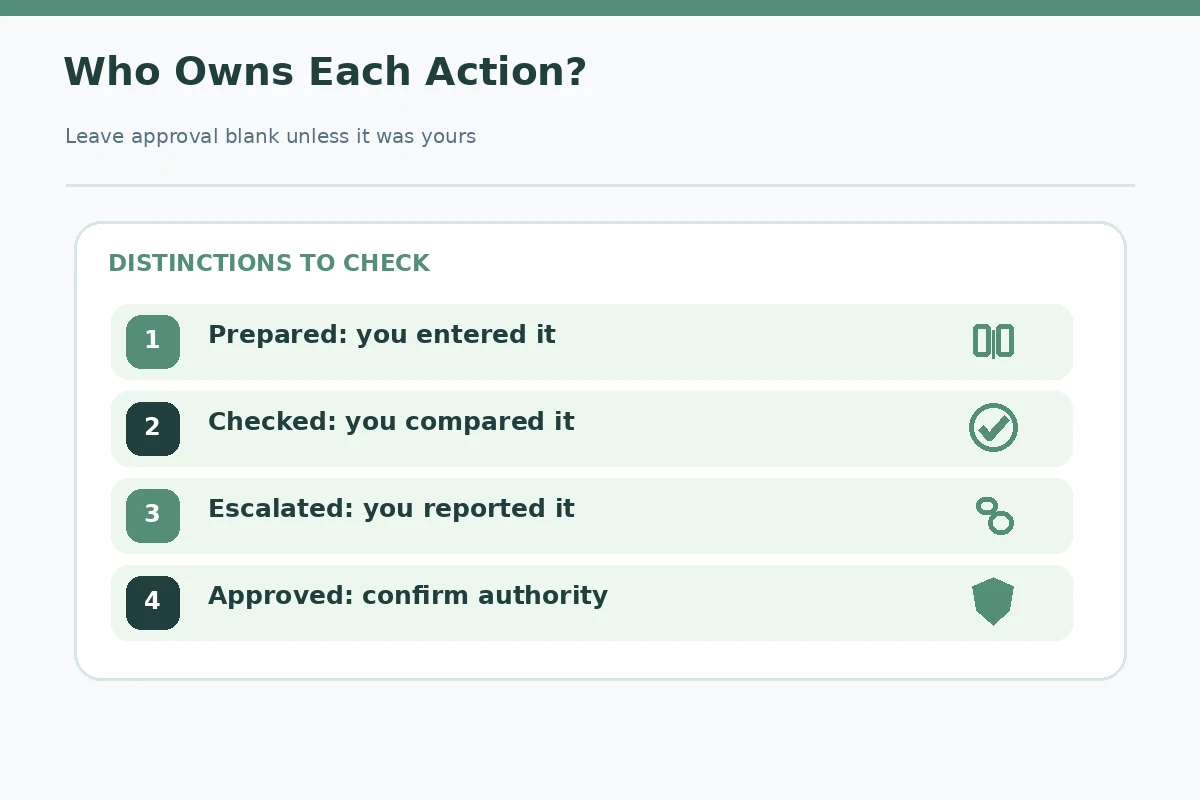
The most useful interview evidence identifies the exact step you controlled. “Prepared invoice records,” “checked entered totals against source documents” and “escalated unmatched entries” describe different actions. “Approved payment” is a more consequential claim and should appear only if the candidate actually had that authorization. Never inflate a supervised school bookkeeping exercise into independent responsibility for a company ledger.
Make four columns: prepared, verified, flagged and approved. Fill the first three from real work or coursework when appropriate, and leave an approval box blank if the authority belonged to a manager. This simple distinction is especially valuable in a part-time role where another person may own the full accounting process and review your work between shifts.

Find the Actual Month-End Commitment
A position advertising weekday flexibility may still require availability for account close, payroll preparation, tax-season support or invoice deadlines. Ask whether hours rise at month-end, who covers urgent discrepancies when you are off shift, and whether regular work can be queued between scheduled visits. BLS notes that accounting support workers may work extra hours near financial close and audits, even though many roles are full time.
Draw a calendar with scheduled workdays, invoice cutoffs, reconciliation checkpoints and supervisor review dates. Mark any unknown overtime or extra-shift expectations as questions. A hypothetical student available Mondays and Thursdays should not promise to complete Friday-close tasks without knowing whether those tasks can be completed asynchronously or handed to an authorized colleague.
Prove Software Ability Without Skill Inflation
Employers may use accounting platforms, spreadsheets or custom record systems. Name the specific functions you have actually used, such as entering transactions in a practice file, checking formulas, sorting records or producing an account summary. Software familiarity does not automatically imply you can administer payroll, resolve tax questions or make adjustments without review. If a listed product is unfamiliar, say what related process you understand and what training you would need.
Prepare a hypothetical demonstration using invented, clearly marked sample records—not any former employer’s private invoices. Include an invoice date, reference, amount and a deliberate mismatch you identify. Explain what you would verify and whom you would alert. Do not publish client information, financial account identifiers or payroll details as portfolio proof.
Check Security and Separation of Duties
Financial record work requires careful handling of access credentials and source documents. Ask what systems are provided, which permissions the part-time worker receives, whether remote access is approved and how errors are recorded. Do not transfer company financial records to a personal email account to “work after hours” without written authorization. Recognize that duties in a small organization may differ from those in a larger accounting team.
If you notice an unexplained difference, save the relevant reference, confirm the permitted checking steps and escalate through the designated channel. Avoid silently changing a transaction to force balances to match. The responsible supervisor determines correction and approval steps. This kind of careful boundary-setting can be more persuasive than a vague claim of perfect accuracy.
Distinguish Legitimate Remote Work From Payment Scams
Some bookkeeping support may be performed remotely, but an online advertisement should still name a verifiable employer, tasks and approved systems. Financial operations offer scammers opportunities to request banking details or recruit people to move money. The FTC guidance on fake jobs warns about bogus employment offers, equipment checks and advance fees. Never accept a job whose first assignment is to deposit or forward money from strangers.
Follow the actual company careers page and check email domains independently. A credible onboarding process may request sensitive employment data after hiring, but a random chat message before screening is not a secure payroll process. Keep a record of the legitimate vacancy URL and the contact who answers questions about your role and access.
Build a Reconciliation-Ready Application
Select two examples to demonstrate your strengths: one showing clean documentation, the other showing what you did when a record did not match. State whether the examples come from paid employment, volunteering or hypothetical coursework. A sample bullet might say, “In a supervised class exercise, identified a duplicated invoice number and documented the difference for review.” It should not claim the student recovered real employer funds.
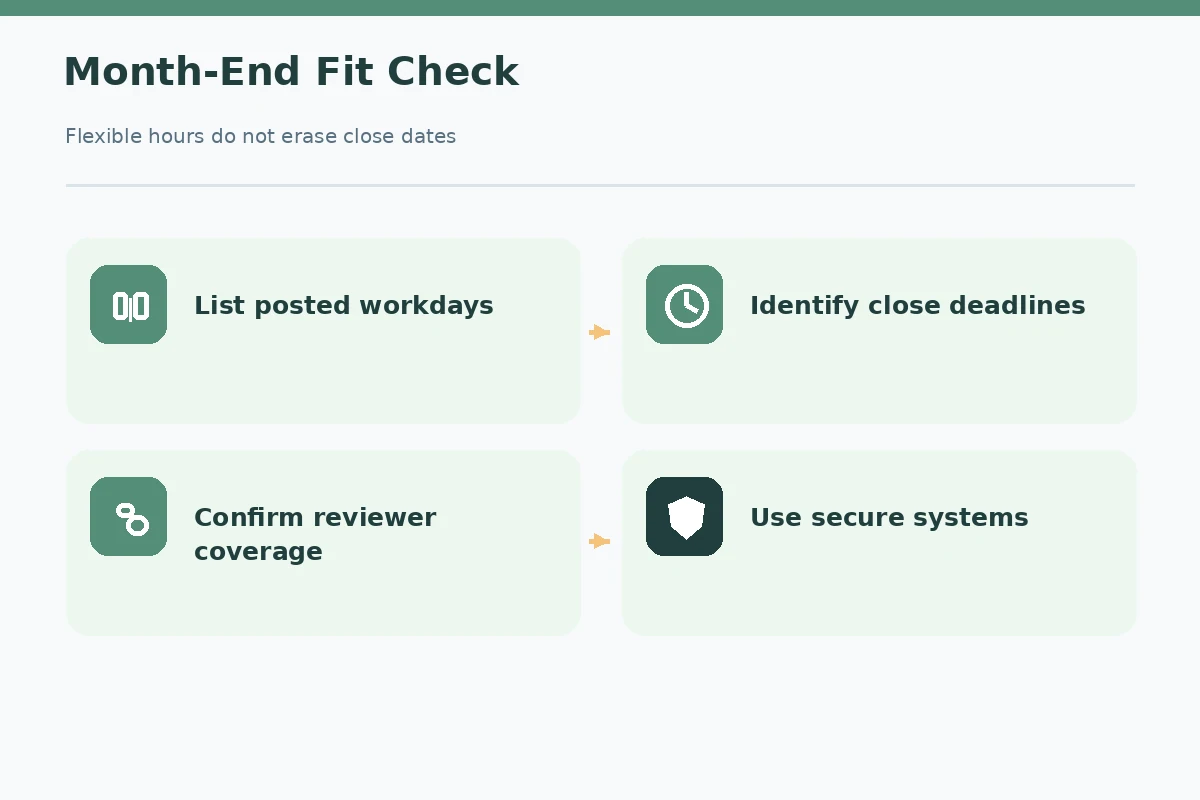
Finish with four fit checks: are the weekly hours stated; are close deadlines compatible; is the approval chain identified; and will the role supply authorized software access? If several answers are unknown, ask them before making a final commitment. Do not mistake a generic “flexible hours” label for written control over accounting deadlines.
How We Research Part-Time Job Options
On 2026-10-27, we reviewed the linked primary US federal agency and professional occupational resources for work duties, hours, qualifications and hiring safety. These descriptions cannot confirm any private employer’s actual opening, rate, benefits, policies or hiring results. We checked the topic against the available JobAsk index, including B076, B090, B112, B120, B128 and adjacent clusters, to focus this page on a distinct decision. Hypothetical examples are not sourced real job outcomes.
Source reference: BLS describes bookkeeping and accounting clerk tasks, training differences, transaction posting and reconciliation.
Source reference: DOL confirms that part-time hours are defined by arrangements rather than one federal FLSA threshold.
Source reference: FTC warns applicants to verify employers and reject upfront-payment job offers.
The cited agencies and organizations do not endorse this article, and no hiring or affiliate relationship is claimed. Read JobAsk’s affiliate disclosure. Always follow the verified employer’s instructions and local requirements.
Related Job Search Guides
- Remote Bookkeeping Jobs: Check Reconciliations, Software, and Client Controls
- Entry-Level Bookkeeping Jobs: Compare Clerk Duties and Skill Proof
- Entry-Level Bookkeeping Jobs: Choose Clerical Routes and Show Accuracy
- Part-Time Library Assistant Jobs: Check Circulation Tasks and Weekly Hours
- Seasonal Part-Time Jobs: Verify the Work Period and Weekly Hours
Some positions are offered part time, but the actual schedule and month-end demands depend on the employer.
Requirements vary; some employers accept relevant coursework and skills, while others prefer more formal education.
Only if the employer has actually authorized that responsibility. Preparing, checking and approving are distinct actions.
No. Verify the employer, duties, systems and secure onboarding, and reject requests to move money for strangers.
Label it as coursework or hypothetical practice and describe the specific steps you completed, not invented company results.