
Part-time delivery jobs using your own car can look flexible, but the advertised amount is not the same as the money left after fuel, maintenance, unpaid time, and other costs. Before applying, distinguish a scheduled employee driving route from contractor or app-based work. Then check permitted vehicle use, insurance, payment terms, and whether the job fits your actual availability.
The Bureau of Labor Statistics notes that some driver/sales workers use their own cars and that independent workers may find assignments through apps. The IRS explains that gig income can have different tax responsibilities depending on worker status. Neither source guarantees an income level for an individual route.
First Separate Employee Work From App Gigs
A store or courier may hire an employee for a defined shift and provide a wage or specified reimbursement. A platform may engage independent contractors who accept individual assignments. Do not assume that a flexible schedule proves contractor status, or that a job board’s “hourly” label describes actual paid hours.
Ask who sets the route, how earnings are calculated, which expenses are reimbursed, and whether any time between offers is compensated. The correct worker classification depends on actual facts and applicable rules, not simply the contract title. If in doubt, seek official tax or labor guidance rather than trusting a recruiter’s casual explanation.
Estimate True Vehicle Expenses
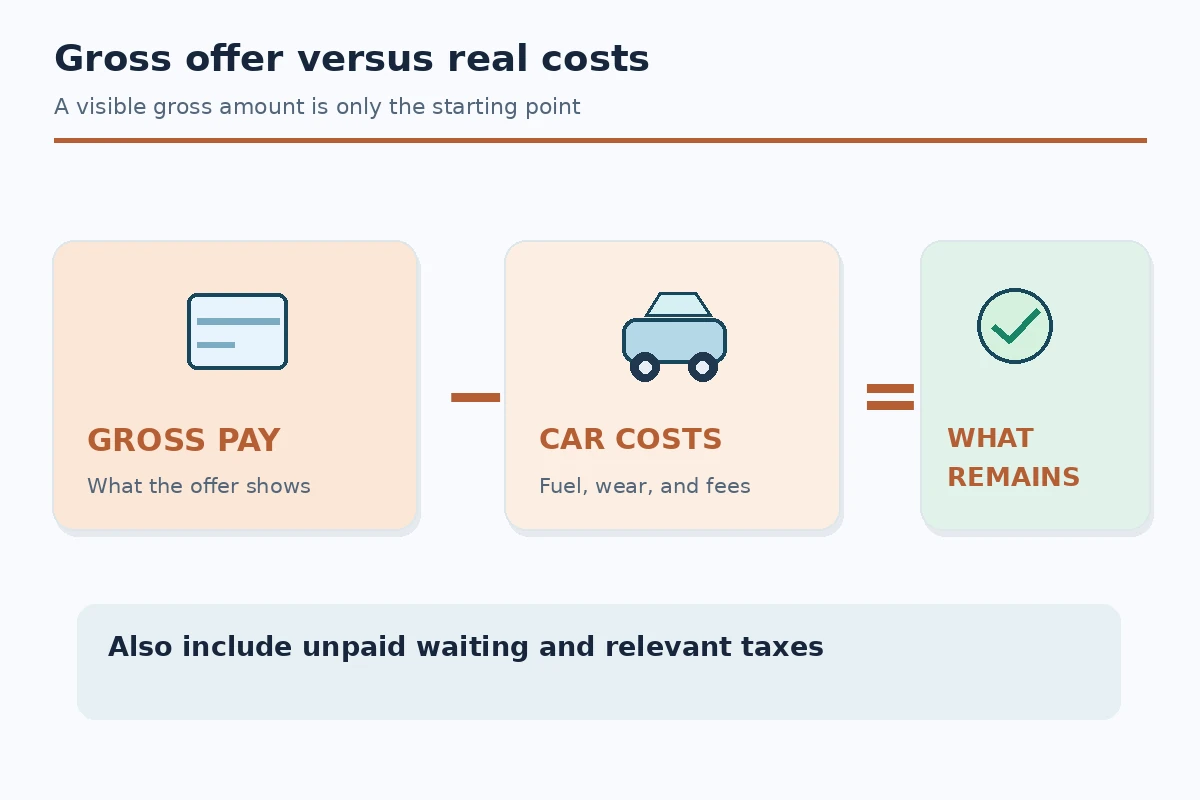
Fuel is visible, but tires, maintenance, depreciation, parking, tolls, and added wear also matter. Compare the offer using a worksheet: money received, total time committed, total work miles, vehicle costs, and any fees. A rate advertised per delivery should not be treated as an hourly guarantee.
Run a hypothetical comparison using your own assumptions rather than published “average earnings” screenshots. Record a conservative and an optimistic scenario and see what changes when travel back from a drop-off is unpaid. Keep tax calculations separate from your immediate cash-flow estimate; a tax deduction is not a reimbursement from the employer.
Check Vehicle Use and Insurance Coverage
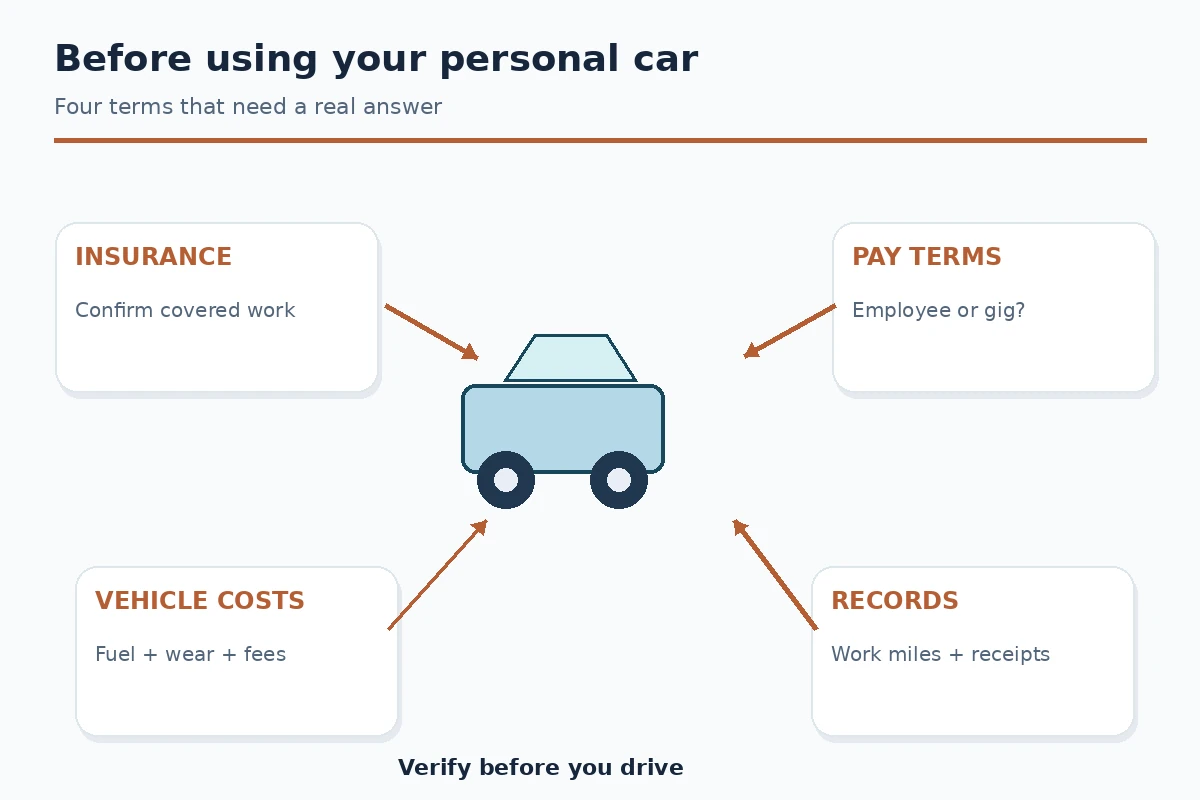
Before using a personal vehicle commercially, tell your insurer exactly what work is proposed and ask what coverage applies, including any time between assignments. Do not assume personal auto insurance automatically covers every type of paid delivery or that a platform’s limited coverage replaces your own policy.
Also review vehicle eligibility, license requirements, registration, local parking and delivery access rules, and whether the employer supplies equipment. Obtain an accurate written answer where possible. The details differ by insurer, platform, location, and contract; this article cannot determine coverage for a particular policy.
Track Miles and Business Records
The IRS advises keeping records that support business income and expenses, with vehicle records where applicable. Keep dates, work purpose, work miles, payment records, toll receipts, and other relevant documents in a secure method suited to your circumstances.
Do not copy a sample deduction amount or vehicle rate into your expected take-home pay. Tax treatment changes with the year, classification, and eligibility. An employee and an independent contractor may face different reporting or reimbursement rules, so verify which rules actually apply to you before relying on any calculation.
Understand Pickup and Drop-Off Work
Food delivery, local parcels, retail orders, and business courier work can have distinct workflows. One job may involve short trips and frequent app notifications; another may have a dispatch route with scheduled stops. Ask whether loading, navigating stairs, contacting customers, waiting at pickups, and returning undelivered items are part of your work.
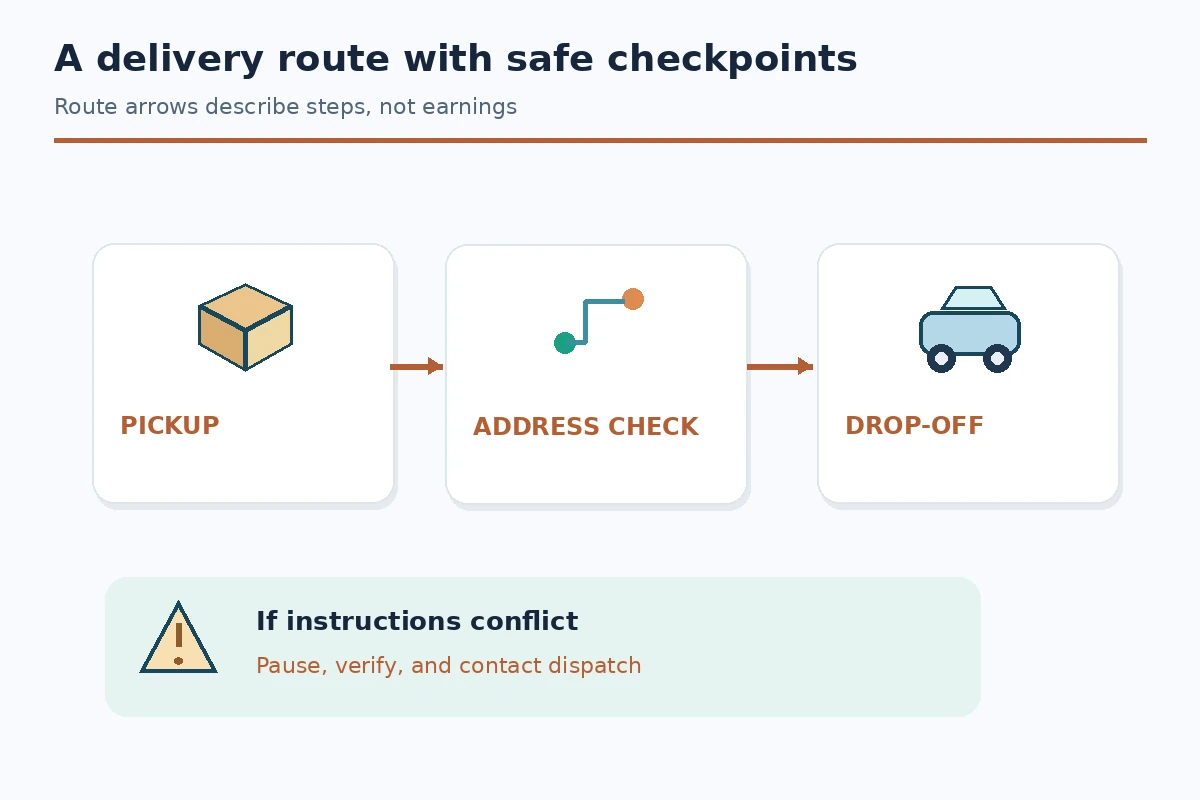
A safe handoff checks the address and authorized drop-off method, protects private customer information, and follows the dispatcher’s or platform’s directions. Avoid marking an order delivered before the approved completion step. When the location is unsafe or directions conflict, use the proper escalation channel rather than improvising a risky stop.
Compare Pay Language Carefully
Look for base pay, incentives, tips, reimbursed mileage, fee deductions, minimum assignments, and rules about cancellations. If a posting gives an attractive number without explaining the basis, ask whether it is a guarantee, estimate, or illustrative example. Never present a platform’s promotional screenshot as a typical result.
Make a personal comparison table with best-known terms and mark missing fields. Include unpaid waiting, return travel, and work interruptions in your planning. Two offers with similar gross figures may feel very different once scheduled hours, driving distance, and car expenses are considered.
Screen Fraud and Unsafe Recruiting
The FTC warns about side gig pitches promising large income for little effort, pressuring quick acceptance, and demanding payment upfront. Verify the company through an official website; do not pay a stranger to unlock deliveries, receive an offer, or collect supposed earnings.
Treat requests to reship unknown packages or transfer money for a purported employer as serious warnings. Never send driver’s license scans or banking credentials until you have independently verified the organization and a legitimate onboarding process. The existence of an app logo does not establish authenticity.
Match the Work to Your Availability
A flexible platform may offer no guaranteed volume when you are free, while a store route may require a fixed evening or weekend shift. Decide whether consistency, control over hours, or predictable driving distance matters most. If you need income by a certain date, calculate the risk of uncertain demand instead of assuming busy periods.
Build an availability grid that includes the commute to the pickup area, breaks, daylight or night conditions, and maintenance appointments. Avoid scheduling so tightly that traffic or a delayed customer would force rushed driving. Safe and sustainable work is a better filter than an optimistic earnings estimate.
Run a Final Offer Verification
Before accepting, capture the exact role, employer, status, pay calculation, coverage questions, miles or vehicle requirements, and dispute or support contact. Check the provider’s original hiring page and read the contract you would actually sign. Save written answers about who handles damaged goods and which expenses the organization covers.
If the role is contractor-based, review the IRS gig-work guidance and keep records from the start. If the offer is employment, review the employer’s actual wage, reimbursement, and schedule terms. Do not begin an assignment you cannot drive legally or insure appropriately.
How We Research Part-Time Role Requirements
This guide cross-checks occupational guidance, industry or employer guidance, official requirements, job-posting verification. Each resource supports only the relevant occupational duties, example schedules, credential rules, costs, or job-verification advice; none proves a specific vacancy is active or that every employer follows one policy. Where sample applications, calculations, or interview situations appear, they are hypothetical and must be replaced with your true details. Confirm requirements on an employer’s official posting and, when applicable, with a regulator or insurer. Read the affiliate disclosure for information about site relationships. No affiliate payment or partnership is assumed.
Related Job Search Guides
- Part-Time Delivery Driver Jobs: Compare Routes, Vehicles, and Real Costs
- Part-Time Delivery Jobs: Routes, Vehicle Costs, and Work Arrangements
- Part-Time Bookkeeping Jobs: Check Skills, Scope, and Hours
- Part-Time Library Assistant Jobs: Check Circulation Tasks and Weekly Hours
- Part-Time Pharmacy Technician Jobs: Verify Credentials and Weekend Hours
No. Gross payments must be considered against vehicle expenses, taxes where applicable, fees, and unpaid work time.
Coverage depends on the policy and the kind of work. Confirm terms directly with your insurer before taking assignments.
No single label decides legal classification. Review the real work relationship and applicable state and federal rules.
Track work-related miles, dates, receipts, payment records, and business purposes as relevant to your tax situation.
Treat unexpected upfront job or earnings-unlock fees as a strong warning. Verify the organization independently and do not pay.