
Part-time nonprofit jobs can be paid work in program support, fundraising operations, administration, event coordination, or community services. The useful question is not only whether a cause matters to you, but whether the posting defines a paid position, the hours you can actually cover, and the authority you would have when handling clients, donors, or confidential records. Start with a verified employer posting, identify who supervises the role, and ask which tasks require training or approval.
A nonprofit title alone does not tell you whether an opportunity is employment, a volunteer role, a stipend arrangement, or short-term contract work. Idealist maintains separate discovery paths for nonprofit jobs and volunteer opportunities. BLS descriptions of social and human service assistants also show that practical service tasks often depend on coordination with supervisors or other qualified staff. This guide provides a screening process rather than a list of supposedly open positions.
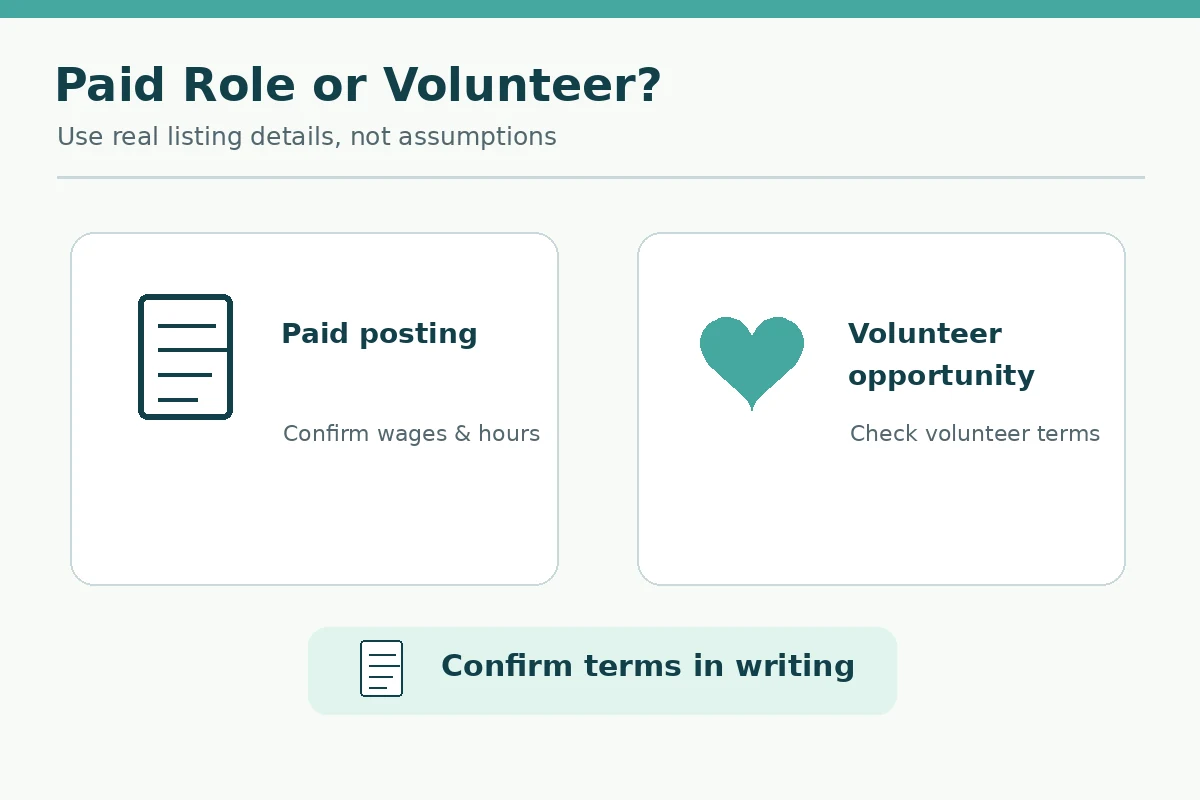
Separate Paid Employment From Volunteer Opportunities
Open the actual listing and look for the organization name, pay or compensation basis, employment classification, reporting manager, and expected weekly coverage. A mission statement and a list of good deeds are not job terms. If an advertisement says “part-time volunteer coordinator,” determine whether the coordinator is being hired and paid to manage volunteers or whether the opportunity itself is unpaid. Do not infer an employee relationship from the word coordinator alone.
Ask whether payroll, scheduled wages, a fixed-term contract, a project fee, a stipend, or volunteer service is intended. These arrangements are not interchangeable; ask for the exact terms in writing instead of assuming a stipend offers ordinary employment benefits. For a campus or neighborhood nonprofit, a role may combine events with office tasks. Record which duties are mandatory, which are occasional, and whether weekend coverage is expected.
Match Nonprofit Duties to Your Real Skills
Program assistants may schedule activities, prepare participant materials, monitor an inbox, or track supply requests. Development or donor-services support may update records, assemble approved acknowledgments, or help with event registration. Operations assistants may maintain calendars and coordinate vendors. Compare these assignments with your actual experience: a school fundraiser may support event check-in, but it does not establish responsibility for an entire donor database or the authorization to approve expenses.
Use task-based search terms such as “program assistant part-time,” “development operations assistant,” or “community event coordinator,” combined with the organization’s service area. Search the official careers page and relevant nonprofit job boards, then verify the original employer posting. For any direct service position, identify whether training, screening, travel, evening appointments, or supervised client contact is required. Different nonprofit programs have very different boundaries.
Check Service, Data, and Approval Boundaries
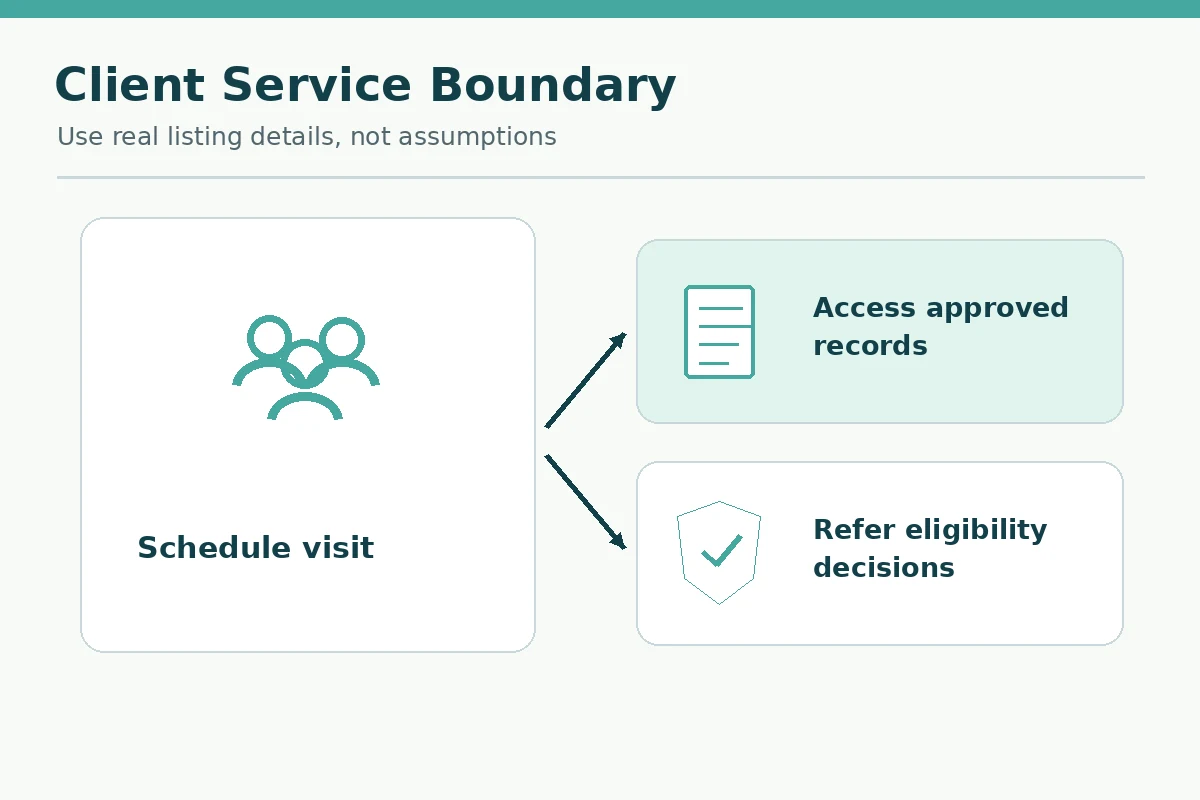
Roles involving beneficiaries, families, volunteers, or donors require clearer questions than a generic office position. Ask who can access contact details, where notes are stored, who approves outreach, and what to do if a participant reports a safety concern. A part-time assistant may help schedule a service without independently evaluating eligibility, promising aid, discussing private cases with outsiders, or giving clinical or legal guidance.
In an interview, try: “Which tasks may a new assistant handle independently, and which require supervisor review?” If the answer is vague, request a concrete example of a routine handoff. Never use a portfolio sample containing identifiable client or donor information without authorization. A redacted, invented workflow demonstration can show organization without revealing personal data or misrepresenting services delivered.
| Path or task | What to confirm | Important boundary |
|---|---|---|
| Program support | Participant scheduling and records | Supervision and privacy rules |
| Development operations | Donor acknowledgments and event tasks | Approval of messaging and access |
| Event assistant | Check-in and setup duties | Peak shifts and physical work |
Compare Coverage and Travel Costs Honestly
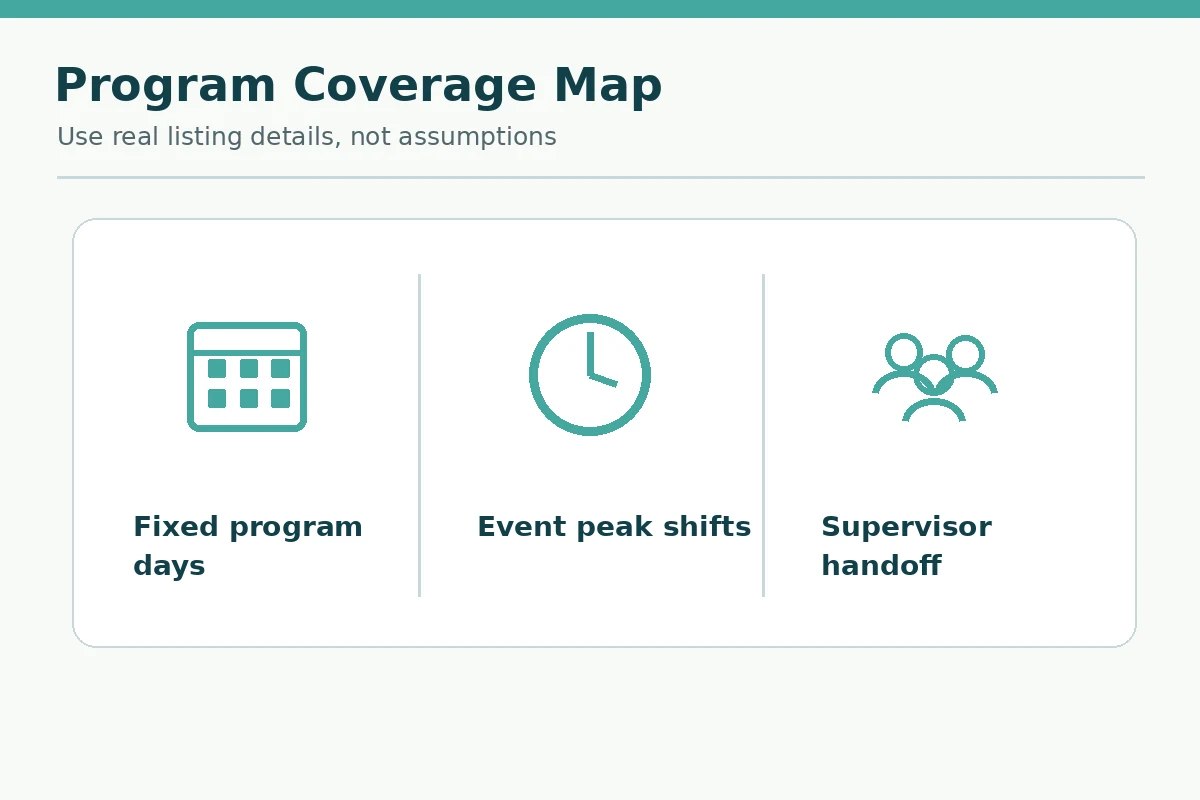
Part-time schedules can include an annual event season, afternoon programs, evenings for community meetings, or a few regularly assigned office days. A posting with fifteen scheduled hours may still require travel between service sites or unpaid availability around events; clarify paid time, reimbursement policies, and whether you can reject additional shifts. Distinguish recurring hours from occasional peak weeks in your own availability chart.
For example, a candidate who can work two weekday afternoons should not describe themselves as “fully flexible” just because they support the mission. Tell the employer the hours you can sustain and ask which days are fixed. If a role requires visits to clients or work in unfamiliar spaces, verify transportation expectations, training, and safety procedures before accepting assignments. A flexible title does not remove scheduling responsibilities.
Send a Focused Inquiry and Track the Real Posting
Your application can mention one verified project or service value and one relevant work habit. A brief hypothetical inquiry is: “I am interested in the part-time program support position listed on your organization’s careers page. I have experience maintaining event registration records and can work Tuesdays and Thursdays after noon. Could you confirm the scheduled hours and whether participant records are updated under supervisor review?”
Keep the job link, employer domain, worksite, application date, classification, and next action in a tracker. If an unexpected recruiter asks for money, banking information, or a check deposit to secure the position, stop and verify the employer through known official contacts. The FTC warns that job impersonation scams can look convincing. The best next step is a verified application, not a promise of immediate placement.
Two Illustrative Cases and Their Different Lessons
Hypothetical comparison: One posting describes a paid eight-hour-per-week program assistant with fixed Tuesday and Thursday shifts. Another says “help our community whenever needed” but specifies no employer, hours, or pay. The first provides a basis for discussing job fit; the second requires clarification before a candidate treats it as a paid job. Neither listing should be assumed to be current without checking the organization directly.
A candidate previously organized a volunteer food drive. The truthful application says they created a sign-in sheet, followed the coordinator’s distribution plan, and reported missing supplies. It does not claim they managed client eligibility or independently allocated assistance. During the interview they ask who approves program changes and where participant information can be stored.
How We Research and Verify Job Information
We reviewed public primary occupational, institution, and consumer-protection sources on 2026-11-14. The www.idealist.org reference supports idealist separates nonprofit job opportunities and lets job seekers inspect actual employer listings. The www.bls.gov reference supports bLS describes supervised service coordination and recordkeeping in human service assistant work. The consumer.ftc.gov reference supports fTC recommends verifying the hiring organization independently and avoiding upfront payment scams. All positions and candidate examples in this article are hypothetical. A posting can change or disappear; verify the actual employer, duties, schedule, credentials, and permissions before acting. See the affiliate disclosure for information about editorial transparency and potential commercial relationships.
Related Job Search Guides
No. Nonprofits can employ paid staff, engage contractors, and offer volunteer opportunities. Read the particular posting and confirm its classification.
Use a nonprofit job board and the organization’s official careers page; verify each posting and its actual schedule before applying.
Yes. State reliable availability and ask whether program coverage or special events require other time blocks.
Do not share restricted donor or participant data. Use approved, redacted, or fictional examples instead.
Ask which tasks you can complete independently, which need approval, and who handles confidential or sensitive client issues.