
The best part-time jobs for student-athletes are not necessarily the jobs with the lowest advertised hours. They are jobs whose actual shifts fit classes, training, competitions, travel, recovery, and any institutional employment guidance. Before choosing a role, build an honest weekly availability plan for the current season and for a quieter period. Then verify employer expectations for schedule changes and check any relevant questions with your athletics compliance office.
Whether you play at a NCAA member school or another college, school rules and program obligations may differ. The NCAA has published guidance about compensation for actual work in certain recruiting and booster contexts, but that does not authorize every arrangement for every student. Avoid blanket claims about eligibility, sponsorship, outside income, or school approval. This article focuses on practical scheduling and when to ask the people who administer your specific campus policies.
Start With a Real In-Season Time Map
Open a calendar showing class attendance, scheduled practice, required team meetings, competition days, and likely travel. Mark fixed commitments separately from optional or movable study sessions. Include transit, meals, and recovery as real time demands rather than treating every empty hour as available for work. If your schedule varies weekly, show the range and identify weeks when work shifts may be impossible.
An employer deserves reliable availability, not a guess based on a convenient week in the off-season. If you normally have training on weekday afternoons, do not promise those hours because a job ad says flexible. Instead identify the blocks you can consistently offer—for example a specific weekday morning or selected non-travel weekends. Discuss any school or team procedures for changing outside employment before accepting a role.

Compare Jobs by Shift Control, Not Job Title
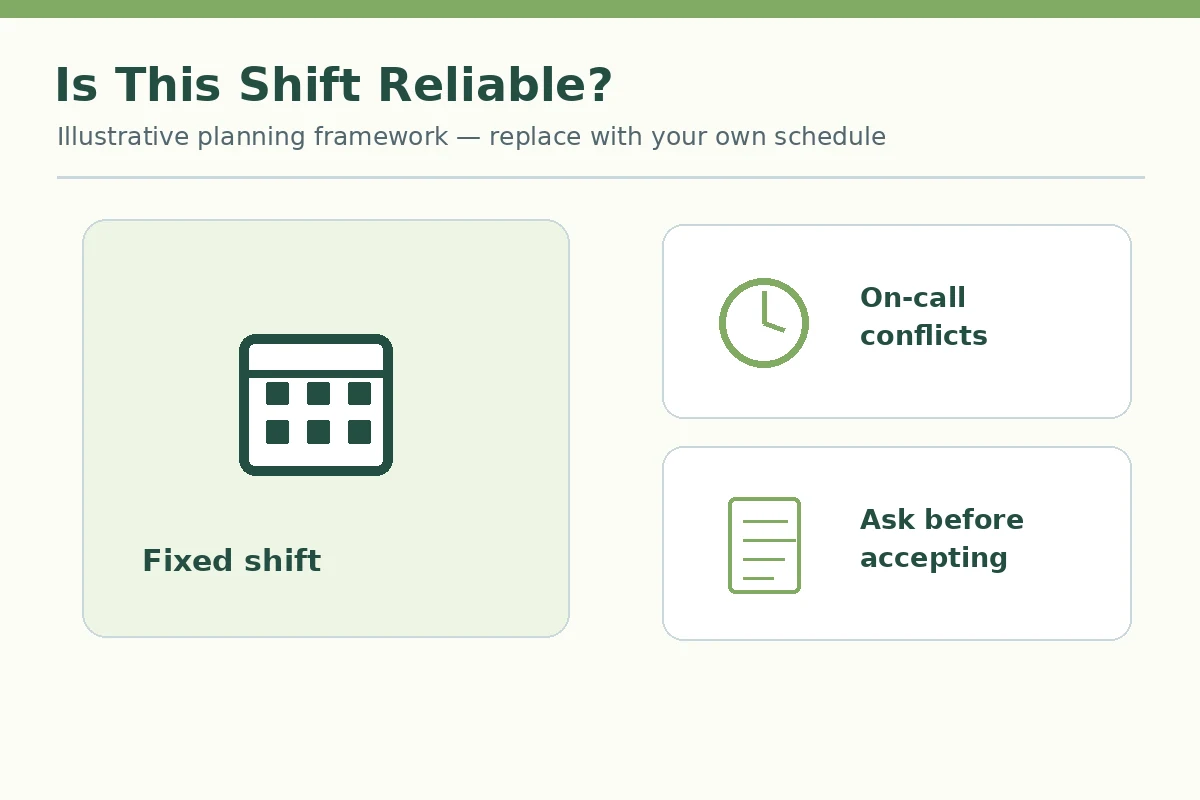
Campus office support, event check-in, tutoring in a subject you know, supervised recreation work, and occasional administrative assistance may offer different hours. These are categories to investigate, not promises that openings exist. A role with one predictable four-hour shift may be easier to manage than an “on-call” position that expects immediate responses during practice or away games.
Ask who posts the schedule, how far ahead it is shared, whether shifts can be swapped with approval, and what happens during competition travel. Be precise about physical demands too. A job involving lifting, late closing shifts, or long periods on your feet could conflict with other commitments; discuss practical fit with the appropriate campus staff. Do not accept unsafe or unauthorized work simply to fill a short gap in the calendar.
Check Institution and Athletics Compliance Questions
If a proposed job is connected to a donor, booster, sponsor, athletics-affiliated business, or your public athletic profile, refer it to the school’s compliance staff before assuming it is routine. NCAA guidance about certain employment situations stresses compensation for work actually performed and separation from athletic status. The details can depend on the school, division, and arrangement; seek a decision from your own compliance contact rather than interpreting a short web summary as individualized permission.
Keep accurate documentation of hours worked, duties performed, and employer communications in the systems your school and workplace require. Do not invent job duties or accept compensation for work you did not do. For independent gigs or promotional opportunities, ask the institution what processes apply. A coach’s casual comment is not a replacement for the designated compliance channel when a formal review is needed.
| Path or task | What to confirm | Important boundary |
|---|---|---|
| Campus desk role | Fixed covered hours | Classes and approved shift swaps |
| Event support | Event-by-event assignment | Team travel and late finishes |
| Remote task work | Response deadline and client | Scam checks and genuine workload |
Present Athletic Experience as Transferable Skills
A team role may provide evidence of preparation, time management, collaboration, or clear handoffs. State a concrete example without assuming sport participation proves all workplace competencies. A student who organized approved travel checklists for teammates can describe maintaining a schedule and flagging missing information. They should not claim to have administered a team budget or supervised staff if they did not.
In an application, provide actual job-relevant evidence alongside your availability. For a campus reception desk, you might mention greeting visitors during an authorized event, following sign-in procedures, or using a shared schedule. If the employer needs evening closing coverage you cannot reliably provide, a strong skill match will not resolve the scheduling conflict. Looking for another assignment is often more sustainable than promising a shift you cannot keep.

Create Two Availability Profiles and Confirm Changes
Prepare a short in-season schedule and a separate off-season schedule. Include fixed days, exceptions for travel, the notice you expect to give, and the maximum recurring shifts you can responsibly accept. Then ask the manager what happens if a competition time changes. Some workplaces can approve a swap; others cannot. Do not assume either answer until the employer confirms its scheduling process.
Hypothetical inquiry: “I can reliably work Friday mornings during the season, with additional hours possible during the academic break. I may have travel commitments on some weekends. How far ahead are shifts posted, and is there a process for submitting schedule exceptions?” For any unexpected remote side gig that promises large income for effortless tasks or asks you to prepay, heed FTC scam guidance. Sustainable work should fit your actual calendar and be verifiable.
Two Illustrative Cases and Their Different Lessons
Hypothetical player A accepts a weekly morning campus shift after confirming it does not overlap classes or scheduled team commitments. Player B accepts a late-night on-call gig that requires immediate weekend responses despite away games. Both roles are described as part-time, but only the first has a predictable fit in this example. Neither conclusion establishes eligibility or school approval; that requires the appropriate campus review.
A student-athlete gets an offer from someone associated with a sports booster to “represent” a local business without defined work. Instead of assuming the money is ordinary pay, the student contacts the campus compliance office, asks for a written description, and does not start until relevant questions are addressed. The example illustrates a verification step, not a universal NCAA ruling.
How We Research and Verify Job Information
We reviewed public primary occupational, institution, and consumer-protection sources on 2026-11-14. The www.ncaa.org reference supports nCAA addresses student-athlete employment by boosters and compensation tied to actual work in its recruiting guidance. The www.ncaa.org reference supports nCAA identifies institutional compliance and eligibility administration responsibilities for Division I. The consumer.ftc.gov reference supports fTC warns that flexible gig promises and upfront payments can signal side-hustle scams. All positions and candidate examples in this article are hypothetical. A posting can change or disappear; verify the actual employer, duties, schedule, credentials, and permissions before acting. See the affiliate disclosure for information about editorial transparency and potential commercial relationships.
Related Job Search Guides
Work arrangements depend on applicable school and athletics rules. Discuss relevant eligibility or employer questions with your institution’s compliance office.
Look for verified shifts that avoid fixed classes, training, competitions, and travel, with a clear process for schedule changes.
Only if that is true for the entire relevant period, including away events and team obligations.
Do not assume so. Refer the specific arrangement and compensation questions to campus compliance staff.
Name observable contributions and role-relevant habits without inventing leadership authority, records, or results.