
Part-time test proctor jobs may be offered by university testing centers, accessibility offices, certification providers, or temporary exam programs. The work typically centers on controlled check-in, following approved exam conditions, observing the room, and reporting problems—not grading answers or deciding accommodations. Before applying, ask which tests the site administers, what training or certification is required, how confidentiality is protected, and whether shifts cluster around finals or examination dates.
Understand the test center’s actual assignment
University and professional exam centers have different policies and vendors. A university testing-center assistant may help schedule examinees, verify identity, collect materials, and maintain a quiet room. A vendor-run site may require prescribed scripts, certification for a specific exam, or additional security procedures. Read the posting’s required qualifications rather than assuming all proctors follow the same rules.
The University of Tennessee describes proctors administering instructor-approved testing conditions and keeping accurate records. Binghamton University describes student assistants supervised by a testing-center director. These examples establish the nature of the work, not a universal national qualification. Ask what the particular employer will train you to do and which duties are restricted.
Map the shift from check-in to final handoff
At check-in, a proctor follows the center’s identification and materials rules. During the session, the proctor helps keep conditions consistent, monitors the room, and follows approved time reminders. At checkout, materials and records return through the authorized process. A good candidate describes this sequence as a controlled workflow without claiming authority to change rules or interpret exam content.
Ask whether you will work with paper tests, computers, or both; whether proctor training includes the testing software; and who handles technical interruptions. Exam instructions differ by instructor and vendor. If you do not know a procedure, the responsible coordinator should direct the next step rather than leaving you to improvise.

Treat accommodations as approved instructions
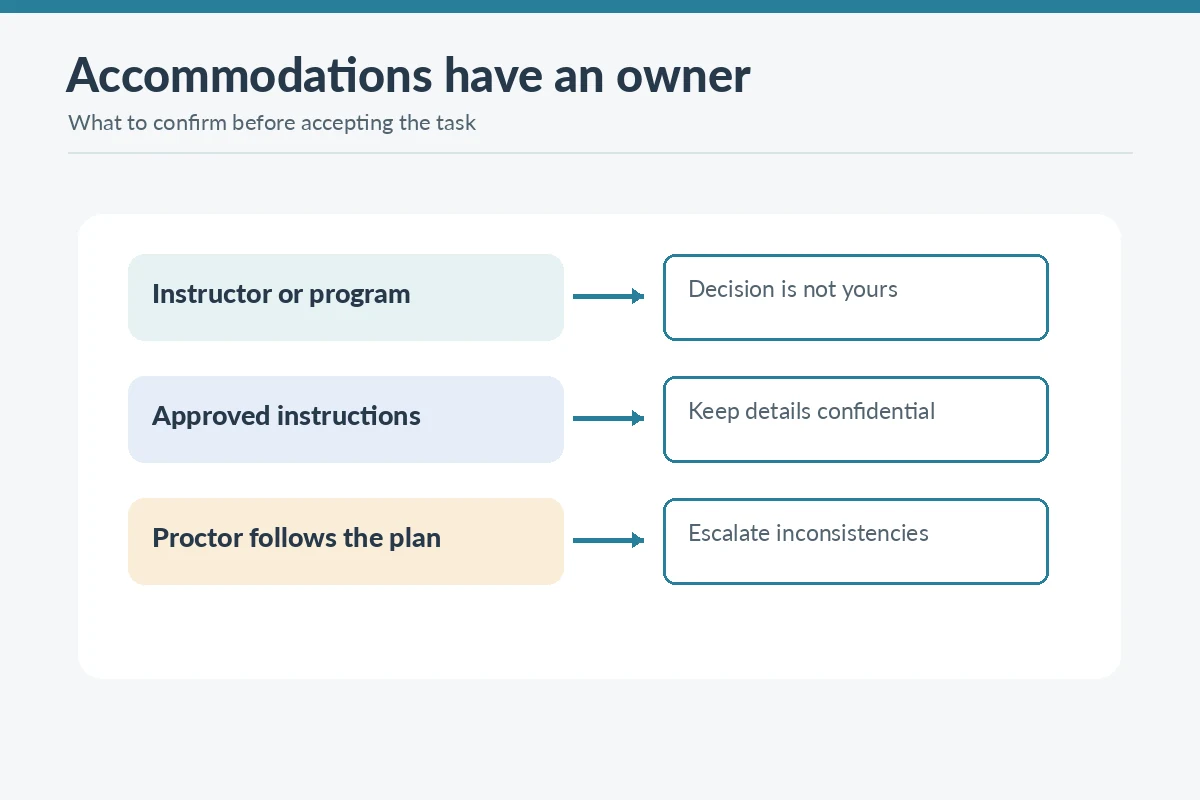
Some testing centers deliver authorized accommodations such as additional time, accessible formats, or a reader or scribe. A proctor follows the officially provided instructions and confidentiality rules; the proctor does not decide whether a student qualifies or change conditions informally. The Tennessee testing office specifically ties conditions to instructors and authorized arrangements.
When discussing this work in an application, emphasize following instructions and treating examinees respectfully. Do not describe specific student medical or disability information, and do not suggest you independently approved an accommodation. Ask the recruiter what training is required for any specialized reader, scribe, or accessibility duties.
Check irregularity reporting and materials security
A proctor may need to notice a possible rule violation, equipment problem, missing exam material, or timing discrepancy. The appropriate response is to document what was observed and notify the assigned coordinator under policy. Avoid assumptions about a student’s motives or outcomes. Exam security requires consistency, not ad hoc disciplinary decisions by a new part-time worker.
Ask who receives incident reports, which logs are used, how secure materials are stored, and how access is restricted. Your resume should describe actual observation, records, or confidential handling experience only. A generic phrase like “ensured academic integrity” can overstate what a novice proctor personally controlled.
Plan around concentrated exam weeks
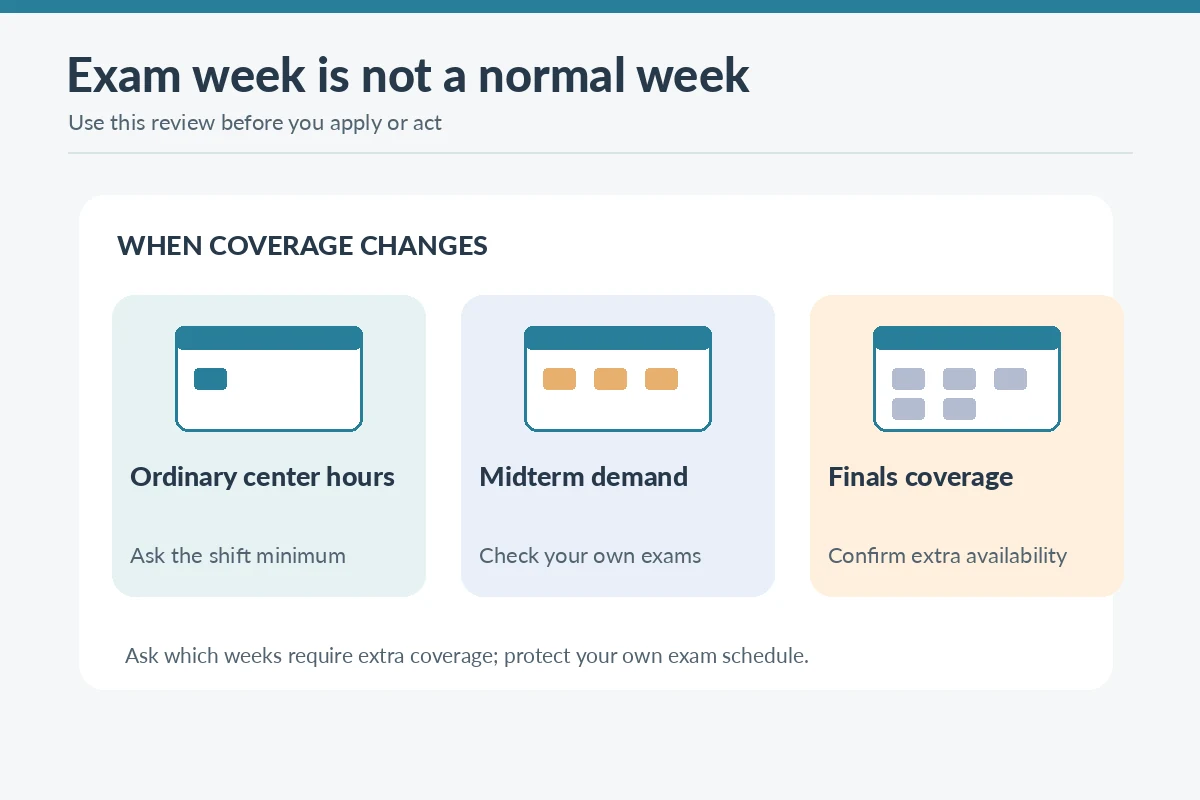
A part-time proctor role may have ordinary office hours and heavier demand during midterms, finals, or professional testing events. Binghamton’s role description includes 15–20 hours during the academic period, while other institutions set different schedules. Do not treat one institution’s numbers as typical or guaranteed. Ask whether rosters change week to week and whether evening or weekend work is required.
Build a personal calendar that flags your own exam weeks. Working as a proctor during the same period you have final exams may create a conflict. Also ask about travel between testing sites and any minimum continuous shift. A short daytime posting may be more compatible than a role requiring early preparation and late secure checkout.
Present credible evidence in the application
Helpful background includes clerical records, front-desk service, following scripts, handling confidential documents, or supervising a structured activity with clear rules. A hypothetical example is checking attendee names against a list at a school event and referring discrepancies to a coordinator. State where that actually happened; do not claim you proctored official exams merely because you invigilated a practice quiz.
Use your cover letter to explain attention to detail and your available exam-week hours. Include a question about certifications if the listing mentions them. Missouri State’s student position, for example, describes certifications obtained after hire; another center may have different conditions. The posting, not an external assumption, determines eligibility.
Confirm the offer and protect exam information
Before accepting, confirm the employing organization, supervisor, site address, training dates, confidentiality expectations, and how many shifts are likely offered. Ask whether the work is temporary or continues across terms and what happens when a testing session is canceled. A schedule with no confirmed minimum hours may not meet your needs, even if the duties are interesting.
Verify the job on the institution or employer’s official site. Do not share test content, candidate information, or nonpublic procedures as portfolio samples. A useful final checklist is: employer verified, required training known, reporting contact identified, exam-week roster realistic, and confidentiality agreement understood.
How We Research and Verify These Job Options
We reviewed role descriptions and training boundaries from an official university hiring or testing resource, an official university hiring or testing resource, an official university hiring or testing resource. The sources describe occupation tasks or hiring safeguards; they do not confirm that any particular employer currently has an opening. Check live employer requirements, shifts, credentials, and pay before applying.
Examples are illustrative unless explicitly described as documented experience. We do not guarantee hiring outcomes or recommend paying to obtain work. Review our affiliate disclosure; no paid partner, employment placement, or affiliate relationship is asserted in this guide.
Related Job Search Guides
Requirements depend on the testing center. Some student roles focus on administration and monitoring; others require vendor training or certification.
No. Authorized accommodations and timing conditions come from the responsible institution or testing program, not a proctor’s independent judgment.
Positions vary. Many require on-site exam rooms, while others include remote administration. Read the specific posting.
Not always. Exam demand may peak around midterms or finals. Ask about guaranteed or typical shifts rather than guessing.
Follow the testing center’s approved interruption procedure and contact the designated coordinator; do not invent a rule or alter exam conditions.