
A project coordinator cover letter should show the difference between keeping a project moving and independently authorizing changes. Explain how you tracked tasks, updated a schedule, prepared notes or raised a blocker to the right owner. A clear, documented handoff is stronger than calling yourself a project manager when that was not your position.
Organizations use the coordinator title for different levels of responsibility. Some roles emphasize calendars, meeting notes and vendor records; others include budget tracking or change requests. BLS describes project-management work as coordinating schedules, staffing and other details, but the posting determines your actual scope. Start with its tasks and the team you would support.
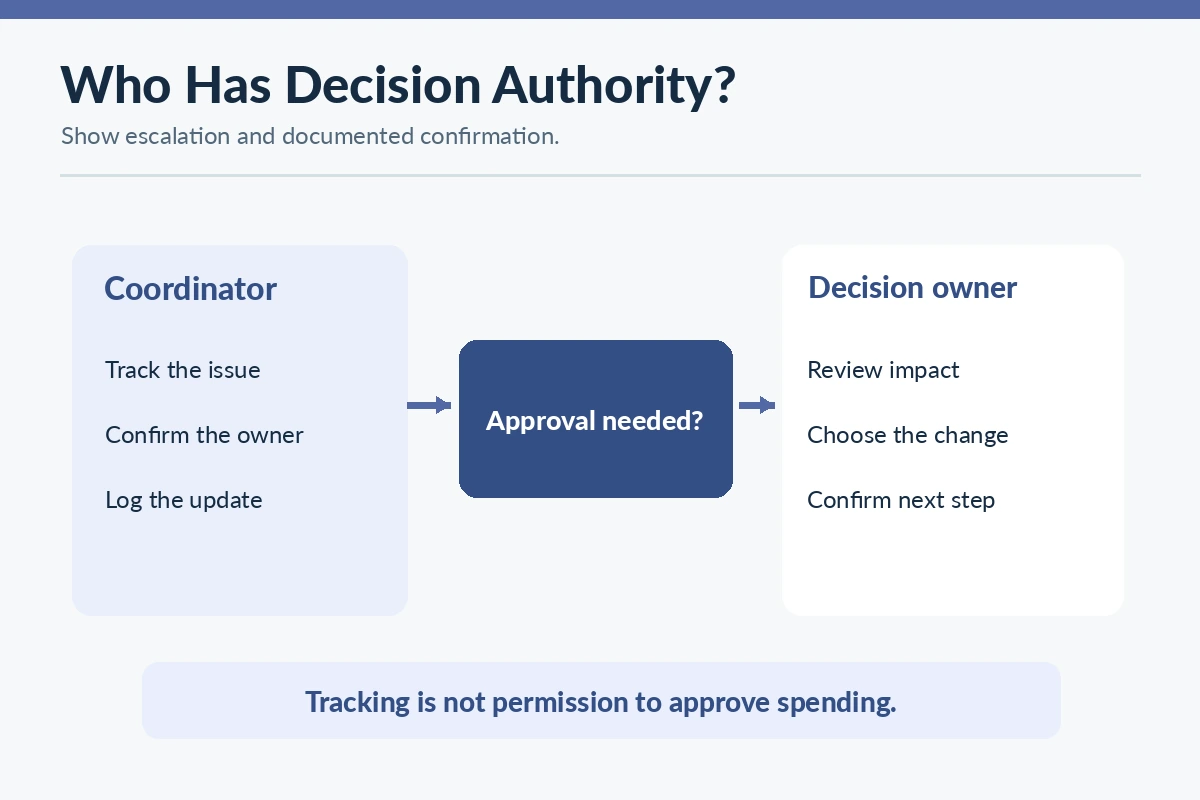
Separate Tracking From Decision Authority
Draw a small ownership grid for your example: task, owner, due date, risk and decision maker. Your role might have been maintaining the tracker, flagging conflicts and requesting direction. That is valuable work even if you did not approve the revised budget or schedule. Never attribute a supervisor’s decision to yourself simply because you communicated it.
Choose a Dependency You Helped Resolve
A convincing story shows why one action depended on another. Perhaps the event team could not print signs before final venue approval. You noted the dependency, confirmed the owner, set a follow-up date and updated the status when the decision arrived. Explain the communication route and record, without inventing a dramatic rescue or a percentage of time saved.
Show the Quality of Meeting Follow-Up
Many coordinator roles involve summarizing action items after meetings. Describe how you recorded what was decided, which points remained open, who owned each next step and when an update was due. A useful example might be a shared agenda or action log. Avoid showing confidential team notes; describe the method and deliverable instead.

Explain How You Handle Competing Dates
When several stakeholders want different deadlines, coordination means making the conflict visible rather than silently promising all of them. Describe checking the approved schedule, clarifying priority with an accountable owner and communicating the confirmed plan. A cover letter should not imply permission to rewrite contractual deadlines or commit spending without authorization.
Discuss Tools Through Work, Not Lists
Calendar tools, task boards and spreadsheets matter only when tied to credible work. If you used a shared spreadsheet for attendance and equipment assignments, say how you kept it current. If you have never used a project management platform, do not list it because the employer uses it. A well-documented workflow can demonstrate transferable learning potential.
Open the Letter With One Project Signal
Lead with the role and the type of coordination the posting needs. Match one requirement, such as tracking deliverables or communicating blockers, to an authentic project. If your example comes from a school event, nonprofit project or team assignment, name the setting. Avoid generic claims that you thrive under pressure unless the example proves what you actually did.
A Hypothetical Project Coordinator Letter
Example for a fictional project role: “Dear Hiring Team, I am applying for the Project Coordinator position. Your team needs accurate action tracking and clear updates when work depends on approvals. While helping organize a volunteer event, I maintained an action log, checked which materials required venue confirmation and reminded assigned owners about upcoming decision dates. When a layout approval was delayed, I documented the dependency and asked the event lead to choose the next step before updating the schedule. That experience taught me to make a risk visible without taking decisions outside my authority. My resume gives the scope and dates of this volunteer assignment. I would welcome the opportunity to support your project managers with disciplined tracking and follow-through. Thank you for considering my application.” Adapt only what is true.

Represent Results and Ownership Carefully
Did the team finish on time, or did you personally complete a tracking deliverable? These are different claims. Use clear attribution: “I maintained the versioned task register for the project team” rather than “I delivered the project ahead of schedule” unless that was really your responsibility. If the final outcome is unknown, describe a confirmed output or documented handoff.
Review the File and Route Before Sending
Check that the employer name and department match the posting. Verify any named tool and project duration, keep confidential notes private, and test portfolio permissions. Confirm that your cover letter describes coordination rather than contract sign-off, safety approval or other regulated functions. Follow the application instructions for file type and submission method.
Build a Small Evidence Log Before Tailoring
Make a private log with a project objective, your team role, the tracking file or meeting note you maintained, and one blocker that needed someone else’s decision. Record which information you verified and whether the action was actually completed. A coordinator can help the team without controlling scope, contracting or spending. If a job asks for status reporting, explain your update format and audience. If it asks for dependency tracking, show how you recognized that another owner needed to complete an earlier task. If it asks for budget monitoring, distinguish reporting a figure from approving payment. This preparation prevents contradictory versions of the same story across your resume, letter and interview. Use a redacted or self-made example instead of uploading internal records, and never write a fabricated delivery metric simply to make a letter sound more impressive.
How We Research Cover Letter Guidance
This guide starts with the U.S. Department of Labor-sponsored CareerOneStop cover letter advice, which recommends tailoring concise letters to a specific opening and using genuine skills and achievements. It also compares duties with official occupational or professional sources, rather than assuming that every employer uses the same job description. The letter samples above are hypothetical and should be rewritten from your own records.
For this occupation, the supporting references include BLS occupational profile. Use the actual posting and appropriate state or workplace rules for final requirements. We do not guarantee interviews, hiring or automated screening results. See our affiliate disclosure for site relationships; no affiliate recommendations appear in this guide.
Related Guides
- Marketing Coordinator Cover Letter: Link Campaign Work to Reliable Reporting
- Event Coordinator Cover Letter With No Experience: Prove Planning and Handoffs
- Project Coordinator Resume Summary: Show Milestones and Ownership
- Marketing Coordinator Cover Letter: Campaign and Handoff Examples
- Entry-Level Project Coordinator Jobs: Evidence for Scheduling and Updates
Yes, if you identify it as a class or volunteer project and name your actual coordination tasks.
Only if that was your truthful title or role. Demonstrate coordination contributions without inflating authority.
Describe a real tracker, meeting record, dependency, handoff or timely communication.
Explain the blocker, responsible owner, documented update and authorized decision route.
List tools you actually used and connect each to a task, rather than keyword stuffing.