
For an internal promotion interview, ask what decisions change with the new title, how success will be measured, who supports the transition, and which responsibilities remain with your current team. You may know the organization well, but that does not mean you know the authority or staffing plan for the higher-level role. Treat the interview as a real selection process; neither tenure nor a friendly manager guarantees promotion.
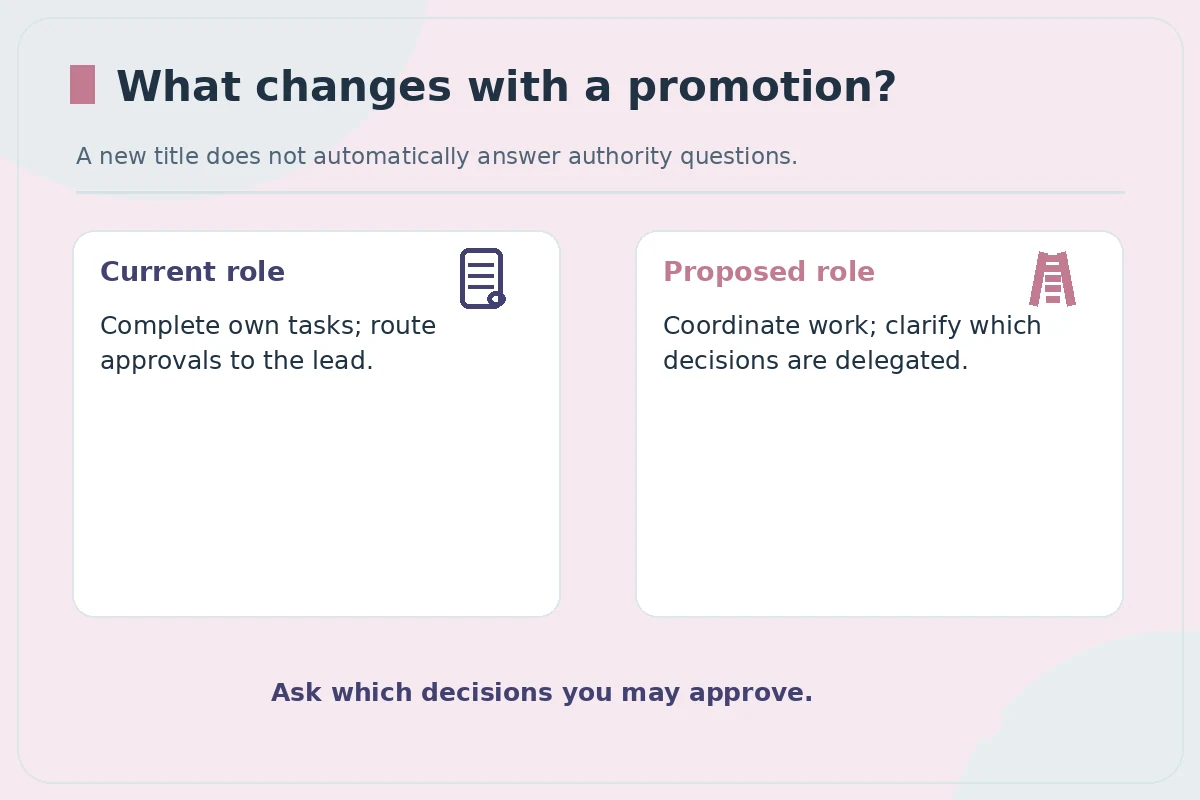
Compare authority rather than only the title
A promotion can change what you recommend, approve, review or escalate. Ask: “Which decisions would I own in this role that I do not own today?” Follow with a specific scenario from the position posting, such as resolving a scheduling conflict or approving a procedural change. The answer should distinguish delegation, policy limits and support.
If the role includes coaching former peers, ask who handles formal performance decisions and which concerns go to HR or senior management. Do not claim the promotion lets you alter employment rules or access confidential records without authorization. A practical question about actual decision boundaries is more useful than asking whether the job is “more leadership.”
Learn what measurable success means in this team
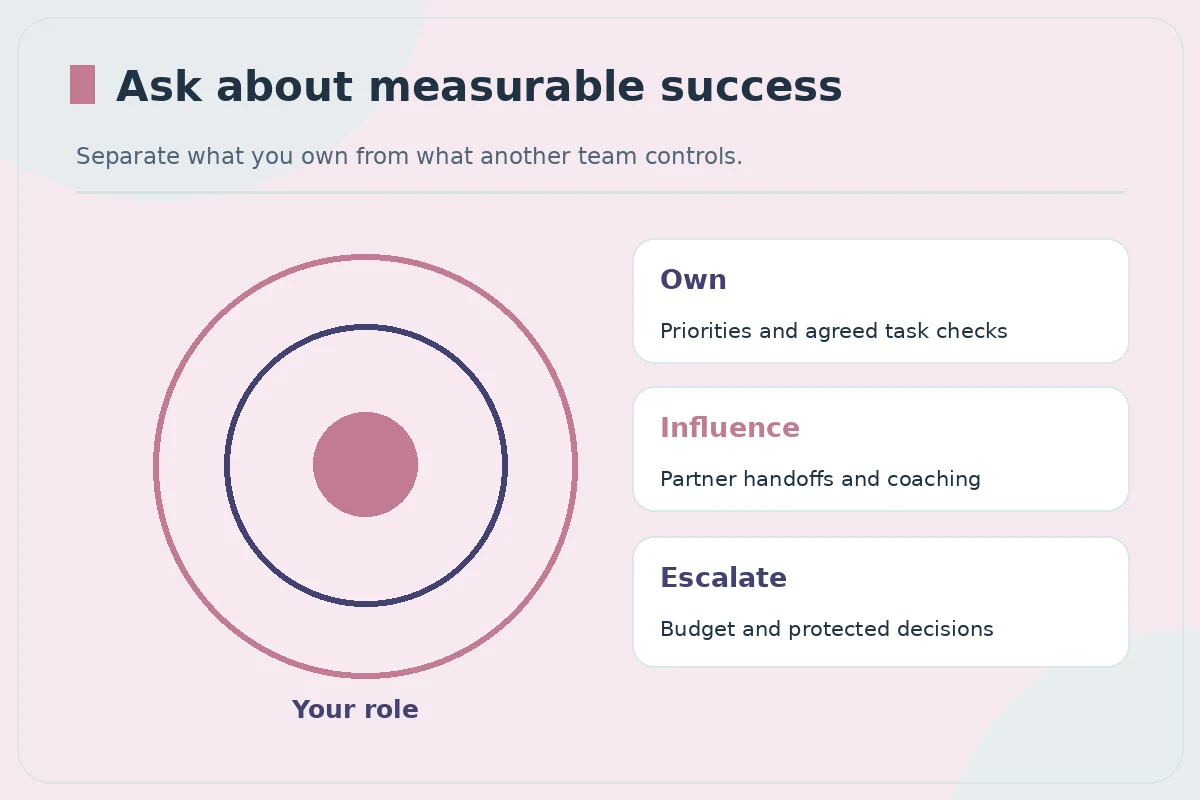
Ask: “What three outcomes would make the first quarter successful, and how would you review them?” The interviewer may name customer wait time, record accuracy, project milestones or coaching completion. Request definitions, baselines and your actual level of control. Not every metric is within the new employee’s power.
Suppose a candidate is moving from customer service specialist to shift lead. The lead may coordinate a queue and coach staff but cannot choose staffing levels. Ask how unresolved demand is escalated and what success means under the scheduled coverage. Evidence-based expectations help you avoid accepting accountability for decisions you cannot make.
Ask what happens to your existing workload
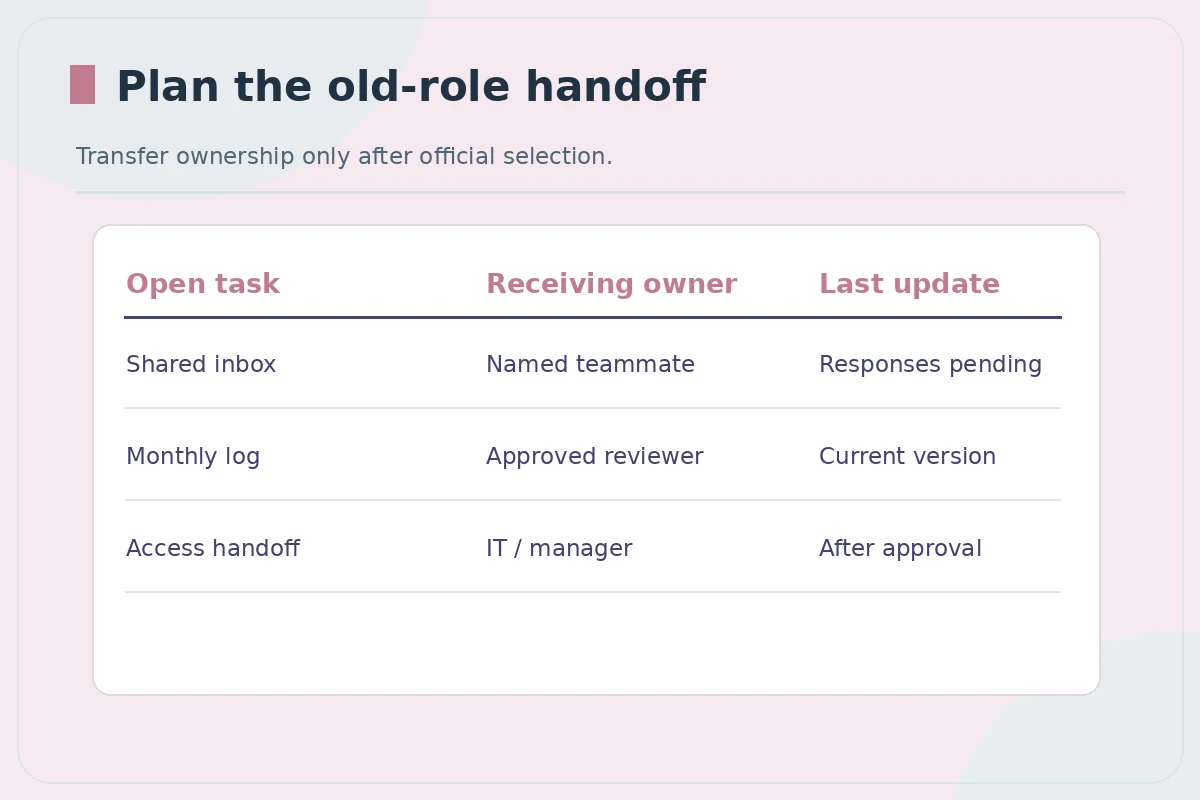
Internal candidates often have active projects, shared inboxes and relationships with colleagues. Ask: “Who will own my current tasks when I transfer, and what transition time is expected?” Do not assume a promotion means you must perform both jobs indefinitely. A useful transition answer names a receiving owner, critical deadlines and supervisor-approved priorities.
If your current manager is on the hiring panel, use professional wording rather than negotiating through personal loyalty: “How would the team coordinate a handoff without interrupting existing service?” A candidate can offer a draft task list after selection, but should not transfer access or announce a move before it is official.
Understand support for managing former peers
Moving into a leadership role changes how team members may interpret feedback and decisions. Ask: “How are new supervisors coached on delegation, documentation and difficult conversations?” A good answer might mention a mentor, scheduled manager check-ins or formal training, but do not assume every company offers a standardized program.
Use a hypothetical example: if two coworkers disagree about task ownership, the new supervisor needs an escalation path, not a personal favor network. Ask how disputes are documented and which issues require senior approval. The point is to understand support without revealing private concerns about named colleagues.
What a useful answer should actually establish
| Question topic | Useful confirmation | Answer to clarify |
|---|---|---|
| Decision authority | Specific approvals and escalation points | Title alone implies power |
| First-quarter goals | Measurable, controllable outcomes | Unexplained broad accountability |
| Old-role handoff | Named successor and transition plan | Indefinite double workload |
| New manager support | Actual coaching and review contacts | No guidance on difficult decisions |
Check reporting lines and cross-team dependencies
An internal job posting may describe outcomes without showing who provides budgets, data, systems or staffing. Ask: “Which partner teams do I rely on, and who can settle competing requests?” The answer helps you distinguish collaboration from formal responsibility. Create a simple role map: your manager, direct reports if any, peers, and specialist reviewers.
For example, a promoted operations coordinator might compile a plan for facilities and IT. They may track owners and dates but not authorize an electrical repair. Ask where approvals reside. The goal is to avoid overstating authority in the interview and to ensure the employer can explain realistic work interfaces.
Keep the competition and feedback process respectful
Even when you already work for the employer, the promotion process may involve other candidates and formal selection procedures. Ask “What skills will distinguish strong performance in this role?” rather than pressing for another applicant’s evaluation. OPM’s structured-interview principles emphasize job-related competencies; private employers may use different methods but can still value clear criteria.
If a manager previously encouraged you to apply, do not treat that encouragement as a selection decision. A respectful follow-up can note the examples you discussed and ask what steps remain. Avoid requests for confidential scoring notes or assurances that policies will be waived for you.
Close with the transition questions you can document
Try: “If selected, which tasks should I stabilize first, and who would approve the transition plan from my current role?” That question ties ambition to operational continuity. Ask the official contact how the decision will be communicated and whether a different manager will confirm job details.
Before an offer, do not edit team permissions, promise a transfer date to coworkers or announce a promotion. After a written selection, review title, reporting structure, responsibilities and effective date with the authorized team. The best internal interview reveals whether the organization has a workable plan, not simply whether colleagues like you.
Reframe promotion ambition as an operational plan
Practice three questions as a sequence: “Which decision changes with this job?”, “How will we measure a good decision?”, and “Who will cover my existing responsibilities while I learn the new ones?” This is a better demonstration of readiness than asking whether leadership already sees you as management material. It connects authority, evidence and continuity in a single conversation.
For a hypothetical team coordinator, the promotion might bring scheduling responsibility but not spending approval. The candidate should be able to describe a sensible escalation path without claiming new powers. The interviewer’s response is useful even if it reveals that a training plan has not yet been drafted. Record unanswered questions for the authorized follow-up contact rather than guessing.
How We Research Interview Questions
We reviewed the following authoritative US resources on November 7, 2026: cloudfront.careeronestop.org (Role-focused interview questions about job expectations and performance). www.opm.gov (Competency-based and structured interview practices). www.eeoc.gov (Limits on inappropriate pre-offer medical inquiries in interview settings). We use the sources to distinguish actual public guidance from interview preparation suggestions; example questions and situations are illustrative, not quotes from recruiters. Company policies, public hiring procedures and the terms of each role can differ. Confirm details with the organization authorized to make the decision.
We do not rank employers for payment and do not claim an affiliation or assured hiring outcome. Read the JobAsk affiliate disclosure. Keep private records and job-application credentials secure; interviews and informal comments do not replace written employer decisions.
More Interview Preparation Guides
Yes. Ask who owns unfinished work and how the transfer date will be coordinated after selection.
No. Ask which coaching, mentoring or required training exists for the position, especially when people-management duties are new.
Focus on your own current qualifications and the advertised role; do not request confidential details about another applicant.
Not as a certainty. Wait for the organization’s formal decision and approved communication plan.
Treat it as a professional selection meeting. Discuss your evidence and future responsibilities, not private arrangements or promises outside the process.